
Personal Injury Lawyer Consultation: What To Expect & Ask
You've been injured, you know you need legal help, and you've found an attorney who offers a free consultation. Now what? Walking into a personal injury lawyer consultation without knowing what to expect can feel overwhelming, especially when you're already dealing with pain, medical bills, and lost wages.
That first meeting is more than a formality. It's your chance to evaluate whether an attorney is the right fit for your case and your situation. It's also the attorney's opportunity to assess the strength of your claim and explain how they can help. At Mayfield Law Firm, P.A., we've spent over 40 years sitting across the table from injured clients in our Southaven and Memphis offices, walking them through this exact process. We know the questions people forget to ask , and the ones that matter most.
This guide breaks down what happens during a personal injury consultation, what documents to bring, and the specific questions you should ask to make a confident, informed decision about your legal representation.
What a personal injury consultation covers
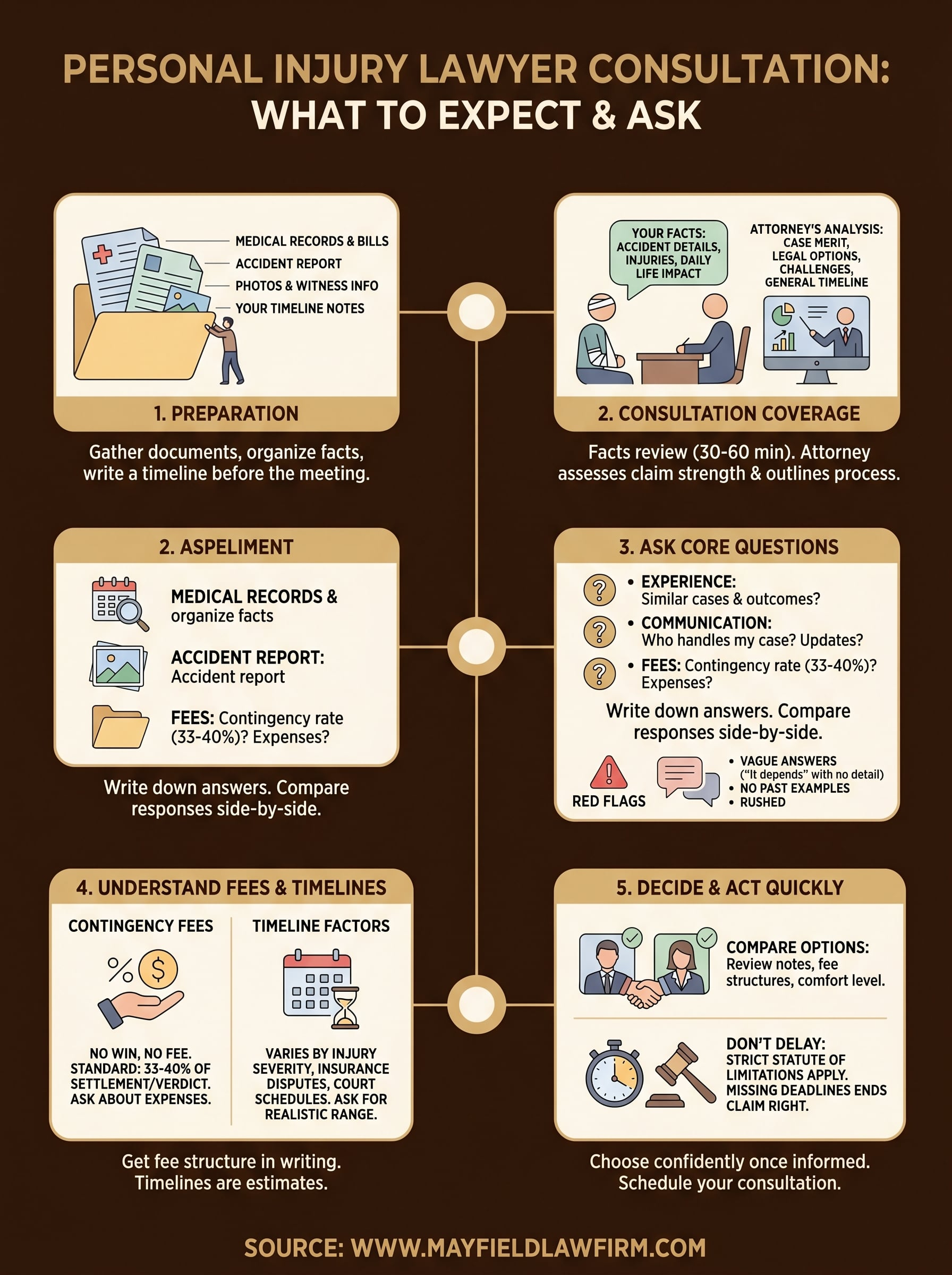
Most personal injury consultations follow a predictable structure , even if the details of each case differ. Understanding that structure helps you use the time wisely and leave the meeting with real answers rather than vague promises. A typical consultation runs 30 to 60 minutes and covers three core areas: your facts, your legal options, and next steps.
The attorney reviews your case facts
Your attorney will ask you to walk through exactly what happened - the accident, your injuries, any treatment you've received, and how the incident has affected your daily life. Be prepared to describe the timeline in detail. The attorney listens for key elements like who was at fault , whether negligence was involved, and whether your injuries are documented enough to support a claim. This part of the personal injury lawyer consultation is not an interrogation; it's information gathering, and honesty matters here.
The more specific you are about what happened and how it affected you, the better your attorney can assess the strength of your claim.
What the attorney tells you in return
Once your attorney understands the facts, they shift to analysis. They will tell you whether your case has legal merit , what type of claim applies (car accident, slip and fall, workplace injury, etc.), and what challenges might come up. This is also when you hear about the general timeline for cases like yours, from filing through settlement or trial. Attorneys often outline what evidence will be needed and whether any deadlines, like the statute of limitations, are already in play.
Key documents that typically come up during this discussion:
- Medical records and bills
- Police or incident reports
- Photos of the scene or your injuries
- Witness contact information
- Any insurance correspondence you've received
Step 1. Get ready before you meet
Showing up prepared makes a real difference in how much value you get from your personal injury lawyer consultation. Attorneys work faster and give sharper feedback when you bring the right materials, so gather your documents and organize your facts before you walk through the door.
Build your case file
Your case file doesn't need to be perfect, but it needs to exist. Pull together medical records, doctor's bills, and insurance correspondence you've received since the incident. If you have a police report or an incident report from an employer or business, bring a copy. Photos of the scene, your vehicle, or your injuries are especially useful, and witness contact information can strengthen your claim significantly.

Bring this checklist to your appointment:
- Medical records and bills related to your injury
- Police or incident report
- Photos of the scene, injuries, or property damage
- Insurance policy documents and any claim correspondence
- Names and contact information for witnesses
- A written timeline of events in your own words
Writing your timeline before the meeting helps you stay calm and accurate when the attorney asks follow-up questions.
Step 2. Ask the right questions
A personal injury lawyer consultation gives you direct access to an attorney's time. Come in with specific questions prepared and write down the answers as you go. The questions below cover the areas that most affect your case outcome.
Questions to ask every attorney
Comparing attorneys gets easier when you ask each one the same core questions and record their responses. Focus on their experience with your case type and how they plan to handle your claim.
Use this list during your consultation:
- How many personal injury cases similar to mine have you handled?
- What is the likely outcome range for a case like this?
- Who will work on my case day-to-day?
- How will you communicate updates to me?
- What is your success rate at trial versus settlement?
Write the answers down during the meeting so you can compare attorneys side by side before making your decision.
What weak answers look like
Vague responses are a real signal. If an attorney cannot give specific examples from past cases or avoids your timeline questions , that tells you something important. A confident attorney speaks clearly about what they've done and what they expect from your case.
Watch for these red flags during the conversation:
- The attorney cannot name a similar case they've handled
- Every answer is "it depends" with no follow-up detail
- They rush you before you finish your questions
Step 3. Understand fees, value, and timelines
Money and time are two things injured clients consistently underestimate going into a personal injury lawyer consultation . Before you leave the meeting, you need clear answers on both, not estimates you have to chase down later.
How contingency fees work
Most personal injury attorneys charge a contingency fee , meaning you pay nothing unless they recover money for you. The standard rate runs between 33% and 40% of your settlement or verdict, depending on whether your case settles early or goes to trial. Ask the attorney to confirm their exact percentage and whether case expenses like filing fees or expert witnesses come out of your share before or after the settlement is divided.
Get the fee structure in writing before you sign anything so there are no surprises when your case resolves.
Use this fee comparison table when evaluating attorneys:
| Fee factor | What to ask |
|---|---|
| Contingency percentage | What is your rate pre-trial vs. at trial? |
| Case expenses | Who advances costs and when are they repaid? |
| Fee agreement | Is the agreement provided in writing? |
What to ask about timelines
Case timelines vary widely based on injury severity, insurance disputes, and court schedules. Ask the attorney for a realistic range , not a single date, and ask what specific factors could push your case longer than expected.
Step 4. Decide what to do next
After your personal injury lawyer consultation , you have information that most injured people never bother to collect. Now you need to compare what you learned across any attorneys you met with and make a clear decision.
Compare Your Options Before Signing
Most people consult more than one attorney before committing. Take your written notes and fee structures from each meeting and lay them side by side. Focus on the attorney's experience with your specific case type, how clearly they explained your options, and who will actually handle your file on a day-to-day basis.
Signing a retainer agreement makes the relationship official, so confirm every detail in writing before you commit.
Use this decision checklist before signing with any attorney:
- Did the attorney answer your questions with specific examples?
- Is the contingency fee clearly defined in a written agreement?
- Do you feel confident in how they plan to communicate with you?
- Does the firm have a track record with cases like yours?
Delaying your decision carries real risk. Personal injury claims are subject to a statute of limitations, and missing that deadline ends your right to recover , regardless of how strong your case looks. Act quickly once you have enough information to choose.
Your next move
You now know exactly what a personal injury lawyer consultation involves, what to bring, what to ask, and how to compare your options before signing anything. That puts you ahead of most injured people who walk into a first meeting without a plan. The next step is simple : schedule your consultation and go in prepared with your documents, your questions, and your written timeline of events.
Do not wait longer than you need to. Mississippi and Tennessee both impose strict statutes of limitations on personal injury claims, and once that window closes, no attorney can reopen it for you. Every day you delay is a day closer to losing your right to recover.
If you were injured in an accident in Northeast Mississippi or South Memphis, contact Mayfield Law Firm, P.A. to schedule a free consultation with an experienced personal injury attorney who will review your case and give you straight answers.