How To File A Car Accident Claim: From Crash To Settlement
You've just been in a car accident. Your heart is racing, your hands are shaking, and the last thing on your mind is paperwork. But knowing how to file a car accident claim , and doing it correctly, can be the difference between getting the compensation you deserve and walking away with nothing. Every year, accident victims in Mississippi and Tennessee leave money on the table simply because they missed a step or made avoidable mistakes early in the process.
At Mayfield Law Firm, P.A., our attorneys have spent over 40 years representing accident victims in Northeast Mississippi and South Memphis. We've seen firsthand how the decisions you make in the hours and days after a crash shape the outcome of your entire claim. That experience is exactly what this guide draws from .
Below, we'll walk you through the full process, from what to do at the scene, to gathering the right documentation, to submitting your claim and negotiating a settlement. Whether you're dealing with a minor fender-bender or a serious collision , each step matters. Read this before you talk to an insurance adjuster, and you'll be in a much stronger position to protect your rights.
Before you file, choose the right claim path
Not every accident claim follows the same path, and choosing the wrong one can cost you time, money, or both. Who pays you and how much you recover depend almost entirely on which type of claim you pursue. Mississippi and Tennessee both have rules that shape your options, and understanding them before you pick up the phone is one of the most valuable things you can do for your case.
First-party vs. third-party claims
The most important decision when learning how to file a car accident claim is whether you go through your own insurance or the at-fault driver's insurance. These are called first-party and third-party claims, and they work very differently.
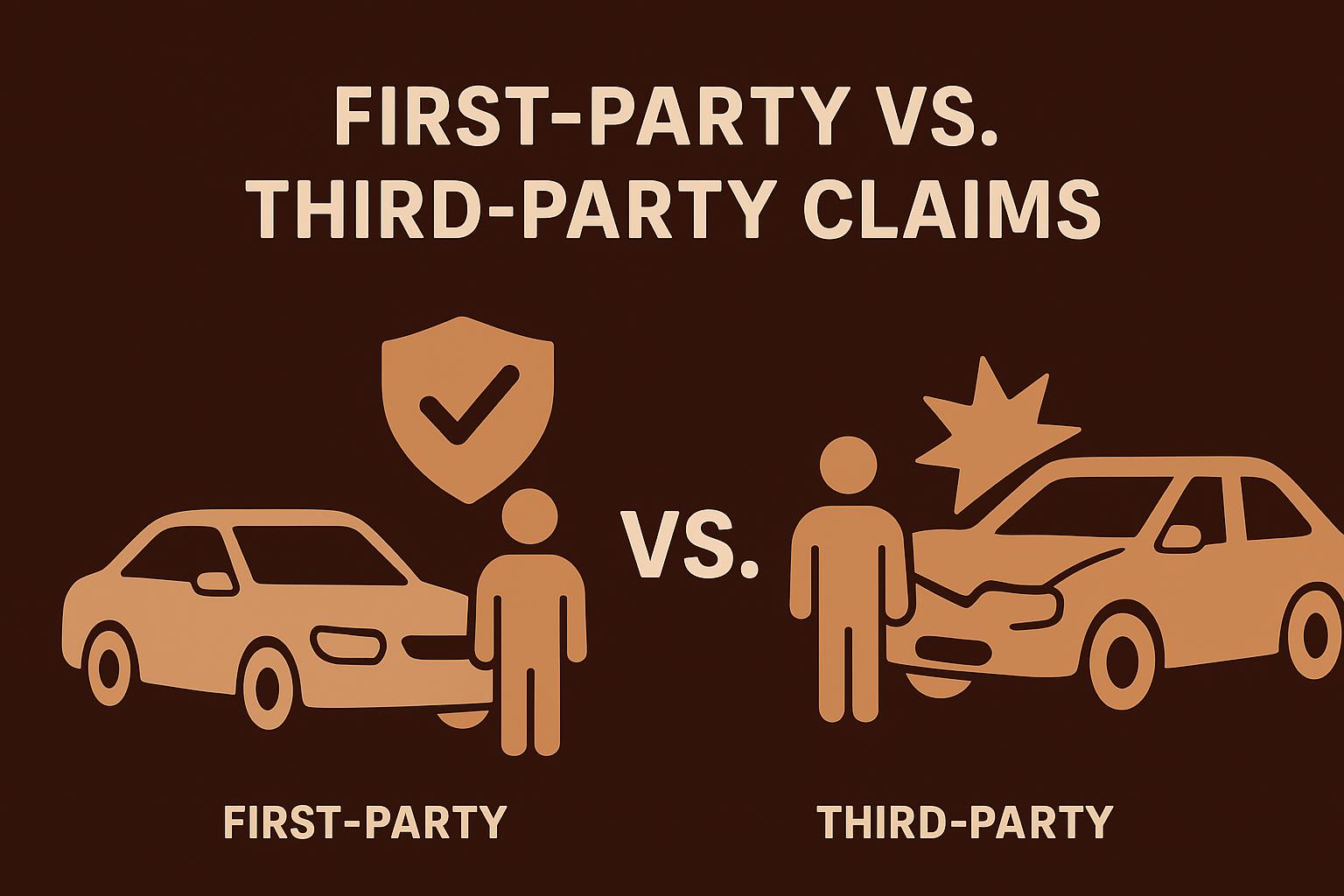
A first-party claim goes to your own insurer. You use your collision coverage to pay for vehicle repairs, and you may use your medical payments (MedPay) coverage for initial medical costs. The upside is that your own insurer is generally easier to access and faster to respond. The downside is that you may owe a deductible out of pocket , and filing a claim can affect your future premiums. A third-party claim goes directly to the at-fault driver's insurance company. If liability is clear and the other driver carries adequate coverage, this is typically the cleaner path because you avoid your deductible and keep your own policy clean. The catch is that the other driver's insurer works against your interests , not for them.
If fault is genuinely disputed, file both a first-party and a third-party claim at the same time. This protects your timeline and keeps all recovery options open.
Here's a comparison of the four most common claim paths:
| Claim Type | Who You File With | When to Use It |
|---|---|---|
| First-party (collision) | Your own insurer | Fault disputed, other driver uninsured |
| Third-party liability | At-fault driver's insurer | Clear liability, adequate coverage |
| Uninsured motorist (UM) | Your own insurer | Other driver carries no insurance |
| Underinsured motorist (UIM) | Your own insurer | Other driver's coverage is too low |
Uninsured and underinsured motorist coverage
Mississippi requires insurers to offer uninsured motorist (UM) coverage on every auto policy, though drivers can reject it in writing. Tennessee has similar requirements. If the driver who hit you has no insurance, or their policy limits won't cover your medical bills and lost wages, your own UM or UIM coverage becomes critical. Pull out your declarations page right now and confirm whether you have this coverage and what the limits are. Knowing your own policy limits before you speak with any adjuster prevents you from underselling your claim before negotiations even begin. If you rejected UM coverage when you bought the policy, that decision matters now, and an attorney can help you identify any remaining options.
When a lawsuit replaces the insurance claim
Sometimes the insurance process simply isn't enough. If the at-fault driver is uninsured and you have no UM coverage, if an insurer denies your claim in bad faith, or if your damages clearly exceed the available policy limits , a personal injury lawsuit may be your only path to full compensation. In Mississippi, you generally have three years from the accident date to file a personal injury lawsuit under Miss. Code Ann. § 15-1-49. Tennessee's statute of limitations is one year for personal injury claims under Tenn. Code Ann. § 28-3-104. Missing either deadline ends your legal options permanently, so never sit on a disputed or underpaid claim assuming the insurer will eventually do the right thing on its own.
Step 1. Protect people and document the scene
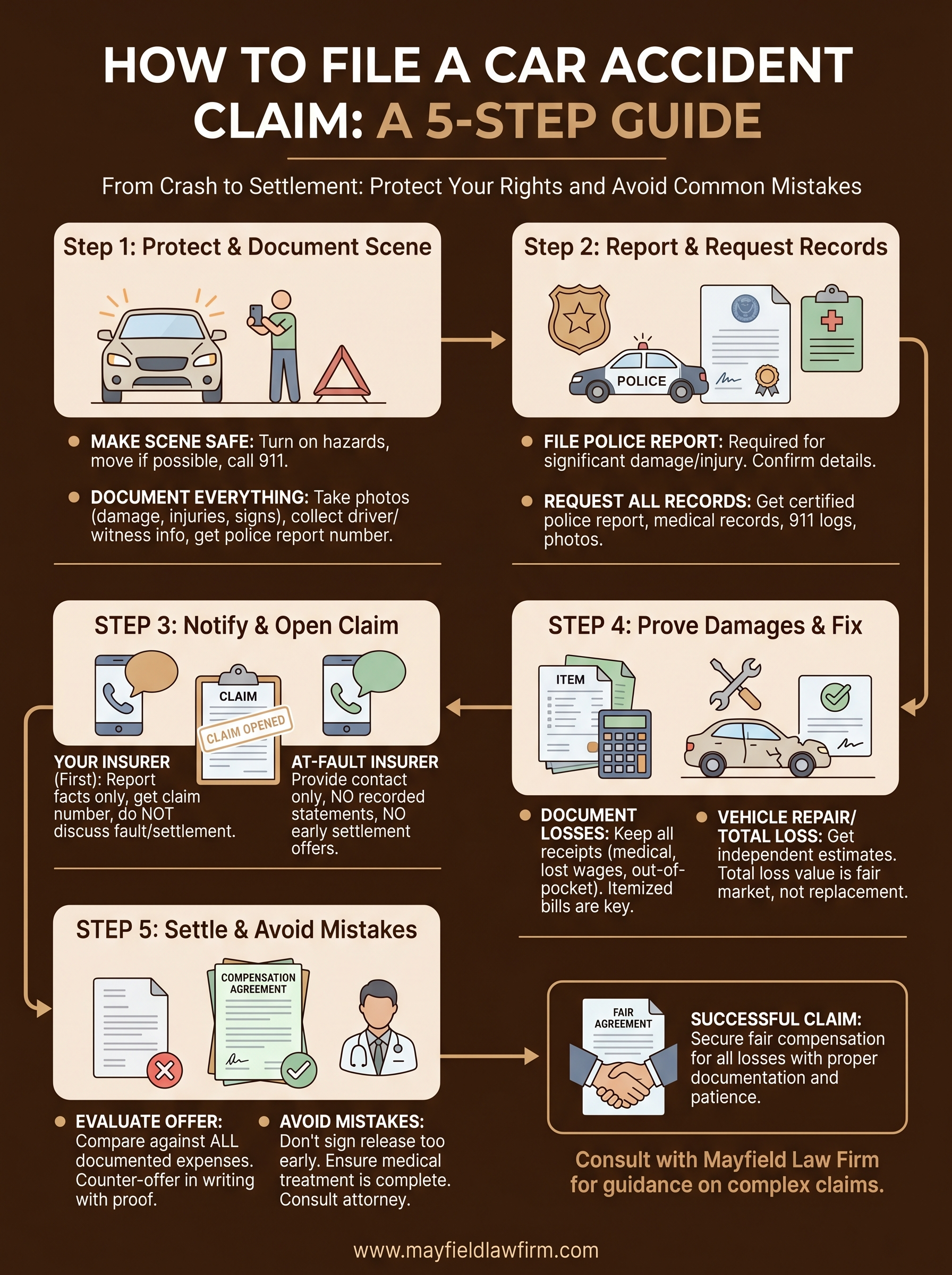
The first few minutes after a crash are the most critical for your physical safety and your legal case . Before you think about insurance or how to file a car accident claim, your job is to stop the vehicle, check for injuries, and make the scene as safe as possible. What you do in this window shapes every piece of evidence you'll have available later.
Make the scene safe before anything else
Turn on your hazard lights immediately and, if the vehicles are drivable and it's safe to do so, move them out of active traffic lanes. Place road flares or emergency triangles behind your vehicle if you carry them. Call 911 right away if anyone is injured, even if the injuries seem minor at first. Adrenaline masks pain, and conditions like whiplash or internal bleeding may not be obvious until hours later.
Never tell the other driver or the responding officer that you're "fine" at the scene. That statement can be used against you when you file your injury claim.
Stay calm, remain at the scene, and do not admit fault to anyone, including bystanders. Saying something like "I'm sorry, I didn't see you" can be treated as an admission of liability, even if you were not the at-fault driver.
Collect everything you need from the scene
Your phone is your most important tool right now. Start documenting before anything is moved or cleaned up. Photograph skid marks, vehicle damage from multiple angles, road conditions, traffic signs, and any visible injuries. Get the full name, driver's license number , license plate, insurance company, and policy number from every driver involved. Collect contact details from any witnesses before they leave.
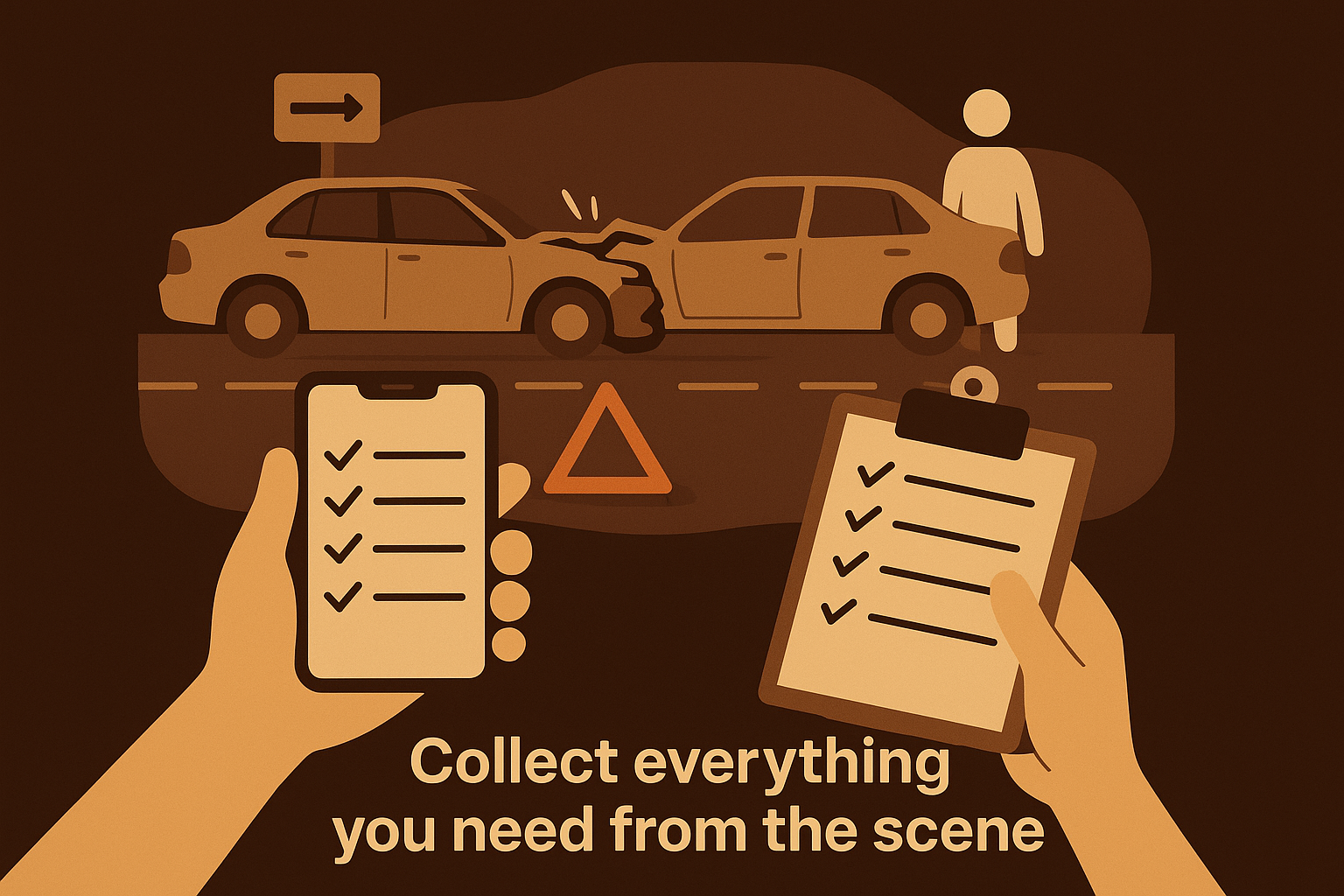
Here's a quick checklist of what to gather at the scene:
- Full names, addresses, and phone numbers of all drivers and passengers
- Insurance company name and policy number for each driver
- Driver's license numbers and vehicle registration information
- Witness names and contact information
- Badge number and name of the responding officer
- Photos of all vehicle damage, injuries, road conditions, and street signs
- The exact location, including cross streets or GPS coordinates
Keep all of this organized in one place. A single missing piece of information, like a witness's phone number, can be the difference between a strong claim and a weak one .
Step 2. Report the crash and request official records
Once the scene is documented, your next responsibility is to make the crash official on paper . Reporting the accident correctly and pulling the right records afterward gives you the foundation every insurance adjuster and attorney will work from. Skipping this step is one of the most common reasons a valid claim loses credibility before it even gets reviewed.
File the police report and confirm the details
In Mississippi, you must report any accident involving injury, death, or property damage over $500 to local law enforcement. Tennessee has a similar threshold. When the officer arrives, give a factual account of what happened, but stick to the facts you personally observed. Ask the responding officer for their name, badge number, and the incident report number before they leave, because you'll need that number to request your copy later.
Get the police report number at the scene. Tracking it down afterward through a precinct or courthouse can take days you don't have.
Review your copy of the report as soon as it becomes available, typically within 3 to 10 business days depending on the department. Check the officer's description of the accident, the listed fault determination, and the names of all parties. If you spot factual errors, contact the reporting agency in writing to request a correction. An incorrect report can complicate how to file a car accident claim successfully.
Request all records before you talk settlement
Insurance adjusters move fast, and they count on claimants not having their documentation in order. Before you enter any settlement conversation, gather your official crash report, your medical records, and any dispatch logs from the 911 call. Both Mississippi and Tennessee allow drivers to request certified copies of accident reports through their respective Department of Public Safety offices, usually for a small fee.
Here are the key records to collect before negotiations begin:
- Certified police accident report (from the local law enforcement agency or state DPS)
- 911 dispatch records (request in writing from the local emergency services agency)
- Emergency room and ambulance records from the day of the crash
- Any traffic camera or surveillance footage (submit a preservation request quickly, since footage is often deleted within 30 days)
- Photographs you took at the scene
Keep digital and physical copies of everything in a single organized file from day one.
Step 3. Notify insurers and open the car accident claim
Once you have the police report number and your scene documentation in order, your next move is to contact the insurance companies. Most policies require prompt notification after an accident, and waiting too long can give an insurer grounds to deny or delay your claim. This step is where you formally begin the process of filing a car accident claim, so handle it deliberately.
Contact your own insurer first
Call your insurance company's claims line as soon as you're away from the scene and in a safe place. You don't need to have every document ready for this call. You simply need to report that the accident occurred and provide basic details: the date, the location, the other driver's information, and whether anyone was injured. The insurer will assign a claim number and a claims adjuster to your file.
Write down your claim number, the adjuster's full name, and their direct phone number the moment the insurer provides them. Every future call should reference that claim number.
When you speak with your own adjuster, stick to confirmed facts only . Describe what happened without speculating about fault, and never estimate the extent of your injuries on the spot. Here's a simple template you can use to open the call:
- "I'm calling to report an accident that occurred on [date] at approximately [time] near [location]."
- "The other driver's name is [name], insured by [insurance company], policy number [number]."
- "I have injuries that are still being evaluated by a doctor."
- "I am not prepared to discuss fault or settlement at this time."
Dealing with the at-fault driver's insurer
The other driver's insurance company will likely contact you quickly after a collision. Be careful. Their adjuster's job is to settle your claim for as little as possible , not to make sure you're fully compensated. You are not required to give a recorded statement to the other driver's insurer, and doing so before you have medical records can seriously hurt your claim.
Provide only your name and contact information if they call first. Tell them your attorney will be in touch if you have one, or that you are still gathering documentation before discussing the claim. Do not accept any settlement offer at this stage. Early offers almost always come before the full scope of your injuries and repair costs is known, and accepting one typically closes your claim permanently.
Step 4. Prove damages and get your car fixed or totaled out
Proving your damages is the part of how to file a car accident claim that actually determines how much money you receive. Insurance adjusters don't hand out compensation on your word alone ; they respond to documentation. Your job in this step is to build a paper record of every loss the accident caused, from your medical bills to your missed paychecks to the cost of repairing or replacing your vehicle .
Document every expense and loss
Start a dedicated folder, physical or digital, and drop every receipt, bill, and record into it from day one. Medical expenses are your largest and most important category: emergency room visits, ambulance fees, follow-up appointments, physical therapy, prescriptions, and any future treatment your doctor recommends. Get itemized bills , not just summary statements, because adjusters review the specific billing codes when they calculate your payout.
Beyond medical costs, track lost wages if the injury kept you out of work. A letter from your employer on company letterhead stating your daily or weekly pay rate and the exact dates you missed is the standard format most insurers accept. Also document out-of-pocket expenses like rental car fees , ride-share costs while your vehicle is in the shop, and any medical equipment your doctor prescribed.
Keep every receipt, no matter how small. A $12 prescription co-pay goes in the folder just like a $4,000 ER bill.
Navigate the vehicle repair or total loss process
The insurer will send an appraiser or adjuster to inspect your vehicle and produce an estimate. You have the right to get your own independent repair estimate from a licensed body shop before you agree to anything. If the insurer's number is lower, submit the competing estimate in writing and request a written explanation of the difference.
Your vehicle is considered a total loss when repair costs exceed a set percentage of its actual cash value, typically around 75% in Mississippi. If your car is totaled, the insurer owes you the fair market value at the time of the crash, not the replacement cost of a brand-new vehicle. Use NADA Guides or comparable local listings to verify the offer independently, and dispute in writing if the valuation falls short. Do not sign a title transfer or accept a settlement check until you agree on the amount.
Step 5. Settle the claim and avoid common payout mistakes
Settlement is the final stage of how to file a car accident claim , and it's also where the most money is lost. Insurance adjusters make offers that sound reasonable until you compare them against your actual documented losses and realize the number falls short. Before you sign anything, understand what a fair offer looks like and which moves cost you the most.
Evaluate the settlement offer before you sign
When an adjuster sends a settlement offer, compare it line by line against your documented expenses. A fair offer should cover all medical bills for both past and reasonably anticipated future treatment, lost wages, vehicle repair or replacement, and pain and suffering. Mississippi and Tennessee both allow recovery for non-economic damages, so do not let an adjuster convince you that only out-of-pocket costs count toward your settlement figure.
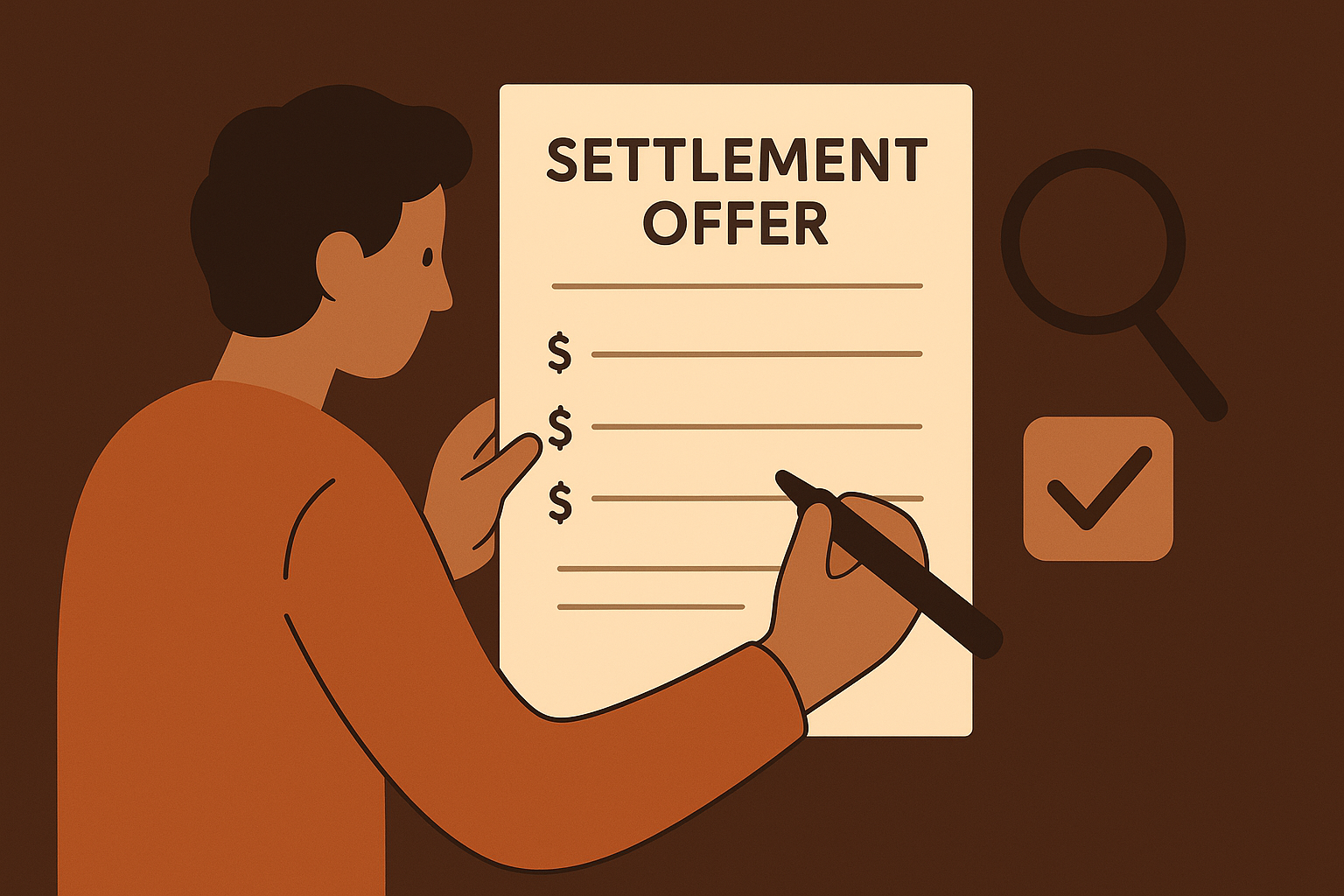
Never accept the first settlement offer without reviewing it against your complete expense documentation, because initial offers are almost always lower than what your case is actually worth.
If the offer falls short, respond in writing with a counteroffer that references your specific dollar amounts and supporting documents . Use a format like this:
Counter-Demand Letter Template
"I am writing in response to your settlement offer of $[amount] dated [date]. Based on my documentation, my losses are as follows:
- Medical expenses (itemized): $[amount]
- Lost wages ([X] days at $[daily rate]): $[amount]
- Vehicle damage or total loss: $[amount]
- Out-of-pocket expenses: $[amount]
- Pain and suffering: $[amount]
Total claimed: $[amount]
I reject your current offer and request a revised offer reflecting the above within 14 days."
Mistakes that cut your payout before you cash the check
Several common errors reduce settlements after all the hard work is done. Signing a release too early is the most damaging, because a release closes your claim permanently, even if new medical costs appear later. Never sign any release until your treating physician confirms your condition has stabilized or reached maximum medical improvement.
Cashing a check that carries "full and final settlement" language in the memo also closes your claim permanently, regardless of your intent. A personal injury attorney can review any offer before you commit, and at Mayfield Law Firm, that consultation costs you nothing.
Wrapping up
Filing a car accident claim correctly requires discipline at every stage, from the first moments after impact to the final signature on a settlement agreement. How to file a car accident claim comes down to one core principle: document everything, move promptly, and never let an insurance adjuster pressure you into a decision before your losses are fully known. Missed deadlines, early recorded statements, and premature releases are the three moves that cost accident victims the most money.
Your situation may be more complex than a standard two-car collision. Disputed fault, serious injuries, or an uninsured driver can change your options significantly, and the stakes are too high to navigate those situations alone. The attorneys at Mayfield Law Firm have handled these cases for over 40 years across Mississippi and Tennessee. If your claim feels stuck or an offer seems too low, contact Mayfield Law Firm for a free consultation before you sign anything.