
Personal Injury Lawsuit Process: Steps, Timeline, And FAQs
If you've been injured because of someone else's negligence, understanding the personal injury lawsuit process can feel overwhelming, especially when you're still recovering. You may be dealing with medical bills, lost wages, and insurance adjusters who aren't exactly on your side. Knowing what to expect from a legal claim gives you a real advantage when it comes to protecting your rights and getting fair compensation.
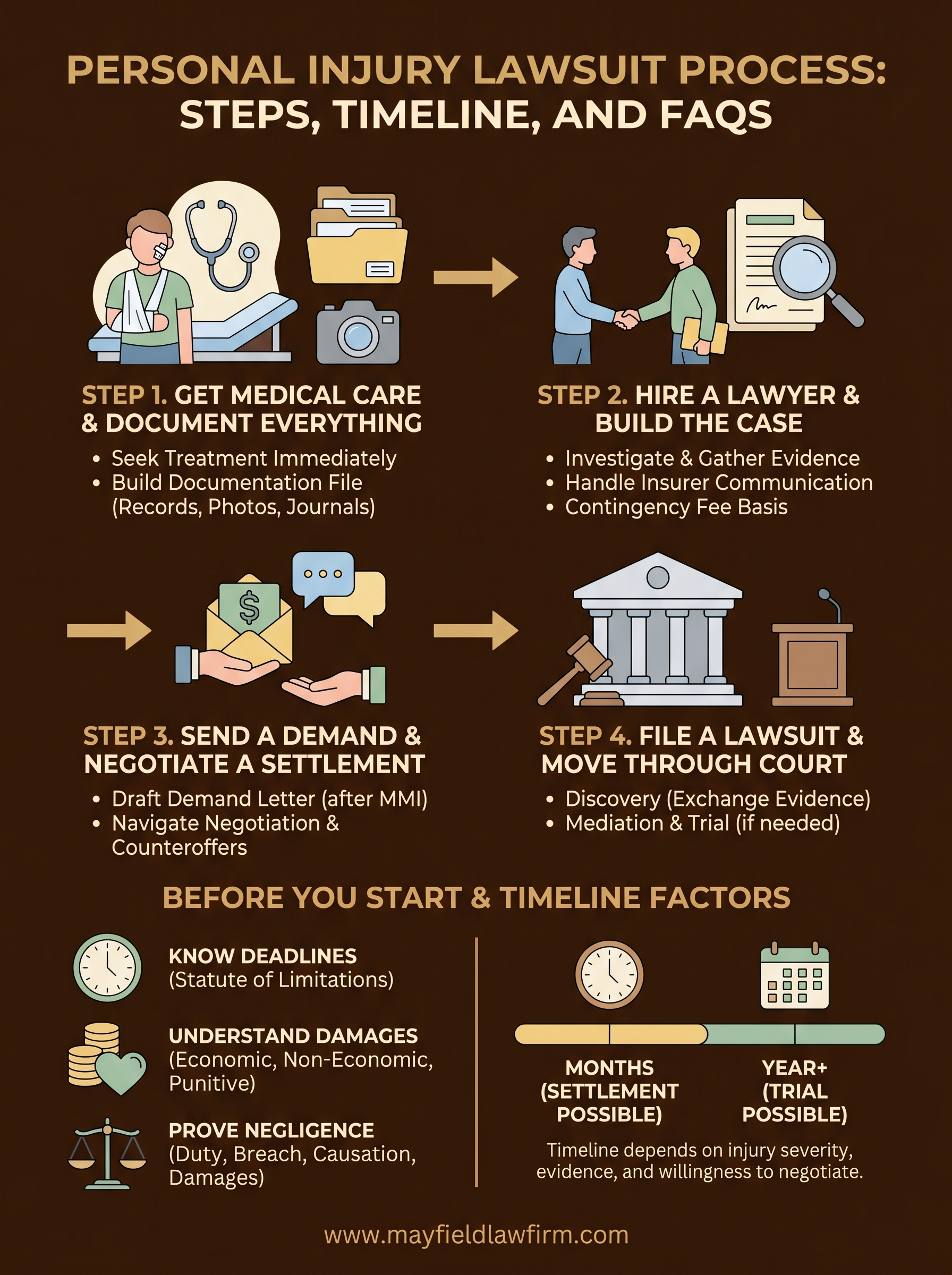
The truth is, most personal injury cases follow a predictable path. From the first consultation with an attorney through investigation, negotiations, and, if necessary, trial, each stage has a specific purpose. Some cases settle in months ; others take a year or more. The timeline depends on factors like the severity of your injuries, how much evidence needs to be gathered, and whether the other side is willing to negotiate in good faith.
At Mayfield Law Firm, P.A., we've guided clients across Northeast Mississippi and South Memphis through every stage of this process for over 40 years . This guide breaks down each step so you know exactly what's ahead, from your initial consultation to the final resolution of your case. We'll also cover common timelines and frequently asked questions so you can move forward with confidence.
What to know before you start a claim
Before you dive into the personal injury lawsuit process , you need to understand a few fundamental rules that govern how claims work. Jumping in without this foundation can cost you compensation you're legally entitled to, or worse, cause you to miss your window to file entirely. Knowing these basics upfront saves you time and puts you in a much stronger position from day one.
Know your filing deadline
Every state sets a statute of limitations for personal injury claims, and missing it means losing your right to sue, regardless of how strong your case is. In Mississippi, you have three years from the date of your injury to file a personal injury lawsuit. Tennessee sets a one-year statute of limitations for most personal injury cases, so if your accident happened across the state line, that deadline is significantly shorter.
If you're unsure which state's law applies to your situation, contact an attorney immediately, because the clock is already running from the date of your injury.
Exceptions do exist in limited circumstances, such as cases involving minors or injuries that weren't immediately apparent. But relying on an exception is a risk you don't want to take . Get legal advice early, before you assume more time is available.
Understand what damages you can claim
Damages refer to the compensation you're entitled to seek through your claim. They generally fall into three categories:
- Economic damages: Medical bills, future medical costs, lost wages, loss of earning capacity, and property damage
- Non-economic damages: Pain and suffering, emotional distress, loss of enjoyment of life, and loss of companionship
- Punitive damages: Awarded in rare cases where the defendant's conduct was especially reckless or intentional
Documenting every expense and impact connected to your injury is critical, because your compensation is only as strong as the evidence supporting it.
Know what you'll need to prove
Personal injury claims are built on the legal concept of negligence . To win your case, you need to establish four things: the other party owed you a duty of care, they breached that duty, their breach directly caused your injury, and you suffered real, measurable damages as a result.

Proving negligence requires solid evidence , including accident reports, medical records, photographs, witness statements, and in some cases expert testimony. The stronger your evidence from the start, the better your chances of reaching a favorable outcome without the time and cost of a full trial.
Step 1. Get medical care and document everything
The first step in the personal injury lawsuit process is also the most time-sensitive one. Your health comes first, but your medical records are also the foundation of your entire claim . If you delay treatment or skip follow-up appointments, the other side will argue that your injuries aren't as serious as you claim, and that argument can stick.
Seek treatment right away
See a doctor as soon as possible after your injury, even if you feel fine in the moment. Some injuries, like soft tissue damage or internal trauma , don't show immediate symptoms. Getting evaluated creates a medical record that links your injury directly to the incident, which is something you'll need when building your case.
Do not tell the insurance company you're "okay" before a doctor has fully evaluated you, because that statement can be used against you later.
Follow every treatment recommendation your doctor makes. Skipping physical therapy, ignoring referrals, or missing appointments signals to insurers and defense attorneys that you're not as injured as you say.
Build your documentation file
Start collecting and organizing every piece of evidence connected to your injury from day one. The more thorough your records, the stronger your case will be. Here's what to gather:
- Medical records and bills: Every visit, prescription, test, and procedure
- Photographs: Your injuries, the accident scene, and any property damage
- Incident reports: Police reports, workplace accident reports, or business incident forms
- Witness information: Names and contact details of anyone who saw what happened
- Personal injury journal: Daily notes on your pain levels, limitations, and how the injury affects your routine
Keep digital and physical copies of everything in one organized place so nothing gets lost before you meet with an attorney.
Step 2. Hire a lawyer and build the case
Once you have medical care underway, hiring an experienced attorney is your next priority. The personal injury lawsuit process involves legal strategies, procedural deadlines, and negotiation tactics that are difficult to handle without professional help. Most personal injury attorneys work on a contingency fee basis, which means you pay nothing upfront and your lawyer only collects a fee if you win.
Choose an attorney who focuses specifically on personal injury cases, since experience in this area directly affects how well your case is built and argued.
What to look for in a personal injury attorney
Finding the right attorney shapes the entire outcome of your claim. Look for a lawyer with a proven track record in cases similar to yours, whether that's auto accidents, workplace injuries, or wrongful death. During your free initial consultation , ask direct questions about their experience, how they communicate with clients, and what their typical case timeline looks like.
- Trial experience in personal injury cases
- Clear, consistent communication practices
- Contingency fee structure with no upfront costs
- Local knowledge of Mississippi or Tennessee courts
How your attorney builds the case
After you hire a lawyer, the investigation and case-building phase begins immediately. Your attorney gathers all available evidence, including police reports, medical records, surveillance footage, and expert witness opinions. Accident reconstruction specialists or medical experts may be brought in to strengthen your claim depending on how complex the facts are.
Your attorney also handles all communication with the insurance company during this phase, which protects you from making any statements that could reduce your compensation. This stage typically runs anywhere from a few weeks to several months, depending on the severity of your injuries and the amount of evidence that needs to be collected.
Step 3. Send a demand and negotiate a settlement
Once your medical treatment reaches maximum medical improvement (MMI) , meaning your condition has stabilized enough to calculate your total losses, your attorney drafts a formal demand letter to the at-fault party's insurance company. This marks one of the most important transitions in the personal injury lawsuit process , because it shifts the interaction from evidence-gathering into active negotiation.
Draft and send the demand letter
Your attorney sends a comprehensive demand letter that outlines the facts of the case, the evidence supporting your claim, and the specific compensation you're seeking. A well-constructed demand letter sets the tone for every negotiation that follows, so the detail and framing here matter significantly. Below is what a strong demand letter typically includes:
- Summary of the incident: Who was at fault and how the injury occurred
- Medical treatment history: Every provider, procedure, and cost since the incident
- Total economic damages: Medical bills, lost wages, and future treatment estimates
- Non-economic damages: Pain, suffering, and impact on your daily life
- Demand amount: The total compensation you're requesting with a response deadline
The demand amount your attorney sets is almost always higher than your target settlement figure, which leaves room to negotiate without landing below what you actually need.
Navigate the negotiation
The insurance company will respond with a lower counteroffer , and that's expected. Your attorney evaluates each counteroffer against the strength of your evidence and the full value of your damages, then responds with a revised position. This back-and-forth can take several weeks to several months , depending on how far apart both sides are and how cooperative the insurer is throughout the process.
Step 4. File a lawsuit and move through court
If negotiations stall or the insurance company refuses a fair offer, your attorney files a formal complaint in civil court. This stage of the personal injury lawsuit process triggers a structured legal timeline governed by court rules, and it signals to the other side that you are serious about recovering full compensation.
Filing a lawsuit does not mean your case will go to trial. The majority of personal injury cases still settle after a lawsuit is filed, often during the discovery phase.
Discovery: exchange evidence and depositions
Discovery is the formal phase where both sides exchange evidence and gather information under oath. Your attorney sends written questions called interrogatories, requests documents, and schedules depositions. During a deposition, witnesses and parties answer questions on the record in front of a court reporter, which locks in testimony that can be used at trial.
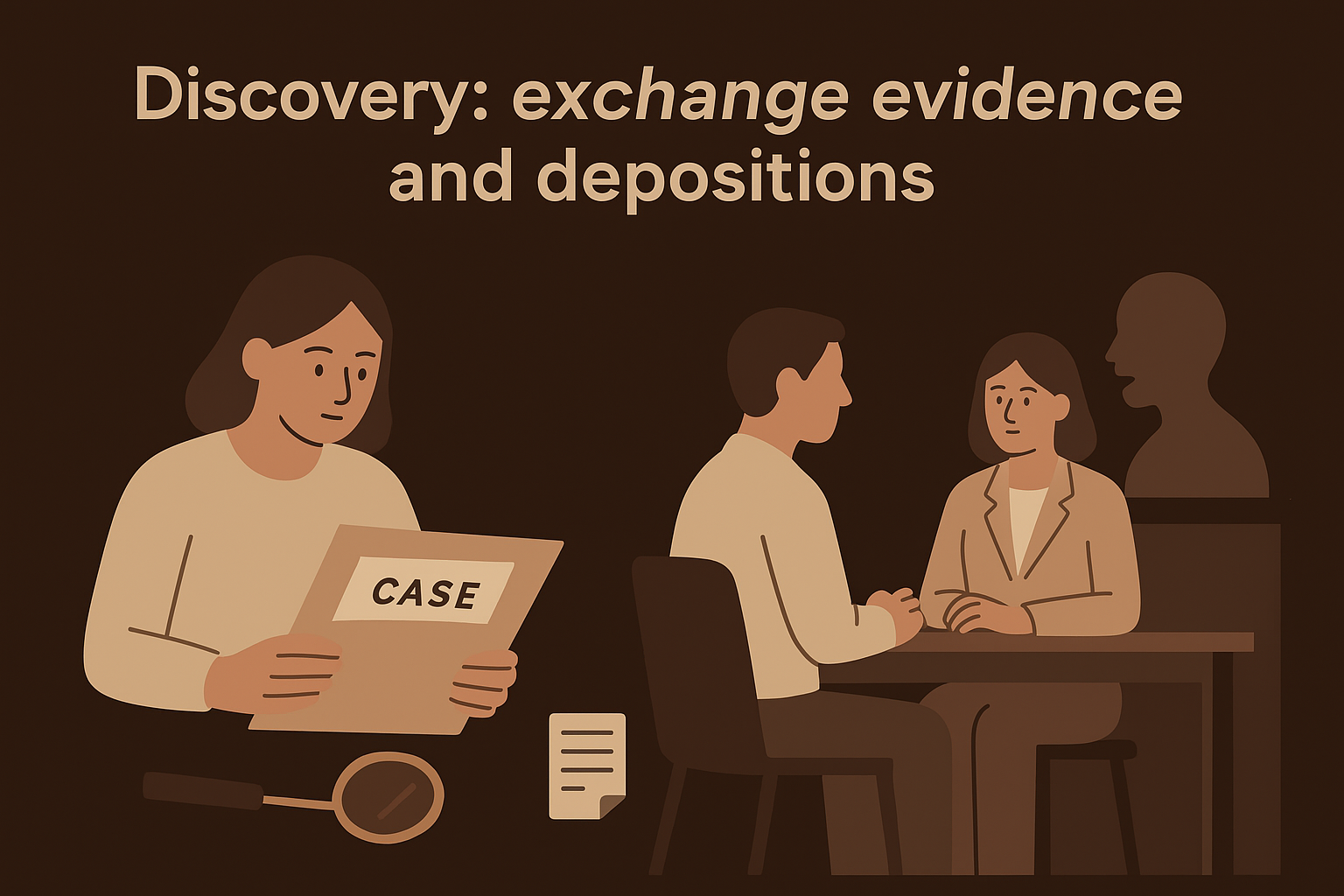
This phase typically runs three to six months , depending on the complexity of the case and the court's scheduling calendar .
Mediation, pretrial motions, and trial
Before your case goes to trial, judges often require mediation , where a neutral third party helps both sides attempt a final settlement. Many cases resolve here without ever reaching a courtroom. If mediation fails, your attorney files pretrial motions to shape what evidence gets admitted at trial.
At trial, both sides present evidence, call witnesses, and make arguments to a judge or jury. The jury decides liability and the amount of compensation you receive. Trial timelines vary widely, but most personal injury trials last between two and five days. The entire litigation process from filing to verdict commonly runs twelve to twenty-four months depending on court schedules and case complexity.
Final thoughts
The personal injury lawsuit process is a serious undertaking, but it becomes far less intimidating once you understand each stage and what's expected of you. From getting immediate medical care and building your documentation file to negotiating a settlement or taking your case to trial, every step you take early in the process shapes the outcome at the end.
Your biggest advantage is acting quickly. Deadlines are firm , evidence disappears over time, and insurance companies move fast to protect their own interests. Waiting to hire an attorney or delay treatment gives the other side more room to reduce what you recover.
At Mayfield Law Firm, P.A., our team has over 40 years of experience guiding injured clients through every stage of this process in Northeast Mississippi and South Memphis. Contact us today for a free consultation and find out exactly where your case stands.