Can You Sue for a Dog Bite? Liability and Compensation
A dog bite can leave you with more than torn skin and stitches. You might be facing medical bills, lost wages, and a nervous glance at every dog you pass afterward. So can you sue for a dog bite ? In most cases, yes, but whether you actually win depends on a handful of legal details most people never think about until they're in the middle of a claim.
Mississippi and Tennessee handle dog bite liability differently, and that difference shapes your entire case. Some states hold owners strictly liable the moment their dog bites someone, while others require proof the owner knew the dog was dangerous. Add in factors like where the bite happened, whether you provoked the animal, and how serious your injuries are, and you get a legal picture that's rarely as simple as "the dog bit me, so I win."
This article breaks down when you have grounds to sue, how liability actually works in Mississippi and Tennessee, what kind of compensation you can realistically pursue, and what the claims process looks like from start to finish.
Why your right to sue depends on state dog bite laws
Every state picks its own rule for dog bite liability, and that choice decides how hard your case will be to win. Some states use strict liability , meaning the owner is on the hook the moment their dog bites someone, regardless of the dog's history. Others follow a negligence or "one-bite" standard , which means you have to prove the owner knew, or should have known, the dog had dangerous tendencies before the attack. That single legal distinction can be the difference between a straightforward claim and a drawn-out fight over what the owner knew and when.
Where the bite happened, and which state's law applies, often matters more than how bad the bite was.
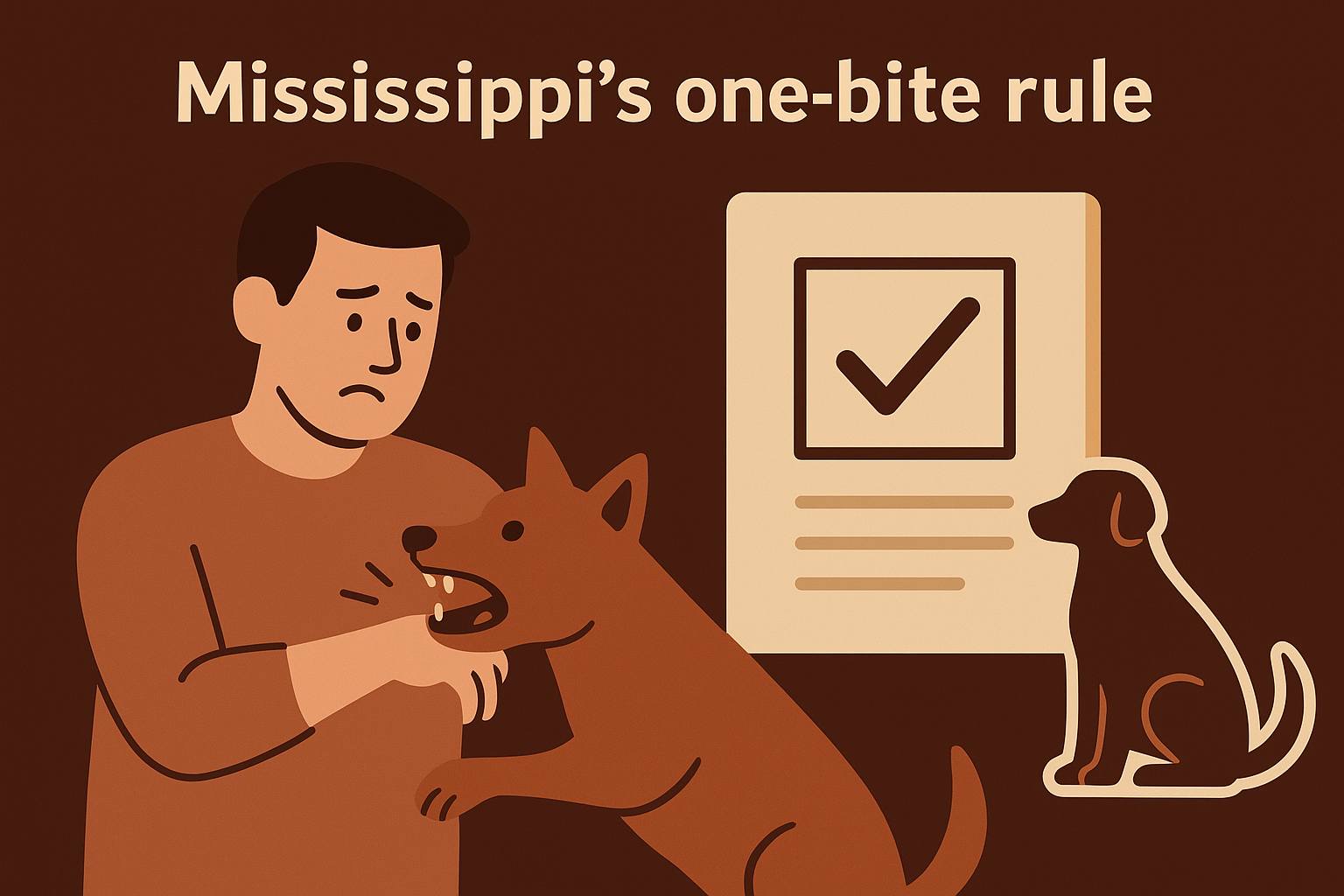
Mississippi's one-bite rule
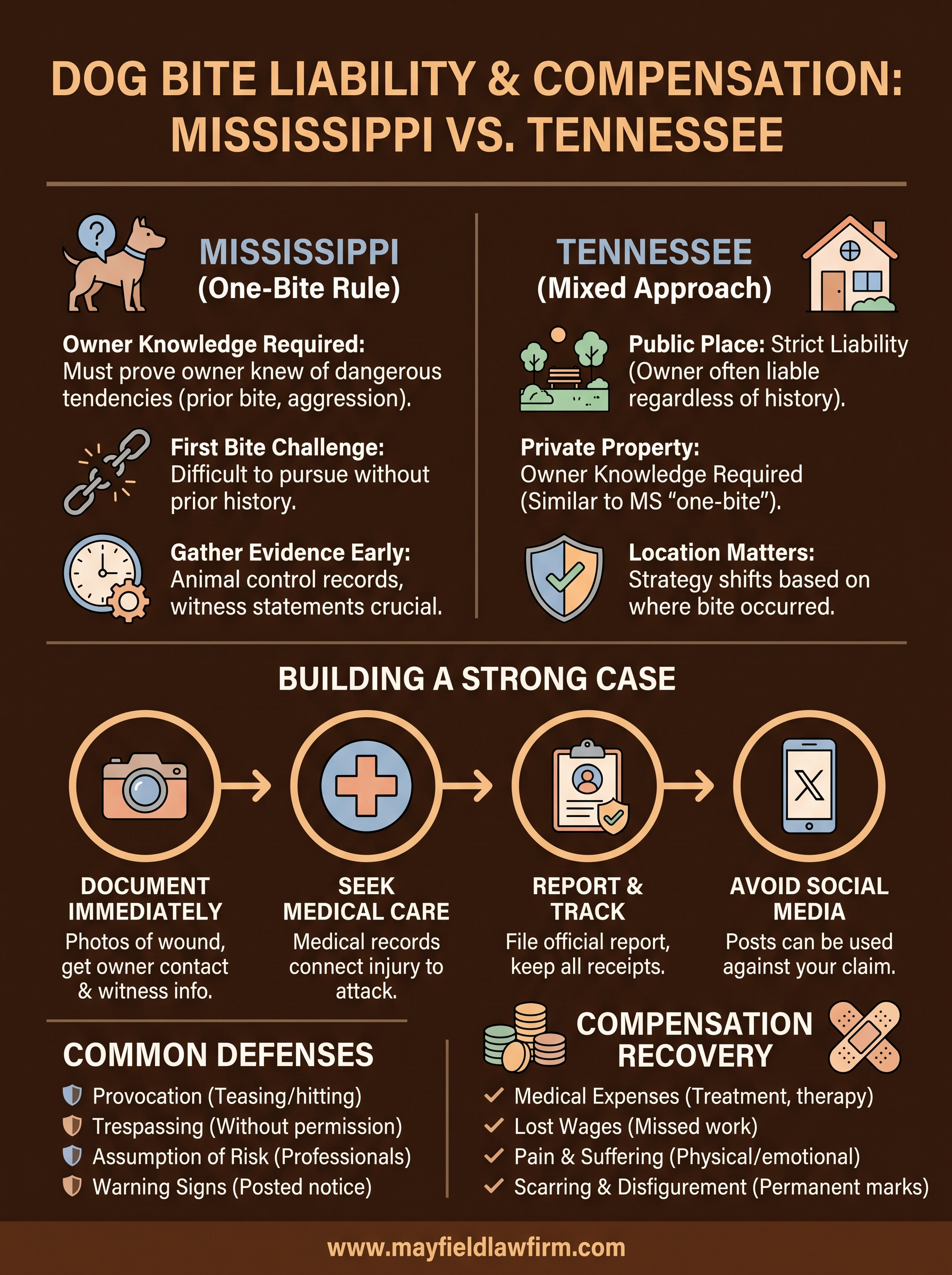
Mississippi follows a version of the one-bite rule . You generally need to show the owner had reason to know their dog was dangerous, through a prior bite, aggressive behavior, or a history of complaints. Without that proof, a first-time bite can be tough to pursue, even if your injuries are serious. That's why gathering evidence of prior incidents, like animal control records or statements from neighbors, becomes central to a Mississippi claim.
Tennessee's mixed approach
Tennessee applies a hybrid system. If the bite happened in a public place or somewhere you had a legal right to be, owners face something closer to strict liability . If it happened on the owner's private property, you're back to proving the owner knew the dog posed a risk. Location alone can shift your entire legal strategy.
| Factor | Mississippi | Tennessee |
|---|---|---|
| Liability standard | One-bite / negligence-based | Strict liability in public, negligence on private property |
| What you must prove | Owner knew or should have known dog was dangerous | Location of bite, plus owner's knowledge if on private property |
| Key evidence | Prior bite history, complaints, animal control reports | Where the bite occurred, witness accounts, property status |
Why this matters for your claim
Understanding which rule applies isn't just academic. It shapes what evidence your attorney needs to collect on day one, whether a quick settlement is realistic, and how much leverage you have if the case goes to negotiation or trial. A bite that happened at a public park in Memphis might be a straightforward strict liability case, while the same bite in a rural Mississippi yard could require months of digging into the dog's history before you even file.
How to build a strong case after a dog bite
Winning a dog bite claim comes down to evidence, and the clock starts ticking the moment the bite happens. Documentation gathered early almost always beats documentation pieced together weeks later, so treat the first 48 hours as your foundation. Photograph the wound before treatment, get the owner's name and contact information if you can safely get it, and ask any witnesses for their names and phone numbers before they walk away.
A dog bite case is won or lost on the evidence you collect in the first few days, not the story you tell months later.
Seek medical care right away, even if the wound looks minor. Dog bites carry infection risk, and a medical record created the same day carries far more weight than one created a week later after the wound worsens. Your treatment notes also become the backbone of your compensation claim, since insurers and courts rely on them to connect the attack to your injuries and costs.
Beyond medical care, a few extra steps make a real difference in how strong your case turns out to be:
- Report the bite to local animal control or law enforcement, since official reports create a paper trail you can't recreate later.
- Track down any prior complaints against the dog, especially in Mississippi where owner knowledge is central to your claim.
- Keep every receipt tied to the incident, from urgent care copays to prescription costs.
- Avoid posting about the bite on social media until your claim resolves, since insurers do search for that.
A personal injury attorney can step in early to request animal control records, track down witnesses before memories fade, and calculate the full value of your medical and wage losses. Handling this alone often means missing evidence you didn't know mattered until it was gone.
Common defenses dog owners use against your claim
Insurance companies rarely hand over money without a fight, and dog owners (or their insurers) lean on a predictable set of defenses to knock down your claim. Provocation tops the list. If the owner can show you teased, hit, or startled the dog before the bite, they can argue you triggered the attack yourself, which weakens or kills your claim depending on the state.
The strongest defense against your claim usually isn't about the dog, it's about something you supposedly did right before the bite.
Trespassing comes up almost as often. If you were on the owner's property without permission, in Tennessee especially, that fact alone can shift the case away from strict liability and back onto a much harder negligence standard. Owners also point to posted "Beware of Dog" signs, arguing you were warned and accepted the risk anyway. Courts don't always buy this defense outright, but it can chip away at your credibility if you ignored a clearly visible sign.
Assumption of risk shows up in specific situations too, like veterinarians, groomers, or dog walkers who get bitten while doing their job. Owners argue that anyone who works with animals professionally accepted some risk of getting bitten, and some judges agree.
Here's what owners and their insurers typically raise:
- You provoked the dog through teasing, hitting, or sudden movements.
- You were trespassing or lacked permission to be on the property.
- Posted warning signs put you on notice of the risk.
- Your profession or role involved inherent contact with animals.
- The bite happened while you were committing a crime on the property.
Knowing these defenses ahead of time lets your attorney prepare counterevidence before the insurer even raises them.
What compensation you can recover in a dog bite claim
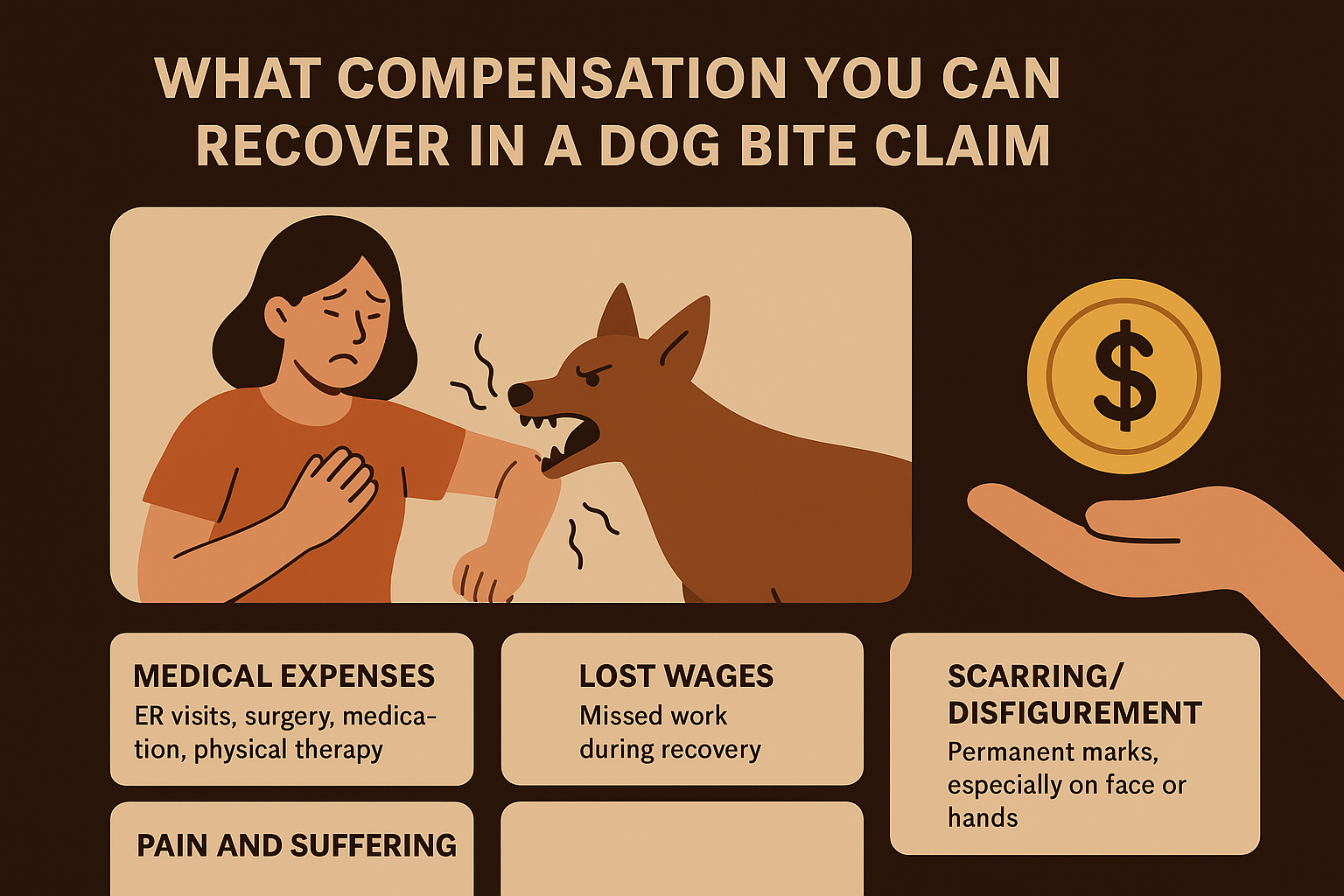
A successful dog bite claim covers more than your emergency room bill. Medical expenses are the obvious starting point, including ambulance rides, stitches, follow-up visits, physical therapy, and any scar revision or reconstructive surgery if the bite left lasting damage. Dog bites to the face and hands often require specialists, and those costs add up fast, so keep every bill and statement your attorney can use to build the claim.
Compensation isn't just about the wound itself, it's about every way the bite disrupted your life afterward.
Beyond medical costs, you can pursue lost wages if the bite kept you out of work, whether that's a few days recovering or months if surgery or infection complicated your recovery. Pain and suffering compensation accounts for the physical pain, emotional trauma, and any lasting fear of dogs that follows an attack, which courts increasingly recognize as a real and compensable harm. Scarring and disfigurement often get their own category of damages, especially with children, since visible scars can affect them for decades.
Here's a quick breakdown of what typically factors into a dog bite settlement or verdict:
| Damage Type | What It Covers |
|---|---|
| Medical expenses | ER visits, surgery, medication, physical therapy |
| Lost wages | Missed work during recovery |
| Pain and suffering | Physical pain, emotional distress, fear of dogs |
| Scarring/disfigurement | Permanent marks, especially on face or hands |
| Punitive damages | Rare, reserved for reckless or repeat-offender owners |
Punitive damages are uncommon but possible if the owner knew the dog was dangerous and ignored repeated warnings. An attorney familiar with Mississippi and Tennessee dog bite law can tell you which categories realistically apply to your case before you settle for less than it's worth.
Deciding your next step after a dog bite
So, can you sue for a dog bite? Yes, in most cases, but winning depends on the state where it happened, the evidence you gathered, and how well you counter the owner's defenses. Mississippi's one-bite standard and Tennessee's mixed approach mean the same injury can play out very differently depending on which side of the state line you're standing on. Timing matters just as much as the law itself, since evidence fades and deadlines pass while you're still healing.
Don't wait until the insurance company calls with a lowball offer to figure out where you stand. Legal guidance early protects both your health claims and your right to full compensation. If you've been bitten in Northeast Mississippi or South Memphis, talk to the team at Mayfield Law Firm for a free consultation before you sign anything.