
How Long Does a Medical Malpractice Case Take? A Timeline
If you or a loved one suffered harm from a medical provider's negligence, one of the first questions on your mind is probably how long does a medical malpractice case take . It's a fair question, and the honest answer is that these cases move slower than most other personal injury claims. Between expert reviews, pre-suit requirements, and the complexity of medical evidence, timelines can range from roughly one to three years , and sometimes longer.
At Mayfield Law Firm, P.A., we represent injury victims across Northeast Mississippi and South Memphis, including those harmed by medical negligence and malpractice . With over 40 years of legal experience, we've guided clients through every stage of these cases, and we know that uncertainty about the timeline adds real stress on top of an already difficult situation.
This article breaks down the major phases of a medical malpractice case, explains what factors speed things up or slow them down, and gives you a realistic picture of what to expect . Whether your case is heading toward a settlement or trial, understanding the process puts you in a stronger position to make informed decisions about your claim.
Typical length of a medical malpractice case
Most medical malpractice cases take between one and three years from the time a claim is filed to the point of resolution. That range sounds wide, but it reflects how much variation exists depending on where you are, how complex your injuries are, and whether the defendant agrees to settle or pushes the case to trial. Understanding where your case falls within that range helps you set realistic expectations from the start.
The single biggest factor that determines how long a medical malpractice case takes is whether the case settles out of court or goes to trial.
Why most cases take one to three years
Medical malpractice cases move slower than standard personal injury claims for a few specific reasons. Expert testimony is required in nearly every case, meaning your attorney has to locate, retain, and prepare qualified medical professionals willing to review records and testify on your behalf. That process alone can take months. On top of that, many states require a pre-suit notice period , during which the defendant's medical provider or hospital has a window to respond before formal litigation even begins. Mississippi follows its own procedural rules, and understanding those requirements early is critical to keeping your case on track.
The discovery phase also adds substantial time. Both sides exchange medical records, deposition transcripts, and expert reports , and scheduling conflicts between busy physicians and legal teams are common. None of this is unnecessary delay. It is simply what thorough preparation looks like in a high-stakes medical case.
Cases that go beyond three years
Some claims push past the three-year mark, and there are identifiable reasons why. If your case involves multiple defendants , such as a surgeon, an anesthesiologist, and a hospital, coordinating discovery across several legal teams stretches every deadline. Cases involving catastrophic or permanent injuries also tend to take longer because both sides spend more time documenting damages, projecting future care costs, and negotiating over higher settlement figures.
A case that proceeds all the way through trial and then faces an appeal can easily extend four to five years or more . That is not the norm, but it happens, and you should know it is a possibility before deciding how to move forward.
Medical malpractice timeline step by step
Understanding how long does a medical malpractice case take becomes clearer when you break the process into distinct phases. Each phase has a specific purpose, and moving through them carefully builds the strongest possible foundation for your claim.
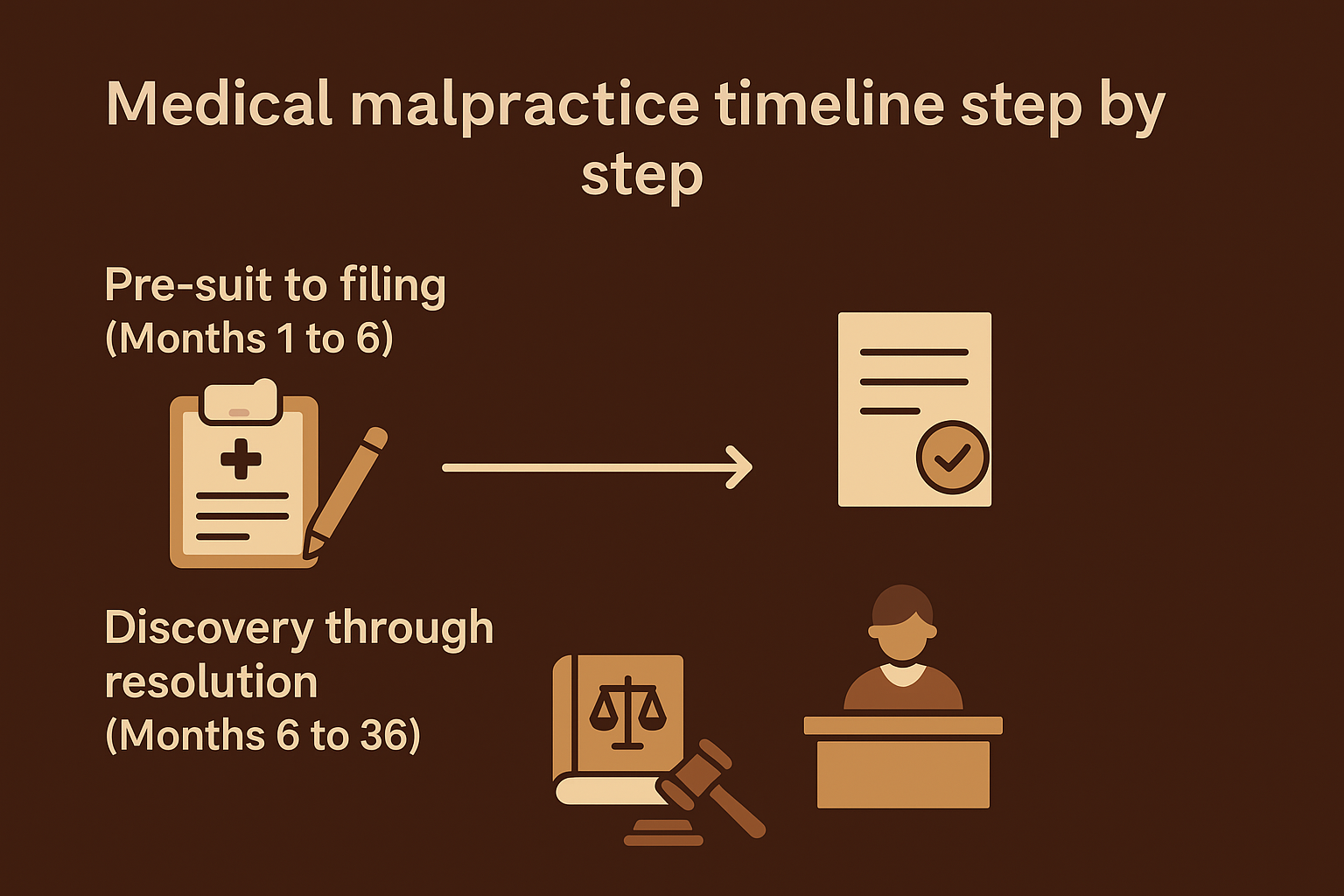
Pre-suit to filing (Months 1 to 6)
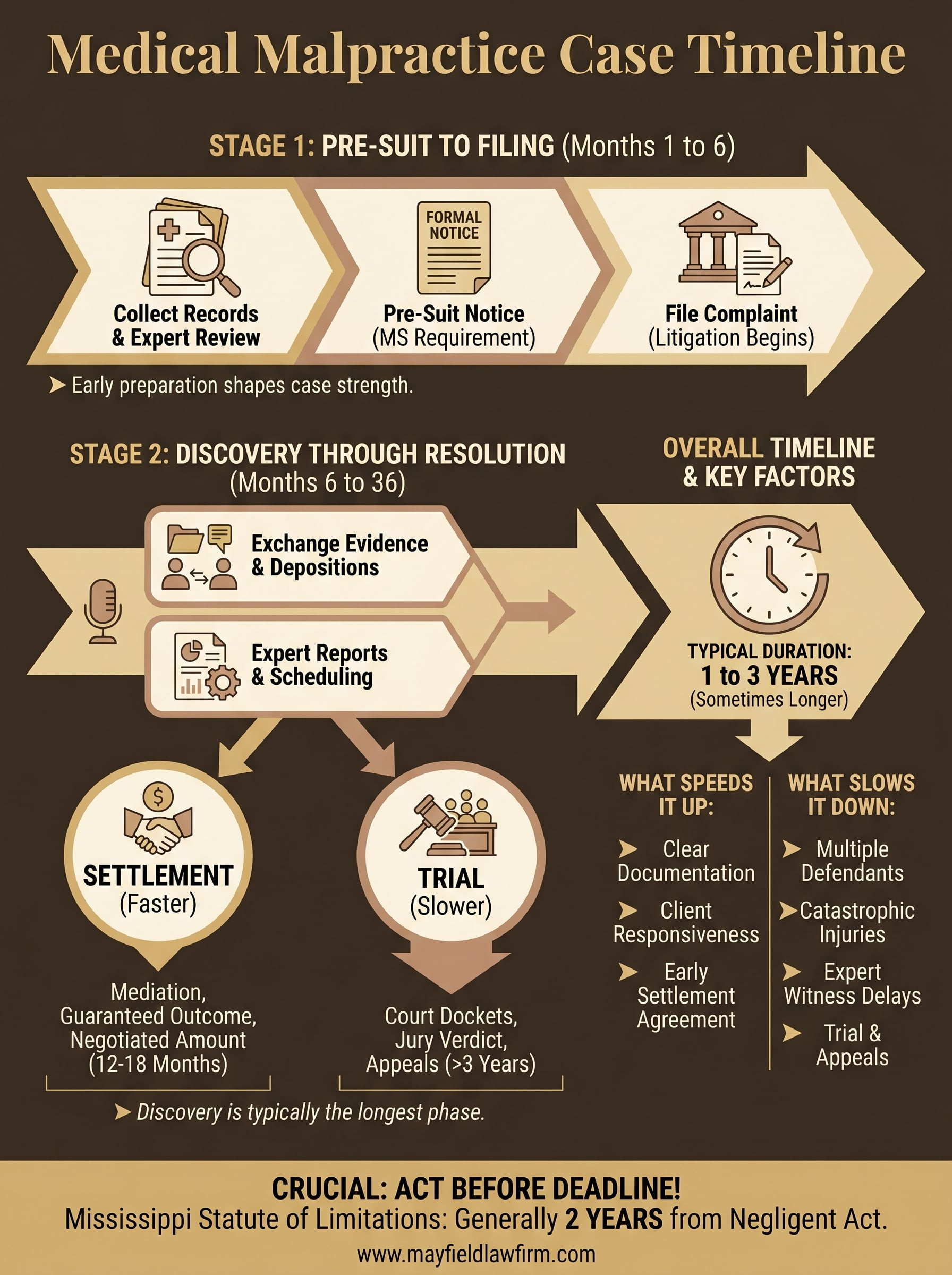
Your attorney starts by collecting all relevant medical records and sending them to a qualified expert for review. That expert must confirm a breach of the standard of care occurred before litigation can move forward. Mississippi also requires formal pre-suit notice to the defendant provider, who then has a set window to respond before your attorney files the complaint.
This early phase shapes the strength of your entire case, so thorough preparation here pays off at every stage that follows.
Once notice requirements are satisfied and the expert review is complete, your attorney files the formal complaint and litigation officially begins. Filing opens the case and starts the clock on all court deadlines.
Discovery through resolution (Months 6 to 36)
Discovery is typically the longest and most demanding phase of a medical malpractice case. Both sides exchange records, take depositions from physicians and expert witnesses, and submit detailed expert reports. Scheduling doctor depositions alone can stretch this phase by several months, even when both sides cooperate.
After discovery closes, both sides enter settlement negotiations, often through formal mediation. If the parties reach an agreement , the case resolves without trial. If not, the case moves to trial, adding more time and extending the overall resolution date significantly.
What factors speed up or slow down a case
When clients ask how long does a medical malpractice case take , the answer often depends on variables specific to their situation. Some of those variables are within your control, but many are not. Knowing what drives delays and what creates momentum helps you work more effectively with your attorney throughout the process.
What slows a case down
Multiple defendants add complexity immediately. When a surgeon, a hospital, and a specialist are all named in the same lawsuit, coordinating discovery across several legal teams multiplies every scheduling challenge. Cases involving catastrophic injuries also move more slowly because both sides spend more time documenting long-term care costs and disputing the total value of damages.
Difficulty finding a qualified expert witness willing to testify is another common source of delay. Medical professionals who can credibly challenge a colleague's standard of care are not always easy to recruit, and their availability affects your timeline directly.
The harder it is to find and schedule expert witnesses, the longer your case will take.
What speeds a case up
Clear documentation of the negligence and your resulting injuries gives your attorney a stronger foundation to negotiate from early. When liability is straightforward and damages are well-supported by records, the defense has less incentive to drag the process out through extended discovery or repeated motions.
Your own responsiveness also matters more than most clients realize. Returning calls promptly, providing requested records quickly, and staying engaged with your legal team keeps your case moving and eliminates unnecessary gaps between each stage.
Settlement vs trial and how timelines differ
Whether your case resolves through settlement or trial is the single biggest variable in understanding how long does a medical malpractice case take. Both paths lead to resolution, but they operate on very different timelines and carry different levels of risk and reward for you as the injured party.

How settlement timelines work
Most medical malpractice cases settle before reaching a courtroom , and that outcome typically produces a faster resolution. Once discovery closes, both sides usually enter formal mediation, where a neutral third party helps negotiate a final agreement. If liability is reasonably clear and your damages are well-documented , settlement talks can move quickly, sometimes wrapping up within 12 to 18 months of filing.
Settlement gives you a guaranteed outcome without the uncertainty of a jury verdict, which is a meaningful advantage when your financial and medical needs are pressing.
The tradeoff is that settlement amounts are negotiated figures , meaning you may receive less than a jury would award if your case is strong. Your attorney can help you weigh that risk against the benefit of resolving the matter sooner.
How trial timelines work
When a defendant refuses to offer a fair settlement , your attorney takes the case to trial. Trials add significant time to the overall process because court dockets fill months in advance, and the trial itself can run several days or weeks depending on the complexity of the evidence. Reaching a jury verdict can push your total timeline to three years or beyond, and any post-trial appeals extend that further.
What to do now if you suspect malpractice
If you believe a doctor, hospital, or medical professional caused you harm, the most important thing you can do right now is act without delay . Medical malpractice cases involve strict filing deadlines called statutes of limitations, and missing that window means losing your right to pursue compensation entirely , regardless of how strong your claim might be.
Act before the deadline
Mississippi law generally gives you two years from the date of the negligent act to file a medical malpractice claim. In some situations, the clock starts from the date you discovered the harm rather than when it occurred, but that exception is narrow and you should not count on it to extend your window. Understanding how long does a medical malpractice case take starts with recognizing that the process cannot even begin until you act.
Waiting to see if your condition improves before consulting an attorney is one of the most common and costly mistakes malpractice victims make.
Steps to take right now
Taking the right steps early protects your claim and gives your attorney the best possible foundation to work from. Start with these concrete actions:
- Request copies of all your medical records from every provider involved in your treatment
- Write down a detailed account of what happened while the events are still fresh in your memory
- Avoid discussing the case on social media or with anyone outside your legal team
- Contact an experienced malpractice attorney as soon as possible for a free case evaluation
Each of these steps costs you nothing but can significantly strengthen your position before litigation begins.
Next steps
Understanding how long does a medical malpractice case take gives you a realistic foundation to make smart decisions about your claim. Most cases resolve in one to three years , depending on complexity, the number of defendants, and whether the case settles or goes to trial. The earlier you take action, the more control you have over that timeline.
Your next move is straightforward: talk to an attorney before the statute of limitations closes your window . Every day you wait narrows your options, and the pre-suit preparation process in Mississippi takes time to complete properly. Gathering records, securing expert review, and meeting notice requirements all happen before a complaint is ever filed.
Mayfield Law Firm, P.A. has over 40 years of experience representing injury victims across Northeast Mississippi and South Memphis, including those harmed by medical negligence. Contact us today for a free consultation and let us evaluate your case at no cost to you. Reach out to Mayfield Law Firm, P.A.