How to Sue a Debt Collector for Harassment Under the FDCPA
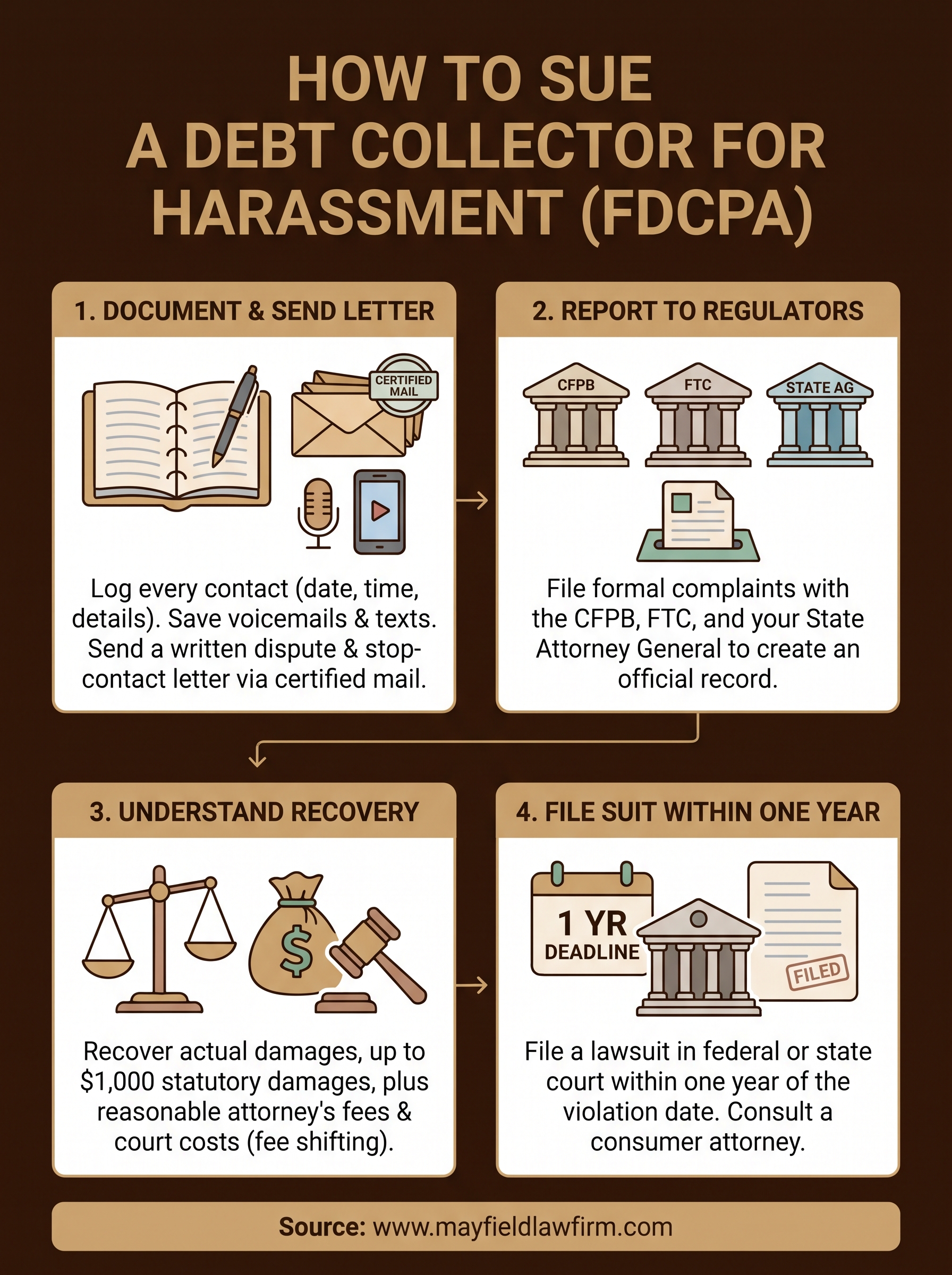
Yes, you can sue a debt collector for harassment when the collector breaks the federal Fair Debt Collection Practices Act (FDCPA). The process takes four steps: document every contact, send a written dispute and stop-contact letter, report the collector to regulators, and file suit within one year of the violation. If you win, the collector pays your actual damages, up to $1,000 in statutory damages, and your reasonable attorney's fees and court costs.
The hard part is knowing where the law draws the line. Collectors may call, write and ask for payment. They may not threaten you, lie about what you owe, call at dawn, or call over and over to wear you down. Most people cannot tell which side of the line their collector is on. So they either put up with it or pay a debt they may not even owe.
This guide covers what counts as illegal harassment, how to build your evidence, where to report, what you can recover, and how to file. Mayfield Law Firm, P.A. represents consumer debtors in Chapter 7 and Chapter 13 bankruptcy in Mississippi and Tennessee, so we also cover what to do when the debt itself is the bigger problem. This is general information, not legal advice for your case.
What counts as illegal debt collector harassment
Harassment under the FDCPA means conduct that breaks a specific rule, not conduct that merely annoys you. The law bans behavior meant to harass, oppress or abuse you, plus lying and unfair collection tactics. Knowing the rules decides whether you have a claim at all.
Who the law covers
The FDCPA applies to third-party collectors , such as collection agencies and, in many cases, debt buyers and collection law firms. It covers consumer debts like credit cards, medical bills and auto loans. It generally does not cover an original creditor collecting its own account, and it does not cover business debts. You are protected whether or not you actually owe the money. The law applies in every state, including Mississippi and Tennessee.
Some states add their own collection rules or recognize claims such as invasion of privacy, so ask an attorney what else applies where you live. Also be wary of a caller who will not name a creditor or refuses to send anything in writing. That may be a scammer, not a collector. Report it to the FTC and do not pay.
Conduct that crosses the line
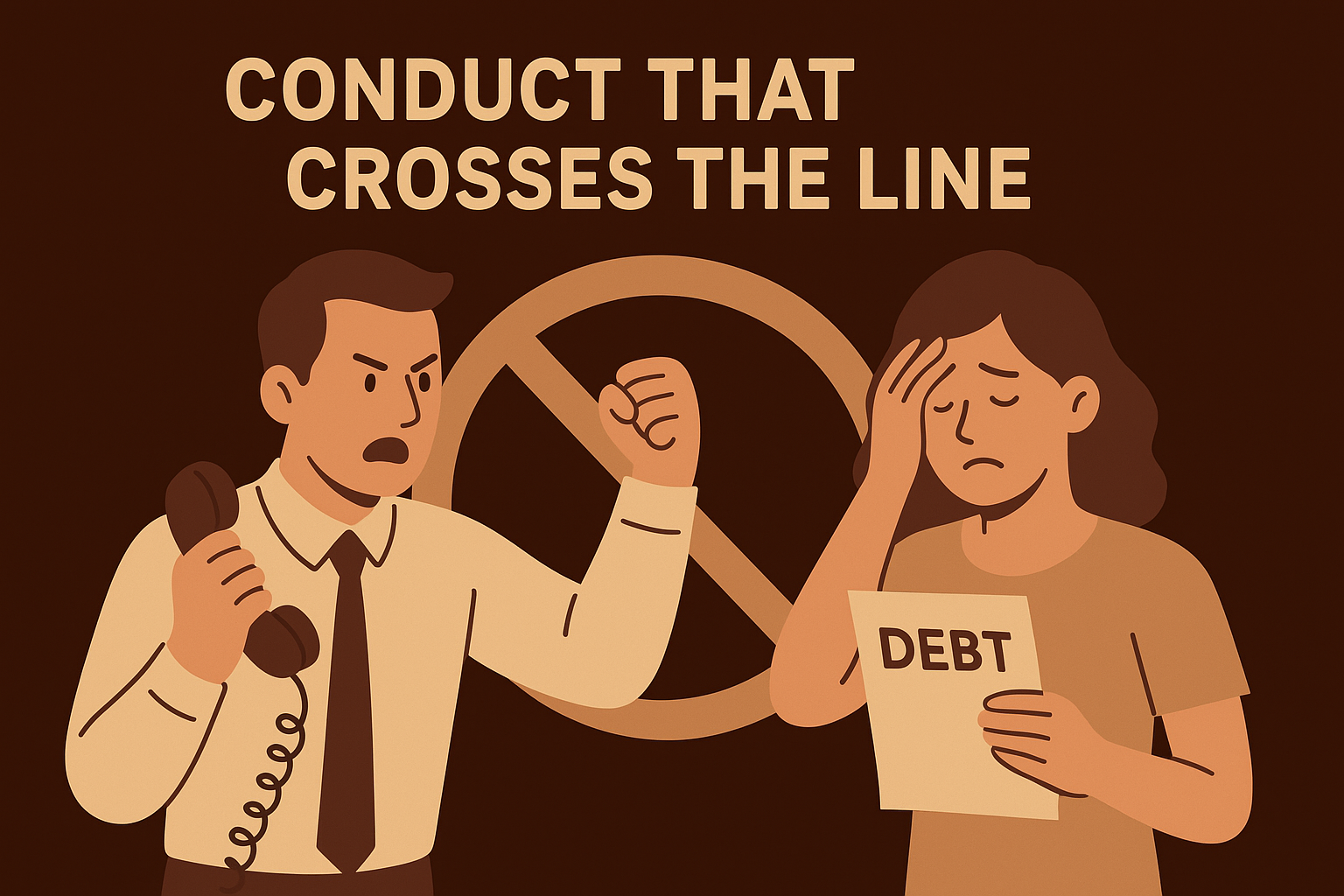
These are the behaviors that most often support a claim:
| Conduct | What it looks like | Source |
|---|---|---|
| Threats and abuse | Threatening harm, swearing, publishing your name as a debtor | FDCPA § 1692d |
| Excessive calls | More than 7 calls in 7 days about one debt, or a call within 7 days after you spoke | Regulation F |
| Bad timing | Calls before 8 a.m. or after 9 p.m. your time | FDCPA § 1692c |
| Contact after you object | Calls after your written stop request, or calls to your workplace after you said your employer disapproves | FDCPA § 1692c |
| Telling others | Revealing your debt to relatives, neighbors or coworkers | FDCPA § 1692c |
| False statements | Threatening arrest, a lawsuit or garnishment it will not or cannot carry out, or posing as a lawyer | FDCPA § 1692e |
| Unfair charges | Adding fees the contract or law does not allow | FDCPA § 1692f |
The question is not whether the collector annoyed you, but whether it broke a specific rule.
Step 1. Document every contact and send a letter
Start a written log today and mail a dispute and stop-contact letter. Evidence decides whether a lawyer will take your case, and the letter creates a clear line after which further contact is easier to prove illegal.
Build the evidence file
Before you sue a debt collector for harassment, you need proof that survives a denial. Collect these items:
- A log of each call: date, time, number, caller's name and what was said.
- Saved voicemails, texts and emails, plus screenshots of your phone's call history.
- Every letter, with the envelope, since the postmark shows when it was sent.
- Notes on what the contact cost you, such as missed work or medical visits. These support your actual damages.
Recording laws differ by state, so check the rules before you record a live call. Saving voicemails is always safe.
Send a validation and stop-contact letter
Within 30 days of the collector's first written notice, you can dispute the debt in writing , and the collector must pause collection until it mails verification. You can also demand in writing that it stop contacting you . After that it may only confirm it is stopping or tell you about a specific action, such as a lawsuit. This does not erase the debt, and the creditor can still sue you for it. Send the letter by certified mail with a return receipt.
 [Your name]
[Your address]
[Date]

[Collector's name and address]

Re: Account number [number]

I dispute this debt in writing under 15 U.S.C. § 1692g. Please send
verification, including the original creditor's name, the amount
claimed, and proof that you are authorized to collect it.

Under 15 U.S.C. § 1692c(c), I demand that you stop contacting me
about this debt, including at my workplace and by phone.

I am keeping records of all contacts, including those on [dates].

Sincerely,
[Your name]
Write down every call the day it happens, because a log made in the moment beats memory in court.
Step 2. Report the collector to regulators
Report the collector to the CFPB, the FTC and your state attorney general. It costs nothing, and it builds an official record that supports your lawsuit.
Where to file
You can file a CFPB complaint, which the agency sends to the company. You can also report at ReportFraud.ftc.gov. Your state attorney general's consumer protection office takes complaints too. Attach your log and letters, and file the same facts with each agency so your story stays consistent.
What a report can and cannot do
A complaint may stop the behavior , and it can show a pattern if other consumers complain too. But agencies do not represent you or pay you. Only a lawsuit gets you money. Your one-year deadline keeps running while a complaint is pending.
A complaint can pressure a collector, but only a lawsuit can pay you.
Step 3. Work out what you can recover
If you prove a violation, 15 U.S.C. § 1692k lets you recover actual damages, up to $1,000 in statutory damages, and attorney's fees and costs. Knowing the numbers up front tells you whether the case is worth filing.
What the law pays
| Type | Amount | Notes |
|---|---|---|
| Actual damages | Your documented losses | Out-of-pocket costs, lost wages and, in many courts, emotional distress |
| Statutory damages | Up to $1,000 | Per lawsuit, not per violation |
| Attorney's fees and costs | Set by the court | Paid by the collector if you win |
| Class action | Lesser of $500,000 or 1% of the collector's net worth | Applies to the group, not to each member |
| Robocall claim | $500 per call, up to $1,500 if willful | Telephone Consumer Protection Act, for autodialed or prerecorded calls without consent |
A worked example
Say a collector calls you 11 times in 6 days, several times at 6:30 a.m., and threatens arrest. You lose $300 in wages and copays dealing with it. A court could award $300 in actual damages plus $1,000 in statutory damages, or $1,300 , plus your attorney's fees. Expect modest sums. Fee shifting is what makes these cases practical, because the lawyer's bill lands on the collector. A collector can defend by showing the violation was an unintentional mistake despite reasonable safeguards.
The $1,000 cap is per lawsuit, so the real leverage is the collector paying your legal fees.
Step 4. File your claim before the deadline
File within one year of the violation, in federal court or a state court that can hear the case. Then work with a consumer attorney if you can. You have only a year, and the clock starts when each violation happens.
Choose where and how to file
Most claims follow the same path:
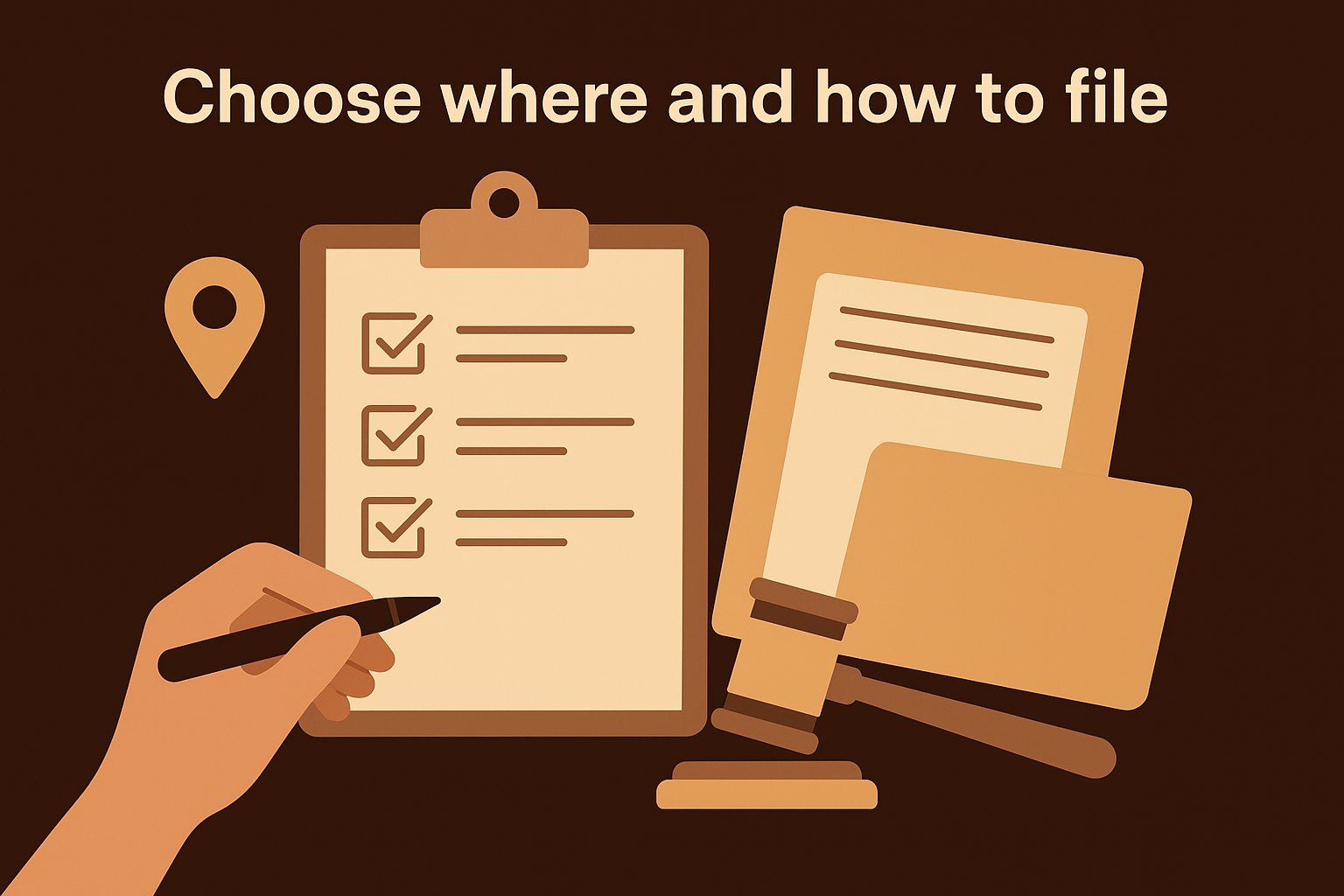
- Gather your log, letters, voicemails and complaint confirmations.
- Have an attorney send a demand letter, which sometimes settles the case.
- File the complaint and pay the filing fee, or ask the court about a fee waiver.
- Serve the collector with the papers.
- Respond to its answer, then negotiate or go to trial.
Some people use small claims court, but limits vary by state and you may give up fee recovery. Ask a lawyer whether they handle FDCPA claims and how they are paid. Because of fee shifting, many consumer attorneys review these cases at little or no upfront cost.
Know when bankruptcy is the better fix
If calls keep coming because you cannot pay, a lawsuit will not remove the debt. Filing bankruptcy triggers the automatic stay under 11 U.S.C. § 362, which stops most collection activity right away. Chapter 7 can discharge many unsecured debts in a few months. Chapter 13 sets up a repayment plan, usually over three to five years. Attorney fees depend on your income and the facts of your case.
File while the evidence is fresh, because the one-year clock starts at the violation, not when you get fed up.
Where to go from here
You can sue a debt collector for harassment when it threatens you, lies, calls at bad hours, calls too often, or ignores your written request to stop. The steps are the same everywhere: keep a log, send a dispute and stop-contact letter, report to regulators, and file within one year. Recovery is modest, but the collector pays your fees if you win.
If the real problem is debt you cannot pay, a lawsuit will not fix it. Schedule a free consultation with Mayfield Law Firm, P.A. to see whether Chapter 7 or Chapter 13 bankruptcy could stop the calls and resolve the debt.