Debt Collection Harassment Laws: What Protects You from Abuse
If a debt collector is calling you five times a day, threatening jail time, or cussing you out on the phone, you're not powerless. Debt collection harassment laws exist specifically to stop this kind of behavior, and most collectors who cross the line are counting on you not knowing your rights.
The main protection comes from the Fair Debt Collection Practices Act (FDCPA) , a federal law that spells out exactly what collectors can and can't do when they're trying to recover a debt. It bans repeated harassing calls, threats, lies about what you owe, and contact with your employer or family about your debt. Mississippi and Tennessee also have state-level rules that add extra layers of protection for local consumers.
In this article, we'll walk through what counts as illegal collector conduct, how the FDCPA works in practice, and what steps you can take if a collector has already crossed the line. If harassment is tied to debt you genuinely can't pay off, we'll also touch on how bankruptcy can shut down collection calls for good.
Why these laws matter for your financial peace of mind
Debt doesn't just hurt your bank account. It follows you into your sleep, your relationships, and your job performance when collectors call before sunrise or ambush you at work. Debt collection harassment laws exist because lawmakers recognized that unpaid bills shouldn't give anyone the right to terrorize you into paying. Congress passed the FDCPA in 1977 after seeing widespread abuse, and the Consumer Financial Protection Bureau now enforces it alongside the Federal Trade Commission.
The toll of unchecked collection tactics
When collectors ignore the rules, the damage compounds fast. You might start dodging calls from unknown numbers, even ones from your kid's school. Chronic stress from harassment has been linked to high blood pressure, anxiety, and strained marriages. Knowing the law is on your side changes the equation entirely.
You don't have to accept threats, lies, or nonstop calls just because you owe money.
What legal protection actually gives you
Understanding your rights turns you from a target into someone collectors have to treat carefully. Once you know the rules, you can spot violations immediately instead of wondering if what's happening to you is normal. That knowledge lets you:
- Document calls and demand written validation of the debt
- Refuse to discuss the debt with anyone except your attorney once you request it
- Report violators to state and federal regulators
- Pursue damages when a collector breaks the law
Southaven and Memphis-area residents deal with the same predatory tactics seen nationwide, sometimes from local debt buyers who assume out-of-state consumers won't push back. Financial peace of mind starts with recognizing that the law already protects you, whether or not you've hired a lawyer yet.
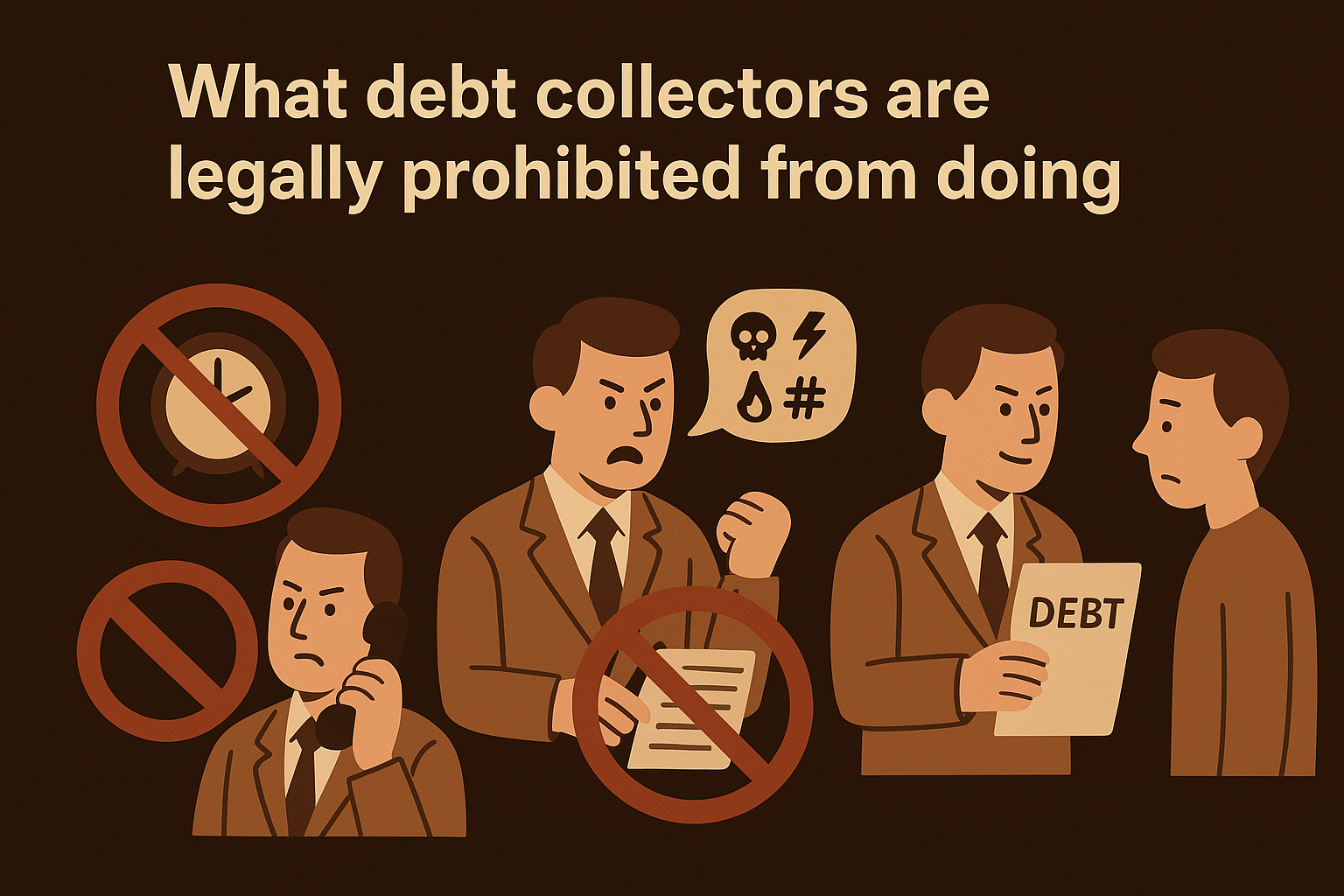
What debt collectors are legally prohibited from doing
The FDCPA draws clear lines around what collectors can say and do, and violations happen more often than most people realize. Prohibited conduct falls into a few obvious categories: harassment, deception, and unfair practices. Once you can name what's happening, you can shut it down.
Calls, threats, and contact rules
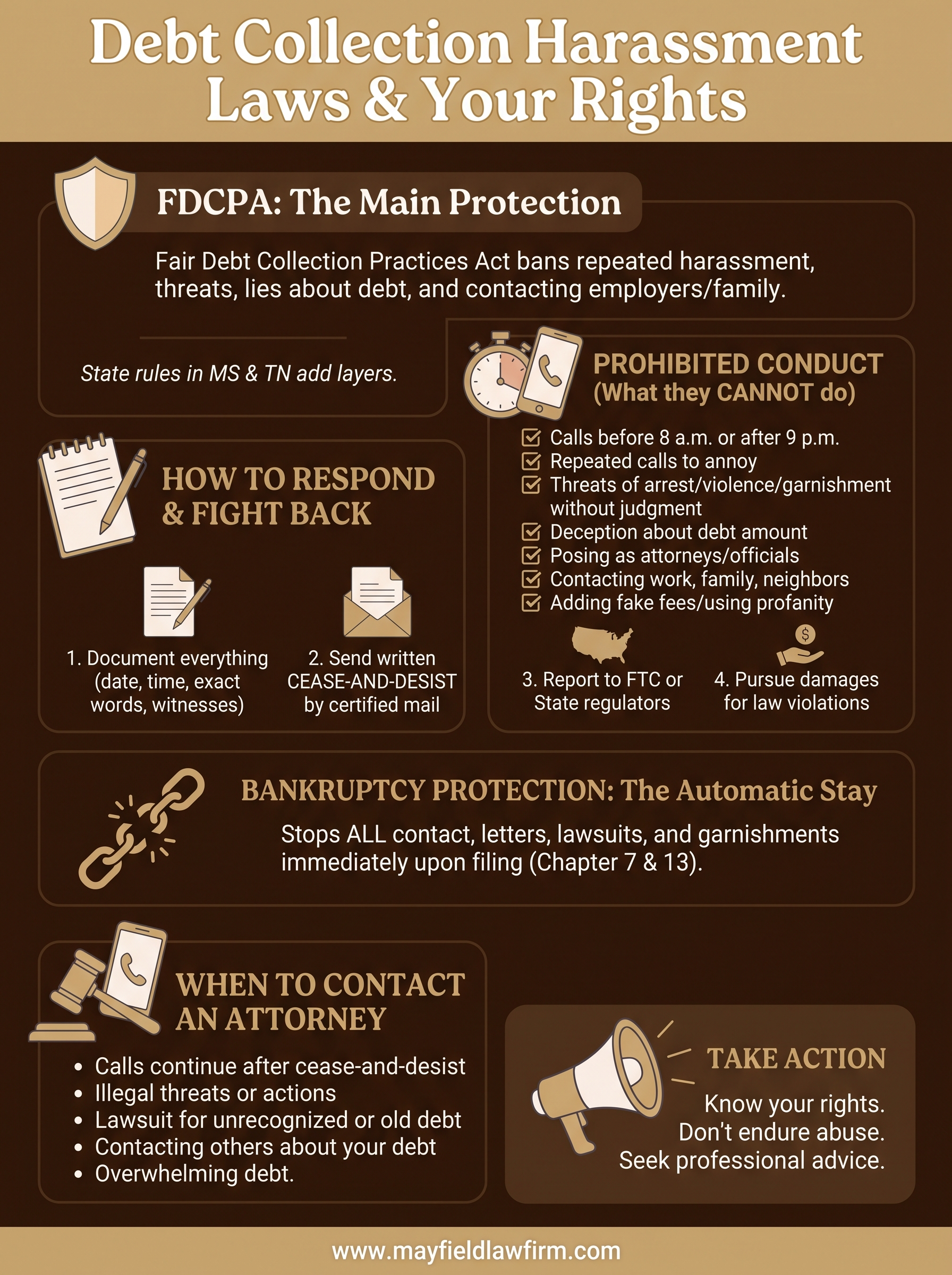
Collectors can't call before 8 a.m. or after 9 p.m., and they can't call repeatedly with intent to annoy you. They also can't threaten arrest, violence, or actions they have no legal right to take, like garnishing wages without a court judgment.
If a collector threatens jail time over an unpaid credit card, that's a straight-up violation of federal law.
Deception and unfair tactics
Deceptive tactics are just as common. Collectors sometimes misrepresent the amount you owe, pose as attorneys or government officials, or claim they'll sue when they have no such plan. Here's a quick rundown of banned behavior:
- Calling your workplace after you've asked them to stop
- Discussing your debt with neighbors, family, or coworkers
- Adding fake fees not authorized by your original contract
- Using profanity or repeated insults during calls
Any of these should raise a red flag and prompt you to start documenting everything.
How to respond when a debt collector crosses the line
Once you spot a violation, your reaction in the first few minutes matters more than you'd think. Start writing down the date, time, and exact words used on every call, because that record becomes evidence if you decide to file a complaint or lawsuit under debt collection harassment laws .
Document everything before you fight back
Grab a notebook or open a notes app and track each contact attempt. Include:
- Caller's name, company, and phone number
- Date and time of the call or letter
- What was said, especially threats or false claims
- Any witnesses present during in-person contact
A paper trail turns your word against theirs into hard proof that holds up.
Send a written request and know your options
Send a written cease-and-desist letter by certified mail demanding the collector stop contacting you directly. Under the FDCPA, they must comply except to confirm receipt or notify you of legal action. Reporting the violation to the Federal Trade Commission or your state attorney general adds pressure, and you may also have grounds to sue for damages.
How bankruptcy can stop creditor harassment for good
Sometimes the debt itself is the real problem, not just the collector's tactics. Filing for bankruptcy triggers an automatic stay , a court order that legally forces every creditor and collector to stop contacting you the moment your case is filed. Phone calls, letters, lawsuits, and wage garnishments all have to halt immediately, no exceptions for aggressive collectors who claim they didn't get the notice.
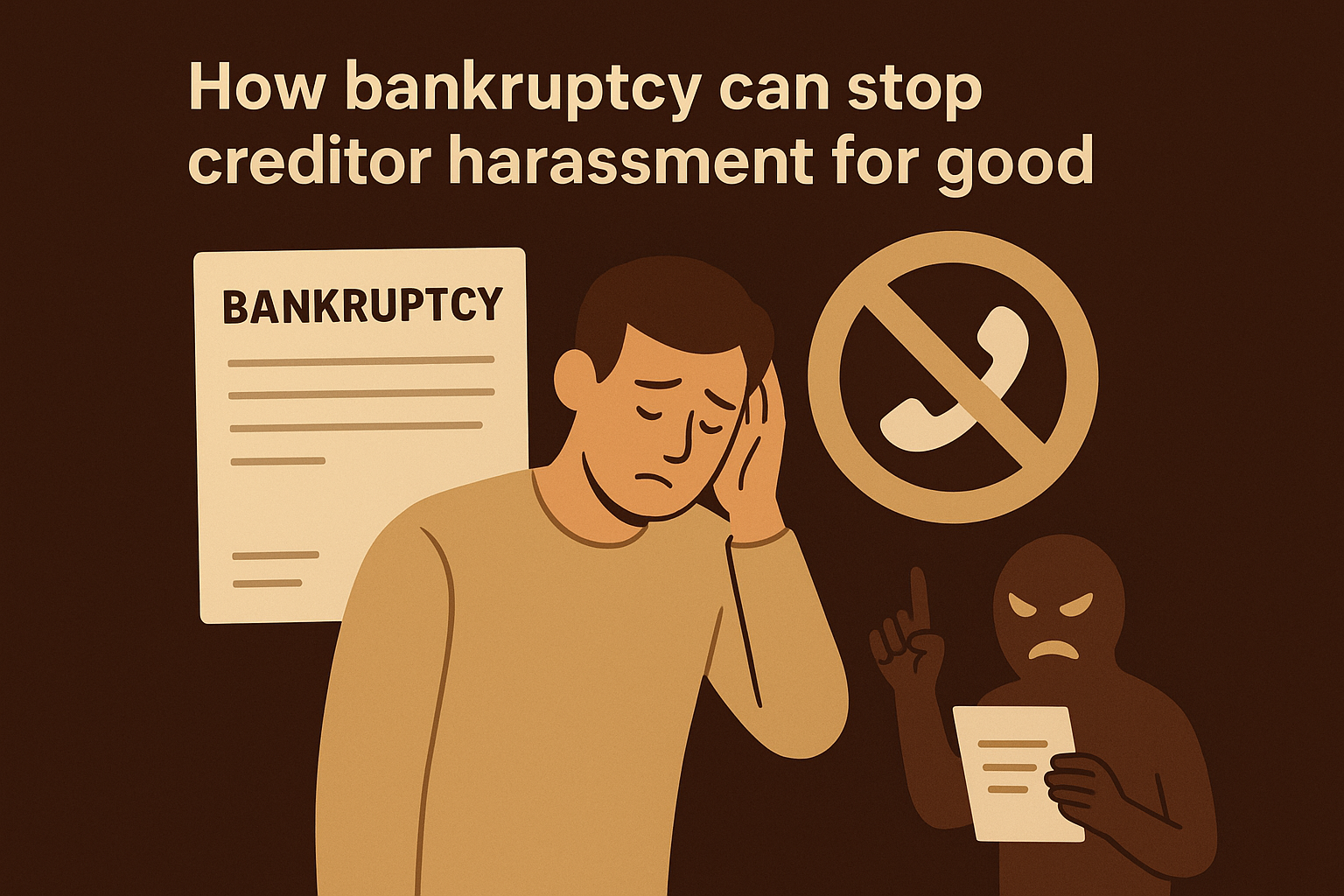
The automatic stay doesn't ask collectors nicely to stop. It legally requires them to.
Chapter 7 versus Chapter 13 protection
Both Chapter 7 and Chapter 13 bankruptcy trigger this same stay, though the paths differ afterward. Chapter 7 typically discharges qualifying unsecured debt within a few months, wiping out the collectors' authority to pursue you entirely. Chapter 13 sets up a repayment plan over three to five years, but the stay still shields you from harassment while you pay under court supervision.
What happens if a creditor ignores the stay
Collectors who keep calling after your filing aren't just breaking FDCPA rules anymore. They're violating a federal court order, and judges can penalize them with fines or sanctions for continued contact.
When to contact a Mississippi or Tennessee attorney
Some situations call for more than a cease-and-desist letter. If a collector keeps calling after you've told them to stop, sued you over a debt that's past the statute of limitations, or threatened you with actions they can't legally take, it's time to bring in a lawyer. Local attorneys who handle debt collection harassment laws know the specific patterns used by collection agencies operating in Southaven, Memphis, and the surrounding region, and they can spot violations you might miss.
Waiting too long to call an attorney can mean losing the window to sue over an FDCPA violation.
Signs it's time to pick up the phone
Don't wait until the harassment becomes unbearable. Reach out when you notice:
- Repeated calls after a written cease-and-desist request
- Threats of arrest, lawsuits, or wage garnishment without a judgment
- A lawsuit filed against you for a debt you don't recognize
- Collectors contacting your employer, family, or neighbors
- Overwhelming debt that harassment alone won't fix
Mayfield Law Firm handles these cases across Northeast Mississippi and South Memphis, and a free consultation costs you nothing while you figure out whether bankruptcy, an FDCPA lawsuit, or both make sense for your situation.
Taking the next step toward relief
Debt collection harassment laws give you real leverage, whether that means firing off a cease-and-desist letter, filing an FDCPA complaint, or filing bankruptcy to trigger an automatic stay. The point isn't to memorize every statute. It's to recognize when a collector has crossed a line and act on it instead of just enduring the calls.
You don't have to figure this out alone. If collectors are calling nonstop, threatening you with actions they can't legally take, or you're drowning in debt that harassment alone won't solve, get a professional opinion before the situation gets worse. A short conversation can tell you whether you have grounds for a lawsuit, whether bankruptcy makes sense, or both.
Mayfield Law Firm has spent decades helping people across Northeast Mississippi and South Memphis push back against abusive collectors. Reach out through Mayfield Law Firm, P.A. and schedule your free consultation today.