How Does Debt Relief Work? Steps, Options, And What To Know
Falling behind on bills creates a kind of pressure that follows you everywhere, into work, into sleep, into every conversation about money. If you've started searching how does debt relief work , you're likely at a point where minimum payments aren't cutting it and you need a real path forward. You're not alone. Millions of Americans carry debt loads that feel unmanageable, and understanding your options is the first step toward regaining control.
Debt relief isn't a single solution, it's a category that includes everything from negotiation and consolidation to formal legal proceedings like bankruptcy. Each option works differently, carries different risks, and fits different financial situations. Choosing the wrong approach can cost you time, money, and further damage to your credit. Choosing the right one can mean a genuine fresh start.
At Mayfield Law Firm, P.A., we help clients across Northeast Mississippi and South Memphis navigate Chapter 7 and Chapter 13 bankruptcy filings when debt becomes overwhelming. With over 40 years of legal experience, we've walked thousands of people through some of the hardest financial decisions they've ever faced. This article breaks down how debt relief programs actually function , the steps involved, and what you should know before committing to any path, so you can make an informed decision about what makes sense for your situation.
Why debt relief matters when you feel stuck
When debt reaches a point where making the minimum payment feels like losing ground, the problem isn't just financial. Missed payments and constant collection calls affect your mental health, your relationships, and your ability to make clear decisions about what to do next. Understanding how debt relief options actually work can give you something more valuable than a quick fix: a realistic picture of your choices before you commit to anything that could make your situation worse.
The real cost of carrying debt you can't pay down
Most people who carry overwhelming debt aren't irresponsible. Medical bills, job loss, divorce, and sudden expenses are the most common reasons people fall behind. Credit card interest rates often sit between 20% and 30%, which means a $10,000 balance that you only pay minimums on could take more than a decade to eliminate and cost you more in interest than the original amount you charged.
Late fees and penalty interest rates pile on top of your existing balance every month you miss a due date. Your credit score drops, which makes any future borrowing more expensive. If accounts go to collections, you may face lawsuits, wage garnishment, or liens on your property depending on your state's laws. The longer debt goes unaddressed, the fewer options remain, and the harder each option becomes to execute.
How the debt cycle keeps people trapped
The cycle works like this: you fall behind on one bill, so you use other credit to cover it, which increases your total balance, which raises your minimum payments, which makes it harder to pay anything else on time. Each missed payment triggers a fee , and that fee gets added to a balance already accruing interest. Before long, a problem that started at a few thousand dollars has grown well beyond what any single paycheck can address.
When you're inside the debt cycle, it rarely resolves itself without a deliberate change in strategy.
Creditors and debt collectors are not on your side when you're falling behind. Their goal is recovery of as much money as possible, as quickly as possible. Some will accept a negotiated settlement, but others will move straight to legal action. Knowing where you stand legally, not just financially, makes a real difference in which option you pursue.
What debt relief actually means for your daily life
People often search how does debt relief work expecting a simple answer, but the term covers a wide range of strategies, each with its own requirements, timelines, and trade-offs. Some options require you to stop paying creditors entirely before negotiation can begin, which accelerates credit damage. Others involve entering a formal repayment agreement that takes three to five years to complete. There is no version that is painless, but some are far better suited to your specific situation than others.
The practical impact on your life depends on which path you choose. A debt management plan through a nonprofit credit counseling agency means making structured monthly payments for years. A settlement program means saving money in an account while your balances grow and your credit takes hits. Bankruptcy means a legal process with court filings, hearings, and a formal discharge. Each one changes what your financial picture looks like, not just today but for years down the road. The goal of this article is to help you understand those differences clearly before you make any decisions.
How debt relief works step by step
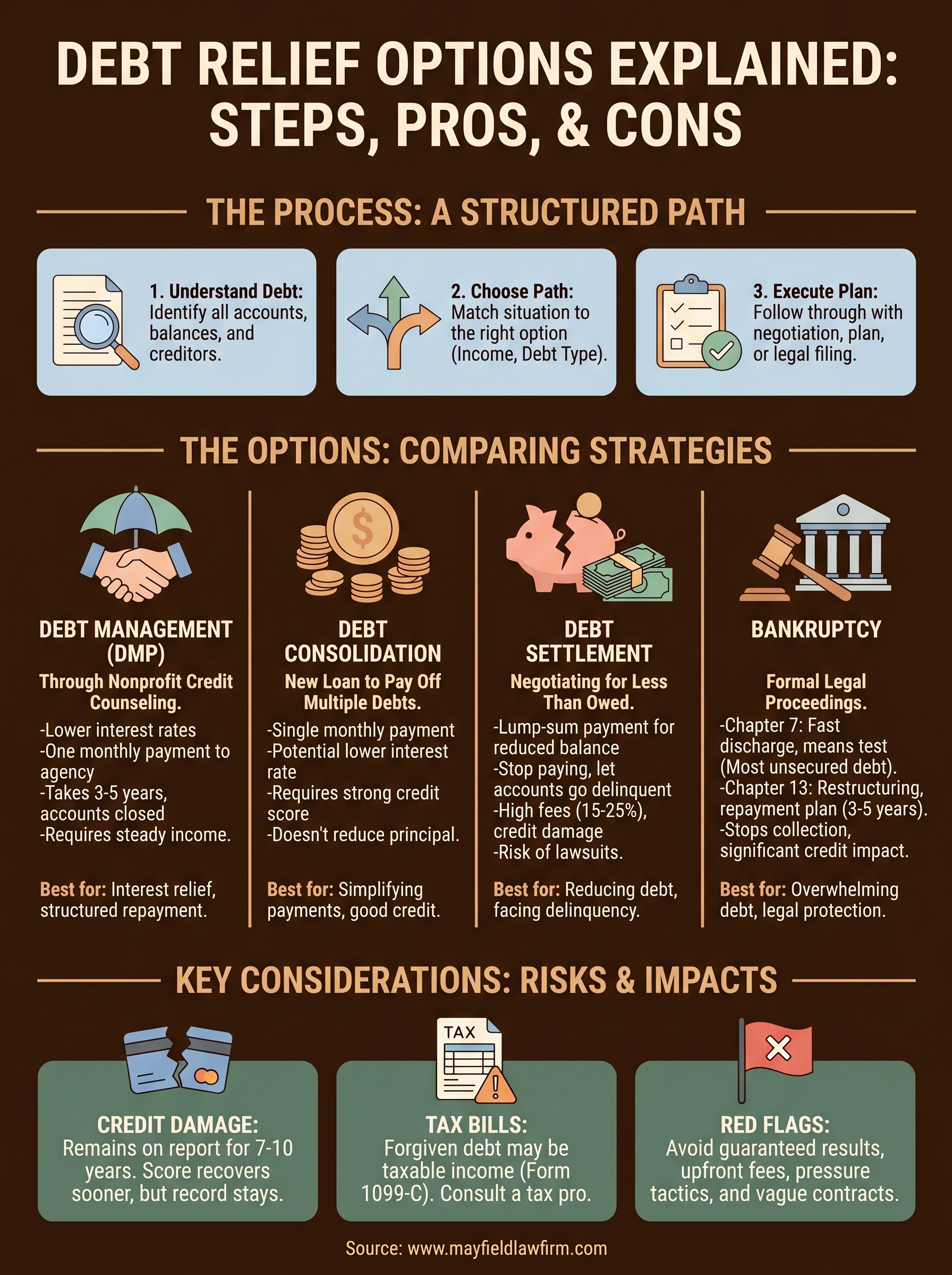
Most people searching how does debt relief work picture a single phone call that ends with their debt disappearing. The actual process is more structured than that. Every legitimate form of debt relief follows a similar sequence: you identify what you owe and to whom, you select an approach that fits your income and debt type, and then you execute that approach through negotiation, a formal plan, or a legal filing.
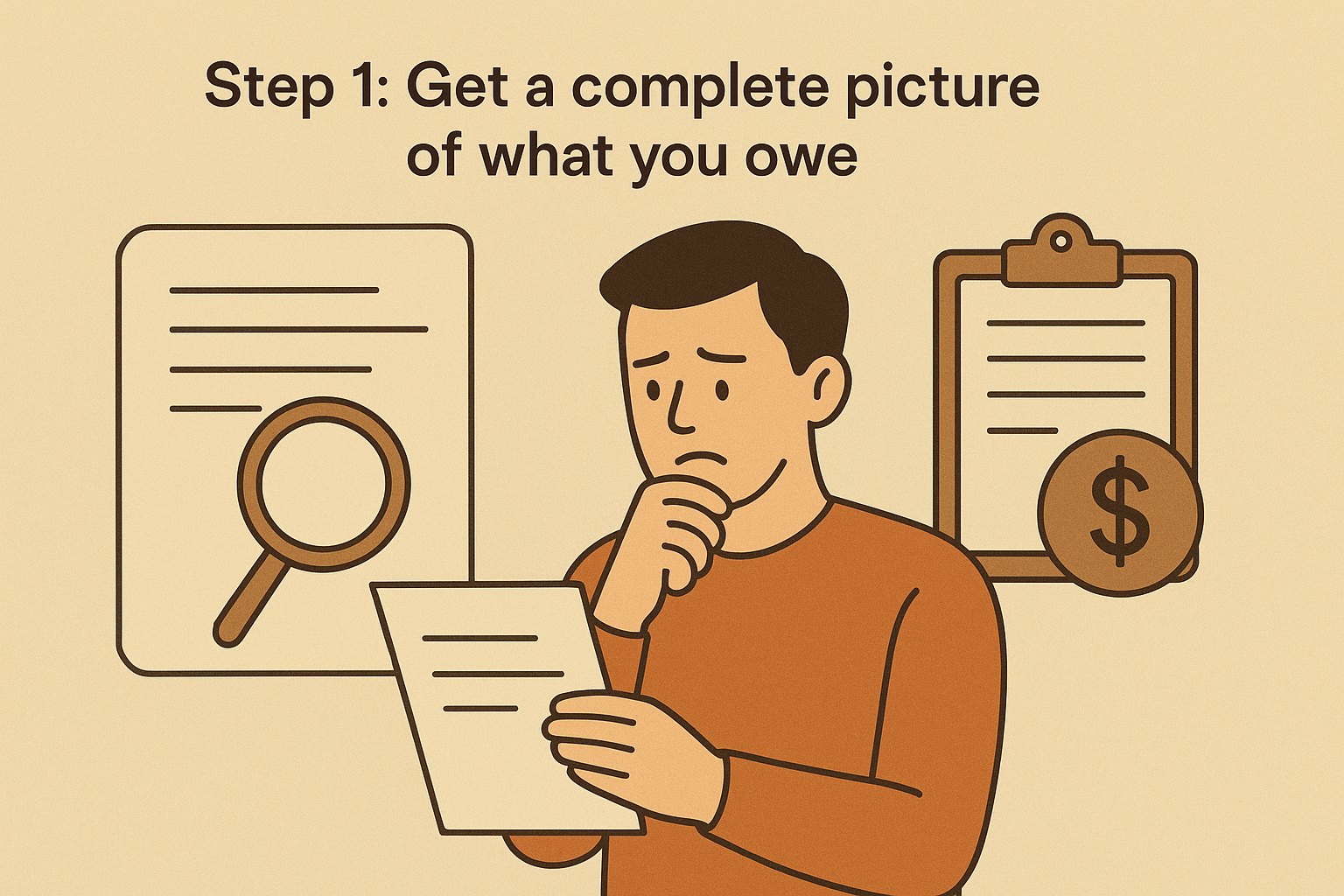
Step 1: Get a complete picture of what you owe
Before any debt relief program can begin, you need a clear accounting of every account, balance, interest rate, and creditor involved. Pull your credit reports from all three bureaus at AnnualCreditReport.com to confirm the full scope of your debt. This inventory shapes every decision that follows , including which debts can be settled, which are already past the statute of limitations, and which require immediate attention to avoid lawsuits.
When reviewing your accounts, note the following for each debt:
- Whether the account is current, delinquent, or in collections
- The creditor's name and the current balance including fees
- Whether the debt is secured (tied to property) or unsecured
Knowing exactly what you owe before you contact any creditor or enroll in any program puts you in a far stronger position than going in blind.
Step 2: Match your situation to the right option
Once you know the full scope of your debt, you compare that picture against the main available options. Your income, the types of debt you carry, and how far behind you are all determine which paths are actually open to you. Unsecured debt like credit cards and medical bills can typically be settled or discharged in bankruptcy, while secured debt like mortgages and car loans follows different rules that not every debt relief strategy covers.
A bankruptcy attorney or nonprofit credit counselor can help you match your specific numbers to the right approach before you commit to anything.
Step 3: Execute the plan and follow through
This is where the actual work happens. Depending on the option you choose , you may stop making payments to creditors and start saving money for a lump-sum settlement, enroll in a structured repayment plan, or file a formal bankruptcy petition with a federal court. Each path carries required steps, deadlines, and legal obligations that you must meet to complete the process successfully. Missing a step can reset your progress or expose you to new legal risk.
Debt settlement vs consolidation vs management plans
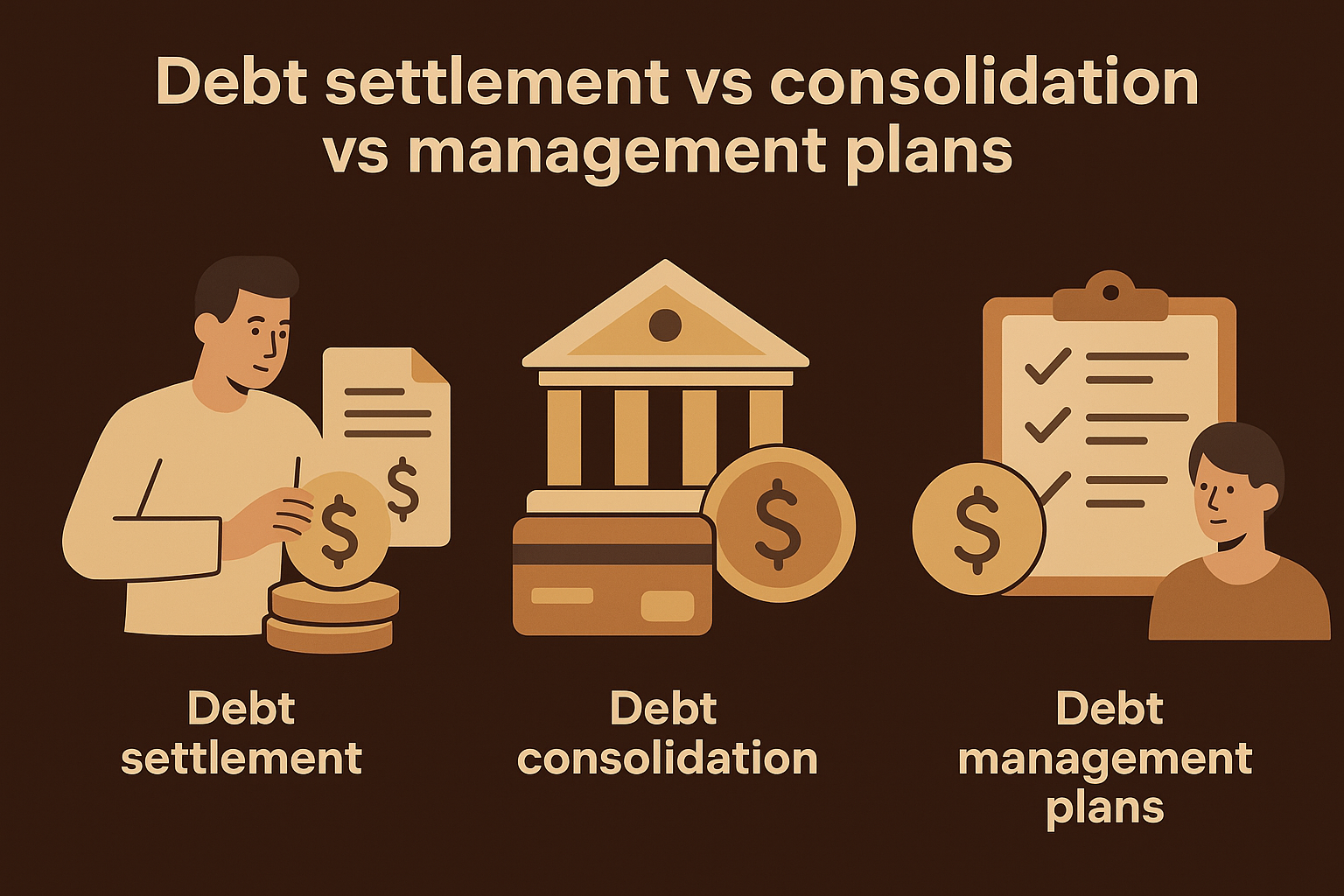
When people ask how does debt relief work , they're usually confused about which specific program they're looking at. Debt settlement, debt consolidation, and debt management plans are three distinct strategies that get grouped under the same umbrella, but they function very differently and carry different consequences for your credit, your wallet, and your timeline. Understanding the difference helps you avoid signing up for something that doesn't actually fit your situation.
Debt settlement: negotiating for less than you owe
Debt settlement means convincing a creditor to accept a lump-sum payment that's less than your full balance in exchange for considering the account resolved. Most creditors won't negotiate until an account is significantly delinquent, which means most settlement programs require you to stop paying your accounts and let them fall behind while you build up a savings fund to make an offer.
This approach can reduce what you owe, but the damage to your credit during the process is real and lasts for years after settlement is complete.
Settlement companies often charge fees ranging from 15% to 25% of the enrolled debt , and there's no guarantee creditors will accept an offer. Some will sue you before any settlement is reached. If you pursue this route, understanding the legal exposure in your state matters as much as understanding the financial terms.
Debt consolidation: combining balances into one payment
Debt consolidation involves taking out a new loan to pay off multiple existing debts , leaving you with a single monthly payment, ideally at a lower interest rate. This approach works best when you have a strong enough credit score to qualify for a consolidation loan with a rate lower than your current balances , which is often not the case for people who are already behind.
Consolidation does not reduce what you owe. It reorganizes it. If you run up balances again after consolidating, you end up in a worse position than before.
Debt management plans: structured repayment with help
A debt management plan (DMP) is set up through a nonprofit credit counseling agency and involves the agency negotiating reduced interest rates with your creditors on your behalf. You make one monthly payment to the agency, and they distribute it to your creditors. These plans typically run three to five years and require you to close the enrolled credit accounts.
DMPs work well for people with steady income who can commit to a fixed monthly payment but need interest rate relief to actually make progress on the principal.
Costs, credit damage, and tax issues to expect
Before you commit to any program, you need an honest look at the full price of debt relief , not just the dollar amount you might save on your balances. When people research how does debt relief work, the costs that follow them after the process ends often come as a surprise. Fees, credit score damage, and potential tax liability are all real consequences that affect your financial life for years after any program concludes.
What debt relief programs actually cost you
For-profit debt settlement companies typically charge between 15% and 25% of your total enrolled debt as their fee, collected after each account settles. On a $30,000 debt load, that means paying $4,500 to $7,500 in fees on top of whatever you pay the creditors. Nonprofit credit counseling agencies that offer debt management plans charge far less , usually a monthly administration fee under $50, but those plans require steady, on-time payments for three to five years. Neither option is free, and you should factor total program cost into any comparison before you choose a direction.
Getting a complete fee breakdown in writing before you sign anything is non-negotiable.
How long the credit damage lasts
Any form of debt relief leaves a mark on your credit report, and the severity depends on which path you take . Settled accounts show as "settled for less than full amount," which signals to future lenders that you did not pay the original obligation in full. That notation stays on your credit report for seven years from the date of first delinquency. Bankruptcy remains on your report for seven years in the case of Chapter 13 or ten years for Chapter 7. Your score can begin recovering well before those marks disappear, but the record itself does not vanish quickly.
The tax bill you might not see coming
The IRS generally treats forgiven debt as taxable income . If a creditor settles your $15,000 balance for $6,000, you may owe income tax on the $9,000 difference. Creditors report forgiven amounts on a Form 1099-C , which gets sent to both you and the IRS. There are exceptions for insolvency and for debt discharged in bankruptcy, but you should speak with a tax professional before finalizing any settlement to understand what your actual tax exposure looks like.
Red flags and how to avoid debt relief scams
The debt relief industry attracts scammers because the people searching how does debt relief work are often overwhelmed and unfamiliar with how legitimate programs actually operate. Predatory companies exploit that uncertainty with high-pressure tactics, false promises, and fees buried in contracts written to confuse. Knowing what to watch for before you engage with any company can save you from turning a difficult financial situation into a genuinely devastating one.
Warning signs a company is not legitimate
Guaranteed results are the clearest red flag in the debt relief space. No legitimate company can promise that creditors will accept a specific settlement amount or that your debt will be reduced by a certain percentage. If a company guarantees outcomes before reviewing your complete financial picture, that guarantee is meaningless and designed to get you to sign a contract quickly, before you think it through.
Other warning signs you should take seriously include:
- Requests for upfront fees before any debt is settled (this is illegal for phone-based debt relief companies under Federal Trade Commission rules)
- Pressure to stop all communication with your creditors before any plan is in place
- Verbal-only explanations of fees with nothing provided in writing
- Claims that they can remove accurate negative information from your credit report
- Vague answers when you ask what happens to your funds if they cannot settle an account
No legitimate debt relief company will ask you to pay fees before they have resolved at least one of your enrolled debts.
How to verify a company before you commit
Check the company through the Federal Trade Commission's website at ftc.gov and review your state attorney general's office for any complaints or enforcement actions on record. Nonprofit credit counseling agencies should carry accreditation through the National Foundation for Credit Counseling , which sets standards for how member agencies handle client funds and what they charge.
Before signing anything, ask for a full written breakdown of every fee, the projected program timeline, and the specific process for handling accounts that creditors refuse to settle. Any company that resists putting these answers in writing is telling you something important. Legitimate providers answer these questions readily because transparency is part of how they build trust with clients.
When bankruptcy may be the better option
Understanding how does debt relief work across all its forms means acknowledging that for some people, bankruptcy is not a last resort but the most sensible first move . When your debt is too large to settle, your income is too low to support a repayment plan, and creditors are already pursuing legal action, bankruptcy provides something that no private debt relief company can offer: a legal stay that stops collection efforts immediately and a court-supervised path to discharge or restructuring.
If you are already facing lawsuits, wage garnishment, or a pending foreclosure, the automatic stay that comes with a bankruptcy filing can halt those actions the moment your petition is submitted.
Chapter 7: a fast discharge for qualifying filers
Chapter 7 bankruptcy is designed for people whose income falls below a certain threshold relative to their state's median and who cannot realistically repay their unsecured debts. The process typically completes in three to four months and discharges most unsecured debt , including credit cards, medical bills, and personal loans. You keep property that falls within your state's exemption limits, which often includes your car, basic household goods, and in many cases your home, depending on equity.
You will need to pass a means test to qualify , and completing a credit counseling course is required before filing. An experienced bankruptcy attorney reviews your income, assets, and debt types to confirm which chapter fits your situation before anything is filed with the court.
Chapter 13: restructuring debt you can actually repay
Chapter 13 works differently. Rather than discharging debt immediately, it reorganizes what you owe into a three to five year repayment plan approved by the bankruptcy court. This option is often a better fit if you have regular income, secured debts you want to keep, or assets that exceed your state's exemption limits under Chapter 7.
Chapter 13 can also help you catch up on mortgage arrears and stop a foreclosure in a way that debt settlement or consolidation cannot. You make structured monthly payments to a court-appointed trustee, who distributes funds to your creditors according to the plan. At Mayfield Law Firm, P.A., our attorneys help clients in Northeast Mississippi and South Memphis evaluate both chapters so you understand exactly what each path means for your specific debts, assets, and income before you commit to anything.
A clear path forward
Understanding how does debt relief work across every major option gives you something most people in debt never have: a complete picture before you commit to anything. Settlement, consolidation, management plans, and bankruptcy each carry real costs and real consequences, and the right choice depends entirely on your income, your debt types, and how far behind you already are.
You do not have to figure this out alone. The wrong program can extend your financial difficulty for years , while the right one can give you a genuine reset. If you are in Northeast Mississippi or South Memphis and your debt feels unmanageable, talking to an experienced attorney before you sign with any debt relief company is worth your time.
Mayfield Law Firm, P.A. offers free consultations with over 40 years of experience helping people evaluate bankruptcy and other debt relief options. Reach out to our team today to talk through your situation.