
Wage Garnishment: What It Is and How It Works
You opened your paycheck and the amount is smaller than it should be. No warning letter you remember signing off on, no clear explanation, just less money to cover rent, groceries, and gas. That's often the first sign someone is dealing with wage garnishment , a legal process that lets a creditor or government agency pull money directly from your paycheck before it ever reaches your bank account.
Here's the short version: garnishment happens after a creditor sues you and wins a judgment, or in some cases, like unpaid taxes or child support, without a court case at all. Your employer then gets a legal order to withhold a set portion of your wages and send it straight to the creditor. Federal and state law cap how much can be taken, and certain debts follow different rules than others.
In this article, we'll walk through how garnishment actually works , who can garnish your wages and why, how much of your paycheck is protected by law, and what steps you can take if a garnishment order shows up in your mailbox. If you're in Mississippi or Tennessee and already facing this, understanding your options now can save your paycheck later.
Why wage garnishment matters for your paycheck
A garnishment order doesn't ask your permission before it takes a bite out of your income. Once it's in place, your employer is legally required to hand over a portion of every check, and that money is gone before you ever see it. For someone living paycheck to paycheck, even a 15% cut can mean choosing between the electric bill and groceries. Understanding how much can legally be taken and which debts qualify is the first step toward protecting what's left of your income.
How much of your paycheck the law lets creditors take
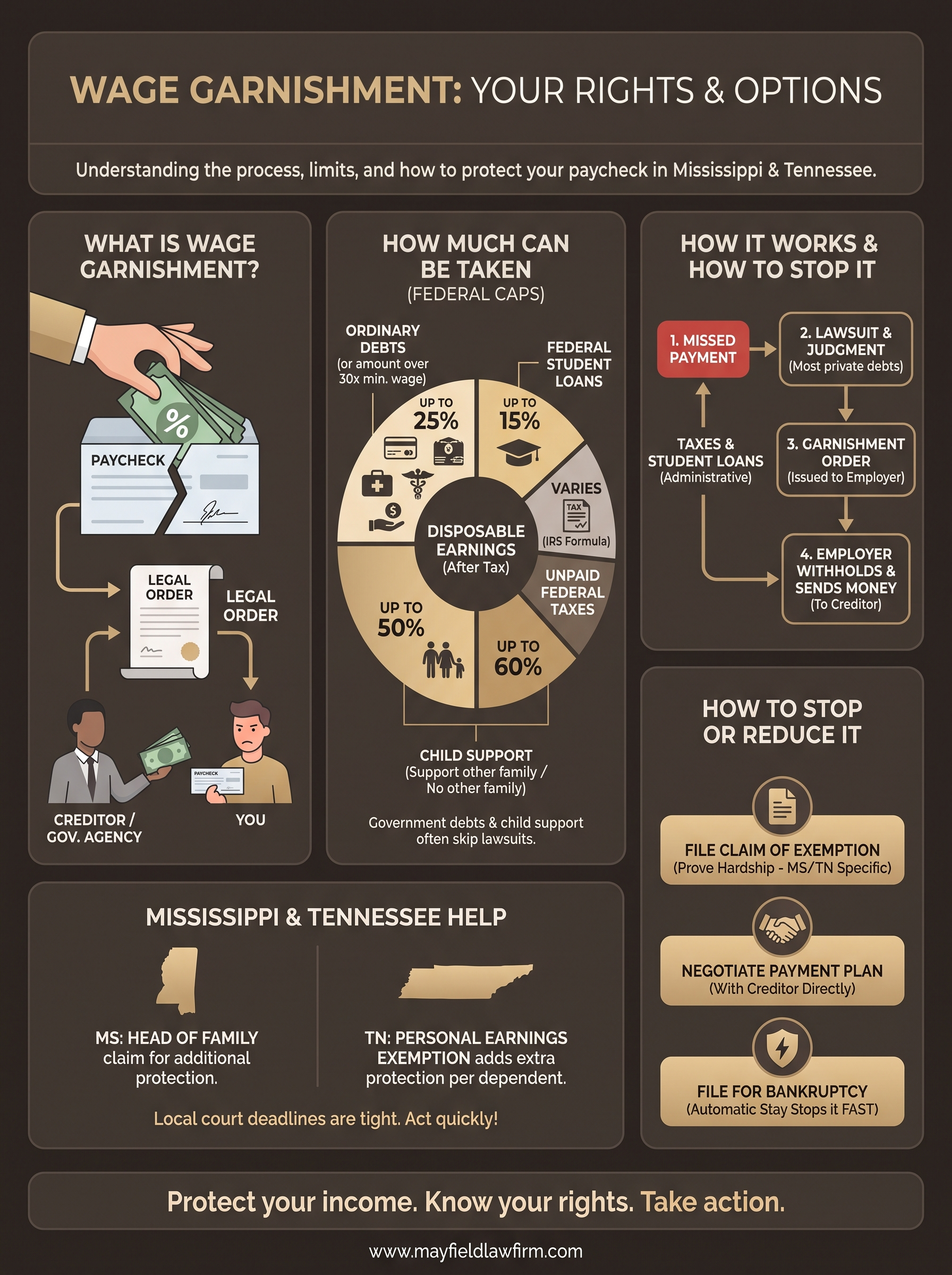
Federal law sets the outer limit through the Consumer Credit Protection Act, which caps most creditor garnishments at the lesser of 25% of your disposable earnings or the amount by which your weekly pay exceeds 30 times the federal minimum wage, whichever is smaller. "Disposable earnings" means what's left after legally required deductions like taxes, not your gross pay. States can set lower caps, but they can't go above the federal limit for ordinary debts.
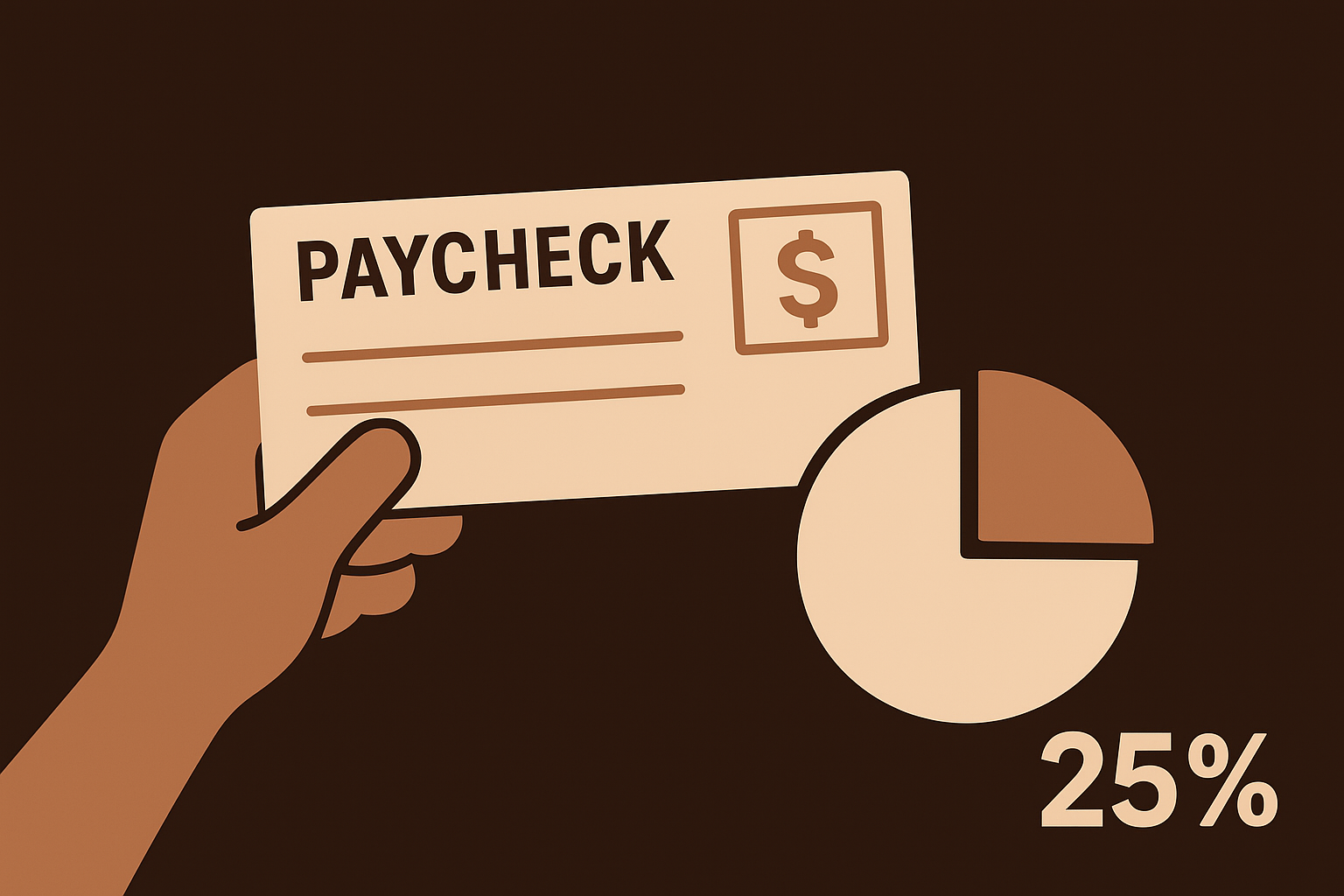
The law protects part of every paycheck, but the exact amount depends entirely on what kind of debt is being collected.
Not every debt plays by the same rules. Here's how the caps typically break down:
| Type of debt | Typical garnishment limit |
|---|---|
| Credit cards, medical bills, personal loans | Up to 25% of disposable earnings |
| Child support (no other dependents) | Up to 60% of disposable earnings |
| Child support (supporting another spouse or child) | Up to 50% of disposable earnings |
| Federal student loans | Up to 15% of disposable earnings |
| Unpaid federal taxes | Varies based on IRS formula and dependents |
Why some debts hit harder than others
Government-backed debts skip a lot of the usual courtroom steps that ordinary creditors have to follow. The IRS can garnish wages for unpaid taxes without ever filing a lawsuit, and the Department of Education can do the same for defaulted federal student loans through what's called an administrative wage garnishment. Child support enforcement agencies get the highest percentage caps of all because family courts treat that obligation as a priority over nearly every other kind of debt. If you owe money in more than one category, these debts often get paid before a regular judgment creditor sees a dime.
The ripple effect beyond the paycheck
Multiple garnishments can stack, and when they do, your employer follows a legal priority order rather than just picking whichever order arrived first. That stacking effect is exactly why one missed credit card payment years ago can suddenly collide with a tax debt and a child support order all at once, cutting your paycheck far more than any single garnishment would on its own. Beyond the immediate financial squeeze, repeated garnishments create paperwork headaches for your employer, and while federal law protects you from being fired over a single garnishment, that protection doesn't automatically extend to a second or third one. Knowing where you stand before it reaches that point gives you room to act.
How wage garnishment works, step by step
Getting from a missed payment to an actual garnishment order involves several legal checkpoints, and most creditors can't skip any of them. Understanding the sequence of events helps you spot warning signs early, before the paperwork lands on your employer's desk instead of yours.
From lawsuit to withholding order
For most private debts, garnishment follows a predictable path:
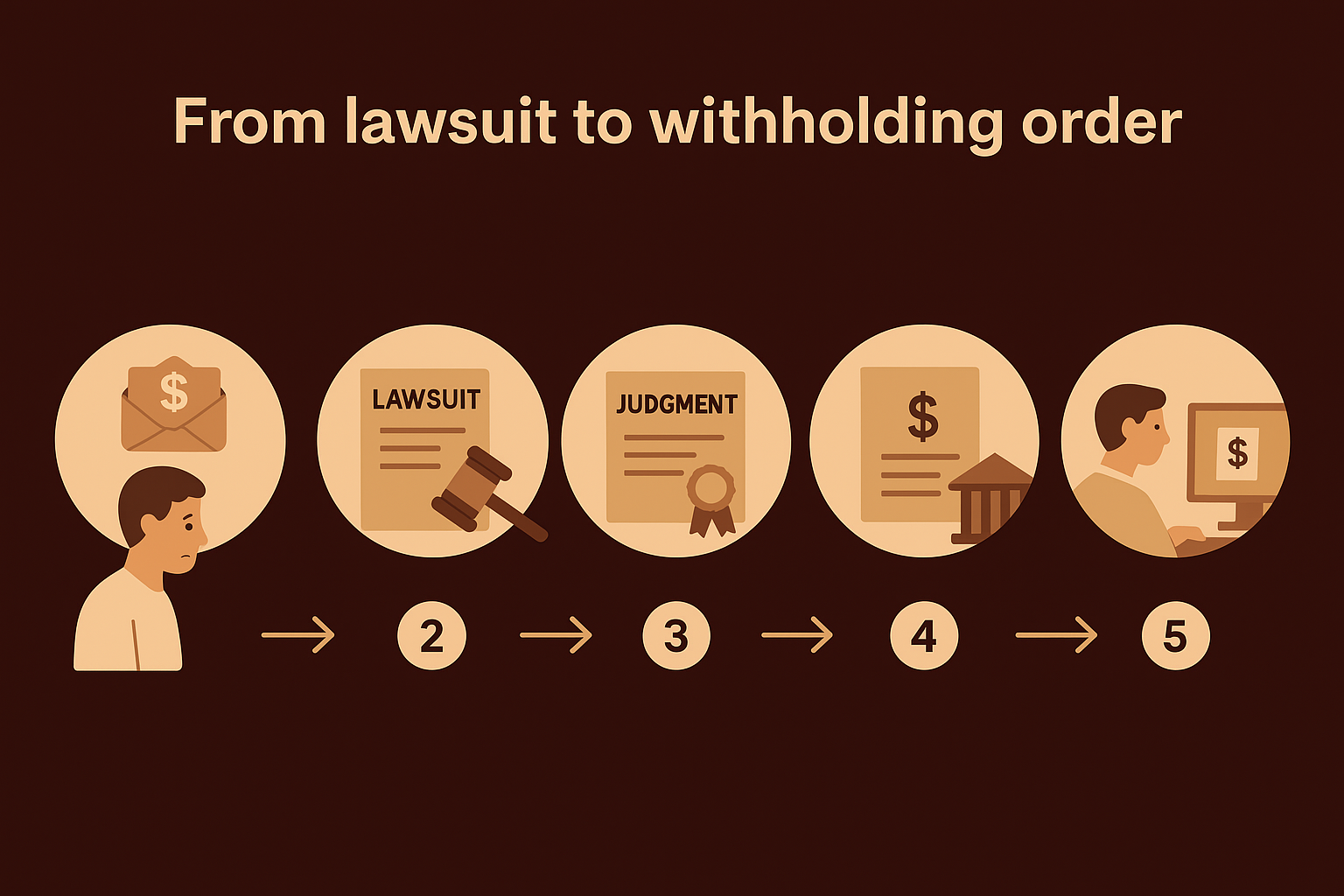
- You fall behind on a debt, and the creditor sends collection notices or sells the account to a collection agency.
- The creditor files a lawsuit against you in civil court, and you're served with a summons.
- A judgment is entered , either because you didn't respond, lost at trial, or agreed to a settlement you couldn't keep up with.
- The creditor requests a writ of garnishment from the court, naming your employer as the party who must withhold wages.
- Your employer receives the order and is legally bound to comply, usually starting with the next pay cycle.
Tax debts and federal student loans skip steps two and three entirely, since agencies like the IRS can issue an administrative garnishment without a judge's signature.
Once a court order or federal notice reaches your employer, withholding isn't optional for either of you.
What happens once your employer receives the order
Employers don't get to negotiate on your behalf or decide the order is unfair. They calculate your disposable earnings , apply the correct percentage cap, and send that portion directly to the creditor, court, or agency named in the order. You should still receive a copy of the garnishment paperwork, often through the mail or via certified delivery, which is your notice that the process has already started. Many employers also notify payroll and HR simultaneously, so don't be surprised if the deduction shows up on a pay stub before any conversation happens. That gap between notice and paycheck impact is short, which is exactly why acting fast on the next steps matters so much.
How to stop or reduce a wage garnishment
Getting a garnishment order doesn't mean you're stuck watching your paycheck shrink for months. Several legal tools exist to challenge, reduce, or eliminate a garnishment, but the window to act is usually short, often just a matter of days after you're served or notified.
Filing a claim of exemption
Most states, including Mississippi and Tennessee, let you file a claim of exemption if the garnishment would leave you unable to cover basic living expenses. You'll need to show the court proof of income, dependents, and necessary expenses like rent or medical bills. Judges don't grant these automatically, so the paperwork has to be accurate and filed on time, missing the deadline usually means the garnishment continues unchanged.
Negotiating directly with the creditor
Some creditors would rather work out a payment plan than deal with the cost of enforcing a garnishment. Reaching out before or right after the order is issued can sometimes lead to a reduced monthly payment in exchange for the creditor agreeing to release the garnishment voluntarily. This works better with private debts like credit cards than with tax agencies or child support enforcement, who have far less flexibility.
Using bankruptcy to stop it fast
Filing for Chapter 7 or Chapter 13 bankruptcy triggers an automatic stay, a federal order that stops most garnishments immediately, often within a day or two of filing. This is frequently the fastest legal way to get relief when a garnishment is already eating into your paycheck and negotiation isn't realistic.
An automatic stay from bankruptcy can halt a garnishment almost overnight, while other options take weeks to work through court.
Here's a quick comparison of your main options:
| Option | Speed | Best for |
|---|---|---|
| Claim of exemption | Weeks | Low income, high hardship |
| Creditor negotiation | Days to weeks | Private debts, willing creditors |
| Bankruptcy filing | 1-2 days | Multiple garnishments, urgent relief |
No single option fits every situation, which is why reviewing your specific debts with someone familiar with local court procedures matters before you pick a path.
What to do if you're garnished in Mississippi or Tennessee
Both states largely follow the federal caps outlined above, but each adds its own wrinkles that can change how much of your check you actually keep. Local court rules determine deadlines, filing fees, and how fast a claim of exemption gets heard, so what works in one county courthouse might move at a different pace in another.
Mississippi's approach to garnishment
Mississippi sticks close to the federal 25% cap for most consumer debts, but state law also lets a head of family claim additional protection on top of the federal exemption if garnishment would leave the household without enough to live on. You'll file that claim with the court that issued the writ, typically in the county where you work or live, and DeSoto County residents dealing with a Southaven employer should expect the paperwork to run through the local circuit court.
Tennessee's approach to garnishment
Tennessee applies a similar federal cap but carves out extra protection through a personal earnings exemption , adding a set dollar amount per week for the debtor and each dependent before garnishation applies. Memphis-area workers often deal with Shelby County General Sessions Court, where garnishment disputes and exemption claims move through a docket that can fill up fast, making early filing important.
Two states, two sets of exemption rules, and missing the difference can cost you money you're legally entitled to keep.
Getting help before the deadline passes
Here's a simple checklist for anyone garnished in either state:
- Confirm the debt is actually yours and the judgment is valid
- Check the math on what's being withheld against the legal cap
- Ask about head of family or dependent exemptions specific to your state
- File any exemption paperwork before the court's deadline
- Talk to a local attorney familiar with Mississippi and Tennessee garnishment law
Acting inside that narrow window, rather than after several paychecks have already shrunk, is usually what separates a manageable outcome from months of lost income.
Protecting your income going forward
Wage garnishment feels like it came out of nowhere, but it never actually does. There's always a lawsuit, a judgment, or a federal notice sitting somewhere in the paper trail before your employer gets that withholding order. Knowing the warning signs early, like collection letters you've been ignoring or a summons you set aside, gives you time to act before your paycheck takes the hit instead of after.
Once a garnishment is already running, speed matters more than anything else. A claim of exemption, a negotiated payment plan, or a bankruptcy filing can each stop the bleeding, but only if you move before deadlines close in. Local rules in Mississippi and Tennessee add exemptions worth claiming, and a lawyer who works those courts daily knows exactly how to file them fast.
If a garnishment is already cutting into your paycheck, don't wait for another one to land. Talk to Mayfield Law Firm about your options today.