
Lawyer for Medical Malpractice near Me: How to Choose One
Something went wrong during a medical procedure or a diagnosis got missed, and now you're stuck wondering whether what happened to you counts as malpractice or just bad luck. That uncertainty is exactly why most people start searching for a lawyer medical malpractice near me instead of trying to figure out the legal standards on their own. These cases hinge on what it takes to show a provider fell below the accepted standard of care, and that means medical records, expert testimony, and someone who knows how to build that argument.
If you're searching that phrase, you want a straight answer on how to pick the right person for the job, not a list of every firm in your zip code. The right attorneys for medical malpractice will have trial experience, access to credible medical experts, and a track record with cases like yours, whether that's a surgical error, a birth injury, or a missed diagnosis.
This article walks through what actually matters when you're vetting a local malpractice attorney , from experience and case results to how firms in Northeast Mississippi and the Memphis area, including Mayfield Law Firm, approach these claims from consultation through settlement or trial.
Why hiring the right medical malpractice lawyer matters
Medical malpractice cases carry more weight than a typical car accident claim. Hospitals and insurance carriers bring in-house counsel and paid medical experts to defend every claim, and they don't settle easily just because a patient got hurt. You need someone on your side who has gone up against these defense teams before and knows how they operate, which is worth understanding before you decide when you actually need a malpractice lawyer, because a lawyer who's only handled slip-and-fall cases will get outmatched fast.
A weak medical malpractice case isn't usually about bad facts. It's about a lawyer who didn't build the case strong enough to survive the fight.
The stakes are higher than a typical injury claim
Because these injuries often involve permanent harm, like a botched surgery that leaves someone disabled or a delayed cancer diagnosis that shortens a life expectancy, the compensation at stake is significantly larger than a fender-bender settlement. That means defense attorneys fight harder, drag out discovery, and challenge every expert opinion your side puts forward. Choosing an experienced malpractice attorney who has actually taken cases to trial, not just settled a few out of court, tells you they won't fold under that pressure.
Statutes of limitations don't wait
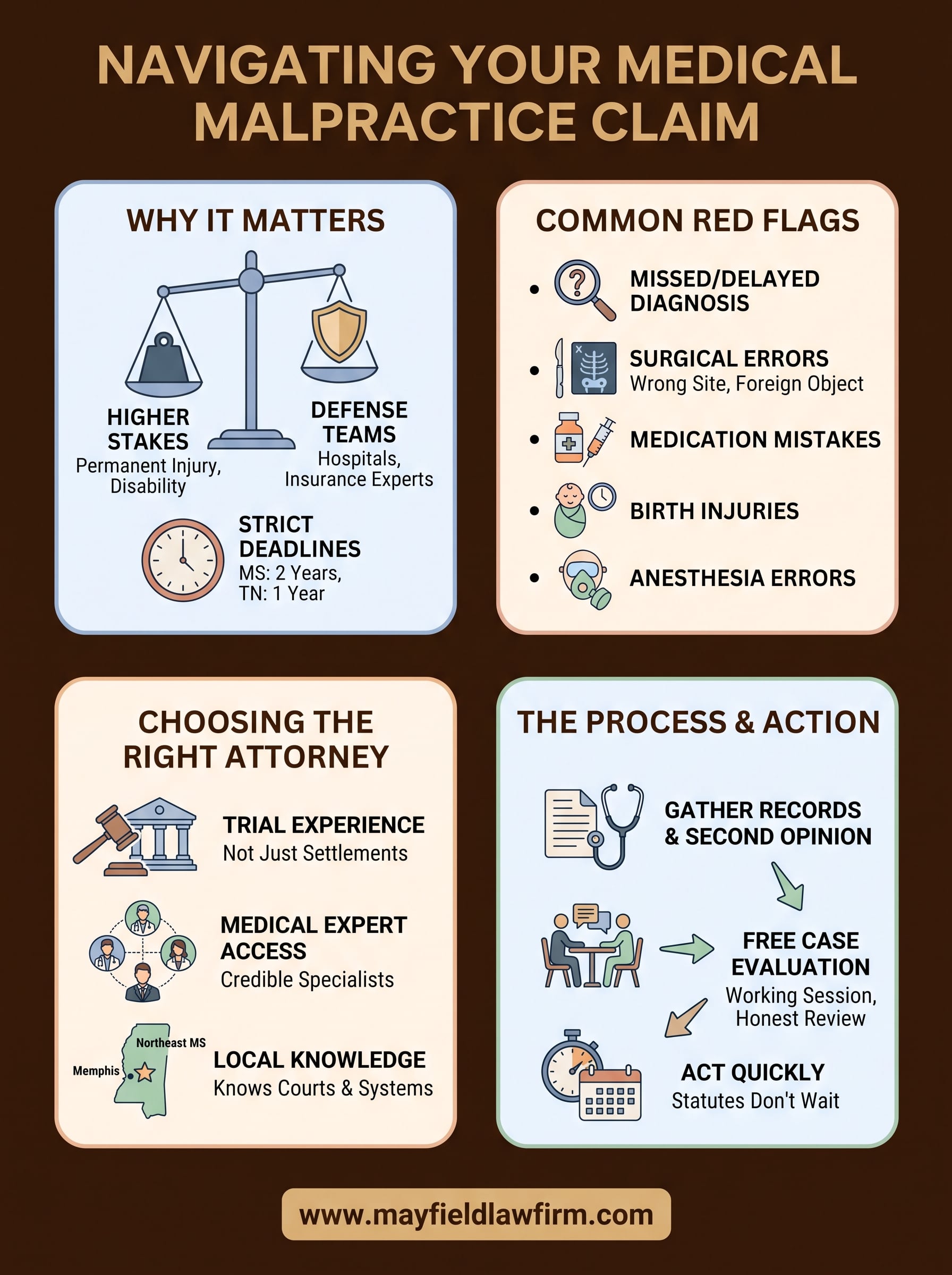
Every state sets a strict deadline for filing a malpractice claim, and missing it kills your case regardless of how strong the evidence is. Mississippi generally gives you two years from the date of injury, while Tennessee gives you one year in most cases, though certain exceptions can extend or shorten that window depending on when the injury was discovered.
| State | Typical Filing Deadline | Notes |
|---|---|---|
| Mississippi | 2 years | Discovery rule may extend deadline in some cases |
| Tennessee | 1 year | Statute of repose caps claims at 3 years from the act |
Searching for a lawyer medical malpractice near me as soon as you suspect something went wrong gives your attorney time to gather records, consult experts, and file before that clock runs out.
Local knowledge shapes case strategy
Too often, patients wait months trying to sort out what happened on their own, only to lose valuable time an attorney could have used to preserve evidence. Firms based in Northeast Mississippi and Memphis, like Mayfield Law Firm, know the local hospital systems, the judges who hear these cases, and the medical experts willing to testify in this region. That regional familiarity often makes the difference between a claim that gets dismissed early and one that reaches a fair settlement or verdict.
How to choose a medical malpractice attorney near you
When you're vetting a malpractice attorney near you, start by looking at case results, not just years in practice. A local malpractice attorney who has actually settled or won cases involving surgical errors, birth injuries, or misdiagnosis claims understands the specific medical literature and expert witnesses those cases require. Ask any firm you're considering how many malpractice cases they've handled in the past five years and how many went to trial versus settled, and use the other proven ways to track down top malpractice attorneys in your area before you narrow the list. A firm that only settles never had to prove it could win in front of a jury.
Next, check whether the attorney has relationships with medical experts who practice in your specialty area. Malpractice claims live or die on expert testimony, and a lawyer without access to credible specialists in cardiology, obstetrics, or oncology, depending on your case, will struggle to build a convincing argument.
The strongest malpractice attorneys aren't the ones with the biggest billboards. They're the ones with medical experts already lined up before you walk in the door.
Here's a short checklist to run through before you sign with anyone:
- Do they handle malpractice cases regularly, or is it a small slice of a general practice?
- Can they name the type of medical experts they'd bring in for your specific injury?
- Do they offer a free consultation to review your medical records before asking for a retainer?
- Are they upfront about what you owe a contingency fee malpractice lawyer if you don't win?
- Do they have offices or a track record in your specific region, whether that's Tupelo, Southaven, or Memphis?
Finally, trust your gut during that first conversation. Good attorneys for medical malpractice explain your case in plain language, answer the questions worth putting to a malpractice lawyer directly, and don't pressure you into signing before you understand what happens next.
Signs you may have a valid medical malpractice claim
Not every bad outcome means malpractice happened, but certain patterns should push you toward a consultation right away. Medical negligence usually shows up as a clear deviation from what any competent provider in that specialty would have done, not just an outcome you didn't like. If your gut tells you something was handled wrong, that instinct is worth checking against an actual legal standard instead of dismissing it.
Common red flags to watch for
Here are the situations that most often turn into legitimate claims:

- A diagnosis that got missed or delayed despite clear symptoms and available testing
- Surgery performed on the wrong site, or a foreign object left inside a patient
- Medication errors involving wrong dosages, wrong drugs, or dangerous combinations
- Birth injuries tied to a delayed C-section or mismanaged labor complications
- Anesthesia mistakes that caused lasting harm during a routine procedure
- A provider who never told you about serious risks before you consented to treatment
If a second doctor looks at your records and says "that shouldn't have happened," you likely have a claim worth investigating.
Getting a second medical opinion matters
Before you commit to litigation, ask another physician outside the original treatment team to review your records. That second opinion often becomes the first piece of evidence your attorney uses to evaluate whether the standard of care was breached. Physicians who spot inconsistencies in your treatment, gaps in monitoring, or a failure to order obvious tests give your case a foundation before a formal expert witness ever gets involved.
Ultimately, the difference between a bad medical outcome and a valid claim comes down to whether a competent provider would have acted differently. Attorneys for medical malpractice look at exactly that question when they review your records during a case evaluation, which is the next step worth understanding.
What to expect during your free case evaluation
Most reputable firms, including Mayfield Law Firm, offer a free case evaluation so you can find out where you stand before spending a dime. That first meeting isn't a sales pitch. It's a working session where an attorney reviews what happened, pulls the medical records you have on hand, and tells you honestly whether the facts support a claim.
What you should bring
Come prepared with as much documentation as you can gather, and know how to get ready for a no-cost attorney consultation before you walk in. A local malpractice attorney can move faster with real records than with a verbal summary of what you remember.

- Copies of medical records, discharge summaries, and test results
- Billing statements showing which providers were involved
- Photos of injuries or complications, if applicable
- A written timeline of appointments, symptoms, and conversations with providers
- Contact information for any second-opinion doctor you've already consulted
How the attorney evaluates your case
Expect the lawyer to ask pointed questions about the standard of care your provider should have followed and whether the outcome deviated from it. They'll also flag statute of limitations concerns immediately, since Mississippi and Tennessee run different clocks, and a delayed filing can end a valid claim before it starts.
A good case evaluation ends with a clear yes, no, or
Taking the next step after medical negligence
Deciding whether to pursue a medical malpractice claim shouldn't drag on for months while your statute of limitations clock keeps ticking. You now know what separates a strong case from a weak one, what red flags to watch for, and what a good attorney brings to the table before you ever sign paperwork.
Waiting rarely helps your case. Records get harder to obtain, memories fade, and filing deadlines in Mississippi and Tennessee don't bend for uncertainty. The sooner a qualified attorney reviews your records, the sooner you know whether you have grounds to move forward.
You don't have to sort through medical jargon or legal standards alone. If something about your care still doesn't sit right, reach out to the medical malpractice and negligence attorneys in Tupelo, MS at Mayfield Law Firm for a free case evaluation and get a straight answer about where your case stands.