
How to Find the Best Medical Malpractice Attorneys Near Me
Something went wrong during a medical procedure or hospital stay, and now you're stuck sorting through pain, medical bills, and unanswered questions. Searching for the best medical malpractice attorneys near me is usually the first real step people take once they suspect a doctor, nurse, or hospital made a mistake that shouldn't have happened. You want someone local, experienced, and honest about whether your case actually holds up.
This article gives you a practical way to vet attorneys instead of just picking whoever ranks first on Google. We'll walk through the specific credentials to check, the questions to ask during a free consultation, and the red flags that separate a firm that fights for you from one that just wants a quick settlement.
We put this together based on what actually matters in Northeast Mississippi and South Memphis, where cases often involve rural hospitals, understaffed clinics, and insurance companies that know the local courts well. By the end, you'll know exactly how to narrow your list and choose an attorney who can genuinely handle your claim.
1. Mayfield Law Firm, P.A.
If you're searching for medical malpractice attorneys near me in Southaven, Mississippi, or South Memphis, Mayfield Law Firm, P.A. is worth putting at the top of your list. The firm has handled personal injury and malpractice cases for over 40 years, and that track record matters when you're dealing with a hospital's legal team that has deep pockets and experienced defense counsel. Lead attorney Mr. Mayfield trained at the University of Michigan Law School and built a practice around the idea that clients deserve serious representation without needing to travel to a big city firm.

How it works
You start with a free consultation , either in person at one of the firm's offices or by phone if getting there is hard given your condition. During that meeting, the firm reviews what happened, pulls together your medical records, and gives you a straight answer about whether your situation looks like a viable malpractice claim or something better handled another way. From there, the firm manages every stage itself, gathering expert medical opinions, negotiating with insurance carriers, and taking the case to trial if the hospital or provider won't offer a fair settlement.
A firm that tells you honestly when you don't have a case is more valuable than one that promises a payout just to sign you up.
Who it's best for
This option suits people in Northeast Mississippi and South Memphis who want a local attorney familiar with the specific hospitals, clinics, and court systems in the region. It's a strong fit if you were hurt by a misdiagnosis, surgical error, medication mistake, or birth injury and you want one team handling your case from the first phone call through settlement or verdict, rather than being passed between departments. Clients who value being able to walk into an office and talk face to face with someone who knows their file tend to do particularly well here.
Cost or fees involved
Mayfield Law Firm takes malpractice cases on a contingency fee basis , meaning you pay nothing upfront and owe nothing unless the firm wins your case through settlement or verdict. The consultation itself costs nothing, so you can find out where you stand without any financial risk. Case costs, such as expert witness fees and court filing costs, are typically advanced by the firm and recovered from the final settlement, which keeps the process accessible if you're already dealing with medical bills and lost income from being unable to work.
2. State bar lawyer referral services
Every state bar association runs a lawyer referral service designed to connect residents with attorneys who actually practice in the area they need help with. The Mississippi Bar and the Tennessee Bar Association both maintain these programs, and they screen attorneys before adding them to the referral list, which gives you a baseline of legitimacy you don't get from a random Google search for medical malpractice lawyers near me.
How it works
You call or fill out an online form describing your situation, and the referral service matches you with a member attorney who lists medical malpractice as a practice area. Most bar programs guarantee a modest-cost initial consultation, often around $25 to $50, though some waive that fee entirely for injury cases. The attorney you're matched with isn't necessarily a specialist, so you still need to ask about their trial experience once you're on the phone.
A bar referral gets your foot in the door, but it doesn't replace asking hard questions about a lawyer's actual malpractice track record.
Who it's best for
This route suits people who don't have a personal network to draw on and want a vetted starting point rather than picking blind from search results. It works especially well if you're new to an area or your case is complicated enough that you want the bar's baseline screening before you start interviewing firms yourself.
Cost or fees involved
Beyond that small consultation fee, referral services don't charge you directly. Whatever attorney you eventually hire will likely still work on contingency , meaning fees come out of a settlement, not your pocket upfront. Check the Mississippi Bar's referral program directly for current fee details before you call.
3. Super Lawyers and Avvo attorney directories
Online directories like Super Lawyers and Avvo let you search for medical malpractice attorneys near me and filter results by location, years of practice, and peer ratings. These platforms pull together client reviews, disciplinary records, and professional recognition into one profile, so you get a quicker snapshot than digging through individual firm websites one by one.
How it works
Each directory works a little differently. Super Lawyers relies on peer nominations and a multi-step evaluation process, then publishes an annual list of top-rated attorneys by state and practice area. Avvo scores lawyers on a 1-to-10 scale based on experience, disciplinary history, and endorsements from other attorneys, and it also hosts client reviews you can read directly. Neither platform charges you anything to search, and profiles usually list contact info, education, and case results the attorney chose to highlight.
A high directory rating tells you a lawyer is recognized by peers, but it still doesn't replace a direct conversation about your specific case.
Who it's best for
This approach fits people who want to compare multiple attorneys side by side before committing to a consultation. It's especially useful if you're relocating, don't have local connections, or simply want to cross-reference a firm you've already heard about through independent reviews rather than taking their own marketing at face value.
Cost or fees involved
Browsing both directories costs nothing, since attorneys pay for premium placement rather than charging searchers. Whatever attorney you ultimately hire from these listings will typically still offer a free initial consultation and work on contingency for a malpractice claim, so the directory itself adds no cost to your search.
4. Martindale-Hubbell peer review ratings
Martindale-Hubbell has been rating lawyers since 1887, and its AV Preeminent rating is still one of the most respected peer-review credentials in the legal industry. Unlike client review sites, this rating comes from confidential evaluations by other attorneys and judges who've actually worked opposite or alongside the lawyer being rated, which makes it harder to game with marketing dollars alone.
How it works
Attorneys are scored on a mix of legal ability and ethical standards, with peers rating categories like legal knowledge, analytical capabilities, judgment, communication, and integrity. A lawyer needs strong, consistent scores from a wide pool of reviewers to earn AV Preeminent, the top tier, so you can search the directory by location and practice area to pull up medical malpractice attorneys who've cleared that bar. Profiles show the rating history, practice areas, and sometimes case results, giving you another data point beyond a firm's own website.
Peer review ratings matter because they come from lawyers who've faced this attorney in a courtroom, not from a marketing team.
Who it's best for
This resource suits people who want a credential that's harder to manipulate than star ratings from anonymous online reviewers. It works well as a secondary check after you've already found a candidate through a directory search or personal referral, since it confirms whether other attorneys actually respect the lawyer's work.
Cost or fees involved
Searching Martindale-Hubbell costs you nothing, since the platform makes money from attorney listings, not searchers. Any malpractice attorney you contact through the directory will typically still offer a free consultation and handle your case on contingency, so checking a rating here adds no expense to your search process.
5. Referrals from doctors, nurses, and other attorneys
Sometimes the fastest way to find medical malpractice lawyers near you is to ask people who work inside the medical and legal systems every day. Nurses, doctors outside the practice involved, and attorneys who handle other types of cases often know exactly which malpractice lawyers actually win, because they've seen the results firsthand or heard about them from colleagues.
How it works
Generally, this starts with a simple conversation. You ask your primary care doctor, a nurse you trust, or a lawyer you've used before (maybe for a will or a real estate closing) if they know a malpractice attorney with a solid reputation. Attorneys in unrelated fields frequently refer cases to malpractice specialists and only take a referral fee if the case settles, so they have real incentive to point you toward someone competent rather than just anyone.
A referral from someone who works in medicine or law carries more weight than a five-star review from a stranger.
Who it's best for
Honestly, this route works best if you already have some connection to healthcare or legal professionals, even a loose one. It's particularly useful for complex cases like surgical errors or misdiagnosis claims, where a nurse or doctor can point you toward attorneys known for handling the medical complexity well, not just the legal paperwork.
Cost or fees involved
Ultimately, getting a referral costs you nothing directly. If an attorney refers your case to a malpractice specialist, that referral fee usually comes out of the specialist's portion of the contingency fee, not an extra charge added to your bill. The malpractice attorney you end up hiring will still typically offer a free consultation and work on contingency , so this method adds no upfront cost to your search.
6. Free consultations to compare attorneys directly
Once you've built a shortlist using directories, referrals, or peer ratings, the real test is sitting down with each medical malpractice attorney in person or on a call. A free consultation isn't just a formality, it's your chance to compare how different lawyers explain your case, what questions they ask, and how confident they sound about liability before you sign anything.
How it works
Most firms handling malpractice claims offer a no-cost consultation , usually 30 to 60 minutes, where you walk through what happened and bring whatever medical records you already have. A good attorney asks pointed questions about timelines, treatment decisions, and other providers involved, then gives you a candid read on whether the case looks viable. Booking two or three of these before committing lets you compare tone, responsiveness, and how each firm plans to build your case strategy .
Comparing three free consultations costs you nothing but time, and it's the single best way to spot which attorney actually understands your situation.
Who it's best for
This approach fits people who aren't in a rush and want to make an informed decision rather than hiring the first name that returns their call. It's especially useful if your case involves a complicated diagnosis or multiple providers, since different attorneys may read the same facts differently, and hearing several opinions helps you gauge consistency.
Cost or fees involved
Consultations tied to malpractice claims are typically free, with no obligation to hire the attorney afterward. If a firm charges for this initial meeting, treat that as a signal to keep looking elsewhere. Whichever attorney you eventually choose will still likely work on a contingency basis , so comparing options upfront adds nothing to your final cost.
7. Court records and past verdict research
Before you sign a retainer, you can check how a medical malpractice attorney actually performs in front of a judge by pulling public court records. Verdicts, settlements, and dismissed cases are all matters of public record, and reviewing them tells you more than any marketing page about whether a firm searching for the best medical malpractice attorneys near me actually delivers results or just files paperwork and settles quickly for less than a case is worth.
How it works
Circuit court clerks in DeSoto County, Mississippi, and Shelby County, Tennessee, keep searchable records of civil filings, and many are accessible online through the court's case management system. You look up the attorney's name as counsel of record, then check case outcomes, whether cases went to trial, settled, or were dismissed, and how long each one took. Some attorneys also publish notable verdicts and settlements on their own sites, though you should treat those selectively, since firms naturally highlight wins and leave out losses.
A lawyer's actual trial record tells you more than a five-star review ever will.
Who it's best for
This method suits people who want hard evidence before hiring anyone, especially if your case involves a large hospital system or insurer likely to fight rather than settle quickly. It's also useful if you're deciding between two finalists and need a tiebreaker beyond how each one sounded during a consultation, since a documented history of trial verdicts shows whether an attorney will actually go to court if negotiations stall.
Cost or fees involved
Pulling court records typically costs nothing beyond your time, since most county court systems offer free public online search tools, though some charge a small fee per document copy. No attorney fee is involved at this stage, since you're researching independently, and any malpractice lawyer you eventually hire will still work on contingency , so this step only adds diligence, not expense.
Choosing the attorney who's right for you
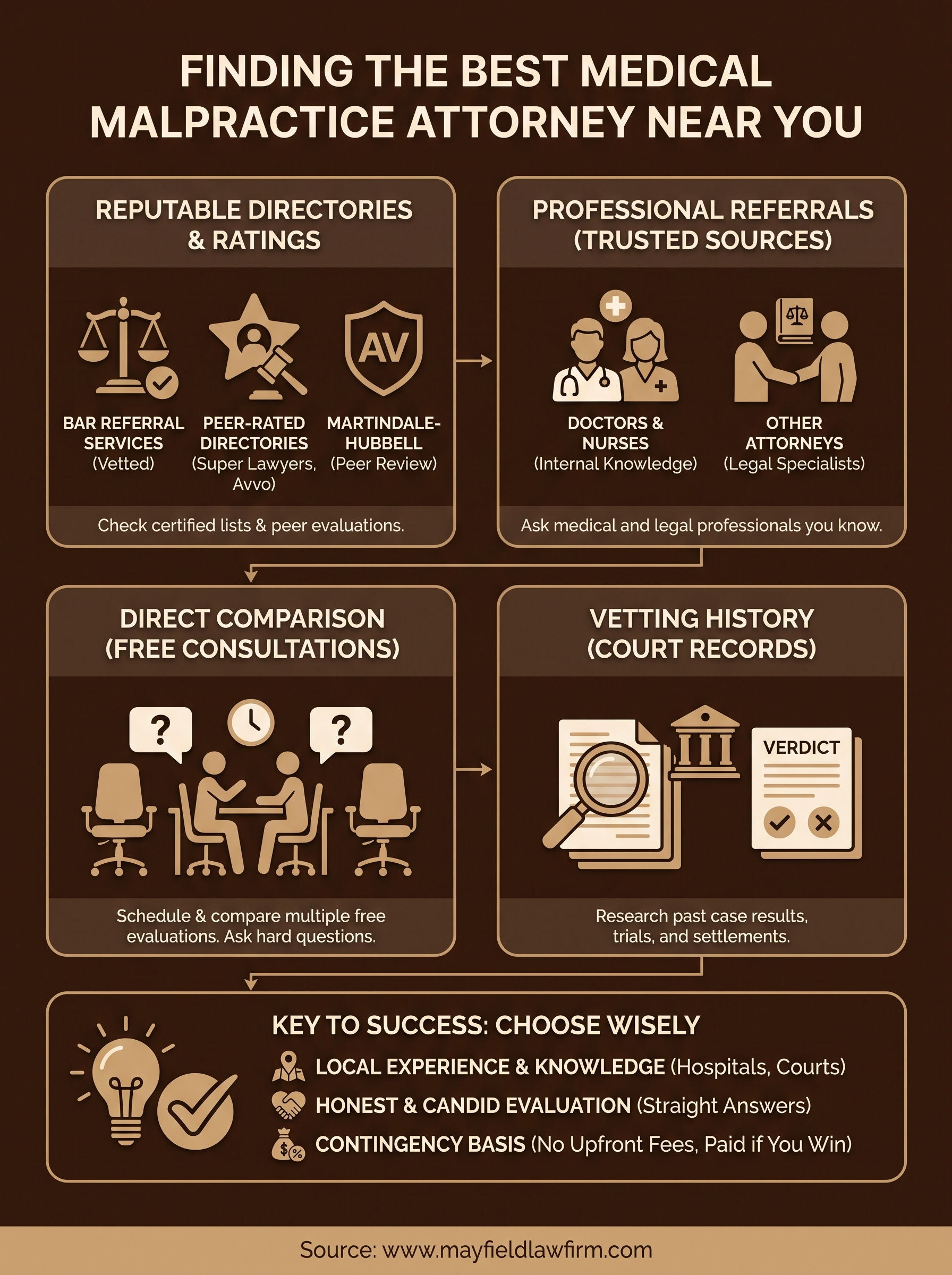
Finding the best medical malpractice attorneys near me isn't about picking whoever spends the most on ads. Run your shortlist through bar referrals, peer ratings, and court records, then book two or three free consultations before deciding anything. Pay attention to how candid each attorney is about your odds, not just how confident they sound on the phone.
Given the effort you've already put into researching this decision, don't settle for a firm that treats your case like paperwork. Look for a local team that knows the hospitals and courts in Northeast Mississippi and South Memphis, answers your questions directly, and only gets paid when you do. That combination of experience and honesty is what actually moves a malpractice claim forward.
If you're ready to talk through what happened with someone who's handled these cases for decades, schedule a free consultation with Mayfield Law Firm and find out where you stand.