
Personal Injury Lawyer for Medical Malpractice: What To Ask
When a doctor, surgeon, or other medical professional causes you harm through negligence, the consequences can be life-altering. Mounting medical bills, lost income, prolonged recovery, and the frustration of knowing that someone you trusted with your health made a preventable mistake. Hiring a personal injury lawyer for medical malpractice gives you the legal firepower to hold that provider accountable, but not every attorney handles these cases the same way , and the questions you ask before signing a retainer matter more than you might think.
Medical malpractice claims are among the most complex personal injury cases. They require an attorney who understands medical records, expert testimony, and the specific procedural rules that Mississippi and Tennessee impose on these lawsuits. At Mayfield Law Firm, P.A., we've spent over 40 years representing injured clients across Northeast Mississippi and the Memphis area, and we know firsthand that the right questions during a consultation can reveal whether a lawyer is truly equipped to take your case to the finish line.
This article breaks down what a medical malpractice claim actually involves, how it differs from other personal injury cases, and, most importantly, the specific questions you should ask any attorney before trusting them with your case. Whether you're dealing with a surgical error, misdiagnosis, or medication mistake , the information here will help you make a confident, informed decision about your next step.
Why medical malpractice needs a specialized PI lawyer
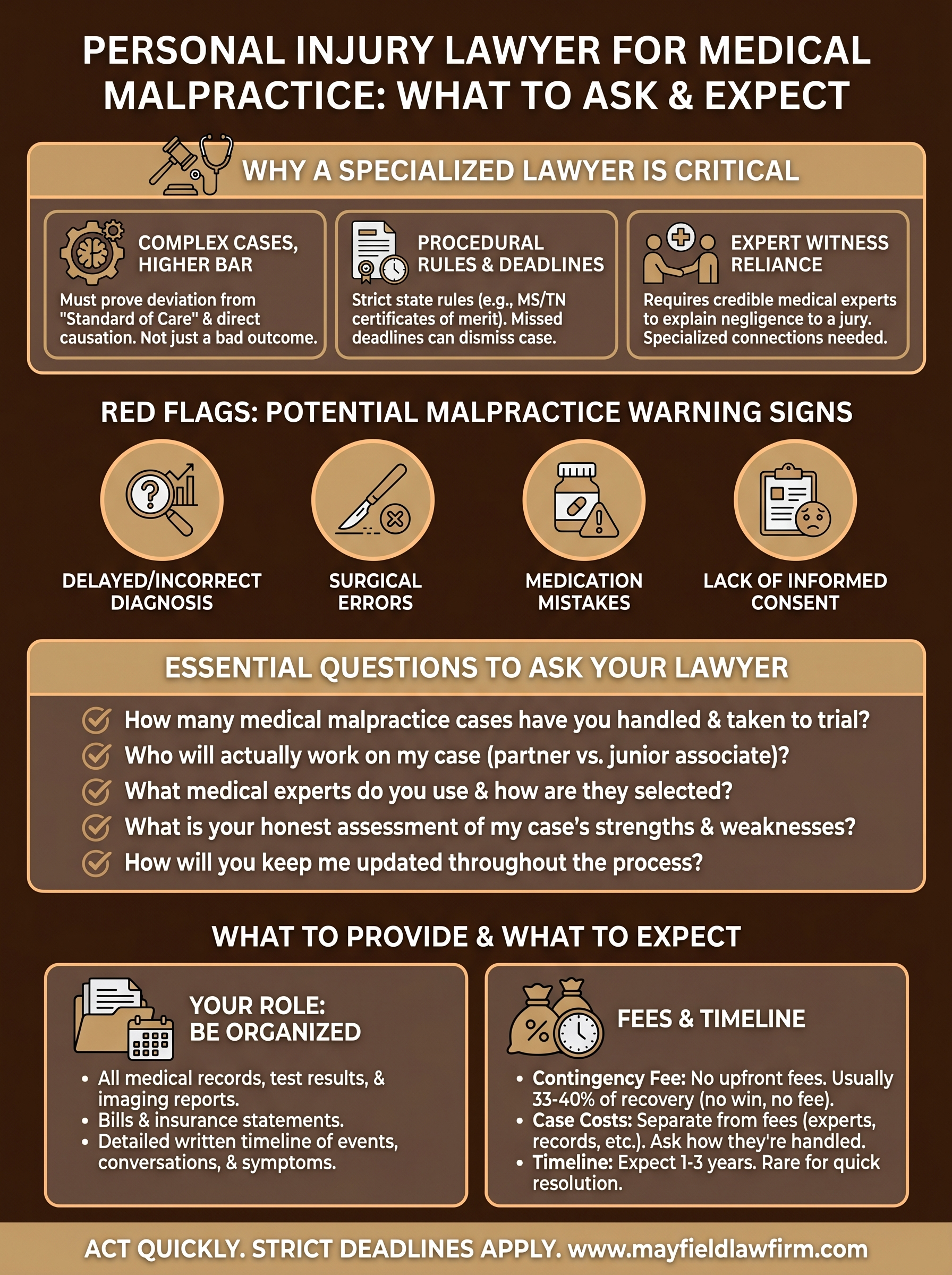
Medical malpractice cases sit in a different league from most personal injury claims. A standard car accident case relies on traffic laws, witness accounts, and physical evidence. A medical malpractice case requires you to prove that a licensed professional deviated from the accepted standard of care in their field, and that deviation directly caused your injury. That's a much higher legal bar, and it demands an attorney who knows how to clear it.
The legal standard is harder to meet
Most states, including Mississippi and Tennessee , require plaintiffs to file a certificate of merit or expert affidavit before a medical malpractice lawsuit can even proceed. This document must come from a qualified medical expert who confirms the case has valid grounds. If you hire a general personal injury lawyer who hasn't handled these cases before, they may miss this procedural requirement entirely, which can get your case dismissed before it starts.
Filing deadlines in medical malpractice cases are strict, and one missed procedural requirement can permanently eliminate your right to sue.
Mississippi's statute of limitations for medical malpractice claims is two years from the date of injury , with very limited exceptions. Tennessee follows a similar timeline. Working with a personal injury lawyer for medical malpractice who understands these rules keeps your case on the right track from day one.
Expert witnesses change the outcome
Medical malpractice claims live and die by expert testimony. Your attorney needs to identify, retain, and prepare a credible medical expert who can explain to a judge or jury exactly how the defendant's conduct fell below the accepted professional standard . This process takes time, costs money, and requires professional connections that general practitioners simply may not have built.
Insurance companies defending hospitals and medical providers know how to challenge weak expert testimony. They hire their own specialists and use every available tool to discredit your claim. An attorney with deep experience in these cases knows how to anticipate those tactics and build a case sturdy enough to withstand that kind of pressure.
How to spot a potential medical malpractice claim
Not every bad medical outcome is malpractice. Doctors and nurses work in high-pressure environments, and poor results don't automatically mean negligence . What matters is whether your provider failed to meet the standard of care that a reasonably competent professional in the same field would have followed under similar circumstances. That distinction is everything in a malpractice case.
If your gut tells you something went wrong that shouldn't have, that instinct is worth exploring with a qualified attorney before you dismiss it.
Common warning signs to watch for
Certain situations point more clearly toward a potential claim. If you received a delayed or incorrect diagnosis that allowed your condition to worsen, or a surgeon made an error during a procedure that left you with new complications, those are significant red flags. Medication errors , such as receiving the wrong drug or the wrong dosage, also fall into this category, as do situations where a provider failed to obtain your informed consent before a procedure.

You don't need to prove your case on your own before contacting a personal injury lawyer for medical malpractice . What you do need is a clear sense that your injury was preventable and directly connected to the care you received, not simply an unfortunate outcome that could have happened regardless of how the provider acted. Bring your records, your timeline, and your questions to an initial consultation, and let an experienced attorney assess whether the facts support a claim.
What to ask a medical malpractice lawyer
A consultation with a personal injury lawyer for medical malpractice is your opportunity to evaluate whether this attorney is the right fit. Most lawyers offer free initial consultations , which means you can ask direct questions without any financial commitment. Come prepared, and pay close attention to how the attorney answers, not just what they say.
The best attorneys give you straight, clear answers rather than vague reassurances designed to keep you engaged.
Questions that reveal experience and fit
Your questions should cover the attorney's track record with medical malpractice cases specifically , not just personal injury cases in general. You want someone who has taken these cases through trial , not just settled them quickly under pressure from insurers.
Ask these questions during your consultation:
- How many medical malpractice cases have you handled , and how many went to trial?
- Who will actually work on my case : you or a junior associate?
- What medical experts do you typically use, and how do you select them?
- What is your honest assessment of the strengths and weaknesses of my situation?
- How will you keep me updated throughout the process?
The answers reveal whether this attorney will give your case the focus it deserves . Any lawyer worth hiring will acknowledge the specific challenges your claim presents rather than make promises about outcomes they cannot guarantee.
What your lawyer will need from you
Your personal injury lawyer for medical malpractice can only build the strongest possible case with the materials you provide. The more organized and complete your documentation is when you walk into that first meeting, the faster your attorney can assess your claim and take meaningful action.
Gathering your records early gives your attorney more time to build a strong case rather than chase paperwork.
Medical records and related documents
Your attorney will need all medical records connected to the care in question, including test results, imaging, surgical reports, prescriptions, and any discharge paperwork. Pull together bills and insurance statements as well, since financial damages are a core part of your claim.

A written timeline of events
Writing out a clear, chronological account of what happened helps your attorney spot patterns and inconsistencies that medical records alone might not reveal. Include every conversation you remember with providers, along with dates and names if you have them.
- Names and contact information of all treating providers
- A list of symptoms or complications that appeared after treatment
- Records of any follow-up care you sought
- Notes on how the injury has affected your daily life and ability to work
Your attorney will also want to know about any prior medical conditions that relate to the same area of the body , since the defense will use that information to argue your injury existed before the treatment in question.
How fees, costs, and timelines usually work
Most personal injury lawyers for medical malpractice work on a contingency fee basis , which means you pay nothing upfront. Your attorney takes a percentage of any settlement or court award, typically between 33% and 40% , depending on whether the case settles before or after a lawsuit is filed. If you recover nothing, you owe no legal fees.
Contingency arrangements let injured people access experienced legal representation regardless of their financial situation.
What case costs actually cover
Legal fees and case costs are two separate things . Even on a contingency arrangement, you may still be responsible for out-of-pocket expenses such as expert witness fees, medical record retrieval, court filing fees, and deposition costs. These expenses can add up significantly in medical malpractice cases, so ask your attorney upfront how those costs are handled if the case does not produce a recovery.
- Expert witness fees (often the largest single expense)
- Court filing and service fees
- Medical record and imaging retrieval costs
- Deposition transcripts and related expenses
What to expect on timeline
Medical malpractice cases rarely resolve quickly . From the time you retain your attorney to a final resolution, expect a process that can take anywhere from one to three years , depending on the complexity of your claim, the availability of expert witnesses, and whether the case settles or proceeds to trial. Your attorney should give you a realistic, honest timeframe during your initial consultation rather than making promises that set unrealistic expectations.
Next steps
You now have a clear picture of what medical malpractice claims involve , why they require specialized legal help, and what questions to ask before you hire anyone. The next move is straightforward: gather your medical records, write out your timeline , and schedule a consultation with an attorney who has real experience handling these cases.
Medical malpractice claims carry strict deadlines, so waiting costs you options. A personal injury lawyer for medical malpractice who reviews your situation early has more time to build a thorough case and secure the right expert witnesses before those windows close.
Mayfield Law Firm, P.A. has represented injured clients across Northeast Mississippi and the Memphis area for over 40 years . Our team handles medical malpractice cases on a contingency basis, which means no fees unless we recover for you. Contact us today at Mayfield Law Firm, P.A. to schedule your free consultation .