Medical Malpractice Lawyer: What They Do and When You Need One
Something went wrong during a medical procedure, and now you're left with more pain, more bills, and more questions than answers. A malpractice medical lawyer is the professional who can tell you whether what happened to you crosses the legal line from a bad outcome into negligence you can act on. That distinction matters, because not every medical mistake qualifies as malpractice under Mississippi or Tennessee law.
If you're searching for an attorney for medical malpractice , you want a straight answer about what these cases require: proof that a doctor, nurse, hospital, or facility failed to meet the accepted standard of care and that failure caused real harm. A qualified attorney medical malpractice case demands medical records, expert testimony, and a firm willing to go up against insurance companies and hospital legal teams.
This article walks through exactly what a medical malpractice lawyer does day to day, the signs that your situation warrants a free consultation , and how Mayfield Law Firm's decades of personal injury experience across Tupelo, Southaven, and Memphis can help you figure out your next step.
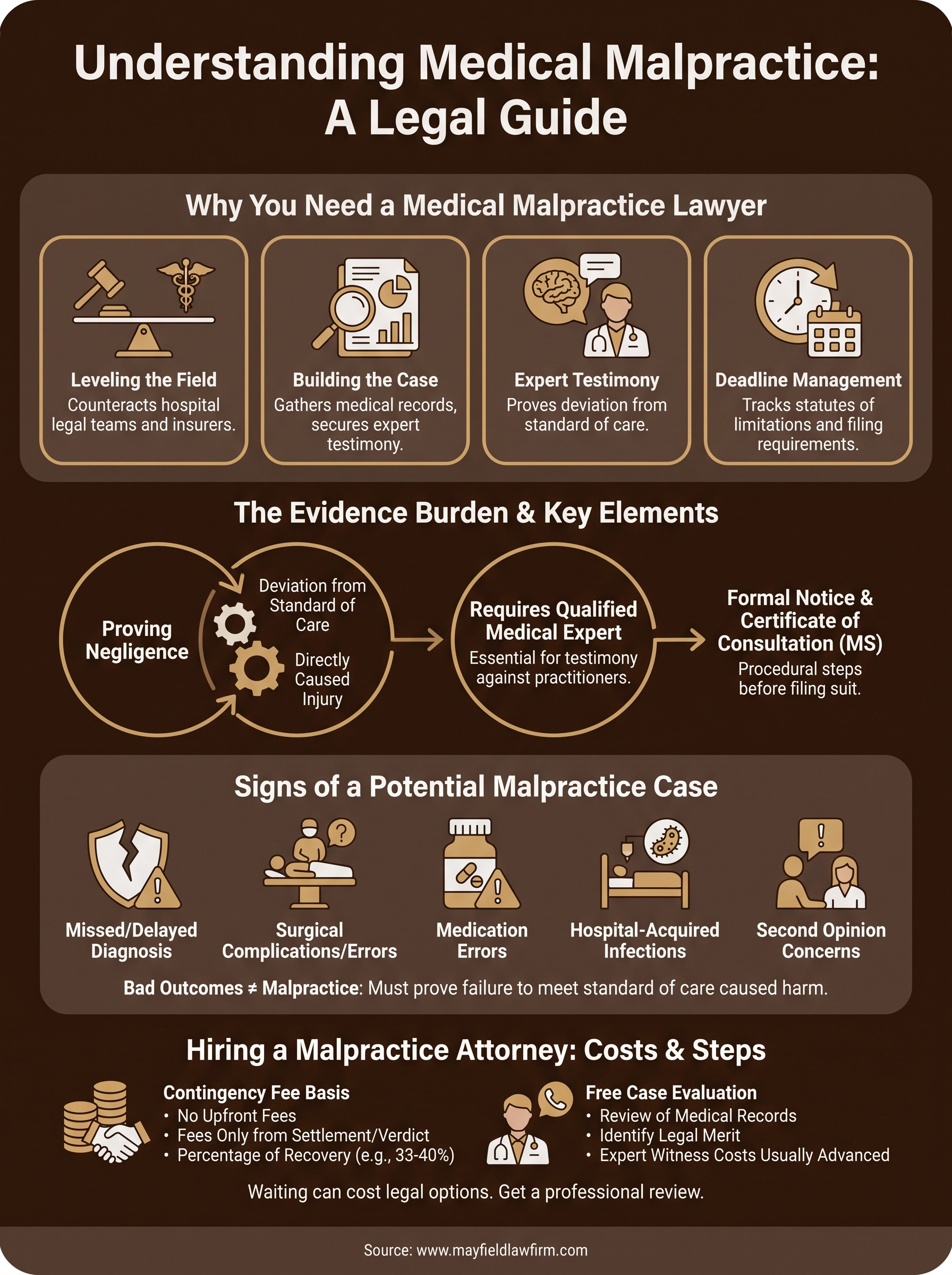
Why you need a medical malpractice lawyer
Hospitals and their insurers don't roll over when a malpractice claim lands on their desk. They have staff attorneys, in-house medical experts, and years of practice defending these exact cases. Walking into that fight alone, armed with nothing but your medical records and a gut feeling that something went wrong, puts you at a severe disadvantage. A malpractice medical lawyer levels that playing field by building your case the way the opposing side will attack it, before they ever get the chance, which is why choosing the right malpractice attorney near you matters so much.
A hospital's legal team starts working the moment a malpractice claim is filed. Yours should too.
The evidence burden is heavier than you think
Medical malpractice claims in Mississippi and Tennessee require more than a bad outcome. You have to show the provider deviated from the accepted standard of care and that the deviation directly caused your injury, which is the core of the evidence needed to prove medical malpractice. Proving that almost always requires a qualified medical expert willing to testify against a fellow practitioner, something that's harder to arrange than most people expect. Mississippi law also requires a formal notice of the claim and, in many cases, a certificate of consultation with a medical expert before you can even file suit. Miss a procedural step and your case can get dismissed before a judge ever hears the facts.
Deadlines don't wait for you to feel ready
Statutes of limitations for medical malpractice are unforgiving. Mississippi generally gives you two years from the date of injury, or from when you reasonably should have discovered it, to file a claim. Tennessee's window is similarly tight. Waiting to "see how things go" with your recovery, or assuming the hospital will make things right on its own, can cost you your legal options entirely. A lawyer tracks these deadlines from day one, makes sure the paperwork, notices, and filings happen on time, and can explain the timeline a malpractice case follows from filing to resolution.
Valuing your claim correctly matters
Insurance adjusters are trained to offer settlements that look reasonable but fall well short of what a case is actually worth. Without legal guidance, it's easy to accept a number that covers today's medical bills but ignores future treatment, lost earning capacity, or long-term pain and disability. An experienced attorney calculates the full scope of your damages before negotiating anything, which is one reason cases with legal representation tend to settle for significantly more than those without.
What the right attorney brings to your case
- Case evaluation to determine whether your situation meets the legal standard for malpractice
- Access to medical experts who can review records and testify on standard-of-care violations
- Negotiation experience against hospital insurers and defense counsel
- Trial readiness , because some cases only settle fairly once the other side knows you're prepared to go to court
- Deadline management for Mississippi and Tennessee filing requirements
Getting a free case evaluation with Mayfield Law Firm's personal injury team costs you nothing and tells you quickly whether your situation has legal merit. That single conversation often makes the difference between a case that goes nowhere and one that results in real compensation for what you've been through.
How to know if you have a malpractice case
Most patients who suspect malpractice aren't sure if what happened to them counts as a legal claim or just an unfortunate result. That uncertainty is normal, and it's exactly why a quick conversation with malpractice medical lawyers before you decide anything is worth your time. You don't need to have all the answers walking in. You need to know which questions matter.
Signs worth taking seriously
Certain red flags show up again and again in cases that turn out to have real legal merit. Consider reaching out if any of these apply to you:
- A diagnosis was missed, delayed, or wrong, and your condition worsened as a result
- Surgery left you with complications that weren't disclosed as a realistic risk beforehand
- Medication was prescribed at the wrong dose, or a dangerous interaction was overlooked
- A hospital or provider failed to follow up on abnormal test results
- You developed an infection or injury during a hospital stay that seemed preventable
- A second doctor expressed surprise or concern about how your first provider handled your care
None of these guarantee a winning claim on their own, but each one is a legitimate reason to get your records reviewed and to learn the steps to take after a suspected medical error.
Bad outcomes aren't automatically malpractice
Medicine involves risk, and even skilled providers following every protocol correctly sometimes get outcomes patients didn't expect. The legal question isn't whether you're unhappy with the result. It's whether the provider's actions fell below what a reasonably careful practitioner would have done in the same situation, and whether that gap caused your harm.
A bad outcome tells you something went wrong. Only a standard-of-care review tells you whether it was negligence.
That's the analysis a medical malpractice attorney runs before filing anything, pulling your full medical history and often consulting an independent medical expert to compare what happened against accepted protocols. Getting that review done early, ideally within weeks of realizing something's wrong, protects your evidence and your legal deadlines at the same time. It's also the fastest way to get a real answer instead of continuing to wonder.
Common types of medical malpractice claims
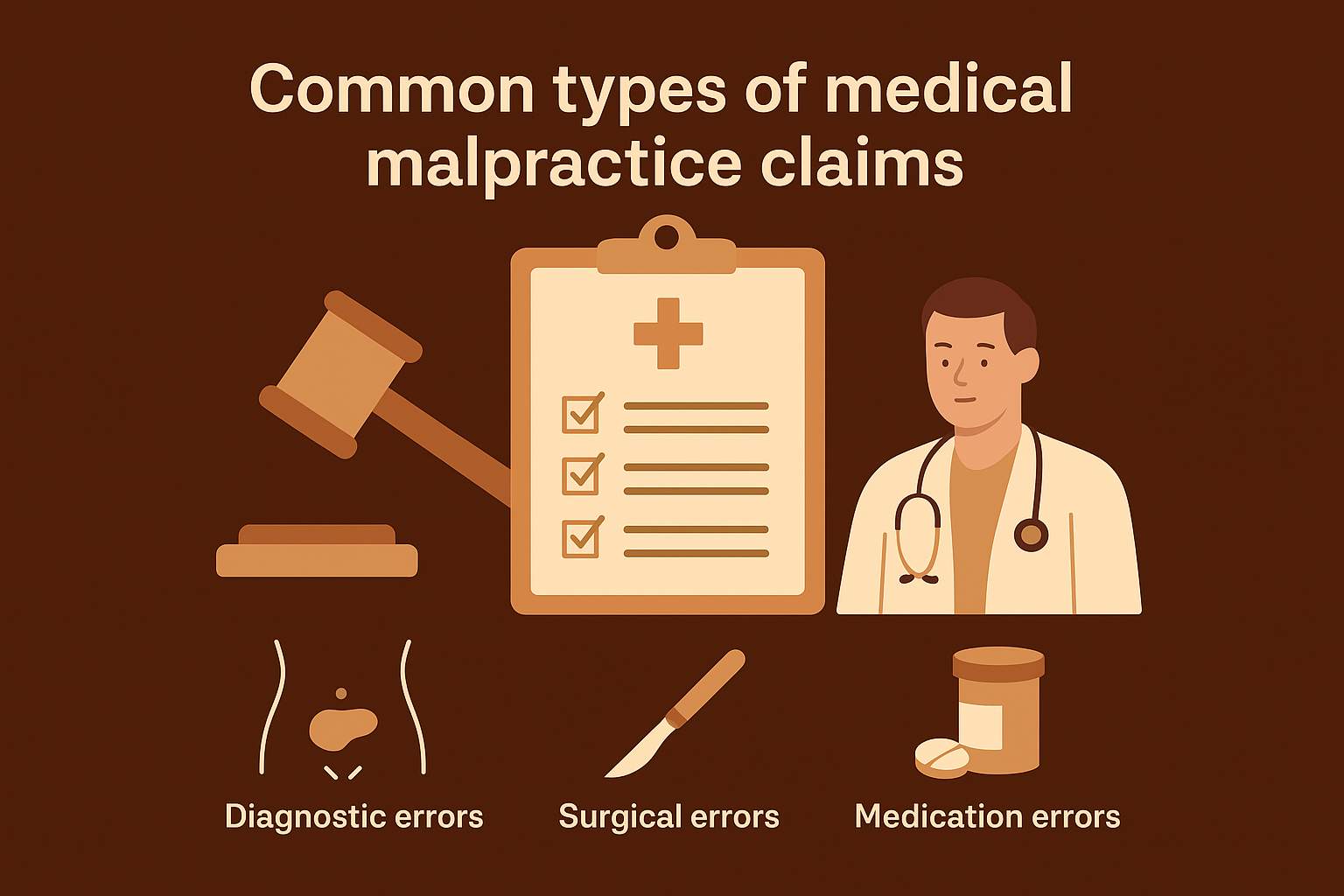
Malpractice cases fall into recognizable patterns, and knowing which category your situation fits helps a medical malpractice attorney move faster on gathering the right records and experts. While every case has its own facts, most claims trace back to one of a handful of common failures in patient care.
| Claim Type | What Typically Happens |
|---|---|
| Diagnostic errors | A condition is missed, misread, or diagnosed too late for effective treatment |
| Surgical errors | Wrong-site surgery, retained instruments, or avoidable complications during a procedure |
| Medication errors | Wrong drug, wrong dose, or a dangerous interaction that wasn't caught |
| Birth injuries | Failure to monitor fetal distress or improper delivery technique causing harm to mother or child |
| Anesthesia errors | Incorrect dosing or failure to monitor vital signs during sedation |
| Hospital-acquired infections | Preventable infections tied to unsanitary conditions or poor post-op care |
Diagnostic and treatment failures
Delayed or missed diagnoses account for a large share of the claims that come across a malpractice medical lawyer's desk. Cancer, heart conditions, and infections are especially dangerous when caught late, since the treatment window for a good outcome can close within weeks. Treatment errors, like prescribing a medication that conflicts with a patient's known allergies or existing prescriptions, fall into this same category and often show up clearly once an independent expert reviews the chart.
The most common malpractice claims share one trait: a provider had information that should have changed the outcome, and it didn't.
Surgical and procedural mistakes
Surgical errors tend to leave the clearest evidence trail, since operating room records, imaging, and post-op notes document exactly what happened. Retained surgical instruments, operating on the wrong body part, or failing to manage post-surgical complications all fall here. Wrongful death lawsuits sometimes arise directly from these errors when a preventable surgical mistake proves fatal, and those cases carry their own legal considerations under Mississippi and Tennessee law that a firm experienced in personal injury and wrongful death claims can walk you through.
What it costs to hire a malpractice attorney
Money worries keep a lot of injured patients from ever picking up the phone. That's unfortunate, because most medical malpractice attorneys , including the team at Mayfield Law Firm, work on a contingency fee basis. You don't pay anything upfront, and you don't owe legal fees unless the attorney recovers compensation for you. That structure exists precisely so that cost never becomes the reason a legitimate claim goes unpursued, though it still helps to understand what hiring a medical malpractice lawyer actually costs.
If a malpractice attorney asks for money before reviewing your case, that's a warning sign, not standard practice.
How contingency fees actually work
Under a contingency arrangement, your attorney medical malpractice fee comes out of the settlement or verdict as a percentage, typically somewhere between 33% and 40% depending on whether the case settles early or goes through trial. Here's how contingency arrangements work in malpractice claims in practice:
- No upfront retainer required to open your case
- No hourly billing while your attorney investigates and negotiates
- Fee deducted only from recovery , meaning a loss costs you nothing in attorney fees
- Case expenses (expert witnesses, medical record requests, court filing fees) are usually advanced by the firm and repaid from any settlement
Ask about the exact percentage and how expenses get handled before you sign anything. A reputable firm explains this clearly during your free consultation , not buried in fine print afterward.
Why expert witness costs matter
Medical malpractice cases lean heavily on expert testimony , and those experts don't work for free. A qualified physician willing to review your records and testify about standard-of-care violations can cost several thousand dollars, sometimes more for complex surgical or birth injury claims. Firms that regularly handle malpractice medical lawyer work usually have established relationships with medical experts, which keeps these costs predictable and helps the case move faster than starting from scratch.
Factoring in these costs before filing protects you from surprises later. A firm confident in your case will typically front these expenses and only recoup them if you win, so the financial risk stays where it belongs, on the attorney's side of the table rather than yours.
Talking to a lawyer about your situation
You don't need certainty before you reach out, just a willingness to ask the question. A malpractice medical lawyer can review your records, tell you honestly whether your situation meets the legal standard, and answer the questions worth asking about experts, fees, and strategy without any pressure to commit. Waiting rarely helps your case and can cost you the deadlines that protect it.
Every point covered here, from spotting the warning signs to understanding contingency fees, leads back to one simple step: getting an experienced set of eyes on your medical records. Northeast Mississippi and South Memphis families have relied on straightforward answers and real advocacy for decades, and that's exactly what a proper case review should give you.
If something about your care still doesn't sit right, don't sit on it any longer. Reach out to Mayfield Law Firm's medical malpractice attorneys for a free, no-obligation consultation and find out where you actually stand.