
Medical Malpractice Lawyer Cost: Fees and Expenses Explained
You already have enough to worry about after a botched surgery or a missed diagnosis. Money shouldn't be the reason you never call a lawyer. That's why understanding medical malpractice lawyer cost upfront matters so much before you pick up the phone or sign anything.
Most people asking about medical malpractice lawyers fees want a straight answer, not a runaround. Here it is: these cases almost always run on contingency fee arrangements , meaning you pay nothing out of pocket unless your attorney wins or settles your case. The percentage, typically between 33% and 40%, plus who covers costs like expert witnesses and medical records along the way, is where things get more complicated and worth understanding before you sign.
Below, we break down exactly how much does a medical malpractice lawsuit cost , from attorney fees to case expenses to what happens if you lose. At Mayfield Law Firm, we've handled enough of these cases across Mississippi and Tennessee to know clients need clear numbers, not vague promises. We'll walk through the fee structures, hidden costs, and questions you should ask any attorney before hiring one.
Why understanding malpractice lawyer costs matters
Medical malpractice cases are some of the most expensive personal injury claims to litigate, and that expense shapes almost every decision your attorney makes. Building a strong case against a hospital or physician requires expert medical witnesses , certified copies of medical records, and, given how long these cases take, often years of preparation before a case ever reaches trial. If you don't understand how those costs get paid, you might hesitate to pursue a legitimate claim, or worse, sign an agreement that leaves you owing money you never expected.
The financial barrier that keeps people from filing
Surveys from legal aid organizations consistently show that cost concerns stop injured patients from even scheduling a consultation. Fear of upfront legal bills keeps people quiet after surgical errors, medication mistakes, and delayed diagnoses that left them permanently harmed. That silence benefits insurance companies and hospital systems, not patients. Knowing that reputable malpractice attorneys work on contingency fees , meaning no money changes hands unless you recover compensation, removes that barrier entirely.
You shouldn't have to choose between paying rent and holding a negligent provider accountable.
Why these cases cost so much to build
Generally, malpractice lawsuits require more resources than a typical car accident claim. Proving that a doctor deviated from the accepted standard of care almost always demands testimony from a qualified physician in the same specialty, and those experts charge by the hour for reviewing records and preparing opinions. Add in the cost of obtaining hospital records, deposition transcripts, and sometimes life-care planners to project future medical needs, and a single case can rack up tens of thousands of dollars in expenses before a settlement ever gets discussed.
What happens when clients don't ask questions upfront
Here's where a lot of people get burned: they assume "contingency fee" means every lawyer's arrangement is identical, and it isn't. Some firms deduct case expenses from your settlement before calculating the attorney's percentage. Others calculate the fee first, then subtract expenses, which leaves you with less money in your pocket. Small differences in how a fee agreement is written can mean thousands of dollars of difference in your final payout.
| Concern | Why It Matters |
|---|---|
| Fee percentage | Determines what share of your settlement goes to legal fees |
| Expense deduction order | Affects your final net recovery |
| Sliding scale by case stage | Fees may increase if a case goes to trial |
| Responsibility if you lose | Some firms require repayment of costs even without a win |
Understanding these variables before you hire an attorney puts you in control instead of leaving you surprised months or years later. Transparency about medical malpractice lawyer cost should be part of your very first conversation with any firm you're considering, not something buried in fine print you skim before signing. At Mayfield Law Firm, we walk every client through these numbers during the free consultation, and knowing what to expect at a free consultation helps, because a fair fee structure shouldn't be a mystery, and neither should the total price tag of pursuing justice for a preventable medical error.
How contingency fees work in a malpractice case
Contingency fees flip the usual legal payment model on its head. Instead of billing hourly, your attorney agrees to take a percentage of whatever you recover through settlement or verdict, and if you recover nothing, you owe no attorney fee at all, which is what a no win, no fee agreement really means. This arrangement exists precisely because malpractice victims often can't afford thousands of dollars in retainers while recovering from a botched procedure or fighting a denied diagnosis. Understanding how medical malpractice contingency lawyers work shows why these arrangements let you access experienced representation regardless of your bank balance.
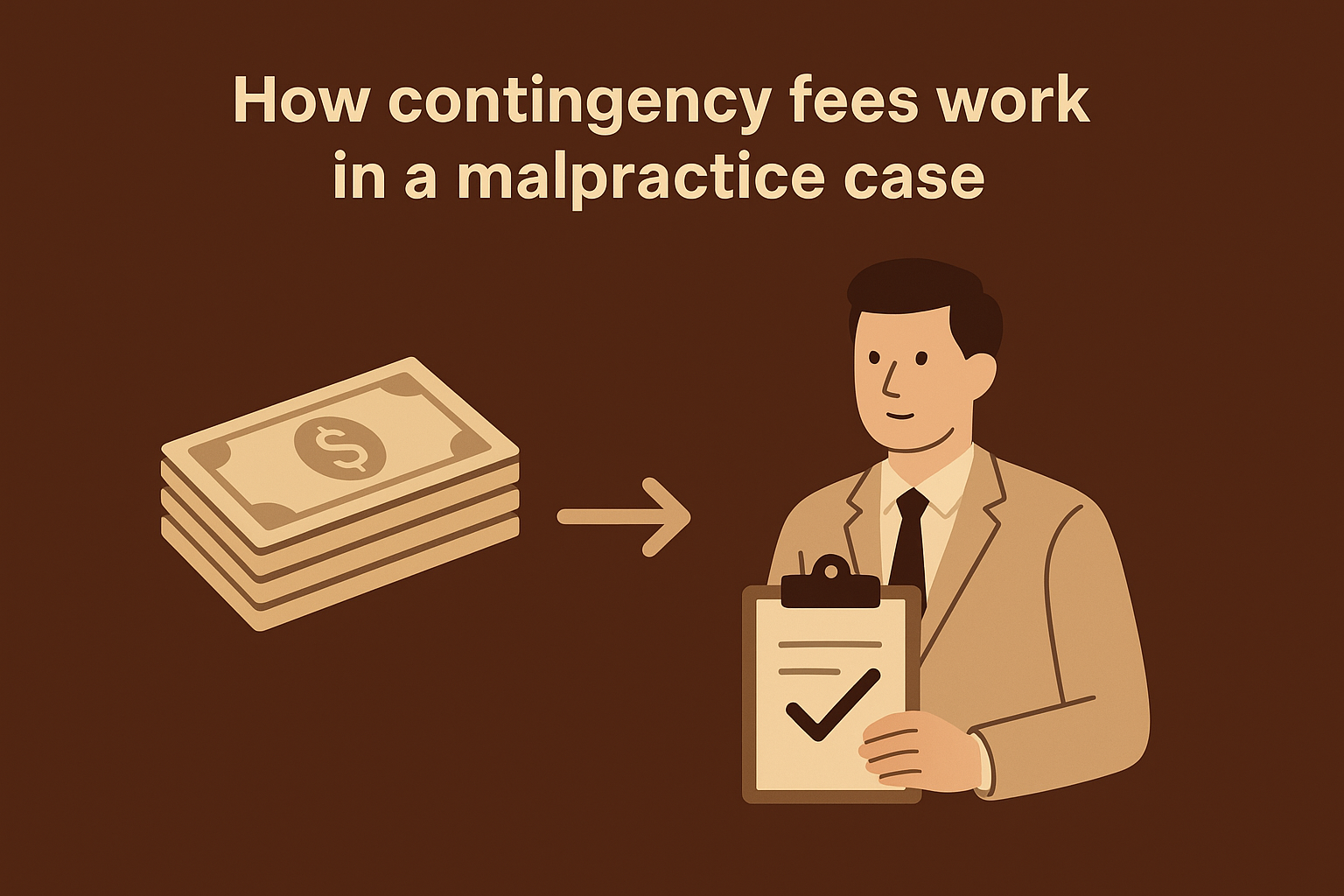
No win means no attorney fee, period.
Standard percentage ranges
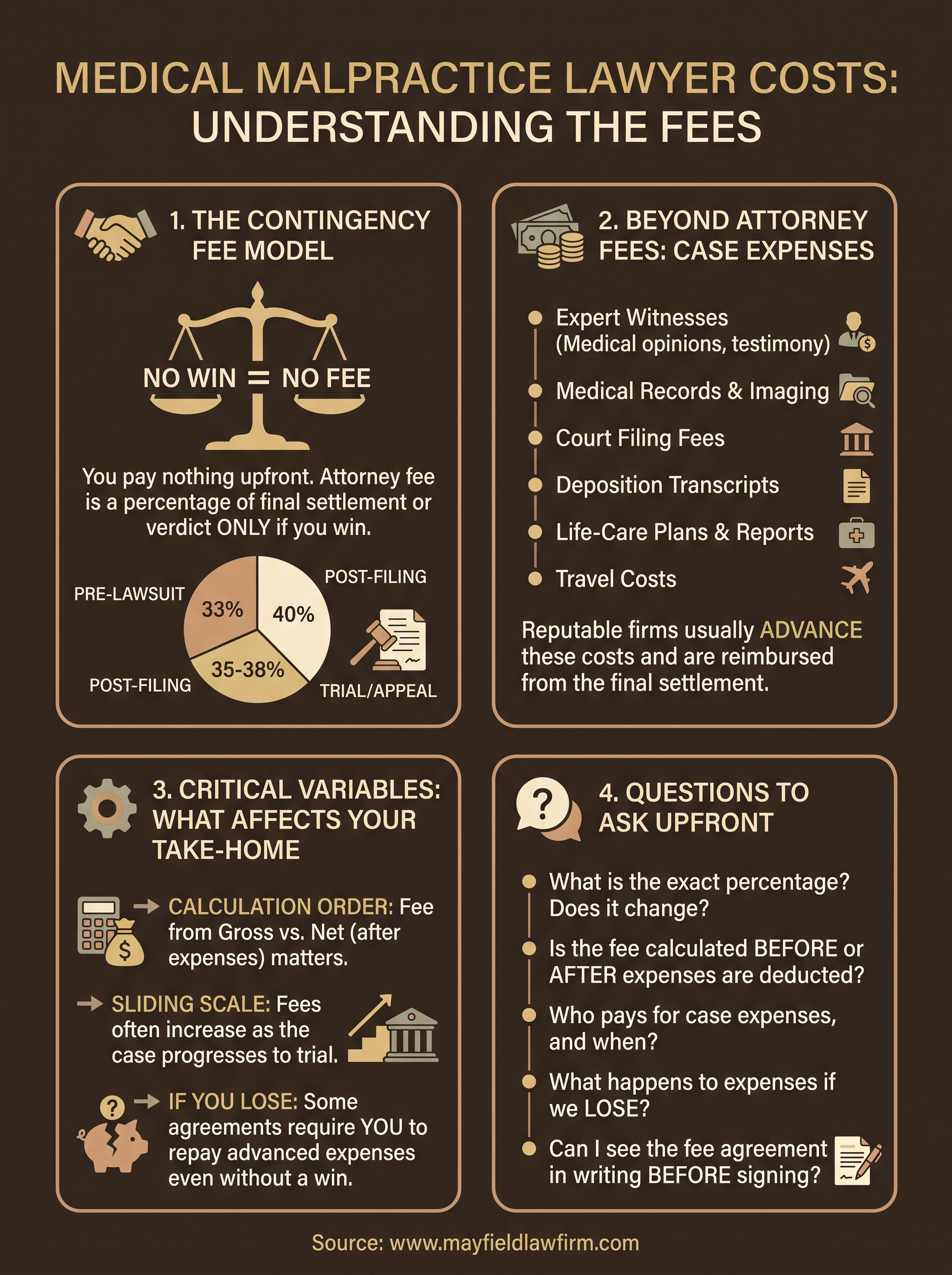
Most firms charge somewhere between 33% and 40% of the total recovery, though the exact contingency fee percentage often depends on how far the case progresses. A case settled before a lawsuit is even filed might carry a lower percentage than one that goes all the way through trial and appeal. Here's a common structure:
- 33% if the case settles before filing a lawsuit
- 35% to 38% if a lawsuit is filed but settles before trial
- 40% if the case proceeds through trial or appeal
Why the percentage climbs as a case progresses
Escalating fee structures reflect the added risk and workload your attorney absorbs. Filing a lawsuit means depositions, expert disclosures, and motion practice, all of which take hundreds of hours your lawyer never bills you directly for. Trial adds even more weight, since preparing witnesses and arguing before a jury demands resources far beyond a quick settlement negotiation. Some states cap contingency fees in malpractice cases specifically, so ask whether Mississippi or Tennessee law limits what percentage your attorney can charge, and check how Mississippi medical malpractice claims are handled where you live.
Getting the fee agreement in writing
Finally, never rely on a verbal explanation of your fee arrangement. Reputable firms put the percentage, the sliding scale triggers, and the expense-deduction method in a signed written agreement before any work begins. If a lawyer hesitates to hand you that document at your first meeting, treat it as a warning sign rather than an oversight.
Other costs and expenses beyond attorney fees
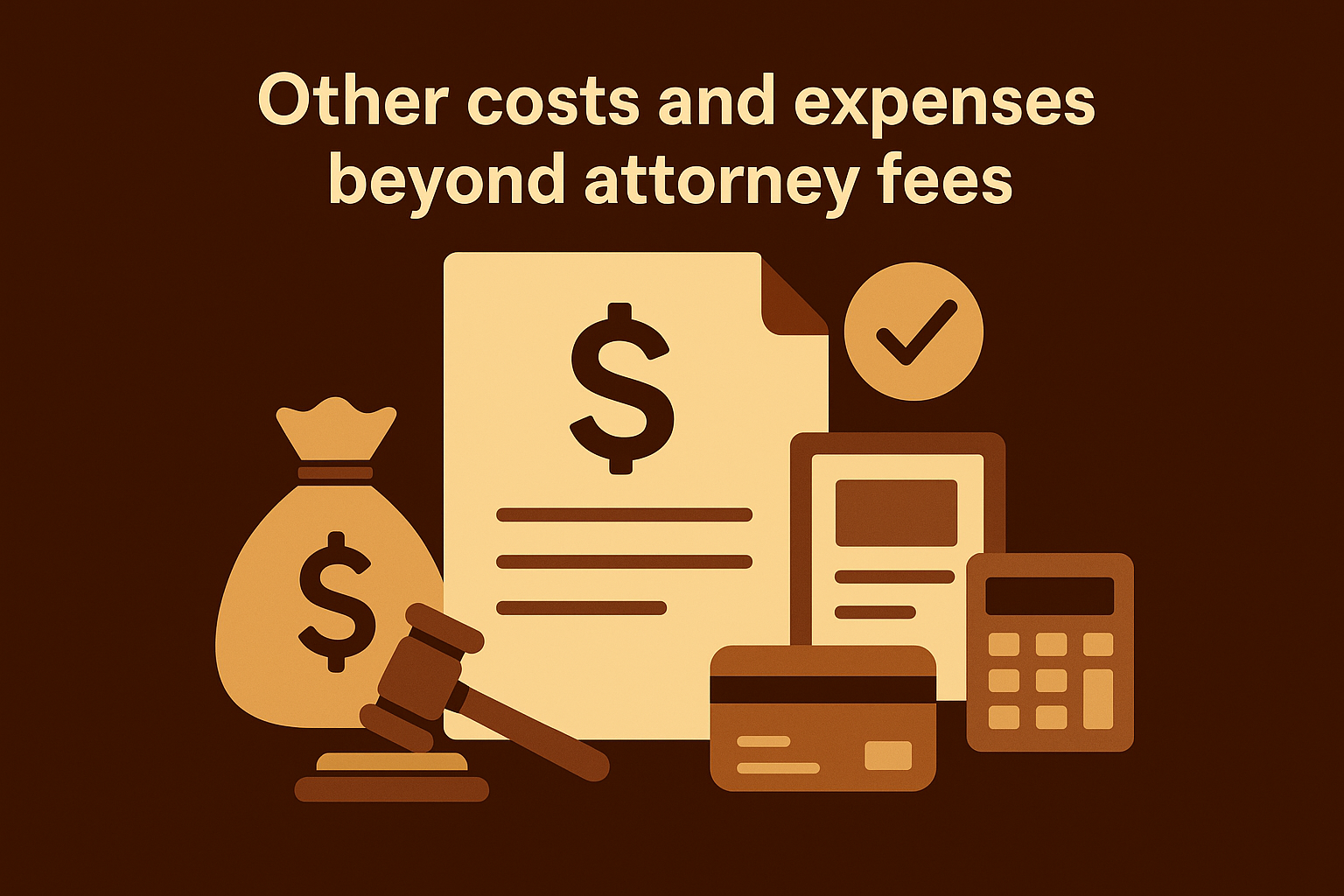
Attorney fees only cover the percentage your lawyer takes from your recovery. Separate from that percentage, every malpractice case racks up hard costs that someone has to pay, and understanding medical malpractice lawyer cost means looking at both numbers together, not just the contingency percentage.
What counts as a case expense
Expenses cover the tangible costs of building your case, and they add up fast in malpractice claims specifically. Typical expenses include:
- Expert witness fees for reviewing records and testifying (often $300 to $600 per hour)
- Certified copies of medical records and imaging films
- Court filing fees and process server costs
- Deposition transcription fees
- Life-care planner or economist reports for future damages
- Travel costs for depositions or trial
Who fronts the money while your case is pending
Mostly, reputable firms advance these costs themselves and get reimbursed from your settlement at the end. That arrangement protects you from writing checks while you're still recovering from a medical error, but it also means your firm has real skin in the game. Practically speaking, this is why firms screen cases carefully before taking them; nobody wants to advance $40,000 in expert fees on a case with weak liability. Ask directly whether your firm fronts costs or expects periodic reimbursement, because the answer affects your cash flow throughout the case.
What happens if you lose
Here's the part people miss. Losing at trial doesn't always mean you owe nothing. Some fee agreements state that if you recover no compensation, you also owe no reimbursement for expenses, full stop. Others specify that you remain responsible for costs even without a win, which could leave you owing thousands after an already difficult loss.
Ask what happens to expenses if you lose before you sign anything, not after.
Given how much variation exists between firms, get the expense policy spelled out in writing alongside the fee percentage. A firm that absorbs the risk of a loss demonstrates real confidence in your case and genuine investment in your outcome, not just your signature.
Questions to ask about fees before hiring a lawyer
Before you sign anything, ask direct questions and expect direct answers. A firm that dodges specifics about medical malpractice lawyer cost or gives vague percentages instead of numbers isn't being upfront with you, and that pattern usually continues throughout your case. Treat your first consultation as an interview where you're evaluating the attorney just as much as they're evaluating your claim, and go in knowing what to ask a malpractice lawyer about experts, fees, and strategy.
Questions about the percentage and structure
Start with the math, because that's where surprises hide later. Bring these questions to every consultation, along with the broader list of questions to ask before you hire a lawyer:
- What percentage do you charge, and does it increase if the case goes to trial?
- Do you calculate your fee before or after subtracting case expenses?
- Is the fee percentage capped under Mississippi or Tennessee law for this type of claim?
- Will you put the fee structure in writing before I sign anything?
If a lawyer won't answer fee questions clearly in the first meeting, that's your answer about how they'll handle the rest of your case.
Questions about expenses and reimbursement
Expenses trip up more clients than the attorney fee itself, so press for specifics here. Ask whether the firm fronts costs like expert witness fees and medical record copies, or whether you'll receive periodic invoices while your case is pending. Find out what happens to those expenses if you lose at trial, since some agreements forgive them entirely and others leave you owing money regardless of outcome. Confirm roughly what your case might cost to build, since a firm that's handled similar claims should be able to give you a realistic range rather than a shrug.
Questions about communication and control
Finally, ask how often you'll get updates and who makes decisions about settlement offers. You should never learn about a settlement offer after the fact, and a written fee agreement should spell out that you retain final say over accepting or rejecting any offer. Ask whether the attorney handling your consultation will actually work your case, or whether it gets handed off to someone you haven't met. These aren't minor details. They determine whether you feel like a partner in your own case or a file number sitting on someone's desk.
Getting a clear picture before you decide
Medical malpractice lawyer cost doesn't have to stay a mystery. Contingency fees mean you owe nothing unless your attorney wins, but the percentage, the expense arrangement, and what happens if you lose all shift the final number you actually take home. None of that should surprise you after the fact. Every reputable firm will walk you through these numbers before you sign, and if one won't, that tells you something important before you commit to a case that could take years.
Questions cost you nothing, and asking them upfront protects you from surprises down the road. You've already been through enough because of someone else's negligence. Don't let confusion about fees keep you from holding them accountable. If you're ready to talk through your case and get straight answers about costs, talk with a medical malpractice attorney at Mayfield Law Firm in a free consultation and find out where you actually stand.