How to Find a Good Car Accident Lawyer: A Step-by-Step Guide
Getting hit by another driver flips your life upside down fast. Between medical bills, insurance calls, and lost wages, the last thing you want is to pick the wrong attorney. Finding a good car accident lawyer means knowing what actually separates a strong advocate from someone who just files paperwork and waits for a check.
The short answer: look at track record , communication style, and how a firm handles cases from the first call through trial if needed. A lawyer who explains your options clearly and has actually taken cases to court, not just settled quietly, gives you real leverage with insurance companies. Free consultations exist for a reason, use them to ask hard questions before you sign anything.
We've spent over 40 years handling auto accident and personal injury claims across Northeast Mississippi and South Memphis, so we know exactly what questions injured drivers should ask before hiring representation. This guide walks through the step-by-step process , from checking credentials to spotting red flags, so you can hire with confidence instead of guessing.
1. Look for proven experience with car accident cases
Experience isn't just a nice bullet point on a law firm's website. It's the difference between an attorney who recognizes how insurance adjusters try to minimize your claim and one who's learning on your dime. A good car accident lawyer has handled hundreds of cases similar to yours, whether that's a rear-end collision on I-55 or a multi-vehicle pileup on the interstate. General practice attorneys who dabble in personal injury alongside divorces and real estate closings simply don't build the pattern recognition that comes from focused, repeated work in this one area.
Why it matters
Insurance companies employ teams of adjusters and defense attorneys whose entire job is to pay out as little as possible. Facing that with a lawyer who's negotiated dozens of settlements gives you leverage. Specialized knowledge of Mississippi and Tennessee traffic laws, comparative negligence rules, and how local juries tend to view certain injuries can shape strategy from day one. Firms that have handled auto accidents for decades, like our car accident lawyers in Tupelo, MS, know which insurance carriers tend to lowball early and which ones respond better once litigation is filed.
A lawyer who's negotiated hundreds of accident claims spots insurance company tactics before they happen, not after.
What to look for
Check how long the attorney has practiced specifically in auto accident and personal injury law , not just how long they've been licensed overall. A firm's website and case results page should tell you whether they focus on this practice area or treat it as one of ten different services. Look for mentions of specific case types, truck accident claims in Mississippi, motorcycle crashes, wrongful death claims, since each carries different legal nuances and insurance policy considerations.
Some markers of real experience include:
- Years spent exclusively or primarily on personal injury and auto accident cases
- A visible history of settlements and jury verdicts in similar cases
- Familiarity with the specific insurance carriers common in your state
- Membership in trial lawyer associations focused on injury litigation
- Attorneys who've personally handled trials, not just referred cases out
Questions to ask
During your free consultation , don't be shy about asking direct questions, and use these tips for getting the most out of a free case review to prepare. A confident, experienced attorney will answer without hesitation:
- How many car accident cases have you handled in the past five years?
- What percentage of your practice is dedicated to auto accidents and personal injury?
- Have you handled a case with injuries similar to mine?
- Who will actually work on my file, you or a paralegal?
- Can you walk me through a recent case you resolved?
Honest answers here separate firms built for volume from firms built for results. If the attorney seems vague about specifics or shifts the conversation toward signing paperwork too quickly, treat that as a warning sign. You want someone who can speak in detail about actual cases, not general promises. Consider scheduling a consultation with our team to see how these questions get answered in practice, and compare the response against other firms you're evaluating.
2. Verify credentials, licensing, and standing
Anyone can put "attorney" on a business card, but not every lawyer carries the credentials or standing to actually help you. Before you hand over your case, confirm the person you're hiring is licensed in the state where your accident happened and holds a clean disciplinary record . A good car accident lawyer should have nothing to hide when it comes to their bar status, and checking takes less time than filling out an intake form.
Why it matters
Licensing isn't a formality, it's your protection. An attorney barred in Mississippi can't represent you on a Tennessee case without proper authorization, and skipping this step can delay or even derail your claim. Bar association records also reveal complaints, suspensions, or malpractice history that a firm's glossy website will never mention. Hiring someone with disciplinary issues on file isn't a risk worth taking when your medical bills and lost wages are on the line.
Check a lawyer's bar standing before your first meeting, not after you've already signed a contract.
What to look for
Every state bar association keeps a public, searchable directory of licensed attorneys. Confirm the attorney is in good standing , meaning no active suspensions or unresolved ethics complaints. You can search the Mississippi Bar or Tennessee Board of Professional Responsibility directories directly. Look for additional credentials too, like membership in the American Association for Justice or state trial lawyer associations, which signal ongoing involvement in personal injury litigation rather than a license that just sits on the wall, and review the rest of the bar records and credentials worth checking before hiring.
Questions to ask
During your consultation, get specifics rather than accepting vague reassurances:
- In which states are you licensed to practice?
- Have you ever faced disciplinary action from a bar association?
- Are you a member of any trial lawyer or injury litigation organizations?
- How long have you practiced law in this specific jurisdiction?
A transparent attorney answers these without flinching. If a firm dodges questions about licensing or standing, walk away and keep looking.
3. Check their track record of settlements and verdicts
Past results won't guarantee your outcome, but they tell you how a firm actually performs under pressure. A good car accident lawyer should be able to point to specific settlements and jury verdicts, not just say "we win big cases." Numbers matter here. If a firm can't or won't share results, that silence tells you something too.
Why it matters
Insurance adjusters research the attorneys they're negotiating against. If your lawyer has a history of settling every case quickly for whatever the insurer first offers, adjusters know they can lowball without much pushback. A firm with documented verdicts and a willingness to take cases further sends a different signal from day one. Track record isn't about bragging rights, it directly affects the number an adjuster puts on the table during negotiations.
An attorney's settlement history tells insurance companies exactly how hard you're willing to fight.
What to look for
Ask for a breakdown of recent case results, ideally cases similar to yours in terms of injury severity and circumstances. Compare settlement amounts against the type of injuries involved, since a broken bone case and a case involving permanent disability shouldn't produce the same payout expectations. Watch for firms that only advertise their biggest wins without context. A trustworthy firm explains the range of outcomes, including cases that settled for less because of limited insurance coverage or shared fault.
| What to Compare | Why It Matters |
|---|---|
| Settlement amounts for similar injuries | Sets realistic expectations for your claim |
| Verdicts versus settlements | Shows willingness to litigate, not just negotiate |
| Timeframe to resolution | Reveals how efficiently the firm works |
| Case types handled | Confirms relevant experience for your accident |
Questions to ask
Push past general statements and get concrete figures during your consultation:
- What's the average settlement you've obtained for cases like mine?
- Can you share a case that went to verdict, and what was the result?
- How do you determine what a fair settlement looks like?
- Have you handled cases involving my specific type of injury?
A firm confident in its results will walk you through real numbers and real cases, not hypotheticals. If you're weighing options, our case results reflect decades of settlements and verdicts across Northeast Mississippi and South Memphis, and we're glad to discuss specifics during a free consultation.
4. Read client reviews and ask for references
Word of mouth still carries weight, even in the age of online reviews. A good car accident lawyer builds a reputation one satisfied client at a time, and that reputation shows up in Google reviews, testimonials, and word from people who've actually sat across the desk from that attorney. Don't just skim the star rating. Read what clients actually wrote about their experience.
Why it matters
Reviews reveal patterns that a firm's marketing never will. One complaint about slow communication might be an outlier, but five reviews mentioning the same issue tells you something real. Client feedback exposes how a firm treats people during the hardest parts of their case, not just the wins they highlight on their website. A top-rated car accident attorney earns that status through consistent, repeated positive experiences, not a handful of curated testimonials, which is why learning to analyze ratings, fees, and red flags in reviews pays off.
Five reviews mentioning the same complaint tell you more than fifty five-star ratings ever will.
What to look for
Check Google reviews, Facebook, and Avvo for a broad picture, since relying on a single platform can skew your impression, and know which review sites are worth trusting and how to spot fake ratings. Look past the star count and read the actual text of recent reviews, paying attention to comments about responsiveness and how the firm handled setbacks in the case. Ask the firm directly for references from past clients with similar cases. A firm confident in its work won't hesitate to connect you with someone willing to share their experience.
- Read reviews across multiple platforms, not just one
- Look for mentions of communication, honesty, and follow-through
- Ask for references from clients with cases similar to yours
- Notice how the firm responds to negative reviews, if any exist
Questions to ask
Bring these questions to your consultation:
- Can you provide references from past clients with cases like mine?
- How do you typically respond when a client has a complaint?
- What do your reviews say about communication during a case?
- Are there any negative reviews you'd like to address directly?
A firm that welcomes this scrutiny, rather than dodging it, is one worth your trust. Reading through our own client testimonials gives you a clear picture of how we've handled cases across Tupelo, Southaven, and Memphis over the years.
5. Understand the fee structure before you sign
Money matters shouldn't be a mystery when you're already dealing with medical bills and missed paychecks. A good car accident lawyer works on contingency, meaning you pay nothing upfront and nothing at all unless your case results in a settlement or verdict. Before signing any agreement, you need to understand exactly what percentage the firm takes and what happens to costs like filing fees or expert witness expenses along the way.
Why it matters
Not every contingency fee agreement looks the same. Some firms take a flat percentage regardless of when the case resolves, while others increase their cut if the case goes to trial. Hidden costs can also eat into your recovery if you don't ask upfront. Signing without reading the fine print can leave you surprised at settlement time, wondering why your check is smaller than expected.
A contingency fee should mean you owe nothing unless your lawyer wins your case, read the agreement to make sure that's exactly what it says.
What to look for
Request a written fee agreement and read it line by line before signing anything. Percentage breakdowns typically fall between 33% and 40%, often increasing if a lawsuit gets filed or the case proceeds to trial, so it helps to understand how fee percentages and litigation costs affect your final recovery. Ask specifically who covers costs like medical record requests, court filing fees, and expert witnesses if the case doesn't result in a recovery.
| Fee Structure Detail | What to Confirm |
|---|---|
| Contingency percentage | Does it increase after filing suit or going to trial? |
| Case expenses | Who fronts costs, and are you responsible if you lose? |
| Deductions order | Are fees taken before or after expenses are subtracted? |
| Written agreement | Is everything documented, not just verbally promised? |
Questions to ask
Bring these questions to your free consultation before agreeing to anything:
- What percentage do you take if the case settles versus goes to trial?
- Who pays for case expenses if we don't win?
- Will I owe anything out of pocket at any point?
- Can I see a sample fee agreement in writing?
Transparency here reflects how the firm treats clients overall. Our team walks every client through fee agreements clearly during the initial consultation, no surprises later.
6. Evaluate communication and responsiveness
Nothing frustrates injured clients more than calling their attorney's office and waiting days for a callback. A good car accident lawyer treats communication as part of the job, not an afterthought squeezed in between court dates. You deserve updates on your case without having to chase them down every time the insurance company sends a new letter or your medical treatment changes.
Why it matters
Communication gaps often signal deeper problems, like an overloaded caseload or a firm that's stopped actively working your file. Consistent updates keep you informed about deadlines, settlement offers, and next steps, which matters when you're already juggling medical appointments and lost income. A firm that answers questions quickly during your free consultation usually keeps that same standard once you've signed on as a client.
If a firm is slow to respond before you hire them, expect that same silence after you sign.
What to look for
During your initial calls, notice how fast someone gets back to you and whether you're speaking with the actual attorney or getting passed between staff every time. Responsiveness patterns set early tend to stick, so pay attention now rather than hoping things improve later. Ask how the firm prefers to communicate, whether that's phone calls, email, or text updates, and confirm that matches how you like to stay informed.
- How quickly does the office return calls or emails?
- Do you get a dedicated point of contact for your case?
- Does the attorney explain legal terms clearly, without jargon?
- Are case updates proactive, or do you have to ask for them?
Questions to ask
Get clarity on communication expectations before you sign anything:
- How often will I receive updates on my case?
- Who should I contact with questions, you or a paralegal?
- What's your typical response time for calls and emails?
- How will you notify me about settlement offers or deadlines?
Expect straightforward answers here. Firms serious about client service, including our team handling cases across Tupelo, Southaven, and Memphis, build responsiveness into how they operate every single day, not just during the sales pitch.
7. Confirm they're ready to take your case to trial
Most car accident claims settle before ever reaching a courtroom, but the attorneys who negotiate the strongest settlements are the ones insurance companies believe will actually go to trial. A good car accident lawyer prepares every case as if it might end up in front of a jury, even when the goal is settling early. Firms that avoid litigation entirely, either because they lack trial experience or because they'd rather churn through cases quickly, tend to accept lower offers than clients deserve.
Why it matters
Insurance adjusters adjust their offers based on perceived risk. If they know a firm settles every single case without exception, they have little incentive to raise their number. Trial readiness changes that calculation entirely. A lawyer who has genuinely tried cases in front of a jury, and won, carries a reputation that follows them into every negotiation. That reputation alone can push a stalled settlement conversation forward.
Insurance companies pay more when they believe your lawyer will actually see them in court.
What to look for
Ask directly how many cases the attorney has taken to trial versus settled out of court. Some firms operate almost entirely as settlement mills, referring cases to outside trial counsel the moment litigation becomes necessary. That arrangement isn't inherently bad, but you deserve to know about it upfront. Look for firms with in-house litigation experience , meaning the same attorneys who negotiate your case can also carry it through the steps and timeline of a lawsuit before a judge and jury without handing you off to a stranger mid-case.
- Number of cases taken to verdict in the past five years
- Whether trial work happens in-house or gets referred out
- Comfort level discussing courtroom strategy, not just settlement tactics
- Track record of filing suit when insurers refuse fair offers
Questions to ask
During your consultation, ask questions that reveal how the firm actually operates once negotiations stall:
- How many cases have you personally tried in front of a jury?
- At what point do you recommend filing a lawsuit instead of continuing to negotiate?
- Will you handle my trial personally, or refer it elsewhere?
- How do you decide when a settlement offer is too low to accept?
A firm's willingness to litigate, not just settle, often determines the ceiling on your recovery. Our attorneys prepare every case with trial in mind from the start, which is part of why insurance carriers across Northeast Mississippi and South Memphis take our settlement demands seriously.
8. Choose a lawyer who knows your local courts
Every courthouse runs a little differently, and the attorney who knows the local rules, the clerks, and the judges has an edge that national firms simply can't match. A good car accident lawyer working in Northeast Mississippi and South Memphis should be comfortable filing in Lee County, DeSoto County, and Shelby County courts, not scrambling to learn local procedure after your case is already underway. This matters more than most clients realize until it's too late.
Why it matters
Local courts have their own filing deadlines, scheduling quirks, and unwritten expectations that don't show up in any statute. A top-rated car accident attorney who's argued cases in front of the same judges for years understands how those judges rule on motions and what arguments tend to land with local juries. That familiarity speeds up your case and reduces the odds of procedural mistakes that could delay your settlement or hurt your claim.
A lawyer who's worked your local courthouse for years knows the judges, the clerks, and the rhythms an outsider never picks up in time.
What to look for
Confirm the firm regularly handles cases in the specific county or district where your accident occurred, not just the state generally. Regional experience across Mississippi and Tennessee courts, including federal courts if your case crosses state lines, signals a firm built to handle cases like yours from filing through trial.
- Regular appearances in the courthouse where your case would be filed
- Relationships with local court staff that keep paperwork moving
- Familiarity with how local juries tend to view injury claims
- Physical office locations near the communities they serve
Questions to ask
Bring these questions to your consultation to confirm local knowledge runs deep, not just surface-level:
- How often do you file cases in this specific county or district?
- Have you tried cases in front of the judges assigned to accident claims here?
- Do you have an office located near where I live or where the accident happened?
- How does local court procedure affect the timeline for my case?
Our firm maintains office locations in Tupelo, Southaven, and Memphis specifically because local presence changes outcomes, and we've built our practice around the courts we know best.
Taking the next step after your accident
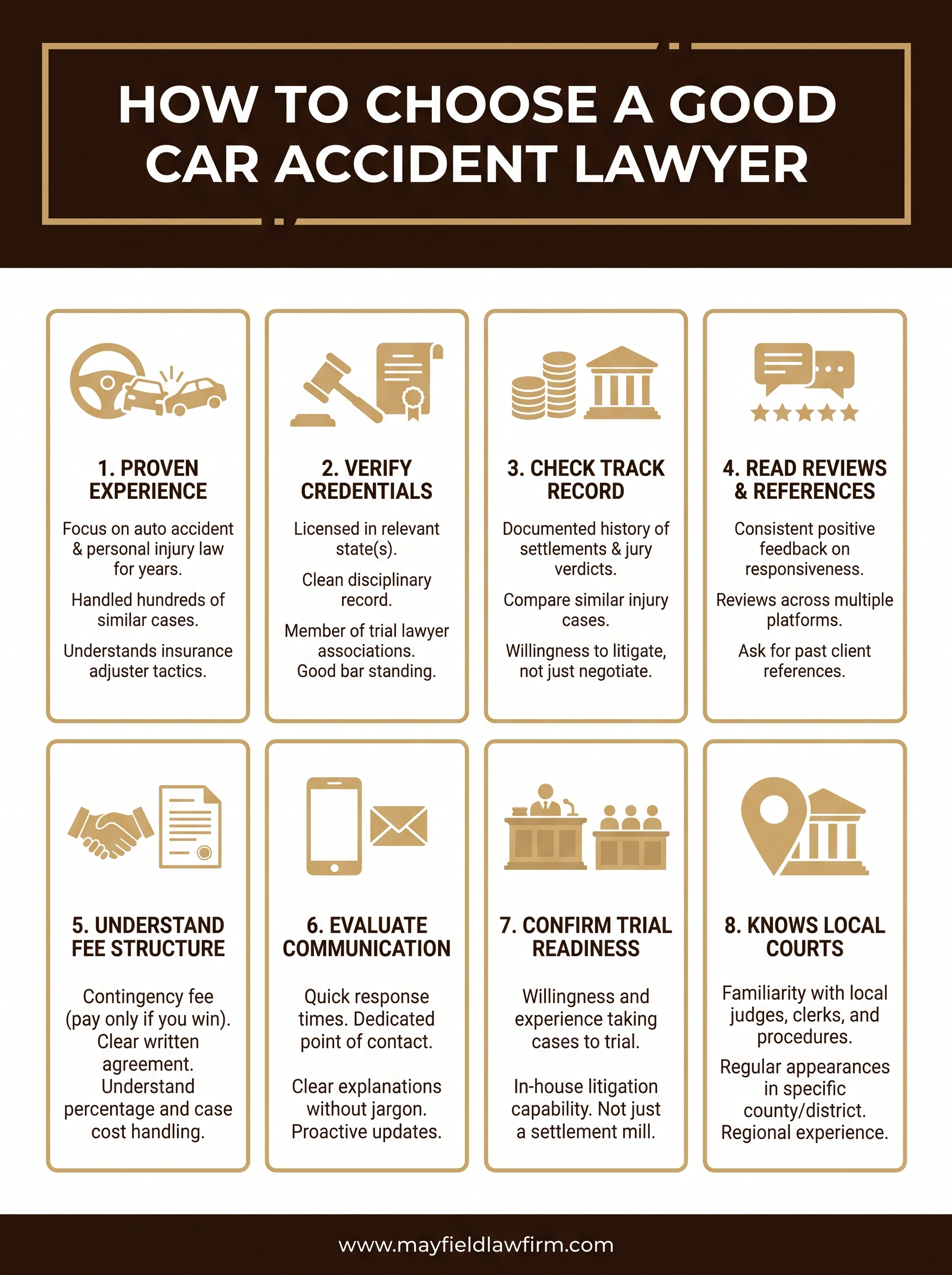
Finding a good car accident lawyer comes down to asking the right questions before you sign anything. Experience, credentials, track record, communication, trial readiness, and local court knowledge all shape whether your claim gets the attention it deserves or gets lost in a stack of files. None of these factors work in isolation. A firm that checks every box gives you real leverage against insurance adjusters who negotiate for a living.
Waiting too long to hire representation can hurt your case, since evidence disappears and deadlines pass whether you're ready or not. You've got the checklist now, so use it during every consultation you schedule. Compare answers, trust your gut, and don't settle for vague promises when your recovery is on the line.
If you're ready to talk through your situation, see what to expect at a free consultation and get straight answers from attorneys who've handled cases like yours for over 40 years.