How to Find the Best Personal Injury Lawyer Near You
You got hurt because someone else made a mistake, and now you're stuck sorting through medical bills, insurance calls, and a pile of legal jargon while trying to heal. Finding the right injury personal lawyer shouldn't add to that stress, but most people have no idea what actually separates a good attorney from one who will settle your case for pennies just to close the file.
The short answer is that you need someone with real trial experience, a track record in cases like yours, and a fee structure that doesn't punish you for asking questions. Local knowledge matters too since insurance adjusters and court procedures differ by state, and a lawyer who knows the Mississippi and Tennessee courts will spot issues an out of state firm might miss.
Below, we break down exactly what to look for, from checking case results and reading client reviews to asking the right questions during your free consultation. By the end, you'll know how to separate the lawyers who talk a good game from the ones who actually deliver for their clients.
1. Start with a local, experienced law firm
Nothing beats local expertise when you're building a personal injury case, because the lawyer down the street already knows the judges, the court clerks, and the insurance adjusters who'll be handling your file. A firm rooted in Tupelo, Southaven, or Memphis for decades has watched hundreds of similar cases move through the same courthouses you'll be dealing with, and that history translates into faster filings and fewer surprises. Skip the national ad campaigns and search for a personal injury lawyer near you who actually practices in your county, not one who just bought billboard space there.

How it works
Local firms build relationships over years of showing up in the same courtrooms and negotiating with the same insurance carriers again and again. Mayfield Law Firm, for example, has served Northeast Mississippi and South Memphis for more than 40 years, which means its attorneys already understand how local adjusters value claims and how judges in Lee County or Shelby County tend to rule on similar disputes. That familiarity often speeds up settlement talks, because the other side knows your lawyer won't fold under delay tactics or lowball offers. You benefit from a track record built case by case, in the exact system that will decide yours.
What to look for
When you're vetting a firm, check for these markers of genuine local experience:
- Years practicing in your specific courts , not just the state generally
- Physical office locations near where you live or where the accident happened
- Named attorneys with bar admission in your state, not a call center that forwards leads elsewhere
- Case history involving auto accidents, workplace injuries, or wrongful death claims similar to yours
- Direct phone access to the attorney handling your file, not just a rotating intake coordinator
A firm that checks every box above is far more likely to know exactly how your specific insurance company handles claims in your region, and that knowledge shows up in your final settlement number.
Why it matters
Hiring an out-of-town firm, or a large volume practice that farms your case out to whoever happens to be free, can cost you real money and real time. Insurance companies track which firms actually go to trial versus which ones always settle cheap and fast, and they price their offers accordingly from the first phone call.
A lawyer who already knows your local courts and adjusters can get you a fair settlement faster than one who's still learning the territory on your case.
Picking a firm with deep roots where you live, like Mayfield Law Firm's personal injury team serving Tupelo, Southaven, and Memphis, means you get a personal injury attorney who has already gone up against your insurance company, not one starting from zero on your dime.
2. Ask for personal referrals
Before you open a search engine, talk to people you already trust. Friends, family, and coworkers who've been through a similar situation can tell you things a website never will, like whether the attorney returned calls promptly or vanished for weeks at a time. A personal referral carries more weight than any online ad because it comes from someone with nothing to gain except helping you avoid their own mistakes.
How it works
Start by asking anyone in your circle who has filed a car accident claim, dealt with a workplace injury, or gone through a personal injury lawsuit in the past few years. Doctors, chiropractors, and even body shop owners often know which local firms actually fight for their clients versus which ones settle fast and move on. Word travels quickly in smaller communities like Tupelo or Southaven, so a firm with a bad reputation for lowball settlements usually gets talked about, and so does one that consistently gets results.
What to look for
When someone recommends a lawyer, dig past the surface compliment and ask specific questions:
- How responsive was the attorney throughout the case, not just at the first meeting?
- What was the final outcome , and did it match what they expected going in?
- Did the firm handle the case personally, or hand it off to someone else midway?
- Would they hire the same lawyer again for a different injury claim?
A referral that comes with detailed, specific answers is worth far more than a vague "they were great."
Why it matters
Referrals cut through marketing noise and give you a preview of what working with a firm actually feels like day to day. Someone who sat across the table from an attorney during settlement negotiations can tell you whether that lawyer pushed back on a lowball offer or just accepted whatever the insurance company handed over.
A trusted referral tells you more about a lawyer's real performance than any advertisement ever will.
Use these firsthand accounts as your starting list, then verify each name against bar records and case history before you make a final call.
3. Search state bar and online legal directories
Once you've collected a few names from referrals, verify them against official sources before you pick up the phone. The Mississippi Bar and Tennessee Board of Professional Responsibility both maintain public databases where you can confirm a lawyer's license status, disciplinary history, and years of active practice. This step takes five minutes and can save you from hiring someone who's been suspended or reprimanded without your knowledge.
How it works
Pull up your state bar's website and search the attorney's name directly, since most bar associations publish licensing dates, standing, and any public disciplinary actions filed against a lawyer. From there, cross-reference that name against reputable online legal directories like Avvo, Martindale-Hubbell, or Justia, which often include peer ratings, published case results, and a summary of the attorney's focus areas. Comparing what you find on the bar site against what's listed in a directory gives you a fuller picture than either source alone.
What to look for
When you're checking these records, focus on the details that actually predict how your case will go:
| Source | What to Check | Why It Matters |
|---|---|---|
| State bar website | License status, disciplinary record | Confirms the lawyer is currently authorized to practice |
| Avvo or Martindale-Hubbell | Peer review score, client ratings | Shows how other attorneys and clients rate the lawyer |
| Directory case history | Practice focus, years handling injury claims | Confirms real experience, not just a general practice label |
A clean bar record paired with strong directory ratings tells you the lawyer has both the credentials and the reputation to back up their marketing.
Why it matters
Skipping this step means you're trusting a firm's own website to tell you the whole truth, which it rarely does. A licensed personal injury attorney with a disciplinary flag on their bar record, or one who's actually a general practice lawyer dabbling in injury cases, won't advertise that fact on their homepage.
Checking bar records and directories takes minutes but protects you from hiring a lawyer whose credentials don't match their marketing.
Once you've confirmed a lawyer's standing is clean and their directory reputation holds up, you're ready to dig into what actual clients say about working with them.
4. Read client reviews and testimonials
Once a lawyer's credentials check out, turn to the people who've actually sat in their office. Client reviews on Google Business Profiles, Facebook, and directory sites give you a window into how a firm treats people after the contract is signed, not just during the sales pitch. A pattern of detailed, specific feedback tells you far more than a five-star average with no context.

How it works
Start with Google reviews, since they're the hardest to fake and usually the most detailed. Read past the star rating and look for specific case details , like whether the client mentions a settlement amount, how long the case took, or how often the attorney communicated during the process. Then check Facebook and the firm's own website for testimonials, comparing tone and detail across platforms to make sure the story holds up consistently everywhere you look.
What to look for
Not all reviews carry equal weight, so filter for the details that actually matter:
- Recent reviews from the past two years, since staff and case-handling practices change over time
- Specific outcomes mentioned , like settlement figures or trial results, not just "great lawyer"
- Responses from the firm to negative reviews, which show how they handle conflict
- Repeat themes across multiple reviewers, such as consistent praise for communication or consistent complaints about being ignored
A firm with a handful of glowing reviews and zero critical feedback anywhere online is worth a second look, since that pattern sometimes points to filtered or incentivized reviews rather than an honest track record.
Why it matters
Reviews reveal the day-to-day experience of hiring a firm, which matters just as much as the final settlement number. A client who felt informed and respected throughout a personal injury claim usually says so in detail, while one who felt abandoned tends to leave a warning for the next person.
Real client reviews expose how a firm actually treats people, long after the ink on the contract has dried.
Cross-reference what you read with the referrals you've already gathered, and you'll walk into your consultation with a realistic picture of how that firm operates.
5. Verify experience with your type of injury case
Every injury personal lawyer claims to handle personal injury cases, but a firm that mostly settles fender benders isn't the right fit for a case involving a semi-truck collision, a defective product, or a wrongful death claim. Digging into the attorney's actual case history for your specific injury type tells you whether they know the nuances of your situation or whether you'd be their learning curve.
How it works
Ask directly during your first phone call: how many cases like mine has your firm handled in the past five years, and what were the outcomes? A firm with genuine depth in motor vehicle accidents , workplace injuries, or medical malpractice claims should answer with specific numbers and settlement ranges, not vague reassurances. Mayfield Law Firm's attorneys, for example, handle everything from car and motorcycle accidents to wrongful death and mass tort litigation, so they can point to real precedent rather than guesswork when your case involves an unusual injury or a complicated liability question.
What to look for
Match the attorney's stated experience against the specifics of your accident before you sign anything:
- Case type match , meaning truck accidents, motorcycle wrecks, or workplace injuries similar to yours, not just "personal injury" broadly
- Settlement and verdict history for that specific injury category
- Knowledge of relevant regulations , like commercial trucking rules or workers' compensation overlap
- Experience with your insurance carrier , since some adjusters handle certain claim types differently
A car accident lawyer who has never touched a product liability case shouldn't be your first call if a defective part caused your injury.
Why it matters
Injury cases involving trucking regulations, medical negligence, or multiple defendants carry legal complexities that a generalist can miss entirely. Missing a filing deadline specific to a wrongful death claim, or failing to identify a second liable party in a workplace accident, can shrink your recovery or kill your case outright.
An attorney's experience only helps you when it matches the exact type of injury you suffered.
Once you've confirmed the firm has handled cases like yours, and settled them well, you're ready to see how they perform face to face.
6. Schedule a free consultation and ask questions
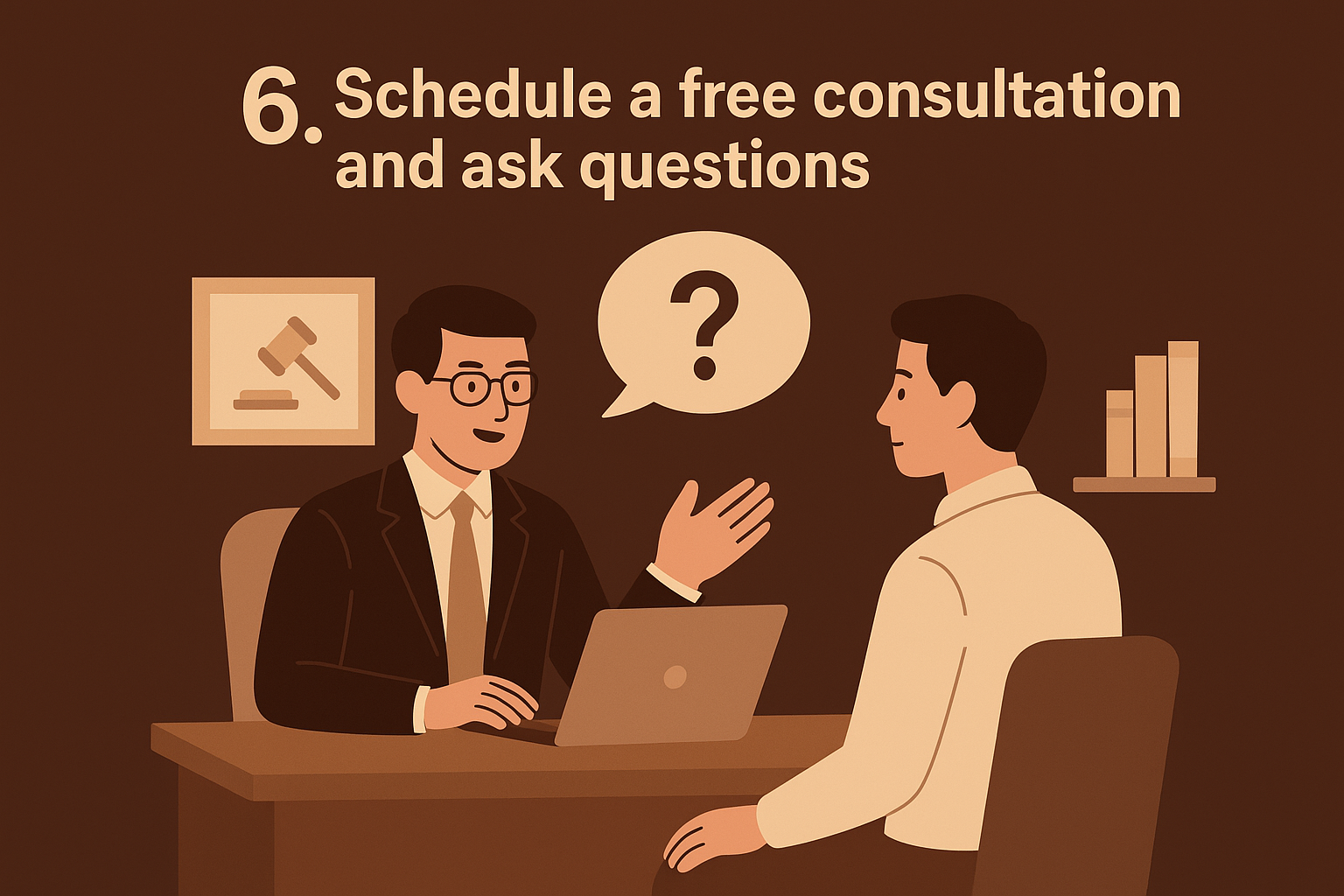
Most reputable firms offer a free consultation , and you should treat that meeting as an interview, not a formality. This is your chance to sit across from the attorney who might handle your case, ask direct questions, and gauge whether they actually listen or just talk over you about their track record. A firm that rushes this meeting or hands you off to an assistant before you've asked a single question is telling you exactly how they'll treat you later.
How it works
Book the consultation as soon as you've narrowed your list to two or three firms, and bring your accident report, medical records, and any insurance correspondence you've already received. Mayfield Law Firm offers this initial meeting at no cost, which lets you compare firms side by side without spending money before you've even decided who to hire. Pay attention to who actually shows up to the meeting, since some firms send a paralegal or intake specialist while the attorney stays in the background until you've signed paperwork.
What to look for
Walk in with a short list of questions and take notes on how directly they get answered:
- Who will handle my case day to day , the attorney I'm meeting or someone else entirely?
- What's your assessment of my case's strengths and weaknesses, based on what I've shared today?
- How often will you update me , and through what method, phone, email, or portal?
- What's a realistic timeline for a case like mine, from filing to settlement or trial?
A consultation that leaves you with clear, direct answers tells you more about a lawyer than any website ever could.
A lawyer who gives you honest, specific answers, even when they're not what you want to hear, is showing you how they'll operate through the whole case.
Why it matters
Skipping this step means signing with a firm based on a website and a phone call, without ever seeing how the attorney communicates in person. The consultation reveals whether you're dealing with a personal injury attorney who genuinely wants to understand your situation or one who's just trying to close a signature before you can compare options elsewhere.
7. Confirm the fee structure before you sign
Most personal injury lawyers work on contingency fees , meaning you pay nothing upfront and the attorney only collects a percentage if you win or settle. That arrangement sounds simple, but the details buried in the fine print, like who pays for expert witnesses or court filing costs, can shrink your final payout by thousands of dollars if you don't ask about them before signing.
How it works
Under a contingency fee agreement , the lawyer typically takes 33% to 40% of your settlement or verdict, with the exact percentage often rising if your case goes to trial instead of settling early. Separate from that percentage, you'll usually owe reimbursement for case costs, things like medical record requests, expert witness fees, and court filing charges, whether or not you win. Ask your attorney to walk through a sample settlement using real numbers so you can see exactly how much reaches your pocket after fees and costs come out.
What to look for
Before you sign a retainer agreement, get clear answers on these specifics:
| Fee Detail | Question to Ask |
|---|---|
| Percentage rate | Does it change if the case goes to trial versus settling early? |
| Case costs | Are they deducted before or after the contingency percentage? |
| Advanced expenses | Do you owe costs even if you lose the case? |
| Fee changes | Will anything shift if the case drags on for years? |
Get every one of these answers in writing, not as a verbal promise during your consultation.
Why it matters
A firm that hesitates to explain its fee structure in plain terms is often hoping you won't ask again once you've signed. Vague answers about costs now can turn into unpleasant surprises later, especially if your case involves expensive expert testimony or drags on for a year or more before resolving.
A clear fee agreement in writing protects more of your settlement than any verbal promise ever will.
Mayfield Law Firm structures its personal injury representation on contingency, so clients only pay when the firm actually wins, and every cost gets explained before you sign anything. Locking down these terms early means you won't be blindsided by deductions once the settlement check finally arrives.
8. Watch for red flags before you hire
Even after referrals, reviews, and a solid consultation, some warning signs only show up once you start paying closer attention to how a firm operates behind the scenes. A personal injury lawyer who pressures you to sign on the spot, dodges direct questions about fees, or can't name a single case result is telling you something important before you've even hired them. Trust that instinct instead of talking yourself out of it.
How it works
Red flags usually surface in small moments, not in dramatic confessions. Watch how the staff treats you on the phone before your consultation, notice whether the attorney actually reviewed your file before the meeting started, and pay attention to how quickly they promise a specific settlement number without seeing your medical records first. A firm that guarantees results before doing any real investigation is either careless or dishonest, and neither trait helps your case.
What to look for
Run through this checklist before you sign a retainer agreement with any injury attorney :
- Guaranteed outcomes promised before reviewing your medical records or accident report
- Pressure to sign immediately , especially with claims that a deadline is closing that same day
- Vague answers about who handles your case day to day
- No physical office you can visit, or an office that's clearly just a mail drop
- Unwillingness to put fees in writing , or fee terms that shift after you ask questions
- Poor communication during the consultation itself, since that pattern rarely improves once you're a client
A lawyer who avoids straight answers before you sign will likely avoid them after you've hired them too.
A single hesitant answer isn't necessarily disqualifying, but two or three of these signs together should send you back to your shortlist.
Why it matters
Signing with a firm that shows these warning signs often means slower communication, lower settlements, and a case that drags on longer than it should. Mayfield Law Firm avoids every one of these patterns by explaining fees upfront, keeping clients informed through direct attorney access, and never promising a number before reviewing the facts of your accident. Trusting your gut on these details protects you just as much as any credential check you've already done.
Choosing the right lawyer for your case
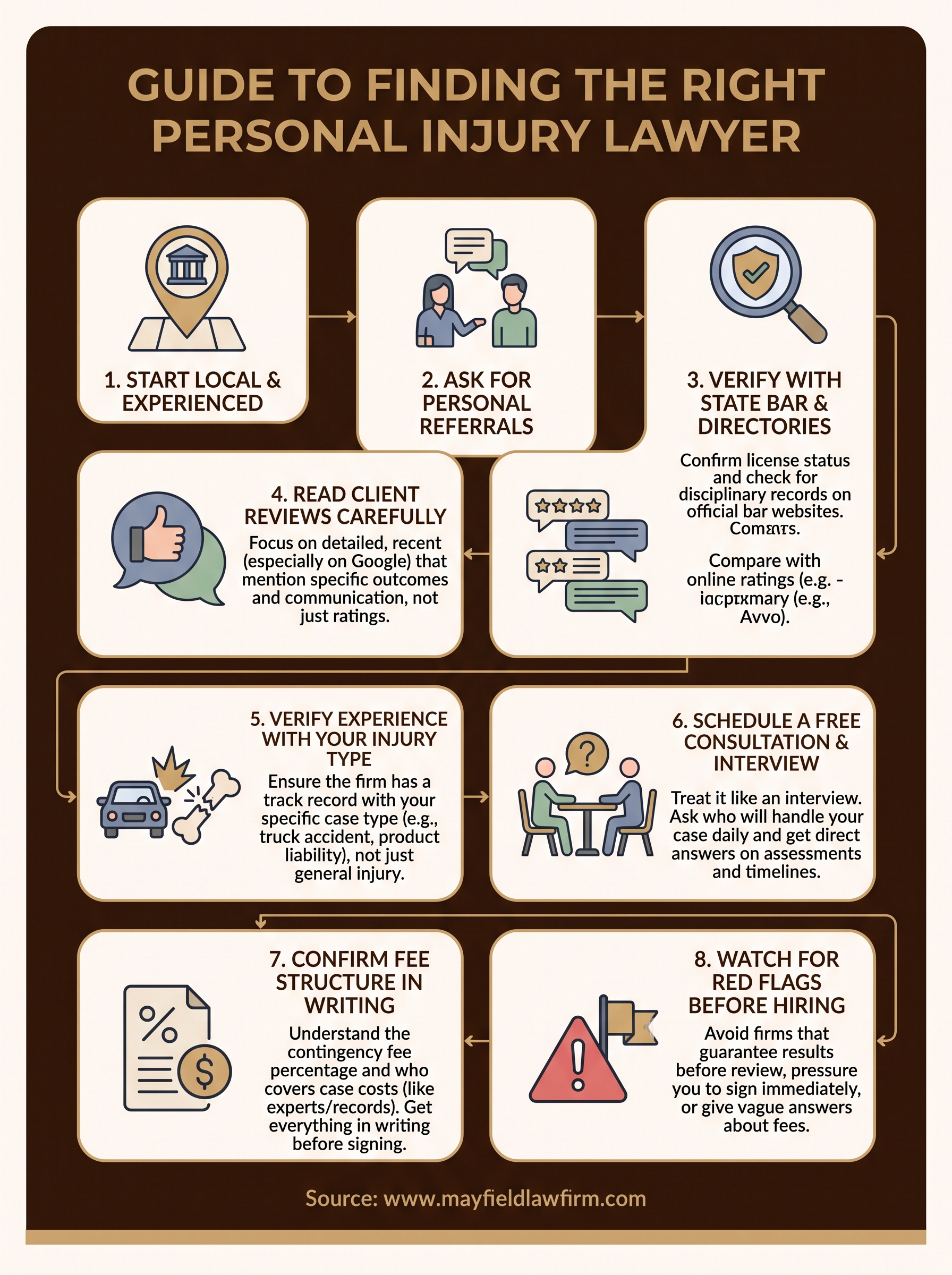
Finding the right injury personal lawyer comes down to doing the homework before you sign anything. Check local experience, verify credentials against bar records, read reviews with a skeptical eye, and confirm the fee structure in writing. None of these steps take more than a phone call or a quick search, but skipping them can cost you thousands in a settlement that undervalues what you actually deserve.
Trust the pattern you see across referrals, reviews, and your own consultation more than any single ad or website claim. A firm that answers questions directly, shows up prepared, and explains fees without hesitation is telling you how they'll treat your case from filing to settlement.
If you're dealing with an accident in Tupelo, Southaven, or Memphis, schedule a free consultation with Mayfield Law Firm and see for yourself how a firm with 40 years of local experience handles your case from day one.