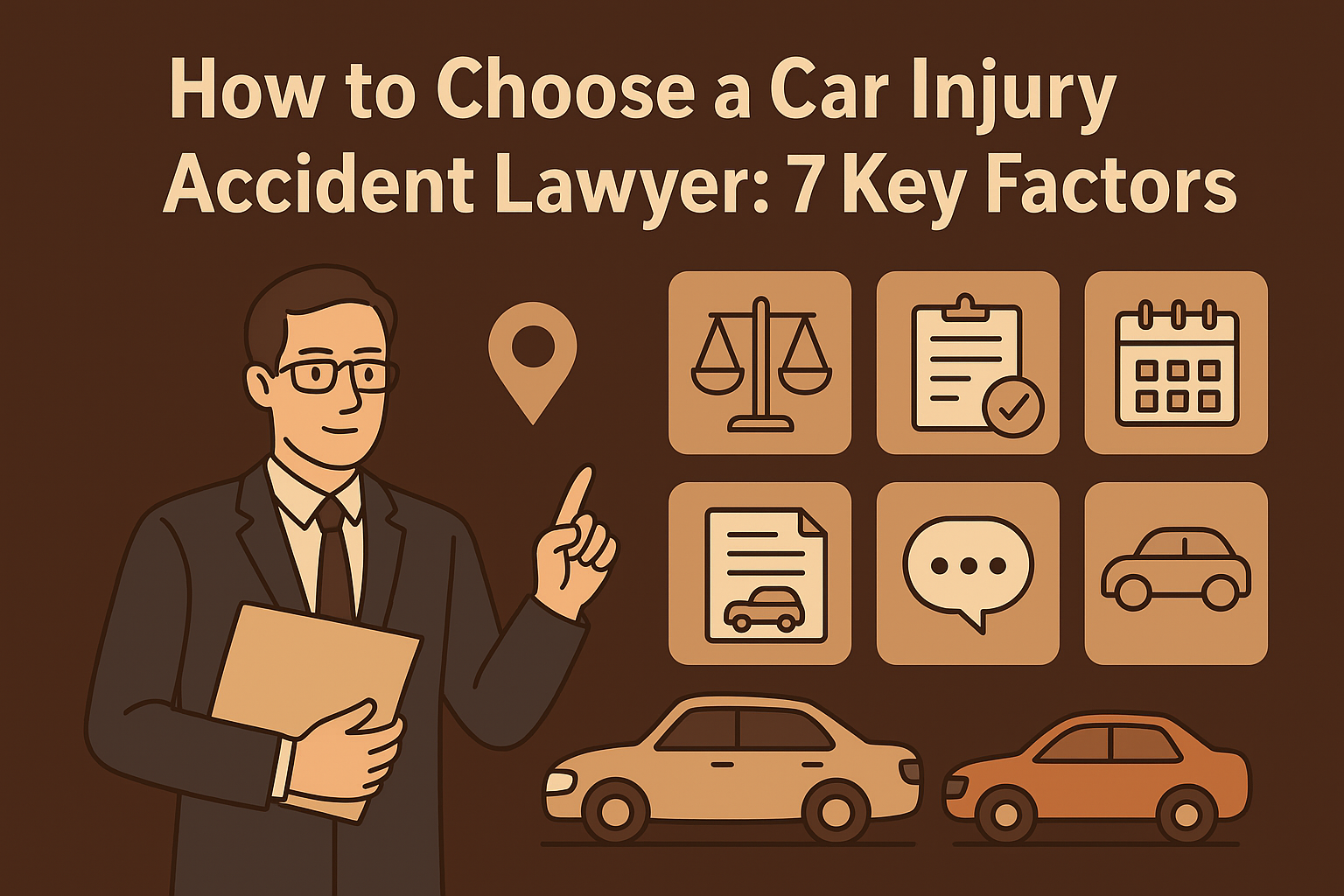
How to Hire a Personal Injury Lawyer: Questions to Ask
You got hurt because someone else made a mistake, and now you're staring at medical bills, missed paychecks, and an insurance adjuster who keeps lowballing you. Before you sign anything or accept a settlement, you need to know how to hire a personal injury lawyer who actually fights for you instead of just collecting a fee. The wrong choice costs you money and time you don't have.
Hiring the right attorney comes down to asking specific questions upfront: how they handle contingency fees , how many cases like yours they've settled or taken to trial, and who on their team will actually work your file. Skip the vague sales pitch and get real answers about case timelines and what happens if your case goes to court instead of settling.
This guide walks you through exactly what to ask during a consultation, red flags that signal an attorney isn't right for your case, and how fee structures typically work in Mississippi and Tennessee. After 40 years handling auto accident and injury claims across Southaven and Memphis, we've seen what separates a lawyer who gets results from one who just files paperwork.
Why the right personal injury lawyer matters
Insurance companies train their adjusters to settle claims fast and cheap, long before you understand the full extent of your injuries. That adjuster on the phone isn't your friend, even when they sound friendly. They're measuring your case against a formula designed to protect the company's bottom line, not your recovery. A skilled personal injury lawyer changes that dynamic immediately because insurers know a represented claimant won't accept a lowball number without a fight.
The insurance company already has a legal team
Every insurance company has attorneys on staff or on retainer, reviewing claims and building defenses before you even file paperwork. Going up against that machinery alone puts you at a serious disadvantage, especially when you're also trying to recover from an injury and manage medical appointments. Legal representation levels that playing field by putting someone in your corner who understands claims valuation, negligence law, and how insurers try to shift blame onto the injured party.
A represented claimant almost never faces the same lowball tactics as someone negotiating alone.
Settlements tend to be higher with legal representation
Research from the Insurance Information Institute consistently shows that claimants who hire attorneys recover more, even after accounting for legal fees, than those who negotiate directly with insurers. That gap widens in cases involving serious injuries, long-term medical care, or lost future wages, situations where an adjuster's initial offer rarely covers what you'll actually need. Numbers matter here, and so does knowing which costs to include in a demand letter, from future surgeries to diminished earning capacity.
| Case Handling Method | Typical Outcome |
|---|---|
| Self-represented claimant | Faster settlement, often below actual damages |
| Attorney-represented claimant | Longer negotiation, settlement closer to full case value |
| Litigation with trial-ready attorney | Highest average recovery, includes future damages |
Deciding to hire counsel early, rather than after a denial or lowball offer, gives your attorney time to gather evidence while it's fresh.
Deadlines can end your case before it starts
Mississippi gives you three years from the date of injury to file a personal injury lawsuit, while Tennessee's window is just one year. Miss that statute of limitations , and no amount of evidence or injury severity will get your case back into court. Attorneys track these deadlines as part of their job, but if you're handling a claim solo, it's easy to lose track of dates while you're focused on recovery.
Sourcing your own medical records, photographing the accident scene, and tracking down witnesses gets harder the longer you wait. A lawyer who takes your case early can preserve evidence, send preservation letters to at-fault parties, and start building your claim while details are still fresh in everyone's memory.
Step 1. Confirm the lawyer's experience and specialization
Before you hire a personal injury lawyer , find out whether personal injury is actually their focus or just one of several practice areas they dabble in. A lawyer who handles wills, divorces, and injury cases in the same week isn't building the specialized knowledge that comes from negotiating with insurance adjusters every day. Ask directly how many years they've spent on injury claims and what percentage of their caseload involves auto accidents, workplace injuries, or wrongful death.
Look beyond years in practice
Years in business tell you less than actual case outcomes. Two attorneys can both have 20 years of experience, but one might have settled hundreds of auto accident claims while the other spent most of that time in courtrooms unrelated to injury law. Push for specifics during your consultation:
- How many personal injury cases have you settled in the last three years?
- How many cases have you taken to trial, and what were the results?
- Do you personally handle my case, or does it get passed to a junior associate?
Case volume and trial results tell you more about a lawyer's skill than years in practice ever will.
Match specialization to your injury type
A firm that mostly handles fender-benders may not have the resources or medical expert network needed for a case involving traumatic brain injury or a wrongful death claim. Specialization within personal injury matters because catastrophic injury cases require different evidence, different damage calculations, and often different expert witnesses than a straightforward rear-end collision.
| Case Type | What to Look For |
|---|---|
| Auto accidents | Experience with insurance negotiation and accident reconstruction |
| Workplace injuries | Familiarity with workers' comp overlap and third-party liability |
| Medical malpractice | Access to medical experts and prior verdict history |
| Wrongful death | Experience calculating long-term financial loss for families |
Specialization directly affects how much leverage your attorney has when the insurance company starts pushing back.
Step 2. Check reviews and peer ratings
Online reviews tell you how a personal injury lawyer actually treats clients once the retainer is signed, not just what their marketing promises. Search the firm's name alongside "reviews" on Google, and read past the five-star ratings to the actual comments about communication, responsiveness, and whether the client felt informed throughout the process. A pattern of complaints about unreturned calls or surprise fees matters more than a single bad review from someone who lost a weak case.
Weigh volume and recency over star count alone
Five stars from three reviews posted six years ago tells you far less than a 4.6 average built on 200 recent reviews. Look for firms with a steady stream of feedback across several years, which suggests consistent client experiences rather than a handful of favors called in from friends and family. Pay attention to how the firm responds to negative reviews too, since a professional, non-defensive reply says something about how they'll handle disagreements with you.
A steady stream of recent reviews tells you more than a handful of five-star ratings from years ago.
Verify standing with the state bar
Every attorney licensed in Mississippi or Tennessee has a disciplinary record you can check for free. The American Bar Association maintains links to each state bar's lawyer lookup tool, where you can confirm license status and see whether the attorney has faced any formal complaints or sanctions.
| Verification Step | Where to Check |
|---|---|
| License status | State bar association website |
| Disciplinary history | State bar complaint database |
| Peer recognition | Legal directories and bar association awards |
| Client feedback | Google Business reviews, testimonials |
Combining bar records with client reviews gives you a fuller picture than either source alone. Neither one replaces a direct conversation, but together they help you walk into your consultation already knowing whether this firm has a track record worth trusting.
Step 3. Ask the right questions during your consultation
Most firms offer a free consultation, but treat it as an interview rather than a formality. This meeting is your best chance to hire a personal injury lawyer who fits your specific case instead of one who simply agrees to take it. Walk in with a written list of questions and pay attention to whether the attorney gives you direct answers or steers you toward vague reassurances about "getting you what you deserve."
Ask about strategy and case value
Getting specifics upfront tells you whether this attorney has actually evaluated your situation or is reciting a standard pitch. Push past general answers and ask about the numbers and timeline that apply to your claim.
- What is your initial assessment of my case's strengths and weaknesses?
- What's a realistic settlement range based on similar cases you've handled?
- How long do you expect this case to take from filing to resolution?
- What evidence do we still need to gather, and who's responsible for collecting it?
An attorney who won't give you a straight answer about case value in the first meeting probably won't give you one later either.
Ask about communication and access
Many client complaints about personal injury firms have nothing to do with case outcomes and everything to do with silence. Clarifying communication expectations now prevents frustration three months into your case, when you're waiting on updates about medical liens or a settlement offer.
- Will I be working directly with you, or primarily with a paralegal or associate?
- How quickly can I expect a response to calls or emails?
- Who do I contact if you're unavailable?
- How often will I receive updates, even when nothing major has happened?
Settling on clear answers to these questions before you sign anything protects you from the common scenario where a firm's marketing team answers the phone but nobody returns your calls once the retainer is signed. If the attorney hesitates or gives you a runaround during the consultation itself, that's a preview of what your entire case will feel like.
Step 4. Review fees and sign the engagement letter
Before you hire a personal injury lawyer, get the fee structure in writing and read every line before you sign. Most firms work on contingency fees , meaning you pay nothing upfront and the attorney only gets paid if your case settles or wins at trial. That arrangement sounds simple, but the percentage and the deductions built into it vary enough between firms to change what actually lands in your pocket at the end.

Know what percentage you're actually paying
Contingency fees typically run between 33% and 40% of your settlement, with the higher end often kicking in if your case goes to trial rather than settling early. Ask whether the percentage changes at different stages, and get a clear answer on how case expenses like expert witness fees, medical record retrieval, and court filing costs get handled.
| Fee Element | What to Ask |
|---|---|
| Contingency percentage | Does it increase if the case goes to trial? |
| Case expenses | Are they deducted before or after the attorney's fee? |
| Unused expenses | Do I owe anything if we lose the case? |
| Payment timing | When do I receive my portion after settlement? |
Get the exact percentage and expense breakdown in writing before you sign anything.
Read the engagement letter line by line
The engagement letter spells out the scope of representation, the fee agreement, and what happens if you want to switch attorneys mid-case. Don't skim it. Confirm it matches everything discussed in your consultation, especially the contingency percentage and how medical liens get resolved out of your settlement.
- Does the letter specify the exact contingency percentage?
- Are case costs itemized or lumped into a vague
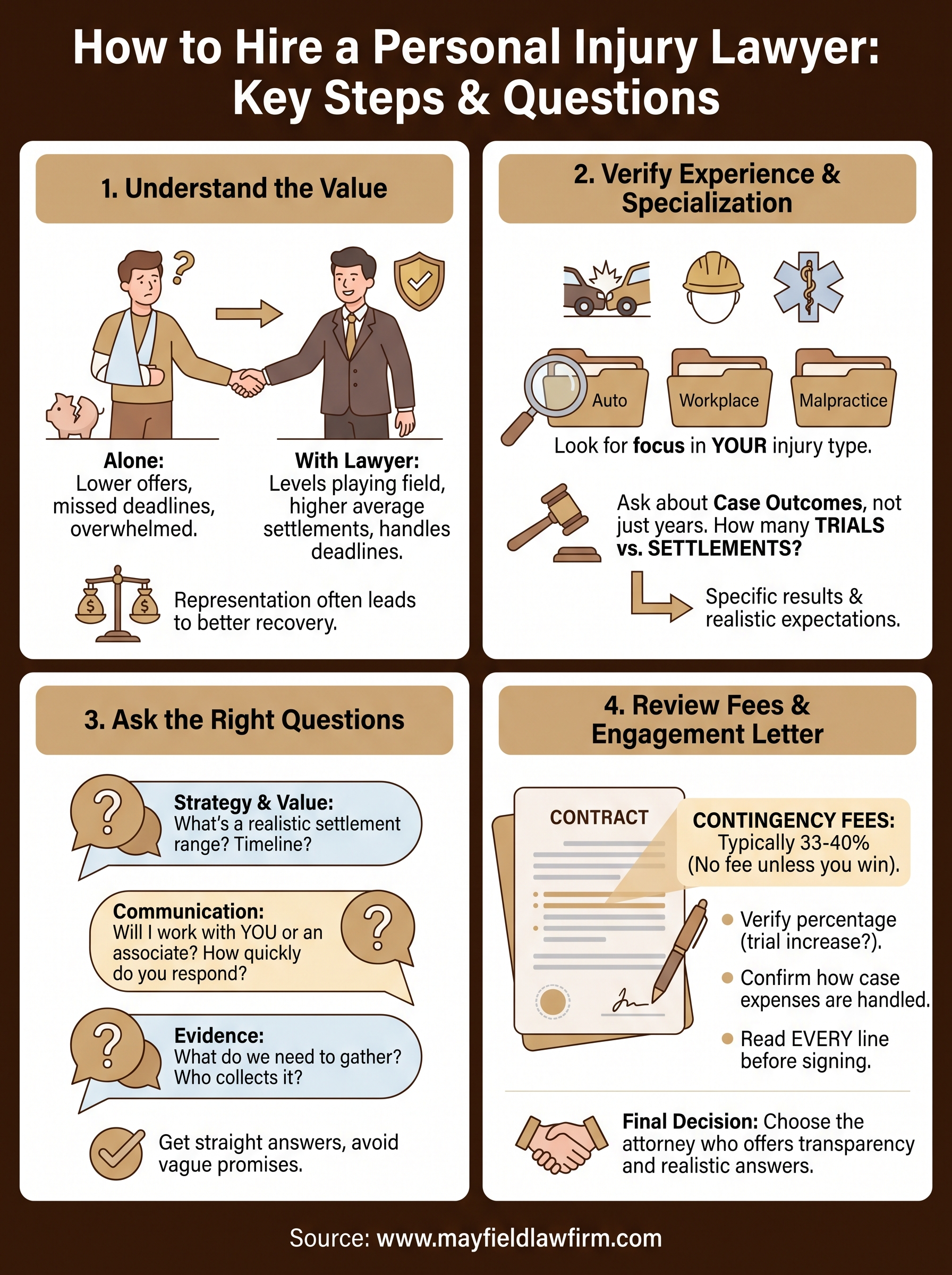
Making your final decision
You've checked experience, read reviews, asked hard questions, and reviewed the fee agreement line by line. Now trust what you learned in that consultation. The attorney who answered directly, explained realistic settlement ranges, and put fees in writing without hesitation is the one worth hiring. The one who dodged questions or rushed you toward a signature isn't worth your case, no matter how polished their office looked.
Getting hurt already cost you enough time and money. Don't let a rushed decision about legal representation cost you more. Take what you've learned here, compare it against your notes from each consultation, and pick the firm that treated your questions seriously from the first phone call.
If you're in Southaven, Memphis, or anywhere across Northeast Mississippi and South Memphis, schedule a free consultation with Mayfield Law Firm and get straight answers about your case before you decide anything.