
Debt Collection Lawsuit Attorney: What They Do and When to Hire One
A lawsuit summons from a debt collector lands hard. Your first instinct might be to ignore it, hoping it goes away, or to panic and pay whatever they demand just to make it stop. Neither move protects you, and a debt collection lawsuit attorney is often the difference between a judgment that garnishes your wages and a case that gets dismissed or settled on your terms.
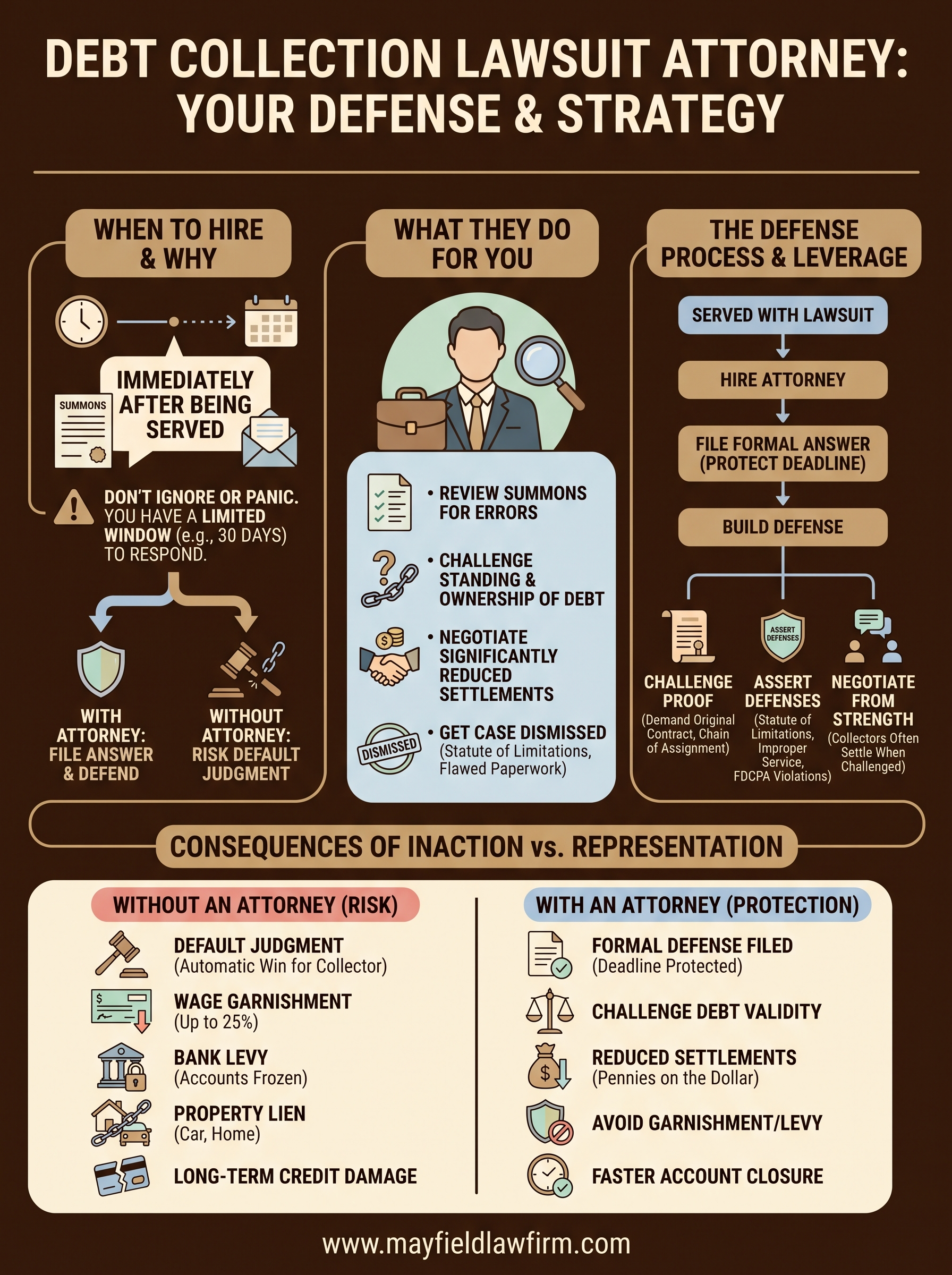
So what does this kind of attorney actually do? They review the summons and complaint for errors, challenge whether the collector even owns the debt or has standing to sue, and negotiate settlements that can cut what you owe significantly. If the debt is past the statute of limitations, or the paperwork doesn't hold up, they can get the case thrown out entirely. Knowing when to hire one matters just as much: the moment you're served, not after a default judgment already hits your credit report.
Below, we break down exactly what a debt collection defense attorney does, the warning signs that mean you need one now, and how the process works if you're facing a lawsuit in Mississippi or Tennessee.
Why hiring a debt collection lawsuit attorney matters
Mississippi and Tennessee courts move fast once a debt collector files suit, and most defendants never show up to fight back. That silence is exactly what collection agencies count on. Without a debt collection lawsuit attorney , you have roughly 30 days to respond, and missing that window almost always means the collector wins by default, whether or not the debt is even valid.
Default judgments happen fast
Once a judge signs a default judgment, the collector gains legal tools to collect that far exceed anything they could do before filing suit. A single missed deadline hands them:
- The right to garnish your wages , often up to 25% of disposable income under federal limits
- The ability to freeze or levy your bank accounts
- A lien placed against your car, home, or other property
- A judgment that stays on public record for years and follows you if you move
These consequences are avoidable, but only if someone challenges the case before the clock runs out.
Collectors bank on your silence
Debt buyers file thousands of these suits every month, often with thin documentation proving they actually own the debt or calculated it correctly. When a licensed attorney shows up and demands proof, many cases fall apart or settle for pennies on the dollar. Collectors rarely expect pushback, and that's the leverage a good defense creates.
A debt collector's biggest advantage disappears the moment you show up with representation.
The cost of doing it alone
Handling the lawsuit yourself is possible, but the outcomes look very different depending on whether you have legal representation.
| Without an Attorney | With an Attorney |
|---|---|
| Default judgment risk within 30 days | Formal answer filed, deadline protected |
| No challenge to debt validity or ownership | Standing and documentation challenged |
| Full balance often owed, plus interest | Settlements frequently reduced significantly |
| Wage garnishment or bank levy likely | Garnishment often avoided entirely |
Getting help early costs far less than losing a judgment you never had to accept.
How a debt collection lawsuit attorney defends your case
Once you're served, a debt collection lawsuit attorney builds a defense around three things: the paperwork, the deadline, and the leverage you didn't know you had. Instead of reacting to scare tactics, they pull apart the complaint line by line looking for gaps the collector hoped you'd never notice.
Challenging standing and proof
Most debt buyers purchase accounts in bulk and can't always prove they own your specific debt or calculated the balance correctly. Your attorney demands the original contract , the chain of assignment, and an accurate accounting. When that proof doesn't exist, courts often dismiss the case outright.
If a collector can't prove the debt is yours and accurate, the case usually falls apart.
Filing the answer and asserting defenses
A formal answer must hit the court within the deadline, and it's where your attorney raises defenses like the statute of limitations , improper service, or violations of the Fair Debt Collection Practices Act. Missing this step means losing by default, so timing matters as much as the argument itself.
Negotiating from strength
When dismissal isn't realistic, your attorney negotiates a settlement on your terms, often for a fraction of the original balance, with a payment structure you can actually manage. Collectors settle more readily once they realize you're prepared to fight in court rather than fold under pressure.
What to expect after being served with a lawsuit
Getting served feels chaotic, but the process itself follows a predictable pattern once you know what's coming. Service typically happens through a process server, sheriff's deputy, or certified mail, and the paperwork includes a summons and a complaint spelling out what the collector claims you owe. A debt collection lawsuit attorney can tell you within minutes whether the service itself was valid, which matters more than most people realize.
The clock starts the day you're served
Mississippi and Tennessee both give defendants a limited window, usually around 30 days, to file a formal answer. That deadline doesn't pause for holidays, confusion, or waiting to see if the collector "forgets" about the case. Missing it hands the collector an automatic win.
The deadline on that summons is the single most important date on your calendar right now.
What documents you should gather
Before your first meeting with an attorney, pull together anything related to the debt:
- The summons and complaint itself
- Any prior letters or notices from the collector
- Account statements or contracts, if you still have them
- Records of past payments or disputes
What happens at the first consultation
During an initial review, your attorney examines the complaint for procedural errors , checks whether the statute of limitations has passed, and outlines realistic options, whether that's dismissal, settlement, or trial. Most firms, including ours, offer this evaluation as a free consultation , so there's no cost to understanding where you stand before deadlines close in.
How to choose the right attorney for your case
Not every lawyer who handles debt cases will fight the way you need them to. Some firms treat these lawsuits as paperwork mills, filing generic answers and pushing quick settlements without ever challenging whether the collector can prove its case. Picking the right debt collection lawsuit attorney means looking past the ad and asking specific questions before you sign anything.
Questions worth asking upfront
Ask any attorney you're considering how they actually approach these cases, not just whether they'll take yours. Their answers tell you a lot about whether they'll fight or fold.
- How many debt collection cases have you handled in Mississippi or Tennessee courts?
- Do you challenge standing and documentation, or move straight to settlement?
- What's your fee structure, and is the initial consultation free?
- Will you personally handle my case, or hand it off to someone else?
- Can you explain the likely timeline for my specific situation?
Local experience matters more than you'd think
Courts in DeSoto County or Shelby County have their own procedural quirks, filing deadlines, and even judges with known tendencies on default judgments. An attorney who regularly appears in these local courts knows which arguments actually land and which clerks catch filing errors before they cost you a hearing date.
The right attorney knows your local courthouse as well as they know the law.
Trust your first impression
A good attorney explains your options clearly, answers questions without rushing you, and gives you a realistic sense of outcomes rather than empty promises. If someone guarantees a dismissal before reviewing your paperwork, that's a red flag worth taking seriously.
Common questions about debt collection lawsuits
Most people facing a summons have the same handful of worries, and the answers rarely match what they assumed. Here are the questions clients ask most often when they first sit down with a debt collection lawsuit attorney .
Can I still be sued if the debt is old?
Yes, but old debt often means the statute of limitations has already expired. In Mississippi, that's typically three years for open accounts; Tennessee allows six. Collectors sometimes file anyway, hoping you won't notice the debt is too old to enforce in court.
Will I have to go to court in person?
Usually, at least once, though many cases resolve through negotiation before trial. Your attorney handles most filings and hearings, and court appearances are often brief procedural check-ins rather than dramatic courtroom battles.
What if I can't afford a lawyer?
Most firms, including ours, offer a free consultation so cost isn't a barrier to understanding your options. Many attorneys also work on flat fees for these cases rather than hourly billing, which keeps costs predictable.
A free consultation costs nothing, but ignoring a summons can cost you years of garnished wages.
Does settling hurt my credit more than fighting?
Not necessarily. A negotiated settlement often looks better on your credit report than an unpaid judgment, and it closes the account faster than dragging the case through trial.
Getting help before your court date
A debt collection lawsuit doesn't resolve itself, and waiting until the week before your court date shrinks your options fast. Once you understand what's at stake, the choice is simple: respond with a plan or risk a default judgment that follows you for years. A debt collection lawsuit attorney reviews your paperwork, checks the deadline, and builds a defense while you still have time to act, not after the collector already has the upper hand.
Every day you wait is a day closer to that 30-day deadline closing. Bring your summons, gather what documents you have, and get a professional read on where you actually stand before assuming the worst. Southaven and Memphis courts move on their own schedule, and the sooner someone experienced steps in, the more options stay on the table.
If you've been served, don't guess your next move. Schedule a free consultation with Mayfield Law Firm before your court date arrives.

