Injured in a Car Accident? What a Lawyer Can Do for You
Getting hit by another driver flips your week upside down. Between the ER visit, the rental car hassle, and the insurance adjuster who keeps calling before your neck even stops hurting, it's easy to feel outmatched. If you've searched for an injured in car accident lawyer , you're likely trying to figure out whether you actually need one or if you can just handle the claim yourself.
Here's the short answer: a lawyer changes what you can recover and how much stress you carry along the way. A good attorney investigates the crash , deals directly with insurance companies, and pushes for compensation that covers more than just your medical bills, things like lost wages, future treatment, and pain and suffering that most people don't know to ask for.
In this article, we'll walk through exactly what a car accident lawyer does at each stage, from the first call to a possible settlement negotiation or trial. If you're in Northeast Mississippi or South Memphis and weighing whether to call one, this breakdown will show you what to expect and why timing matters more than most injured drivers realize.
Why you need a lawyer after a car accident injury
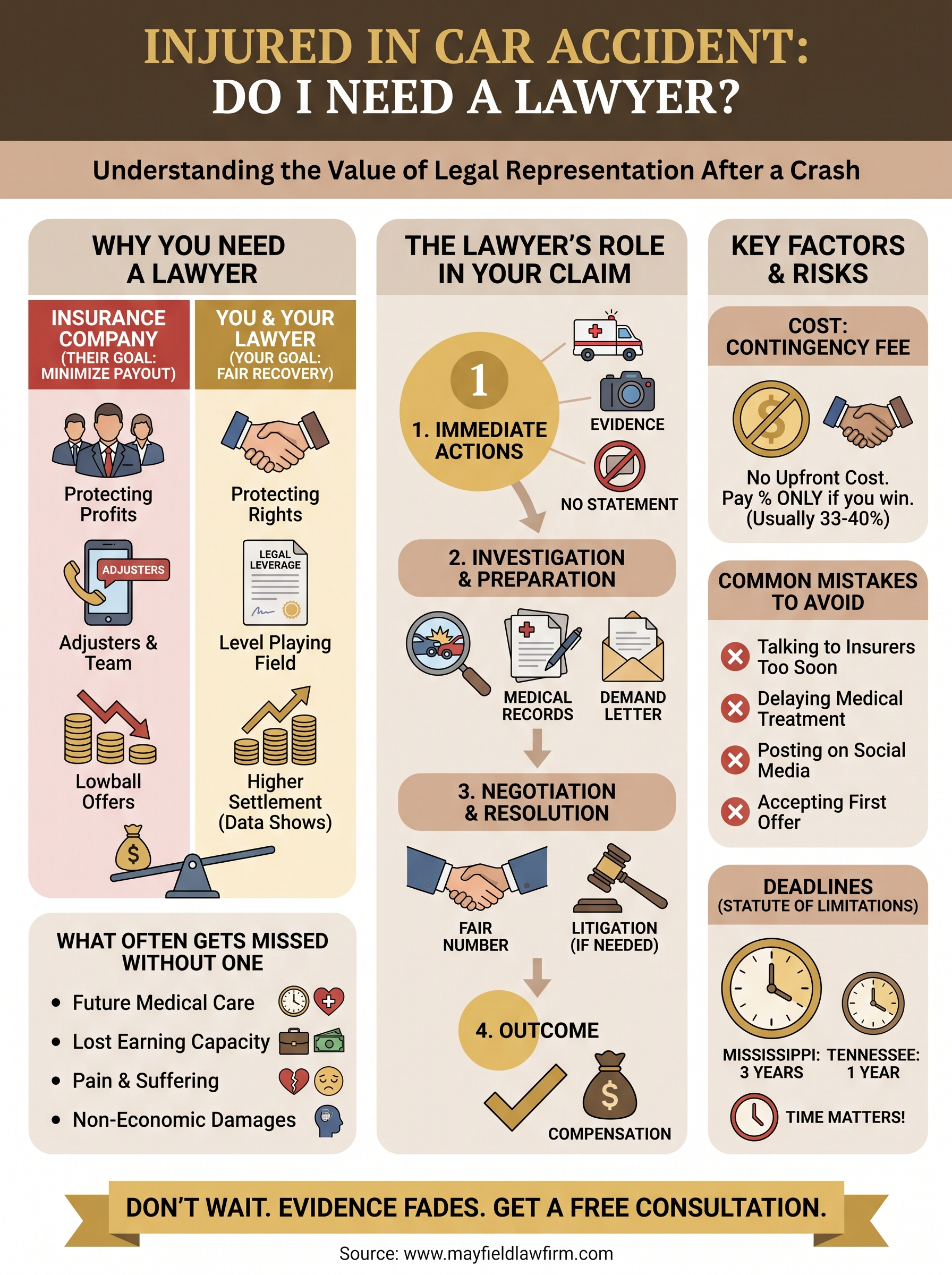
Skipping legal help after a serious wreck almost always costs you more than hiring a lawyer would. The insurance company on the other side has a team of adjusters, defense attorneys, and claims software all working to close your file for as little as possible. You, meanwhile, are trying to heal, keep up with bills, and figure out medical terminology you've never heard before. That imbalance is exactly why so many people who search for an injured in car accident lawyer end up hiring one within days of the crash rather than weeks later.
Insurance adjusters aren't working for you
Adjusters sound friendly on the phone, but their job is to protect the insurer's bottom line, not yours. They'll often call within 24 hours of the crash, ask you to give a recorded statement, and quietly note anything you say that they can later use to shrink your payout. Recorded statements taken before you've seen a doctor or understood the full extent of your injuries almost always work against you.
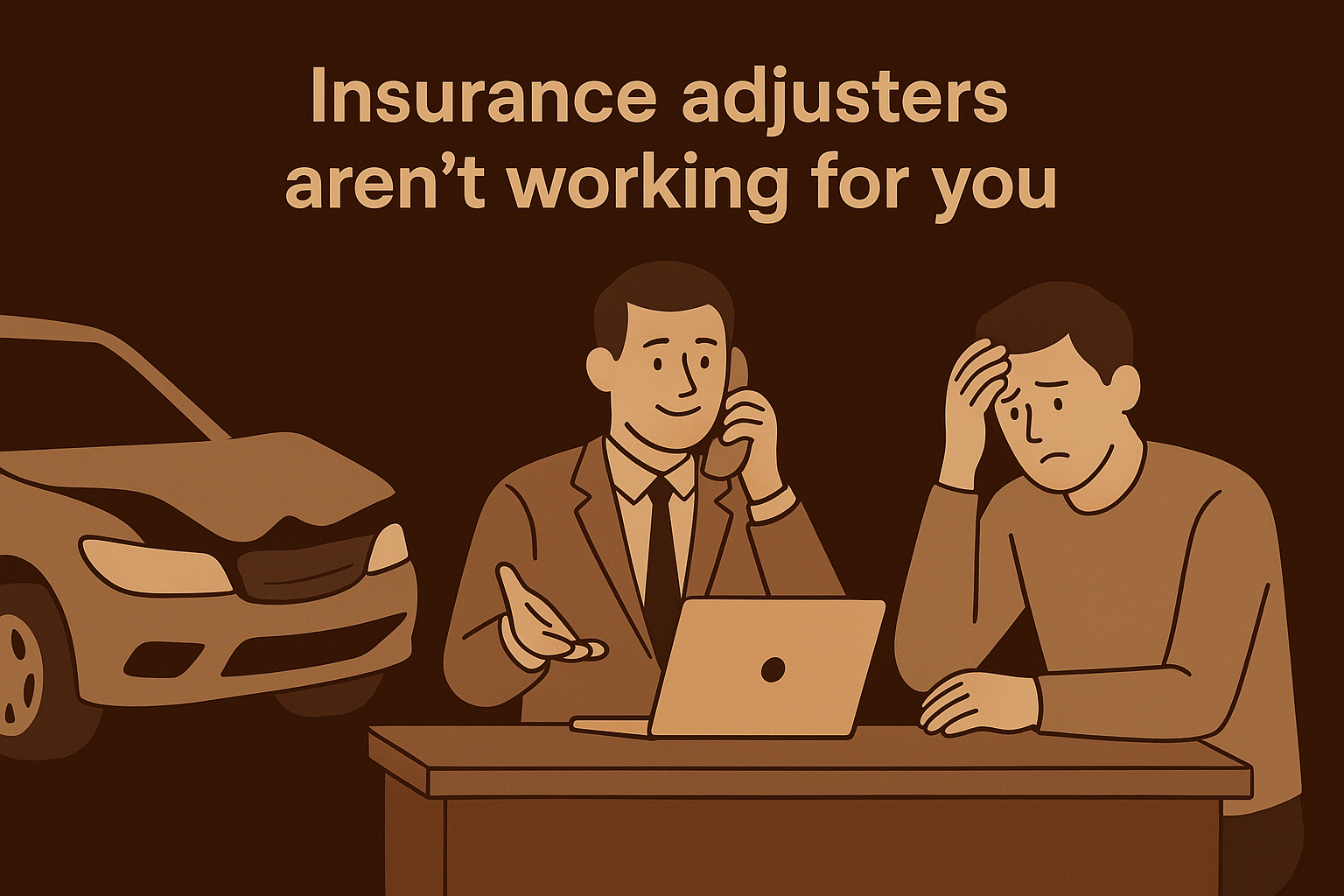
The insurance company's first offer is designed to close the file cheap, not to cover what you actually lost.
A lawyer intercepts those calls, controls what information goes out, and makes sure nothing you say gets twisted into a reason to deny or lowball your claim.
The financial stakes are usually bigger than they first appear
Most people underestimate what a car accident actually costs them over time. The ER bill and the tow truck fee are obvious, but future medical care , lost earning capacity if you can't return to your old job, and the value of chronic pain rarely show up on any receipt. A lawyer who's handled hundreds of these claims knows how to calculate those numbers with support from medical experts and, when needed, economists.
Here's a quick look at what often gets missed when someone settles without legal help:
- Follow-up surgeries or physical therapy months after the crash
- Lost promotions or overtime tied to missed work
- Property damage beyond the vehicle itself
- Mileage and out-of-pocket costs for every medical appointment
- Pain and suffering tied to a permanent injury or scarring
Each of those items has real dollar value, and insurance companies rarely volunteer to include them unless someone with legal leverage asks.
You're negotiating against people who do this every day
Understanding your legal rights and courtroom procedure with medical bills piling up isn't something most drivers have time to master, and that gap gets exploited constantly. Adjusters know the difference between a claim filed by someone without representation and one filed through an attorney's office, and the settlement offers reflect that difference. Data from insurance industry studies consistently shows represented claimants recover significantly more than those who negotiate alone, partly because a lawyer knows the fair value of a claim and won't accept the first number offered.
Without that leverage, you're negotiating blind against a company whose entire business model depends on paying out less than your claim is worth. Bringing in a car crash injury lawyer levels that playing field from the very first phone call, and it costs you nothing out of pocket to find out where you stand, which we'll cover in the pricing section below.
How a car accident lawyer handles your claim
Hiring a car accident lawyer kicks off a process that most people never see, but it's the reason represented claims tend to end with bigger checks. From the moment you sign on, the attorney's office starts building a file that documents every dollar you've lost and every way the crash has changed your life. Knowing the stages ahead of time helps you understand why some claims take a few months and others stretch past a year.
Investigating the crash before evidence disappears
Speed matters here. Skid marks fade, traffic camera footage gets overwritten, and witnesses forget details within weeks. A thorough investigation typically includes pulling the police report, photographing the vehicles and scene, tracking down witness statements, and requesting the at-fault driver's insurance policy limits. Some firms bring in accident reconstruction specialists for serious crashes involving disputed fault or catastrophic injury.
The evidence that wins a claim is almost always gathered in the first few weeks, not the last few.
Managing your medical treatment and records
Your lawyer doesn't practice medicine, but they do make sure your treatment is documented in a way that supports your claim. That means requesting complete medical records , coordinating with your providers on billing liens, and flagging gaps in treatment that insurers love to point to as proof you weren't really hurt. Staying consistent with appointments matters just as much as the injury itself when it comes time to prove damages.
Negotiating instead of settling for the first offer
Once your treatment stabilizes, the lawyer packages everything into a demand letter that lays out liability, medical costs, lost income, and pain and suffering, then sends it to the insurer with supporting documentation attached. Negotiations often go through several rounds before both sides land on a number. Here's roughly how that process unfolds:
- Demand letter sent with a specific dollar figure
- Insurance company responds with a counteroffer, usually low
- Attorney counters with additional evidence or expert opinions
- Both sides negotiate until a fair number is reached
- If talks stall, a lawsuit gets filed to keep the case moving
Taking the case to court when needed
Filing suit doesn't necessarily mean a trial. Most cases still settle before reaching a courtroom, but having a lawyer willing to litigate changes how seriously the insurance company treats your claim from the start. That willingness to fight is often what pushes a stalled negotiation toward a fair settlement.
What compensation you can recover after a crash
Most people call an auto accident injury attorney thinking only about medical bills, but a well-built claim covers far more ground than the hospital invoice. Damages generally fall into two buckets: economic losses you can prove with receipts and pay stubs, and non-economic losses that compensate for pain, disruption, and loss of normal life. Knowing both categories exist before you sign a release is what keeps you from settling for a fraction of what the crash actually cost you.
Economic damages you can document
Economic damages cover the costs you can back up with paperwork. Medical expenses top the list, including ambulance rides, surgeries, physical therapy, and prescriptions, along with projected future care if your injury requires ongoing treatment. Lost wages come next, covering time missed from work now and reduced earning capacity if the injury limits what job you can do going forward. Property damage, mileage to appointments, and even the cost of hiring help for chores you can't do yourself all belong in this category.
Non-economic damages for pain and disruption
Non-economic damages don't come with a receipt, which is exactly why insurers try to minimize them. Pain and suffering accounts for the physical discomfort and emotional toll of the injury, while loss of enjoyment of life covers hobbies, relationships, or activities you can no longer do the same way. Severe cases may also include compensation for disfigurement or permanent disability.
A fair settlement pays for what the crash took from your life, not just what it took from your wallet.
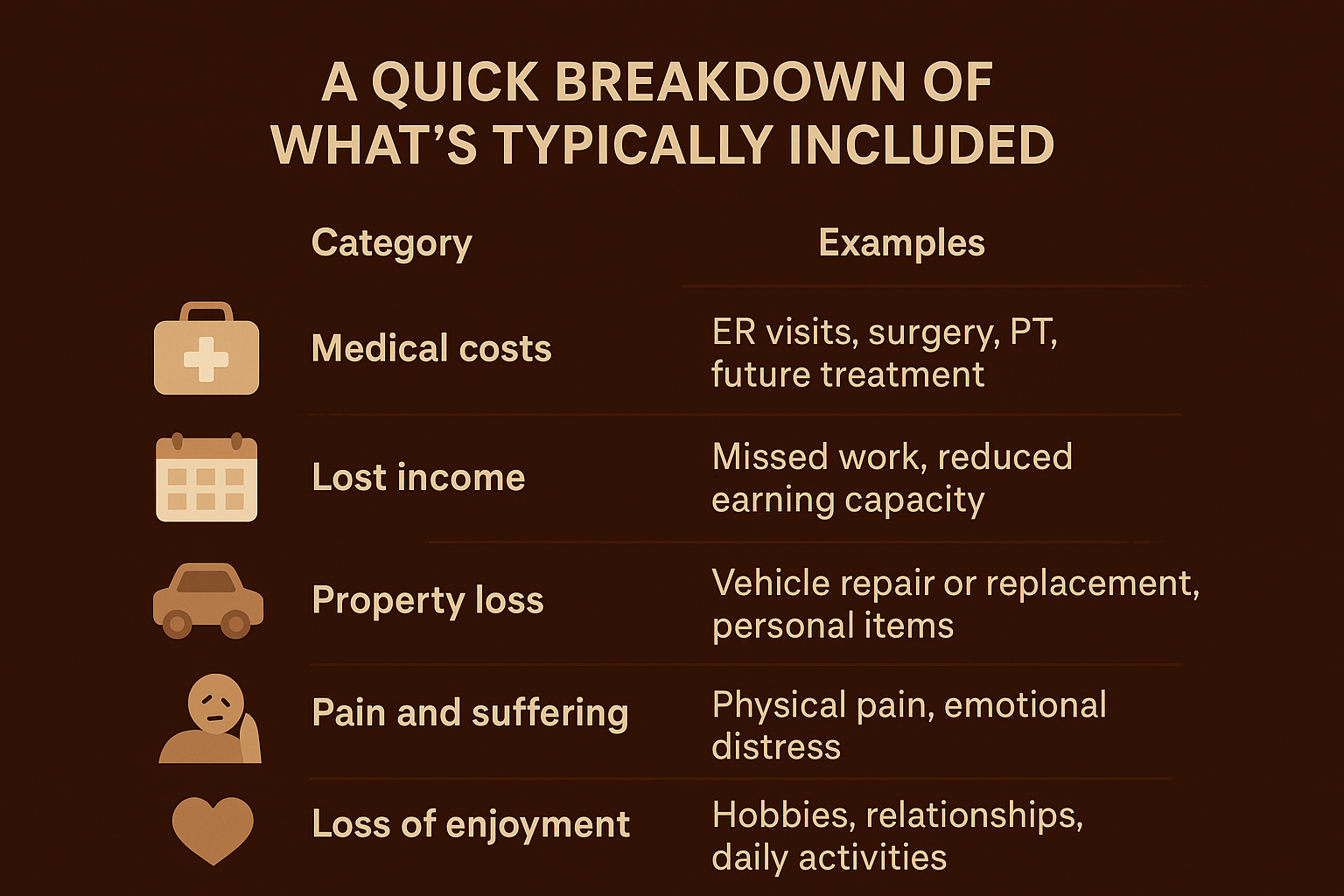
A quick breakdown of what's typically included
| Category | Examples |
|---|---|
| Medical costs | ER visits, surgery, PT, future treatment |
| Lost income | Missed work, reduced earning capacity |
| Property loss | Vehicle repair or replacement, personal items |
| Pain and suffering | Physical pain, emotional distress |
| Loss of enjoyment | Hobbies, relationships, daily activities |
| Wrongful death | Funeral costs, loss of companionship (fatal crashes) |
Rarely, punitive damages get added when the at-fault driver's conduct was reckless, like drunk driving, though Mississippi limits when these apply. Sorting out which categories fit your case takes someone who's calculated these numbers before, which is exactly the value a car accident lawyer for injury claims brings to the table before you ever sign anything with the insurance company.
Common mistakes that can hurt your claim
Even a strong case can lose value fast if you make the wrong move in the days after a crash. Insurance companies know the common slip-ups, and they're trained to capitalize on them before you ever call an injured in car accident lawyer . Recognizing these mistakes early can save you thousands of dollars and a lot of frustration down the line.
Talking to the insurance company too soon
Giving a recorded statement before you've spoken to an attorney is one of the fastest ways to torpedo a claim. Adjusters ask leading questions designed to get you to downplay your injuries or admit partial fault, and anything you say gets typed into the file permanently. Politely decline to give a statement until you have representation, even if the adjuster insists it's just a formality.
What you say in the first phone call can shrink your settlement more than anything that happens later.
Delaying medical treatment
Skipping the doctor because you feel "okay" a day or two after the crash is one of the most damaging mistakes you can make. Insurers use gaps in medical treatment as proof that your injuries either weren't serious or weren't caused by the accident at all. Getting evaluated within 24 to 72 hours creates a paper trail that ties your injuries directly to the crash.
Posting about the accident on social media
A cheerful photo from a weekend trip can undo months of documented pain and suffering. Defense attorneys routinely pull social media accounts looking for anything that contradicts your claimed limitations, so it's smart to lock down your profiles and avoid posting until your case resolves.
Accepting the first settlement offer
Early offers almost always come in below what a claim is actually worth, especially before you know the full scope of your injuries. Signing a release means giving up your right to ask for more later, even if you need surgery six months down the road.
Waiting too long to get legal help
Evidence disappears, memories fade, and deadlines creep closer every week you wait. Here's a short list of what typically goes wrong when someone delays:
- Witnesses become harder to locate
- Surveillance footage gets deleted
- Medical bills pile up without documentation strategy
- Statute of limitations deadlines sneak up faster than expected
Avoiding these missteps is often the difference between a claim that pays fairly and one that leaves money on the table.
How much hiring a car accident lawyer costs
Money worries keep a lot of injured people from ever picking up the phone, but the pricing structure for a car accident lawyer removes most of that risk. Nearly every personal injury firm, including ours, works on a contingency fee, meaning you pay nothing upfront and nothing at all unless the case results in a settlement or verdict. That arrangement is exactly why searching for an injured in car accident lawyer rarely costs you anything just to find out where you stand.
How contingency fees actually work
Contingency fees are calculated as a percentage of your recovery , not an hourly rate or flat fee billed to you directly. Most personal injury attorneys charge somewhere between 33% and 40%, with the exact number often depending on whether the case settles early or ends up in litigation. The percentage gets spelled out in writing before you sign anything, so there's no guesswork later about what the firm takes home.
If your lawyer doesn't win, you don't pay a dime out of pocket.
What the fee typically covers
A contingency arrangement usually bundles the attorney's time with the case expenses needed to build your claim, though some firms separate the two. Here's a rough breakdown of how those percentages tend to shift:
| Stage of the case | Typical fee range |
|---|---|
| Settled before filing suit | 33% |
| Settled after a lawsuit is filed | 35% to 38% |
| Goes to trial | 40% |
| Case expenses (records, experts, filing fees) | Often deducted from the final settlement |
Ask upfront whether medical record requests, expert witness fees, and court costs get deducted from your settlement before or after the percentage is calculated. That detail affects your final check more than people expect.
Why free consultations matter
Every legitimate auto accident injury attorney offers a free initial consultation, and you should treat that meeting as a chance to ask hard questions about fees, timelines, and who actually handles your file day to day. A firm that hesitates to explain its fee structure clearly is a red flag worth noticing before you sign a representation agreement. Since the consultation costs nothing and the contingency fee only kicks in in if you get paid, there's little reason to handle a serious injury claim alone out of fear over cost.
Deadlines to know for filing your claim
Missing a filing deadline kills an otherwise strong claim outright, no matter how clear the other driver's fault was or how serious your injuries are. Every state sets a statute of limitations , a strict window during which you're allowed to file a lawsuit, and once that window closes, courts won't hear your case regardless of the facts. Because Mayfield Law Firm handles claims in both Mississippi and Tennessee, the exact deadline you're working against depends on where the crash happened, not just where you live.
Mississippi gives you three years
Under Mississippi Code Section 15-1-49, most personal injury claims, including car accidents, carry a three-year filing deadline from the date of the crash. Three years sounds generous, but evidence and witness memory don't wait around, and insurers slow-walk negotiations knowing the clock is ticking in their favor too.

Tennessee cuts that window to one year
Tennessee moves much faster. State law gives injured drivers only one year from the date of the accident to file suit for personal injury. That's a fraction of Mississippi's timeline, and it catches a lot of South Memphis residents off guard when they assume they have years to decide.
One state gives you three years to act, the other gives you one, and that difference alone can decide whether you get paid.
Why the deadline matters long before you plan to sue
Most claims settle without a lawsuit, but the deadline still shapes every conversation with the insurance company. Adjusters know exactly how much time you have left, and they'll stall negotiations right up against that line hoping you'll accept a lowball offer just to avoid missing it entirely.
| State | Statute of limitations | Starts counting from |
|---|---|---|
| Mississippi | 3 years | Date of the crash |
| Tennessee | 1 year | Date of the crash |
Special circumstances, like claims involving a government vehicle or a minor injured in the crash, can shorten or extend these windows, so confirming your exact deadline with a lawyer early protects you from a costly surprise later.
Taking the next step after your accident
A car accident injury doesn't just cost you money, it costs you time, sleep, and peace of mind while you wait for someone to treat your claim fairly. Everything in this article points to one truth: the insurance company has a plan for your claim, and you need someone with equal leverage working your side of it. Hiring a lawyer costs nothing upfront, protects you from the mistakes that quietly shrink settlements, and keeps the statute of limitations from sneaking up while you're focused on healing.
Waiting rarely helps your case and often hurts it. Evidence fades, deadlines tighten, and adjusters count on you feeling unsure about what to do next. If you're still searching for an injured in car accident lawyer after reading this far, that instinct is worth acting on now rather than later. Schedule your free consultation with Mayfield Law Firm and find out exactly where your claim stands.