Personal Injury Lawyer No Win No Fee: What It Really Means
You've been hurt in an accident that wasn't your fault, and now you're dealing with medical bills, missed work, and mounting stress. Hiring a lawyer feels like the right move, but how are you supposed to pay attorney fees when you're already struggling financially? That's exactly where a personal injury lawyer no win no fee arrangement comes in. It's a billing structure built around a simple idea: you don't pay unless your case results in compensation .
The concept sounds straightforward, but the details matter. Contingency fee agreements carry specific terms that affect how much you ultimately take home, what expenses get deducted, and what happens if your case doesn't succeed. Misunderstanding these terms can lead to surprises at settlement time, and that's the last thing you need after fighting for fair compensation. Knowing how the arrangement works puts you in a stronger position from day one.
At Mayfield Law Firm, P.A., we've spent over 40 years representing injured clients across Northeast Mississippi and South Memphis, and contingency fees are central to how we practice . We believe that access to experienced legal help shouldn't depend on the size of your bank account. This article breaks down what "no win no fee" actually means, how contingency fees are calculated, what to watch for in your agreement, and how to choose the right attorney for your case.
What no win no fee means in personal injury cases
"No win no fee" is not a loose promise. It's a legally binding arrangement called a contingency fee agreement , and it defines exactly how your attorney gets paid. Under this structure, your lawyer agrees to represent you and takes on all the work of your case in exchange for a percentage of the final settlement or court award . If your case doesn't result in compensation, your attorney collects nothing for their time. That's the core of how a personal injury lawyer no win no fee arrangement operates.
How contingency fees are calculated
The percentage your attorney receives is agreed upon before your case begins and is written into your retainer agreement. In most personal injury cases, the standard contingency fee ranges from 33% to 40% of the total recovery. The exact percentage often depends on the complexity of your case and whether it settles before trial or moves into litigation. Cases that go to trial typically carry a higher percentage because they require significantly more time and resources from your legal team.
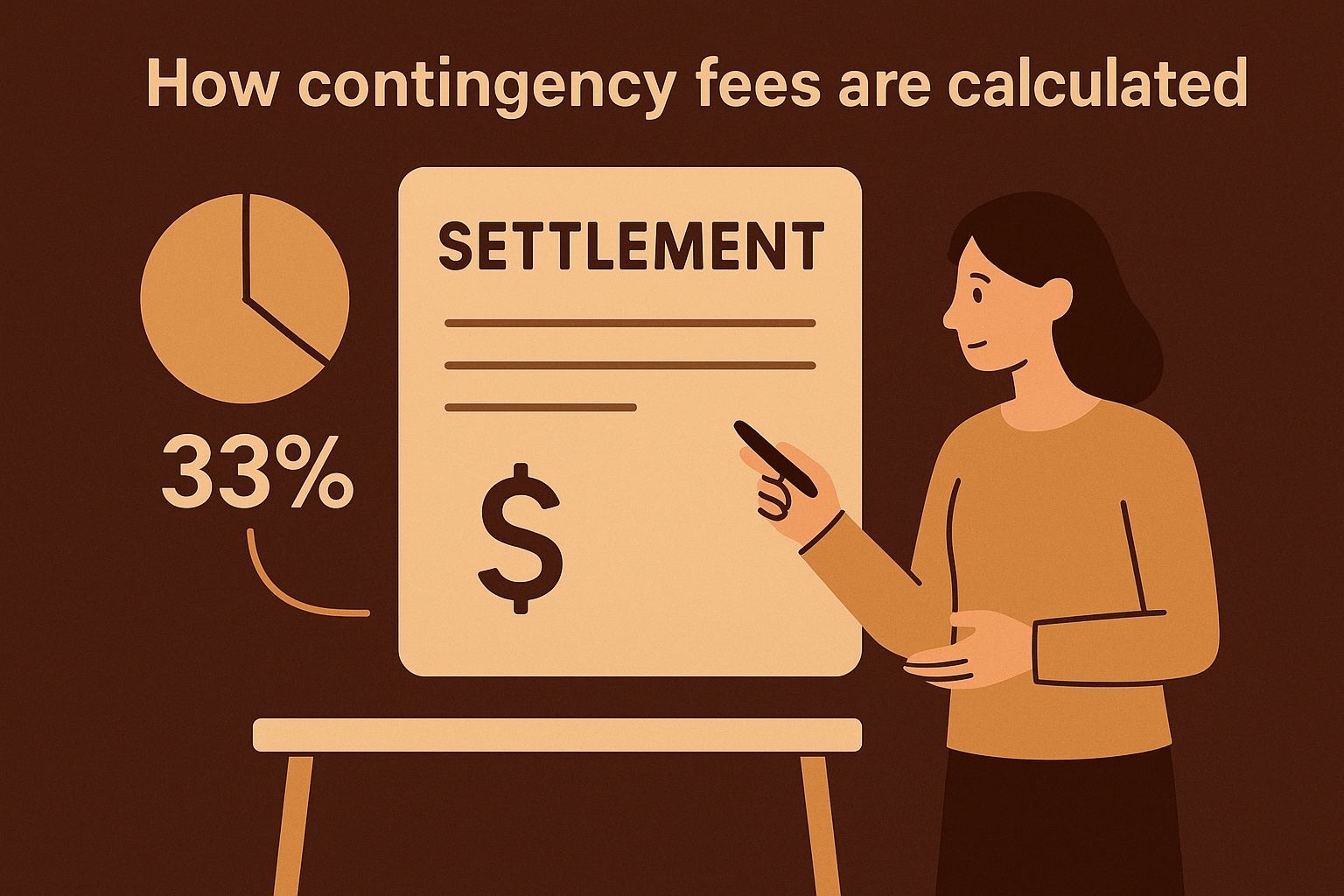
The contingency fee percentage can be negotiated before you sign, so read your agreement carefully and ask questions about anything that isn't clear.
Here's how the math works in a basic example:
| Settlement Amount | Contingency Fee (33%) | Amount You Receive |
|---|---|---|
| $30,000 | $9,900 | $20,100 |
| $75,000 | $24,750 | $50,250 |
| $150,000 | $49,500 | $100,500 |
The difference between fees and costs
Your attorney's contingency fee and case expenses are two separate things , and confusing them is one of the most common mistakes clients make. Fees refer to the percentage your lawyer earns for their legal work. Costs cover the out-of-pocket expenses required to build your case, such as filing fees, medical record requests, expert witness fees, and deposition costs. Some firms advance these costs on your behalf and deduct them from your settlement alongside their fee, while others require payment regardless of the outcome.
Understanding this distinction matters because the total amount deducted from your settlement can be significantly higher than the contingency fee percentage alone. Before you sign any agreement, ask your attorney directly how costs are handled and whether you would owe anything if your case does not succeed.
Why contingency fees help injured people
When you're recovering from an injury, financial pressure is often just as painful as the physical damage. Most people who need a personal injury lawyer no win no fee arrangement aren't sitting on savings they can tap to cover hourly legal rates. Contingency fee agreements remove that barrier by making access to qualified legal representation possible for people at their most vulnerable point.
You get the same legal firepower regardless of income
A contingency structure means your attorney takes on the same financial risk you do. Your lawyer only gets paid if you win, which means they have a direct incentive to build the strongest possible case on your behalf. Your attorney's compensation ties directly to your outcome , so their interests and yours point in exactly the same direction. That alignment matters when your case reaches the negotiating table.
This shared stake in your result is one of the most powerful advantages of working with a contingency fee attorney.
Some of the concrete advantages this structure gives you include:
- No upfront retainer fees before your case begins
- No hourly billing that drains your finances while you wait for resolution
- Attorney motivation aligned with maximizing your recovery
The financial risk shifts to your attorney
Without a contingency agreement, pursuing a personal injury claim can cost thousands of dollars before you ever reach settlement negotiations. Expert witnesses, medical record retrieval, and court filing fees add up fast. Under a contingency arrangement, your attorney absorbs those upfront costs while your case is active.
This means you can focus on your recovery instead of calculating what you can afford to spend on legal representation.
How no win no fee agreements work
When you hire a personal injury lawyer no win no fee , the process starts with a signed retainer agreement. This document is the foundation of your working relationship, and it spells out the contingency percentage, how case costs are handled, and under what conditions the agreement can end . Before your attorney invests a single hour in your case, both sides agree on these terms in writing. Nothing about the fee structure should catch you off guard later.
Signing the retainer agreement
Your attorney will walk you through the retainer before you sign anything. The agreement defines your attorney's percentage, typically between 33% and 40% , and outlines any adjustments that apply if your case proceeds to trial rather than settling early. Read every line before signing, and ask for clarification on anything that feels unclear. You have every right to ask questions, negotiate specific terms, or take time to decide before committing.
Once you sign the retainer, your attorney begins working immediately, so understanding what you agreed to before that point is essential.
What happens at settlement
When your case resolves, your attorney deducts their fee and any advanced costs directly from the settlement proceeds before you receive your portion. The law firm provides a settlement statement that itemizes every deduction so you can verify the math yourself. You receive the remaining balance , and your attorney collects nothing beyond what was agreed to in writing. If the case doesn't settle or win at trial, your attorney walks away without collecting a fee for their legal work on your behalf.
What you may still pay for and when
A personal injury lawyer no win no fee arrangement eliminates your attorney's hourly fees, but it doesn't automatically eliminate every cost tied to your case . Some expenses exist outside the contingency fee structure, and knowing about them before you sign your agreement prevents unwelcome surprises when your settlement arrives.
Case costs and expenses
Most personal injury firms advance case-related expenses on your behalf while your claim moves forward. These costs cover the practical work of building your case, from pulling medical records and hiring expert witnesses to paying court filing fees and deposition transcripts. When your case settles , your attorney deducts these costs directly from your recovery in addition to their contingency fee percentage.
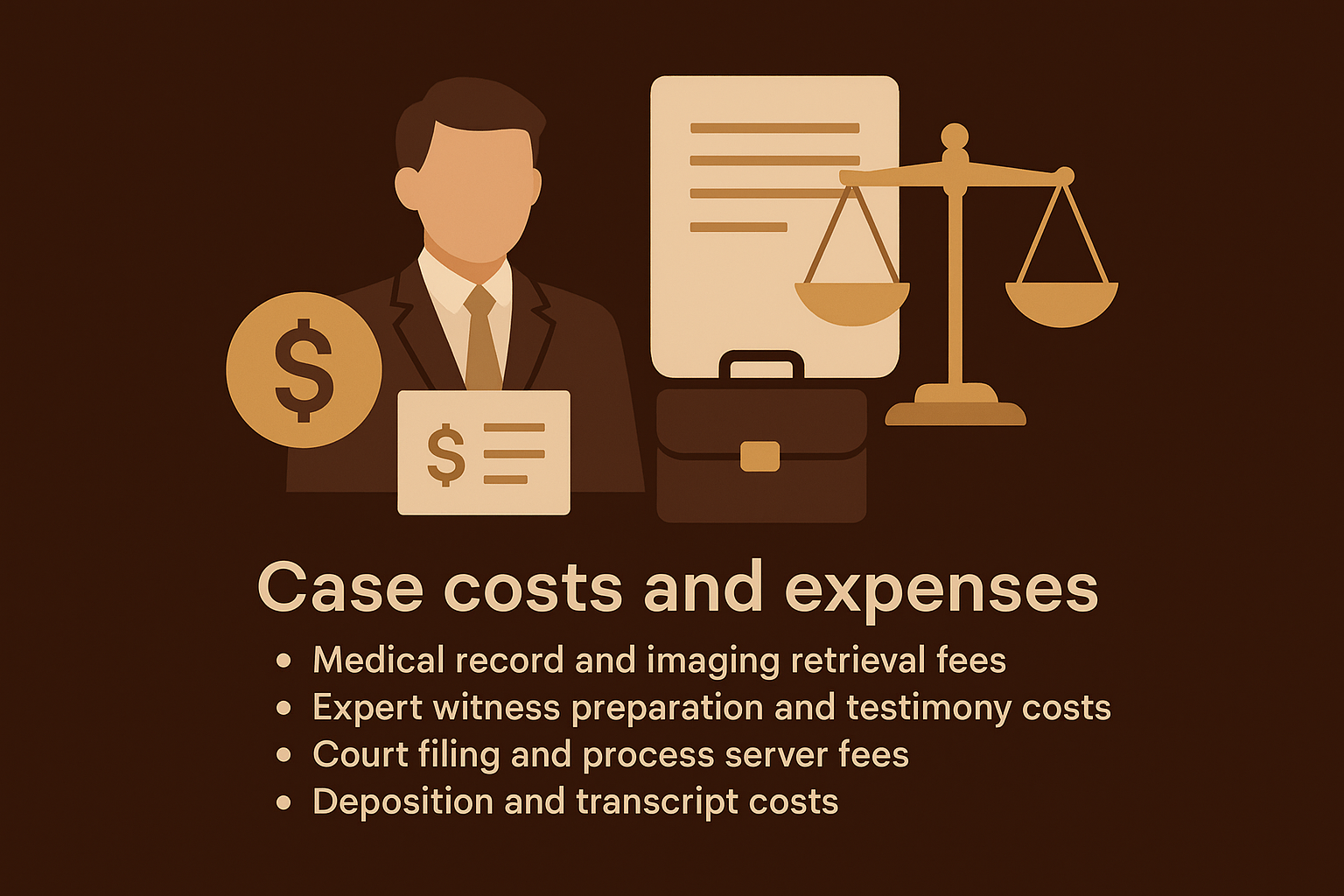
Always confirm in writing whether you owe case costs if your case does not result in a recovery, because firm policies on this point vary.
Common expenses you may see deducted at settlement include:
- Medical record and imaging retrieval fees
- Expert witness preparation and testimony costs
- Court filing and process server fees
- Deposition and transcript costs
When you might owe money even without winning
Some retainer agreements require you to reimburse advanced costs even if your case doesn't succeed. This is a separate obligation from the attorney fee itself, which is only collected upon a win. Read the specific language in your agreement about cost reimbursement, and ask your attorney directly whether you carry any financial obligation if your case is dismissed or lost. Getting a clear answer to that question before you sign protects you from unexpected bills at the worst possible time.
How to pick the right lawyer for a contingency case
Not every attorney who offers a contingency arrangement is the right fit for your specific situation. Selecting the right personal injury lawyer no win no fee takes more than accepting the first attorney who offers to take your case. Your choice directly affects the quality of your representation and the size of your final recovery , so it's worth taking time to evaluate your options carefully.
The attorney you choose should have a clear track record in cases similar to yours, not just general legal experience.
Check experience in your specific type of case
Personal injury law covers a wide range of claim types , from car accidents and workplace injuries to wrongful death and medical malpractice. An attorney who handles mostly slip-and-fall cases may not be the strongest advocate for a serious truck accident claim. Ask directly about their experience with cases like yours , the volume they've handled, and what outcomes they've achieved.
Some questions worth asking during your consultation include:
- How many cases similar to mine have you handled in the past three years?
- What percentage of your personal injury cases settle versus go to trial?
- Who on your team will manage my case day to day?
Evaluate communication and transparency
Your attorney should explain your agreement clearly and answer every question without making you feel rushed. If a lawyer dodges specific questions about fees, costs, or case strategy during your first conversation, that pattern is unlikely to improve once you sign. Pay close attention to how well they listen and how directly they respond to your concerns before you commit.

Next steps if you think you have a case
If you've been injured and believe someone else is responsible, the most important thing you can do right now is act . Evidence fades, witnesses become harder to reach, and statutes of limitations set hard deadlines on when you can file. Working with a personal injury lawyer no win no fee means you can start that process without putting a single dollar at risk upfront.
Start by writing down everything you remember about your accident, including dates, locations, what happened, and who was present. Gather any documentation you have , such as medical records, photos, police reports, and insurance correspondence. Bring all of it to your first consultation so your attorney can assess your case with the full picture in front of them.
The legal team at Mayfield Law Firm, P.A. offers free consultations and has represented injured clients across Northeast Mississippi and South Memphis for over 40 years. Contact us today to discuss your case and find out what your options are.