Can Debt Collectors Call Your Workplace? Know Your Rights
Your phone rings at your desk, and it's a debt collector asking for you by name in front of coworkers. If this has happened to you, you're probably wondering can debt collectors call your workplace and whether you have to just live with it. You don't. Federal law puts real limits on when and how often a collector can reach you at your job.
The short answer is yes, collectors can call your workplace, but only until you tell them to stop, and there are rules about how they behave once they do call. The Fair Debt Collection Practices Act gives you the power to cut off workplace calls entirely, and it bans collectors from discussing your debt with coworkers or supervisors. Knowing these protections turns an awkward, stressful situation into one you can actually control.
In this article, we'll walk through exactly what collectors can and can't do when they call you at work, how to formally stop the calls, and what steps to take if a collector keeps calling anyway. We'll also cover when persistent collection calls signal a bigger financial problem, one that bankruptcy protection under Chapter 7 or Chapter 13 might actually solve for good.
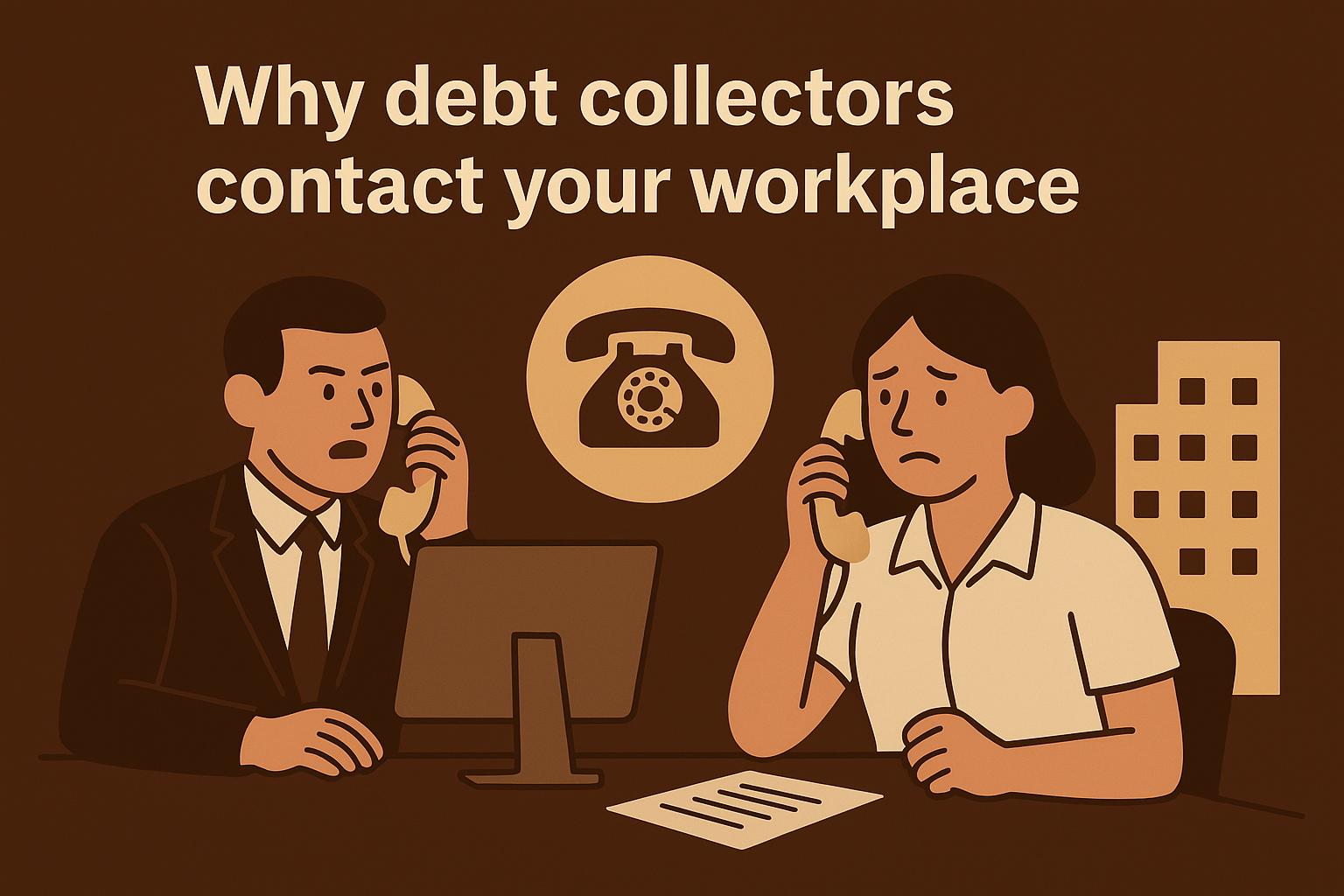
Why debt collectors contact your workplace
Collectors call your job because it works. Your employer's phone number is often the easiest one to find, especially if you've listed it on a credit application, a loan document, or even an old job posting. Skip tracing services that collection agencies use pull employment records, LinkedIn profiles, and public directories to track you down when your cell phone goes unanswered. A workplace number also guarantees someone picks up during business hours, which is exactly why can debt collectors call your workplace is one of the most searched questions among people dealing with overdue accounts.
The pressure tactic behind the calls
Beyond convenience, there's strategy at play. Collectors know that a call at your desk creates social pressure you don't feel at home. Nobody wants a supervisor overhearing details about unpaid medical bills or a repossessed car. Some agencies bank on that embarrassment pushing you to pay faster, even if it means borrowing from a paycheck or a coworker just to make the calls stop.
Debt collectors call your workplace because embarrassment is a powerful motivator, and they know it.
Where the legal line sits
Here's the part most people don't realize: the Fair Debt Collection Practices Act allows a single call to your job to confirm employment or ask for updated contact information, but it stops there. Once you tell a collector, verbally or in writing, that your employer prohibits personal calls or that you simply don't want them contacting you at work, continued calls become a violation. The Consumer Financial Protection Bureau confirms this protection applies regardless of whether the debt is legitimate, so even collectors chasing valid debts must respect the boundary once you set it.
Most agencies won't stop on their own initiative. Instead, they'll keep dialing until you draw a clear line, because silence looks like tolerance from their side of the phone. Recognizing why the calls happen is the first step toward shutting them down for good, which is exactly what the next section walks through.
How to stop debt collectors from calling your job
Stopping workplace calls doesn't require a lawyer or a court filing. Federal law gives you the right to send a cease communication notice , and once a collector receives it, workplace calls have to stop within a reasonable time. Put your request in writing rather than relying on a phone call, since a written notice creates a paper trail if the collector ignores it.
Sending a written cease notice
Keep the letter short and factual. Send it by certified mail with a return receipt so you have proof of delivery, and keep a copy for your own records.
 Date: [today's date]
Re: Account #[account number]
To [Collection Agency Name],
Under the Fair Debt Collection Practices Act, I am requesting that you stop contacting me at my place of employment, [Employer Name]. Please direct all future communication to my home address or in writing only.
[Your Name]
[Your Address]
A single certified letter can legally end workplace collection calls for good.
What happens after you send it
Once the collector receives your notice, continued calls to your job become a violation you can report. The Consumer Financial Protection Bureau lets you file a complaint online, and many people find that a single complaint gets faster results than repeated phone arguments. Document every call that comes after your letter, including the date, time, and caller's name, since that record matters if the harassment continues or you decide to pursue legal action later.
What collectors can and can't tell your employer
Privacy protections don't disappear just because a collector reaches your job. The Fair Debt Collection Practices Act limits a collector to confirming your employment or verifying a phone number when they call your workplace. They cannot mention the debt, the amount owed, or even that you're being pursued by a collection agency . If a supervisor or coworker answers, the collector has to keep the conversation vague, and pressing for details about your financial situation crosses a legal line.
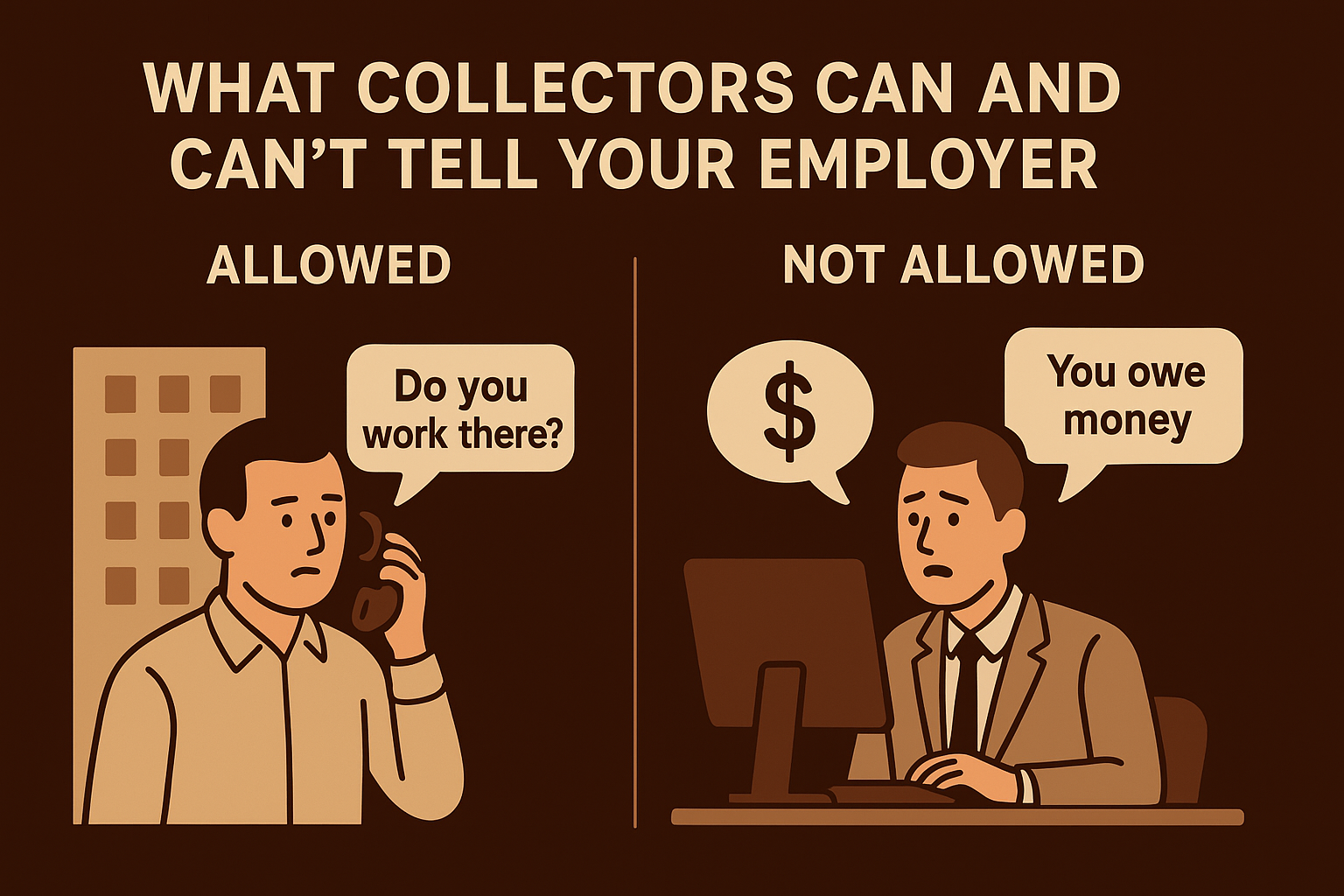
A collector can ask if you work there, but they can never say why they're calling.
Specifics matter here, so here's a quick breakdown of what's allowed versus what isn't:
| Allowed | Not Allowed |
|---|---|
| Confirming you work there | Mentioning the debt exists |
| Asking for a callback number | Discussing the amount owed |
| Leaving a name and general message | Revealing they're a debt collector |
| One-time employment verification call | Repeated calls after being told to stop |
Employers themselves have no legal obligation to relay messages or pass along details, and most HR departments won't get involved beyond confirming basic employment status. Violations like disclosing debt details to a coworker or repeatedly calling after a cease notice give you grounds to file a complaint with the Federal Trade Commission or pursue damages in court, since these disclosures often count as third-party disclosure violations under federal law.
When to talk to a bankruptcy attorney
Cease notices stop the calls, but they don't erase the debt behind them. If collectors keep dialing because you genuinely can't pay, that's a sign the problem runs deeper than call volume. A bankruptcy attorney can tell you within one consultation whether Chapter 7 or Chapter 13 fits your situation, and whether filing would actually discharge the accounts collectors keep chasing.
Signs the debt itself needs attention
Watch for these warning signs that a phone call script won't fix:
- You're getting calls from multiple agencies about different debts
- Wage garnishment notices have already arrived
- You're using credit cards to cover minimum payments on other debt
- Medical bills, credit cards, or old loans total more than a few months of income
- Collectors mention lawsuits or court dates
Any one of these suggests collection pressure is a symptom, not the main issue.
If cease letters keep the peace but the debt keeps growing, bankruptcy protection may be the real solution.
What a consultation actually covers
Mayfield Law Firm reviews your income, assets, and total debt load during a free consultation, then explains which chapter applies and what property you'd keep. Southaven and Memphis clients often come in expecting a lecture and leave with a filing plan instead. Talking to an attorney costs nothing upfront, and it answers the question collectors never will: whether this debt is actually manageable or whether it's time to file.

Taking back control from collection calls
You now know the real answer to can debt collectors call your workplace : yes, but only until you say stop, and never to discuss your debt with coworkers or supervisors. A written cease notice, sent certified, ends the calls within days in most cases. If they keep dialing anyway, that's a federal violation you can report, not something you have to tolerate.
But stopping the phone from ringing doesn't make the underlying debt disappear. If you're fielding calls from multiple agencies, juggling minimum payments, or dreading a garnishment notice, the calls are just the symptom. The debt itself needs a real solution. Mayfield Law Firm has spent over 40 years helping people across Southaven and Memphis figure out whether Chapter 7 or Chapter 13 actually fixes their situation. Schedule a free consultation with Mayfield Law Firm and find out where you really stand.