Slip And Fall Settlement Amounts: Ranges, Factors, Examples
If you've been hurt in a slip and fall accident, one of the first questions on your mind is probably about money, specifically, slip and fall settlement amounts and what your case might actually be worth. That's a fair question, and the honest answer is that these cases can range from a few thousand dollars to well over six figures , depending on the circumstances.
Several factors drive that number up or down: the severity of your injuries, where the accident happened, who was at fault, and how much it has cost you in medical bills, lost income, and pain. No two cases settle for the same amount , and anyone quoting you a guaranteed figure before reviewing the facts isn't being straight with you.
At Mayfield Law Firm, P.A., we've spent over 40 years representing injured clients across Northeast Mississippi and South Memphis, and we know that understanding your claim's potential value matters. This article breaks down realistic settlement ranges, walks through the key factors that affect what you can recover, and includes real-world examples to give you a clearer picture of what to expect.
Why slip and fall settlement amounts vary
Slip and fall cases don't follow a fixed formula. Property owners, insurers, and courts each weigh a different set of facts before any dollar amount gets put on the table, and those facts vary widely from one accident to the next. That's why slip and fall settlement amounts can land almost anywhere on the spectrum, and why two people who slip on the same type of surface can walk away with very different outcomes.
The legal standard: proving negligence
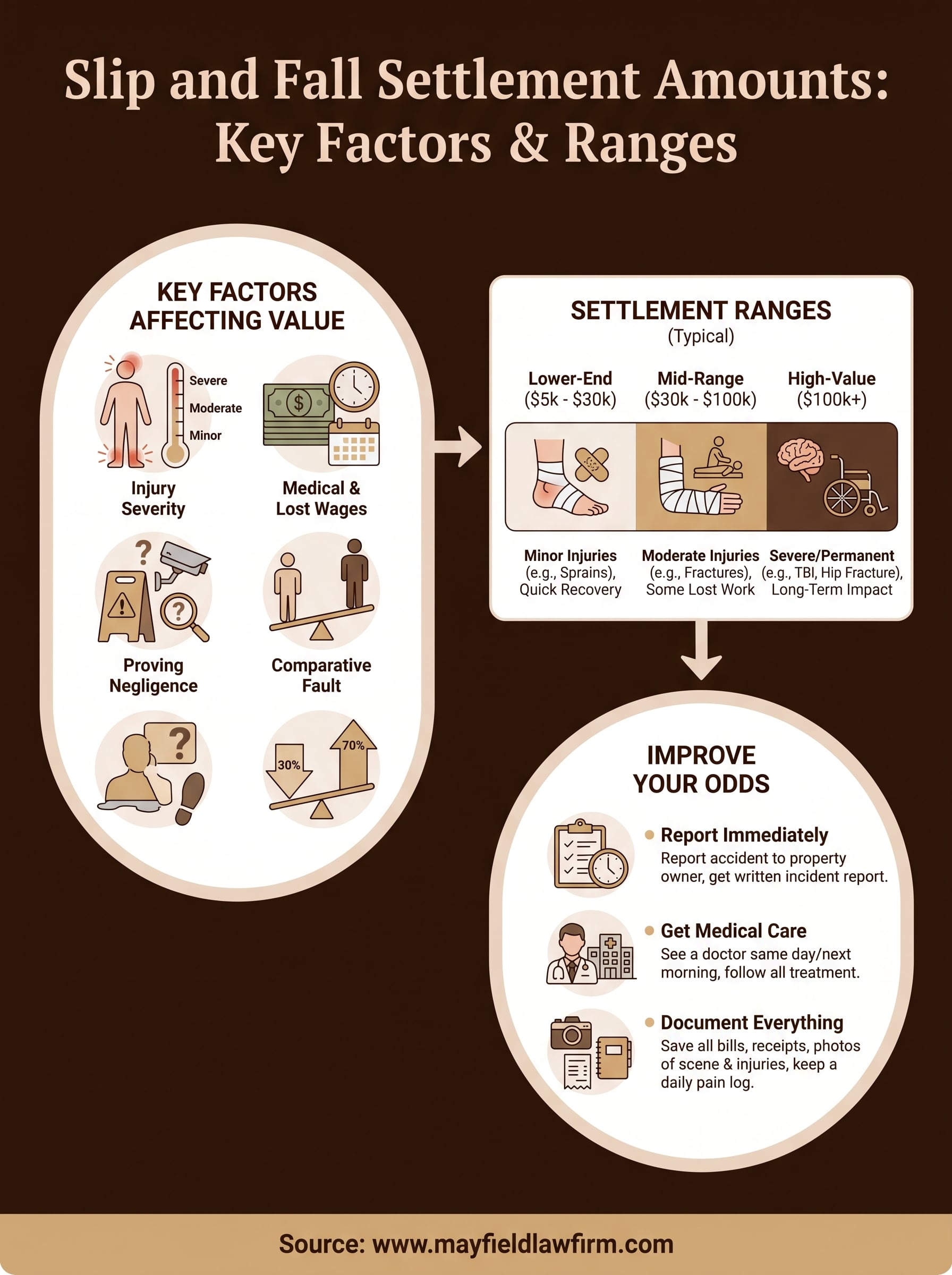
To recover compensation, you have to show the property owner was negligent , meaning they knew or should have known about a dangerous condition and failed to fix it or warn you. A wet floor with no warning sign, a broken step left unrepaired, or a cracked sidewalk ignored for months are all situations where negligence is easier to establish. The stronger your evidence of the owner's failure to act, the more leverage you have when negotiating a settlement. Weak or missing evidence of fault pushes settlement offers down significantly.
The harder it is to prove the property owner knew about the hazard, the lower your leverage and your likely settlement offer.
The role of your injuries and losses
Medical bills and lost wages are the two biggest drivers of settlement value. A sprained wrist that heals in three weeks generates far less in damages than a fractured hip requiring surgery, physical therapy, and months away from work. Insurers calculate economic damages (what you've actually spent or lost) and non-economic damages (pain, suffering, and loss of enjoyment) separately. The more severe and lasting your injuries, the higher both categories tend to climb.
Comparative fault and how it affects your recovery
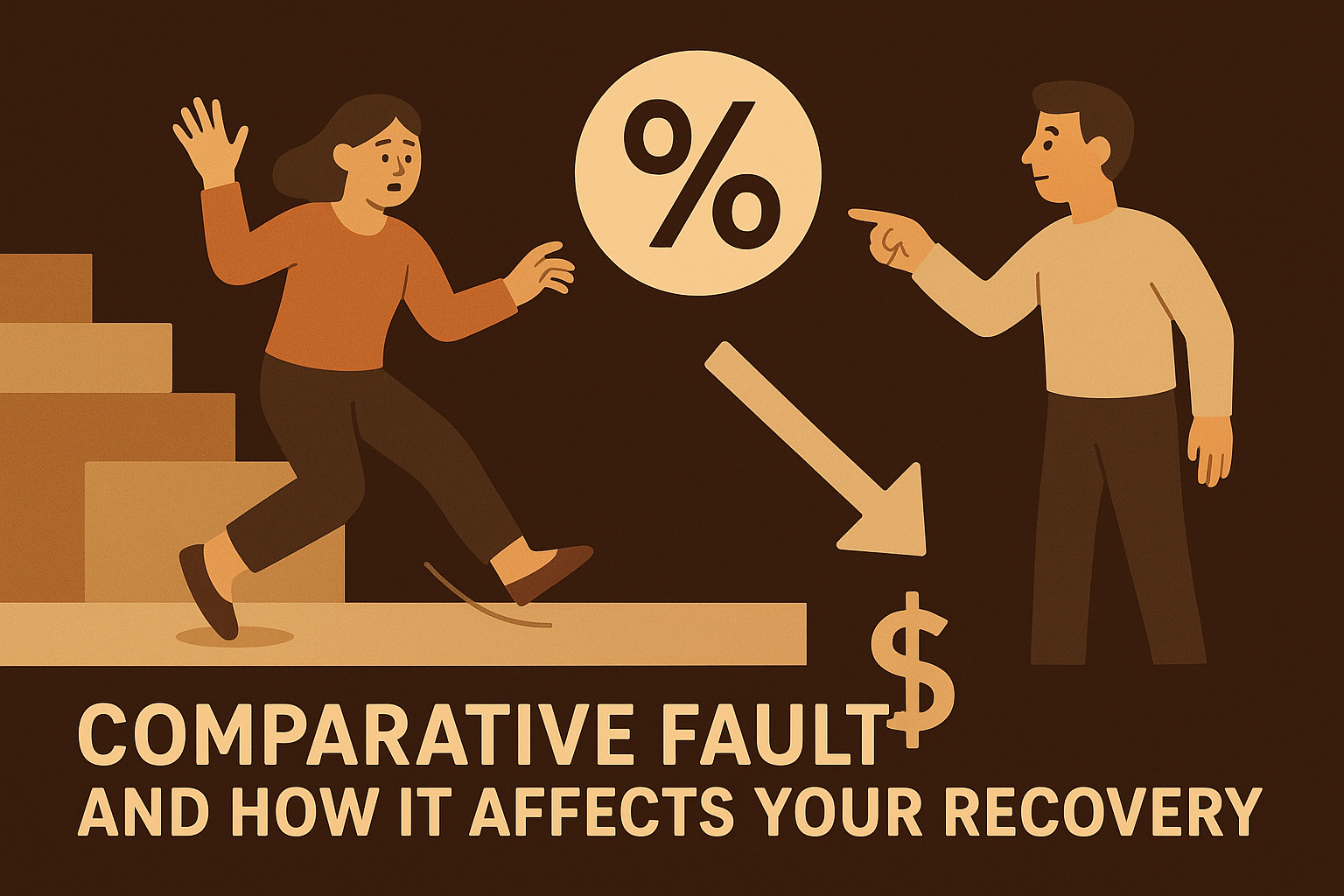
Your share of blame matters directly to how much you collect. Mississippi follows a pure comparative fault rule, which means your compensation gets reduced by your percentage of fault. If you're found 30% responsible for not watching where you were walking, a $100,000 settlement drops to $70,000 . Insurance adjusters will look for any reason to assign blame to you, so the specific facts surrounding how the fall happened carry real weight in determining your final number.
Average ranges and what they cover
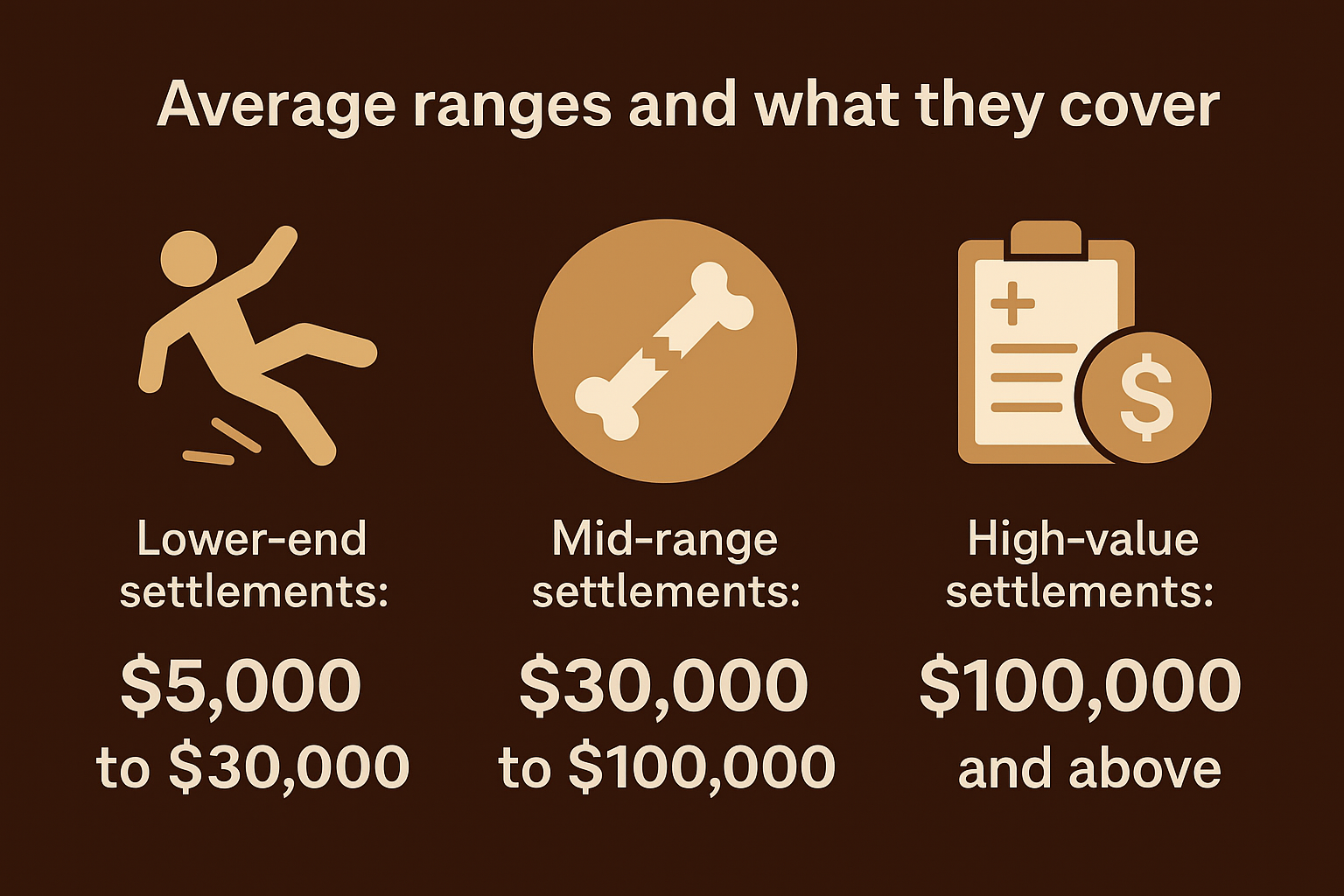
Slip and fall settlement amounts don't follow a single fixed range, but patterns do emerge based on injury severity and fault clarity. Most cases settle somewhere between $10,000 and $200,000 , with the majority landing in the lower half of that range because most injuries are moderate rather than catastrophic.
Where your case falls in that range depends almost entirely on the quality of your evidence and the extent of your injuries.
Lower-end settlements: $5,000 to $30,000
These outcomes typically involve soft tissue injuries like sprains, bruises, or minor cuts that heal within a few weeks. Medical costs are low, and you're usually back to work quickly. Insurance companies push hard to settle these cases fast and cheap, often before you fully understand your total costs.
Mid-range settlements: $30,000 to $100,000
Cases in this band usually involve broken bones, torn ligaments, or disc injuries that require imaging, specialist visits, or surgery. Lost wages start adding up, and non-economic damages for pain carry more weight. Documentation becomes critical here because the difference between $35,000 and $90,000 often comes down to how well your medical records and expert opinions support your claim.
High-value settlements: $100,000 and above
These cases involve severe or permanent injuries such as traumatic brain injuries, spinal damage, or injuries that permanently limit your ability to work. Wrongful death claims also fall into this range. Expect longer negotiations and often litigation before reaching a resolution.
Key factors that raise or lower value
Several specific variables push slip and fall settlement amounts up or down beyond just injury severity. Understanding which factors work in your favor, and which ones hurt your case, helps you make smarter decisions from the moment you fall.
Medical documentation and treatment consistency
Gaps in your medical treatment are one of the fastest ways to shrink a settlement. Insurers argue that if you waited weeks to see a doctor or skipped follow-up appointments, your injuries couldn't have been that serious. Complete and consistent medical records that directly connect your fall to your diagnosis carry far more weight than scattered or incomplete care histories.
A clear, unbroken trail from accident to diagnosis to treatment is often the difference between a fair offer and a lowball one.
Your records should include imaging results, specialist referrals, physical therapy notes, and any prescribed medication. The more detailed the paper trail, the harder it is for an insurer to minimize your claim.
Liability clarity and witness support
Surveillance footage, incident reports, and witness statements can dramatically strengthen your claim. If a store's own camera caught the hazard on film before you fell, liability becomes much harder to dispute. On the other hand, a lack of witnesses or no written incident report gives the property owner room to deny the condition existed at all. Locking down this evidence quickly after your fall is critical.
Settlement examples by injury and treatment
Looking at real cases gives you a clearer sense of where slip and fall settlement amounts actually land. The numbers below reflect typical outcomes tied to specific injury types and the level of care each required.
What the numbers look like by injury type
Your injury type and treatment intensity shape the settlement range more than almost any other factor. The table below gives you a practical reference point.
| Injury Type | Typical Treatment | Settlement Range |
|---|---|---|
| Sprained ankle or wrist | Doctor visits, short PT | $8,000 to $20,000 |
| Broken bone (arm, wrist) | Casting, follow-up care | $25,000 to $60,000 |
| Torn ligament or meniscus | Surgery, extended PT | $40,000 to $90,000 |
| Hip fracture (older adults) | Surgery, long-term rehab | $100,000 to $300,000 |
| Traumatic brain injury | Hospitalization, specialist care | $150,000 to $500,000+ |
Why treatment matters to your final number
Documented, consistent treatment directly connects your injuries to the fall and makes it much harder for an insurer to minimize your claim. A person with a broken hip who completes every recommended rehab session builds a far stronger case than one who stops treatment early.
Stopping treatment before your doctor clears you signals to insurers that your injuries were not serious, which lowers your settlement offer.
Specialist referrals and imaging results also carry significant weight because they show the full scope of your injury in objective terms rather than relying on self-reported pain alone.
How to improve your odds of fair payment
What you do in the hours and days after your fall shapes the size of your settlement more than most people realize. Taking deliberate action early builds the kind of evidence record that makes it harder for insurers to dispute your claim or blame you for the accident.
Report the accident and get medical attention right away
Report the fall to the property owner or manager before you leave, and ask for a written copy of any incident report they file. Then see a doctor the same day or the next morning, even if your pain feels manageable. Delayed medical visits give insurers an opening to argue that your injuries were not serious or were caused by something unrelated to the fall. That argument directly reduces slip and fall settlement amounts.
The moment you skip or delay medical care, you hand the insurance company a reason to cut your offer.
Keep records of every cost the accident creates
Save every receipt, bill, and document tied to your injury, including prescriptions, transportation to appointments, and any medical equipment you purchase. Write down a brief daily log of how your pain affects your routine, your sleep, and your ability to work. These records become the foundation of your economic and non-economic damages calculation, and gaps in documentation consistently result in lower offers from insurance adjusters.
Your next steps
Slip and fall settlement amounts depend heavily on the decisions you make right after your accident, and waiting to take action consistently works against you. Report the fall, get medical attention the same day, and start building your documentation record immediately. Every day you wait gives the property owner and their insurer more time to dispute your account of what happened, locate witnesses who favor their side, or erase surveillance footage that could prove your case.
Dealing with a serious injury while managing bills, missed work, and insurance calls is overwhelming on your own. An experienced attorney can handle the negotiation, gather the evidence, and make sure you're not pressured into accepting a settlement that doesn't cover your full losses. At Mayfield Law Firm, P.A., we've represented injured clients across Northeast Mississippi and South Memphis for over 40 years. Contact us today for a free consultation and find out what your case may actually be worth: Mayfield Law Firm personal injury attorneys.