Attorney for Car Accident Near Me: What They Do and How to Choose
You've got medical bills piling up, an insurance adjuster calling nonstop, and a car that's still in the shop. Searching for an attorney car accident near me is usually the first smart move after a wreck, but knowing who to call and what they actually do for you is another matter entirely.
A local car accident lawyer investigates your crash, deals with the insurance company on your behalf, and fights to get you paid for medical expenses, lost wages, and pain and suffering, all without you paying anything upfront. Most auto car accident lawyers near me searches turn up a long list of firms, but the right one for your case comes down to experience, communication, and how they handle claims like yours.
At Mayfield Law Firm, we've represented injured drivers and passengers across Tupelo, Southaven, and Memphis for decades, so we know what separates a firm that fights for full value from one that settles fast and moves on. This article walks through exactly what a car accident attorney does day to day, when hiring one actually matters, and the specific questions you should ask before signing with anyone.**
Why you need a car accident attorney near you
Not every fender bender needs a lawyer. If you walked away without injuries and the damage is minor, you can probably handle the claim yourself. But the moment you're dealing with an emergency room visit, missed work, or an insurance adjuster who won't return your calls, the math changes fast. Serious injuries and contested liability are the two biggest signs you need a local car accident attorney before you sign anything or accept a settlement check.
Insurance companies are businesses, and their goal is to close your claim for as little money as possible. Adjusters are trained negotiators who talk to injured people every day, while you've probably never negotiated a bodily injury claim in your life. They'll often make a quick, lowball offer within days of your crash, hoping you'll take it before you understand the full cost of your medical treatment or how long your recovery will actually take. Once you accept that check and sign a release, you can't go back for more money later, even if your injuries turn out to be worse than expected.
An insurance adjuster's first offer is almost never their best offer.
Deadlines make this even riskier to handle alone. Mississippi gives you three years from the date of the crash to file a personal injury lawsuit, while Tennessee only gives you one year, according to each state's statute of limitations. Miss that window and you lose your right to sue entirely, no matter how strong your case is. A car accident attorney near you tracks these deadlines for every case and knows exactly how state lines affect a claim when your wreck happened crossing the border between Mississippi and Tennessee, which is common for drivers around the Southaven and Memphis area.
Signs your case needs a lawyer, not a DIY claim
Most people don't realize how quickly a straightforward-looking accident can turn complicated. Here are the situations where hiring an attorney almost always pays off:
- You were hospitalized or need ongoing treatment like physical therapy, injections, or surgery
- The insurance company is disputing fault , even partially, which can reduce or kill your payout
- The at-fault driver was uninsured or underinsured , requiring a claim against your own policy
- You've missed work and are losing income while you recover
- The crash involved a commercial vehicle , like a delivery truck or company car, which brings in corporate insurance defense teams
- A loved one died in the crash, opening the door to a wrongful death claim
If any of these apply to you, a free consultation with a local firm costs nothing and can tell you within an hour whether you're leaving money on the table.
What happens when you go it alone
Statistics from the Insurance Research Council consistently show that injured people who hire attorneys recover significantly more, even after legal fees are deducted, than those who negotiate directly with insurers. That gap exists because insurance companies know an unrepresented claimant doesn't have the leverage of a potential lawsuit behind them. Without a lawyer, you're also responsible for gathering your own evidence: police reports, medical records, wage statements, and witness contact information, all while you're supposed to be healing.
Local representation matters here too. Familiarity with local courts and the judges, adjusters, and defense attorneys who work in Northeast Mississippi and South Memphis gives your case an edge that an out-of-state or online-only firm simply can't match. A Tupelo-based attorney knows which insurance companies in the area tend to lowball claims and which ones negotiate in good faith. That local knowledge shapes strategy from the first phone call, whether that means filing suit early to apply pressure or holding out for a fuller medical picture before making a demand. When your recovery, your paycheck, and your legal deadline are all on the line, having someone nearby who knows the terrain isn't a luxury. It's the difference between a fair settlement and a rushed one.
What a car accident attorney does for your case
Hiring a car accident attorney means handing off the parts of your claim that require legal skill and industry knowledge, so you can focus on healing. From the moment you sign on, your lawyer takes over communication with insurance adjusters, gathers evidence, calculates the true value of your claim, and negotiates on your behalf. Full-time case management is what separates a represented claim from one you're juggling alone between doctor visits and work.
Investigating your crash and building the claim
Building a strong claim starts with evidence, and a lot of it disappears fast. Attorneys send preservation letters to trucking companies or rideshare services within days, pull traffic camera footage before it's overwritten, and interview witnesses while memories are still fresh. Accident reconstruction experts get brought in for serious crashes to establish exactly how the collision happened, especially when fault is contested. Your lawyer also collects the medical records, wage statements, and repair estimates needed to prove not just that you were hurt, but how much that injury actually cost you.
Negotiating with the insurance company
Dealing with insurance companies is where most of the fighting actually happens, and it's rarely a quick conversation. Adjusters counter, delay, and dispute injuries as a matter of routine, and an attorney who negotiates these claims daily knows which tactics to push back on. Your lawyer builds a demand package backed by medical documentation and legal precedent, then negotiates until the offer reflects your actual damages, not the insurer's opening number.
A well-documented demand letter often gets you further than months of phone calls ever will.
Gathering the right proof and pairing it with skilled negotiation is what typically moves a case from a lowball offer to a fair settlement.
Handling the paperwork and legal deadlines
Every claim comes with a stack of filings, medical liens, and court deadlines that are easy to miss if you don't handle them for a living. Your attorney tracks the statute of limitations in your state, files suit if negotiations stall, and manages any liens from health insurers or hospitals that need to be resolved before you get your check. Missing one of these steps can delay your payout by months or jeopardize the claim entirely.
Preparing your case for trial if needed
Settling out of court is the goal in most claims, but your attorney should be just as prepared to try the case in front of a jury. Insurance companies negotiate harder when they know a firm will actually file suit and litigate. Here's what that trial-readiness typically includes:
- Deposing the at-fault driver and key witnesses
- Retaining expert witnesses for medical or accident reconstruction testimony
- Filing motions to keep unfair evidence out of the case
- Presenting evidence clearly to a judge or jury if the case goes to trial
Without that leverage, insurers have less incentive to offer full value, which is exactly why the right attorney matters as much as hiring one at all.
How to choose the right car accident attorney near you
Finding the right attorney car accident near me search actually turns up dozens of names, but not all of them will fight the same way for your case. Some firms settle every claim fast for a quick fee, while others build cases for trial and push for full value even if it takes longer. The difference between those two approaches can mean tens of thousands of dollars in your pocket, so it's worth slowing down before you sign a contract with the first firm that answers the phone.
Prioritize local experience over big ads
Billboards and TV commercials don't tell you who actually handles your file once you sign. Local trial experience matters more than marketing budget, because a lawyer who's tried cases in your county courthouse knows the judges, the local defense firms, and which insurance adjusters negotiate fairly versus which ones need a lawsuit filed before they'll move. Ask how long the firm has practiced in your specific area, not just how many billboards they have around town.
Check their track record with cases like yours
Cases involving a totaled sedan and a hospital stay are handled differently than a multi-vehicle pileup with a commercial truck involved. Verify that the attorney has actually resolved cases similar to yours, whether that's a rear-end collision, an uninsured motorist claim, or a wrongful death case. Most firms will share sample settlement or verdict ranges during a free consultation, and a firm that won't discuss past results at all is worth a second look.
The firm that handled a case like yours before is the firm best equipped to handle yours now.
Read reviews and ask about communication
Google reviews and testimonials tell you a lot about how a firm treats clients once the contract is signed. Reviews that mention slow callbacks or a lawyer who never showed up for court are red flags worth taking seriously. You should also ask directly who will actually work your file day to day, since some firms hand cases off to paralegals or junior associates after the initial signing.
| What to check | Green flag | Red flag |
|---|---|---|
| Response time | Returns calls within a day | Days go by with no update |
| Case results | Shares specific settlement examples | Vague or evasive about past outcomes |
| Local presence | Physical office near you | Call center or out-of-state firm only |
| Fee structure | Clear contingency percentage upfront | Fees explained only after you sign |
Meet with more than one firm if you're unsure
Signing with the first name you find online rarely gives you a full picture of your options. Talking to two or three auto car accident lawyers near me during free consultations costs nothing and lets you compare how each one explains your case, estimates your claim's value, and answers your questions. The attorney you choose should leave you feeling confident, not rushed into signing paperwork you haven't had time to read.
Questions to ask before you hire an attorney
Walking into a free consultation without a plan wastes an opportunity to compare firms fairly. Prepared questions help you see past a polished sales pitch and figure out who's actually going to fight for your claim. Bring a notebook, write down the answers, and don't be afraid to ask the same question at every firm you meet with so you can compare responses side by side.
Questions about experience and results
Start with questions that reveal whether this firm has actually handled cases like yours before, not just car accident cases in general.
- How many car accident cases have you handled in the past year, and how many went to trial versus settled?
- What's a typical settlement range for a case with injuries similar to mine ?
- Have you handled cases involving my specific situation, like an uninsured driver or a commercial truck?
- Who at the firm will actually manage my file day to day, an attorney or a paralegal?
If a firm can't answer basic questions about past results, that's a preview of how they'll communicate once you're a client.
Questions about fees and costs
Money questions feel uncomfortable, but skipping them leads to surprises after your settlement arrives. Every reputable firm works on contingency fees , meaning you pay nothing unless they win, but the percentage and the handling of case expenses vary between firms.
- What percentage do you charge if the case settles versus if it goes to trial?
- Who covers costs like expert witness fees and court filing fees upfront?
- Do those costs come out of my settlement even if we lose?
- Will I owe anything out of pocket at any point in the process?
Questions about communication and timeline
Having a clear plan for staying informed matters as much as the legal strategy itself. Ask each firm how often you should expect updates, and get a sense of realistic timelines instead of vague promises.
| Question | Why it matters |
|---|---|
| How often will you update me on my case? | Sets expectations before you sign |
| How long do cases like mine usually take to resolve? | Helps you plan financially |
| Can I reach you directly, or only through a paralegal? | Reveals the firm's actual staffing structure |
| What happens if the insurance company denies my claim? | Shows whether they're prepared to litigate |
Questions specific to your accident
Finally, ask questions tailored to the facts of your crash. If a commercial vehicle was involved, ask how the firm handles corporate insurance defense teams. If you're unsure whether the other driver carried enough coverage, ask how uninsured motorist claims work in Mississippi or Tennessee. Case-specific answers tell you more about a firm's real experience than any generic pitch about their years in practice. An attorney who takes time to explain your specific deadlines, evidence needs, and likely challenges is one who's already thinking about how to win your case, not just sign you as a client.
How much does a car accident attorney cost
Money worries keep a lot of injured people from calling a lawyer at all, but most car accident attorneys work on a contingency fee , meaning you pay nothing out of pocket to hire them and nothing at all unless they win your case. That structure exists specifically so injured drivers with medical bills and lost paychecks aren't priced out of getting real representation. Searching for an attorney car accident near me who offers a free consultation is the first step, and asking about fees directly during that meeting is the second.
How contingency fees work
Under a contingency arrangement, your attorney's fee comes out of the settlement or verdict as a set percentage, agreed to upfront in your written contract. Nothing gets deducted from your paycheck or bank account while the case is pending. If the attorney doesn't recover money for you, you typically owe no attorney fee at all. That's the entire point of the model: it aligns your lawyer's incentive with yours, since they only get paid when you do.
No recovery means no attorney fee, which is exactly why contingency arrangements protect injured people who can't afford hourly legal bills.
What percentage should you expect
Percentages vary by firm and by whether the case settles early or heads to trial. Litigation takes more time, more resources, and more risk, so many firms charge a higher percentage once a lawsuit is filed. Ask for these numbers in writing before you sign anything.
| Stage of the case | Typical fee range |
|---|---|
| Settles before a lawsuit is filed | Around 33% |
| Settles after a lawsuit is filed | Around 35-40% |
| Goes to trial or appeal | 40% or higher |
These ranges shift firm to firm, so treat the table as a starting point for comparison rather than a guarantee.
Who pays case expenses
Beyond the attorney's fee, every claim racks up expenses: police report copies, medical record requests, expert witness fees, and court filing costs if a lawsuit becomes necessary. Reputable firms front these costs and recover them from your settlement, so you're never billed while the case is active. Verify how a firm handles expenses if the case doesn't result in a recovery at all, since policies differ.
- Do you front case costs , or do I pay as they come up?
- Are expenses deducted before or after the attorney's percentage is calculated?
- Am I responsible for costs if we don't win the case?
Understanding these three points before you sign protects you from surprises once your check finally arrives. A firm that answers clearly, in plain language, without dodging the math, is one that's used to explaining fees to clients who've never hired a lawyer before.
What to expect during the claims process
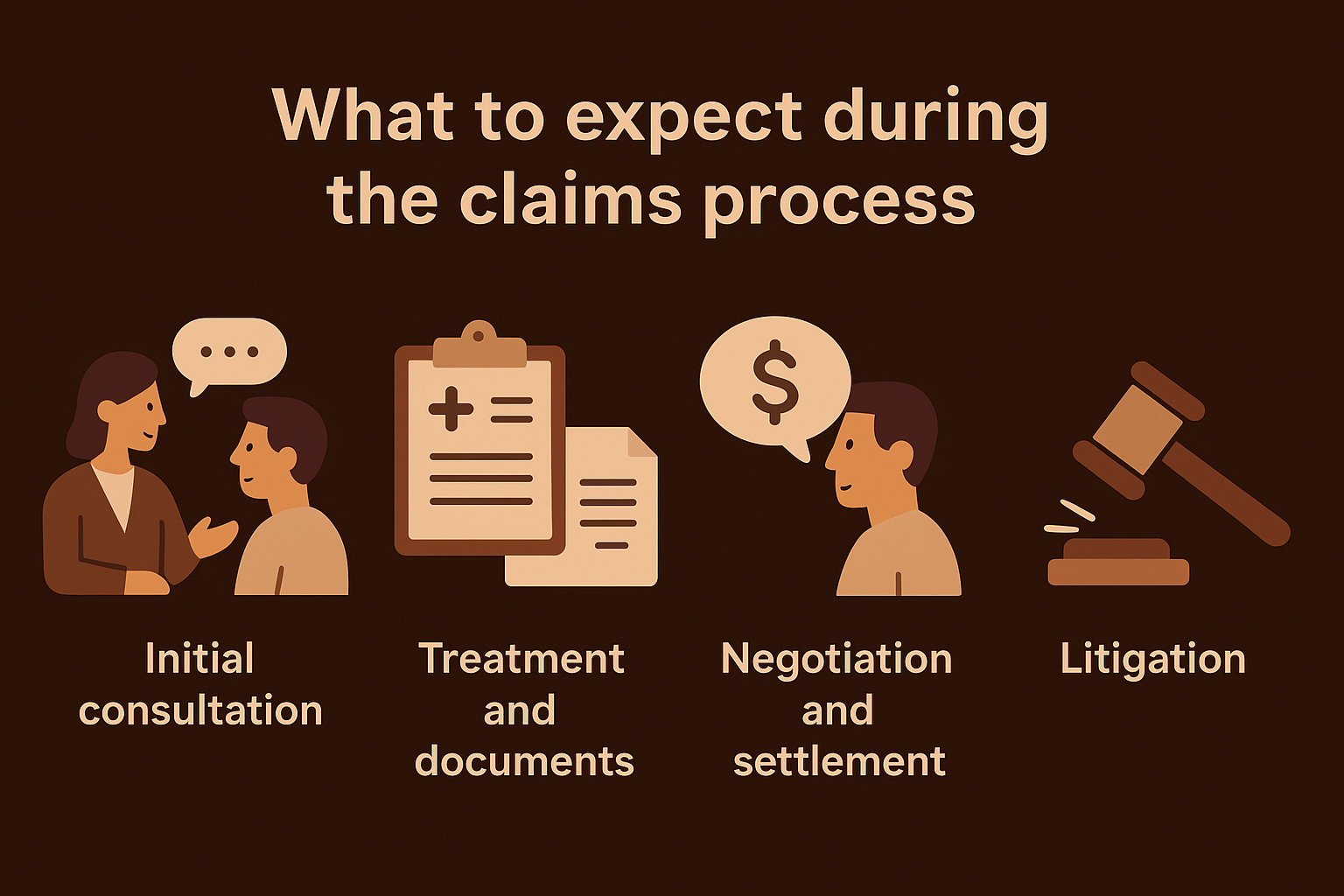
Knowing the roadmap ahead of time makes the whole process less stressful, especially when medical bills are arriving faster than answers. Every claim moves through the same general stages , though the timeline stretches or shrinks depending on how serious your injuries are and how willing the insurance company is to negotiate fairly. Here's a realistic look at what happens after you hire a local car accident attorney, from the first phone call to the final check.
The initial consultation and case evaluation
Your first meeting is usually free and focused on facts, not paperwork. The attorney reviews your accident report , asks about your injuries and treatment, and gives you an honest read on whether you have a viable claim. Most firms sign you on the same day if it's a good fit, and the investigation starts immediately after, pulling police records, photos, and any available surveillance footage before it disappears.
Treatment, documentation, and the demand letter
Nothing moves quickly at this stage, and that's intentional. Your attorney waits until you reach maximum medical improvement , meaning your doctors have a clear picture of your recovery, before sending a demand to the insurance company. Settling too early risks leaving money on the table if you need surgery or ongoing treatment later. Once your medical records are complete, the firm compiles a demand package that includes:
- Medical bills and records documenting every treatment related to the crash
- Wage loss statements from your employer
- Photos and repair estimates showing property damage
- A written demand amount based on your total damages
Settling before your medical treatment is finished almost always costs you money down the road.
Negotiation and settlement
Quick offers show up first, and they're rarely close to fair value. Negotiation typically involves several rounds of counteroffers over a few weeks to a few months, depending on how the insurer responds to the evidence in your demand package. Some cases resolve here without ever seeing a courtroom, and that's usually the fastest path to getting paid.
When negotiations stall or fault is disputed
Litigation becomes necessary when the insurance company refuses to offer a fair number or denies liability outright. Filing a lawsuit doesn't mean your case is guaranteed to go to trial. Most lawsuits still settle, often once the insurer sees the attorney is prepared to take the case in front of a jury. Discovery, depositions, and mediation happen along the way, and your attorney should keep you informed at every step rather than letting months pass in silence.
| Stage | Typical timeframe |
|---|---|
| Investigation and treatment | 2-6 months |
| Demand and negotiation | 1-3 months |
| Litigation, if needed | 6-18 months |
Understanding these stages helps you set realistic expectations from day one, so you're not blindsided by a process that takes longer than a TV lawyer's commercial ever suggests.
Car accident laws and deadlines in Mississippi and Tennessee
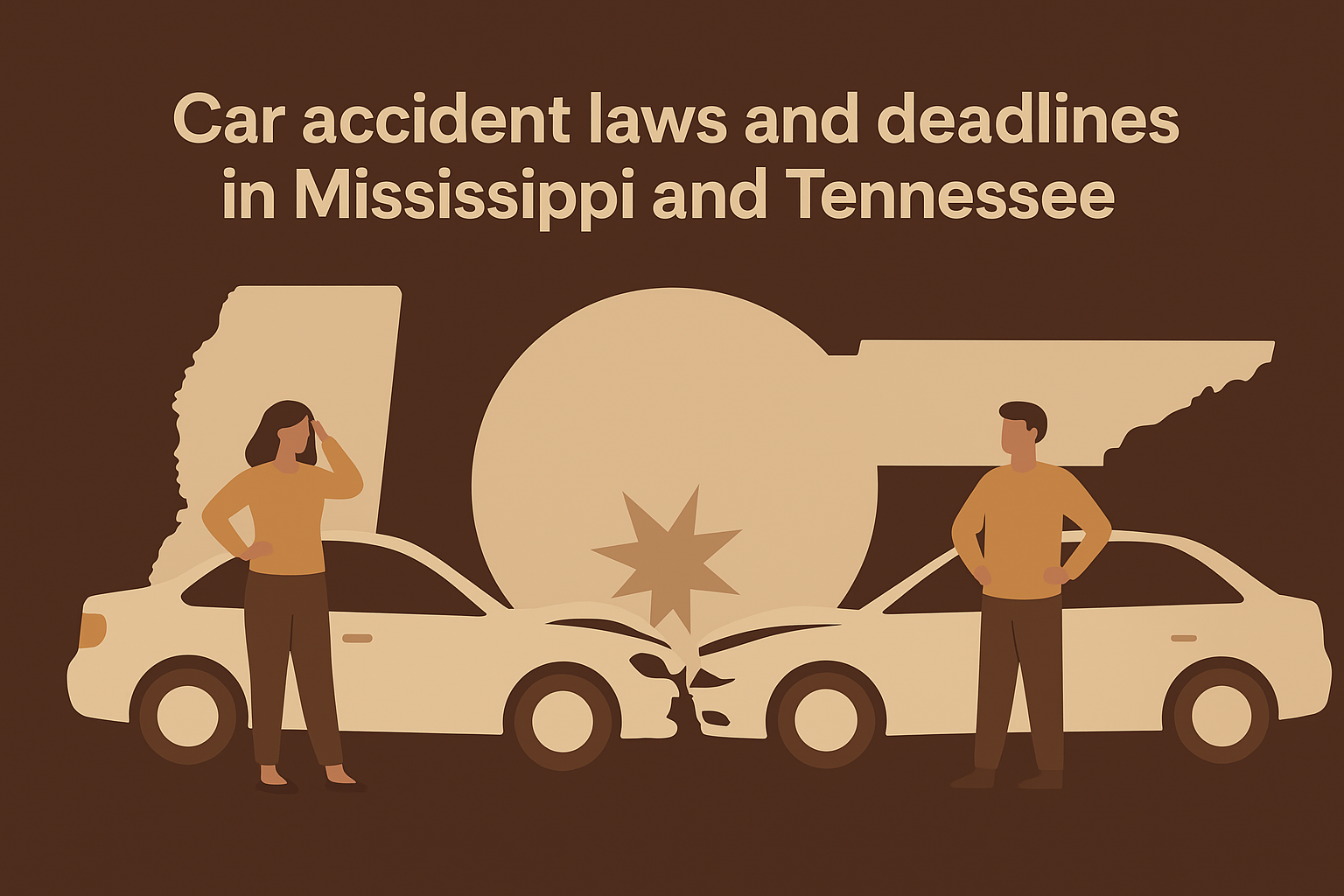
Driving across the state line between Mississippi and Tennessee is routine for anyone commuting between Southaven and Memphis, but the two states handle car accident claims very differently. State-specific deadlines and fault rules decide how much you can recover and how long you have to file, so knowing which law applies to your crash matters just as much as knowing who caused it.
Statute of limitations differences
Mississippi gives injured drivers three years from the date of the crash to file a personal injury lawsuit, under Mississippi Code Section 15-1-49. Tennessee cuts that window down to just one year under Tennessee Code Annotated Section 28-3-104. That's a massive gap, and it catches people off guard when their accident happens near the state line and they're not sure which court has jurisdiction. Missing either deadline means losing your right to sue permanently, regardless of how clear liability was or how serious your injuries turned out to be.
A one-year head start disappears fast once medical treatment, insurance back-and-forth, and daily life get in the way.
Comparative fault rules
Both states use versions of comparative negligence, but the details change your payout. Mississippi follows pure comparative negligence, meaning you can recover damages even if you were 90% at fault, though your award shrinks by your percentage of blame. Tennessee uses modified comparative fault with a 50% bar, so if you're found 50% or more responsible for the crash, you recover nothing at all. That difference alone can determine whether a contested-fault case is worth pursuing and how aggressively your attorney should push back on an insurer's blame-shifting.
| Legal factor | Mississippi | Tennessee |
|---|---|---|
| Statute of limitations | 3 years | 1 year |
| Fault rule | Pure comparative negligence | Modified comparative fault (50% bar) |
| Minimum liability insurance | $25,000/$50,000/$25,000 | $25,000/$50,000/$25,000 |
Insurance minimums and uninsured motorist coverage
Minimum liability coverage happens to match in both states right now, but that doesn't mean every driver on the road carries it, or enough of it, to cover your medical bills after a serious crash. Uninsured and underinsured motorist coverage on your own policy often becomes the real source of recovery when the at-fault driver is uninsured or carries only the state minimum. Reviewing your own policy limits before you're ever in an accident is worth doing, since that coverage can make the difference between a full recovery and a stack of unpaid medical bills.
Knowing which state's law governs your claim shapes everything from your filing deadline to your negotiating leverage, which is exactly why a local car accident attorney near you checks the crash location, both drivers' home states, and where the insurance policies were issued before giving you a straight answer about your case.

Taking the next step after your accident
A car accident throws your whole life off balance, and the legal side shouldn't add to that stress. You now know what a car accident attorney actually does, how contingency fees work, and why the deadline in Mississippi looks nothing like the one in Tennessee. That knowledge puts you ahead of most people who search attorney car accident near me and just pick the first result.
Waiting rarely helps your claim. Evidence disappears, deadlines shrink, and insurance adjusters count on you not knowing your rights. Free consultations exist so you can get a straight answer about your case before you sign anything or accept a settlement check you'll regret.
If you've been hurt in a crash anywhere near Tupelo, Southaven, or Memphis, don't wait to find out where you stand. Contact Mayfield Law Firm today for a free consultation and get a real assessment of your case.