
Attorney for Motorcycle Accident: What They Do and Why You Need One
A motorcycle wreck leaves you with more than road rash and a totaled bike. You're staring down medical bills, missed paychecks, and an insurance adjuster who assumes you're partly to blame just because you were on two wheels instead of four. That bias is real, and it's exactly why an attorney for motorcycle accident claims matters so much in these cases.
A qualified motorcycle accident injury attorney does the work you can't do from a hospital bed: gathering police reports and witness statements, dealing with insurance companies, calculating what your claim is actually worth, and pushing back when an adjuster tries to lowball you or shift fault. They handle the legal fight so you can focus on healing.
This article walks through what an attorney handles at each stage of a motorcycle injury claim, why these cases get treated differently than car accidents, and how to know when it's time to call a motorcycle personal injury lawyer . At Mayfield Law Firm, we've represented injured riders across Northeast Mississippi and South Memphis for over 40 years, and we offer a free consultation to talk through your specific situation.
Why you need an attorney after a motorcycle accident
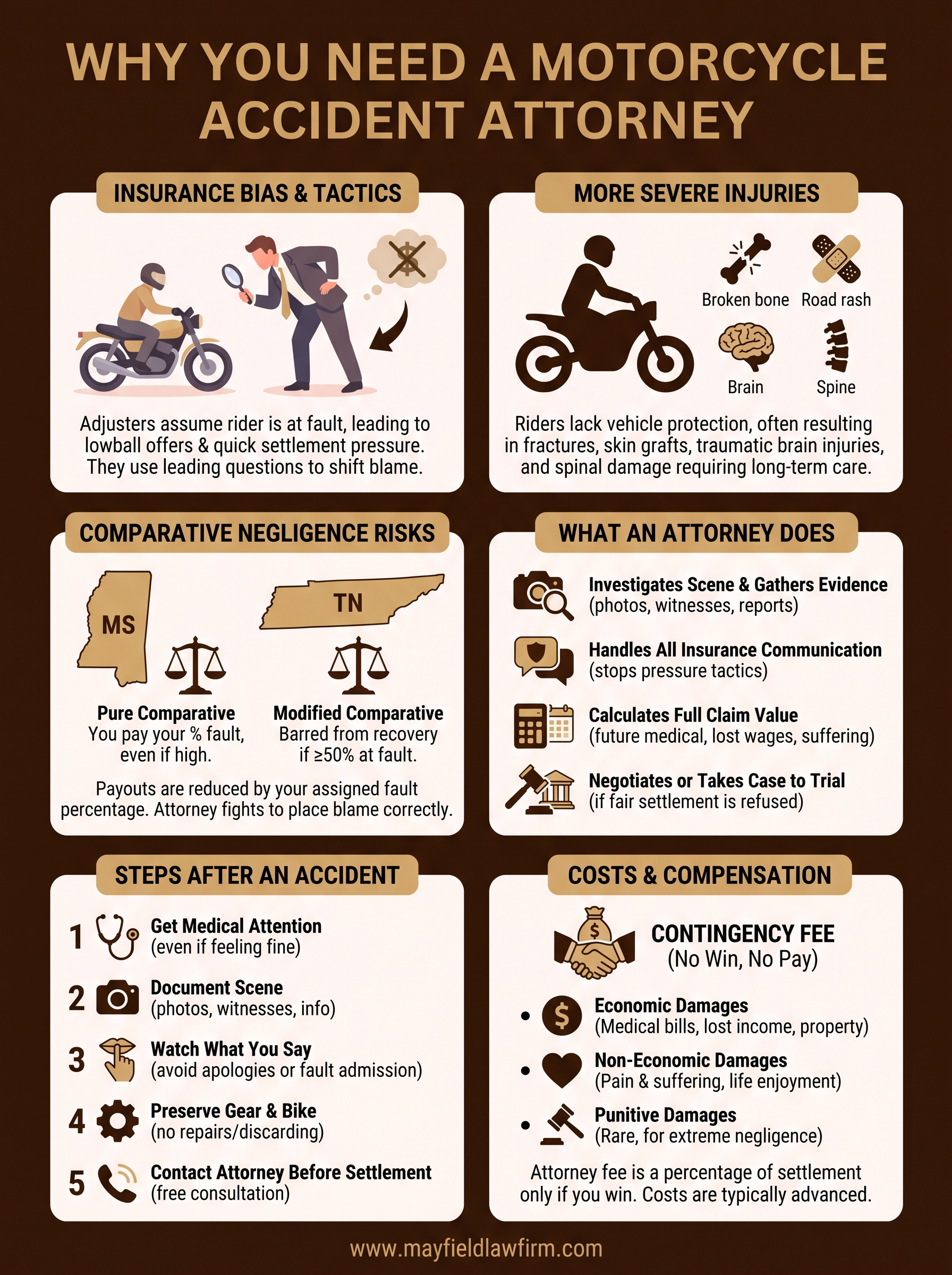
Insurance companies treat motorcycle claims differently than car accident claims, and not in your favor. Adjusters are trained to assume riders take more risks than drivers, even when the facts say otherwise. That built-in skepticism means you're fighting an uphill battle from the moment you file a claim, and it's the biggest reason to bring in a motorcycle accident injury attorney before you say anything official to the insurer.
Insurance adjusters assume you're at fault
Adjusters know most people picture motorcyclists as reckless, and they use that bias to their advantage. They'll ask leading questions designed to get you to admit partial fault, downplay your injuries in recorded statements, or push you to accept a quick settlement before you know the full extent of your medical needs. An experienced motorcycle personal injury lawyer knows these tactics because they see them in nearly every case, and they know how to shut them down before they cost you money.
Here's what typically happens without legal representation:
- The adjuster requests a recorded statement within days of the crash, while you're still on pain medication or in shock.
- They offer a settlement that covers your immediate medical bills but ignores future treatment, lost wages, or pain and suffering.
- They point to Mississippi's or Tennessee's comparative negligence rules to argue you share blame, even with thin evidence.
- They delay the claim hoping you'll get desperate enough to accept less than it's worth.
An adjuster's first offer is almost never their best offer, and accepting it without legal review usually costs riders thousands.
Motorcycle injuries tend to be more severe
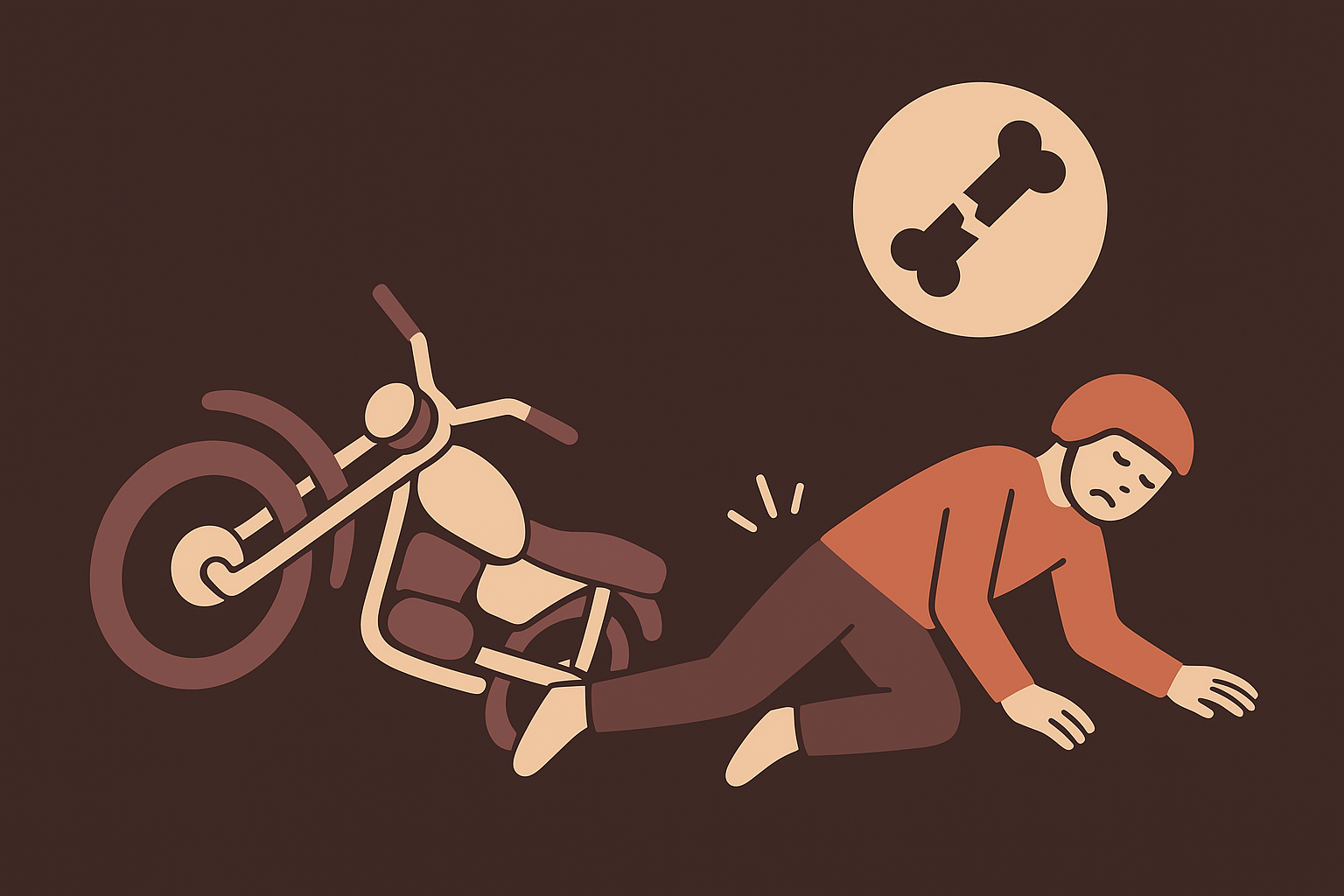
Riders don't have a steel frame, airbags, or seatbelts protecting them on impact. That means the injuries from motorcycle wrecks skew toward broken bones, road rash requiring skin grafts, traumatic brain injuries, and spinal damage that can require months or years of treatment. According to the National Highway Traffic Safety Administration, motorcyclists are far more likely to be killed or injured in a crash than occupants of passenger vehicles, mile for mile. Calculating what a claim involving those kinds of injuries is actually worth takes more than adding up hospital bills. It requires understanding future medical costs, long-term disability, and how the injury changes your ability to work and live the way you did before.
Comparative negligence rules can gut your payout
Both Mississippi and Tennessee use comparative negligence systems, which means your compensation gets reduced by whatever percentage of fault you're assigned. If an insurance company convinces an adjuster or a jury that you were 30% at fault, your payout drops by 30%, even if the other driver caused the wreck. Insurers know this, so they aggressively look for any excuse, lane position, speed, visibility, to shift blame onto the rider.
A motorcycle accident injury attorney builds a case that puts the fault where it belongs, using police reports, accident reconstruction when needed, witness statements, and photos from the scene. Without that pushback, riders often end up accepting far less than their claim is worth simply because nobody challenged the insurer's version of events.
Deadlines don't wait for you to feel ready
Both states have a statute of limitations on personal injury claims, and missing that deadline means losing your right to recover anything at all, regardless of how strong your case is. Between recovering from injuries, dealing with lost income, and trying to get your bike repaired or replaced, it's easy to lose track of paperwork deadlines and evidence that needs to be preserved quickly.
Surveillance footage gets deleted. Witnesses move or forget details. Physical evidence from the scene disappears. Bringing in legal help early means someone is tracking these deadlines and preserving evidence while you focus on getting better, not scrambling to piece together your case months later when the trail has gone cold.
Taken together, these factors explain why so many riders regret handling a claim on their own. Insurance company bias, the severity of typical injuries, comparative negligence rules, and legal deadlines all stack the deck against an unrepresented rider. An attorney for motorcycle accident claims levels that playing field, and that's true whether your case settles in a few months or ends up needing a lawsuit to get fair compensation.
How to choose the right motorcycle accident attorney
Not every personal injury lawyer handles motorcycle cases well. Riders face specific bias from insurers and juries that a general practice attorney may not know how to counter. Picking the right attorney for motorcycle accident claims means looking past a flashy billboard and asking questions that reveal whether they actually know this niche.
Ask about motorcycle-specific experience
Begin by finding out how many motorcycle cases the attorney has actually handled, not just personal injury cases in general. Car accident claims and motorcycle claims involve different evidence, different injury patterns, and different insurance company tactics. A motorcycle personal injury lawyer who understands lane splitting laws, helmet statutes, and how bias plays out in front of a jury brings something a generalist can't.
Questions worth asking during a free consultation:
- How many motorcycle accident cases have you handled in the last five years?
- Have you taken a motorcycle case to trial, or do you settle everything?
- Do you understand how comparative negligence gets applied to riders in this state?
- Will you personally handle my case, or will it get passed to a junior associate?
How the attorney answers these questions tells you as much as the answers themselves. Someone with real experience will give specifics, not vague reassurances.
Check their track record and reputation
Look at case results, client reviews, and how long the firm has practiced in your area. Local knowledge matters here more than people realize. An attorney who's worked with the insurance adjusters, judges, and court systems in Northeast Mississippi or South Memphis for years knows how those specific players operate. That familiarity often speeds up negotiations and helps set realistic expectations about what your case is worth.
A lawyer's history of results tells you more about what they can do for you than anything on their website.
Don't skip the reviews, but read them critically. Look for mentions of communication, responsiveness, and how the attorney handled setbacks, not just the final settlement number.
Understand the fee structure before you sign
Most motorcycle accident attorneys work on contingency, meaning you pay nothing unless they win your case. Before signing anything, get clear on the percentage they take, whether that percentage changes if the case goes to trial, and who covers costs like expert witnesses or medical record requests along the way. A firm that explains this clearly upfront, without hedging, is one that respects your time and your money.
Trust your gut during the first conversation
Finally, pay attention to how you feel after talking to them. Do they listen, or do they talk over you? Do they explain things in plain language, or bury you in legal jargon? You're going to work closely with this person for months, sometimes longer, while dealing with a painful recovery. Choosing someone who communicates clearly and treats you like a person, not a case number, matters just as much as their track record in the courtroom.
What a motorcycle accident attorney does for your case
Hiring an attorney for motorcycle accident claims isn't just about having someone answer your phone calls. It means putting a specific set of legal tasks in the hands of someone who knows how to execute them under deadline pressure, while you focus on physical therapy and getting your life back on track. Here's what that work actually looks like from the day you sign on through the day your case resolves.
Investigating the crash scene and gathering evidence
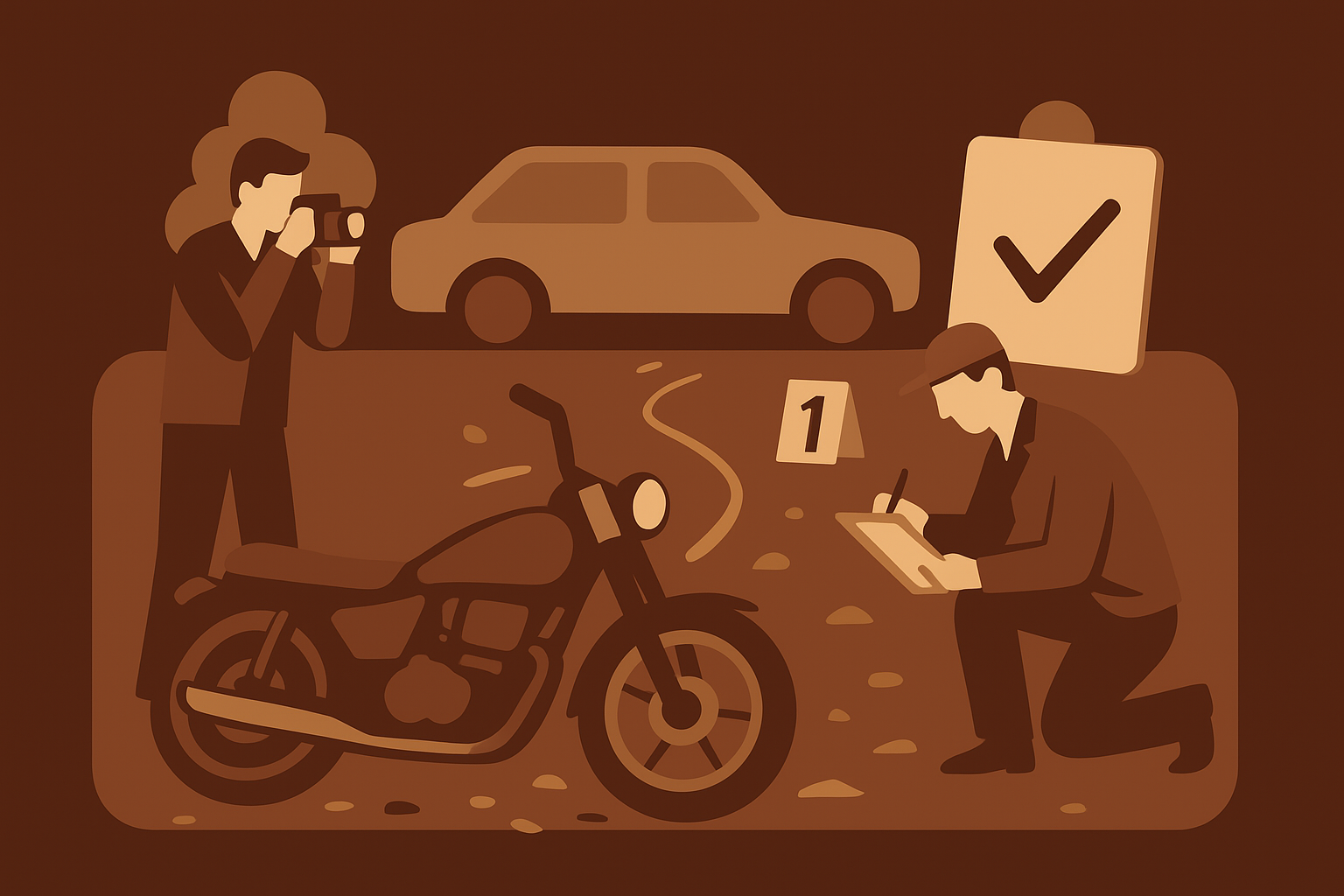
Building a strong claim starts with evidence, and a lot of it disappears fast. Your attorney sends someone to photograph the scene, pull traffic camera footage before it's overwritten, and track down witnesses while their memories are still fresh. They request the official police report, pull your bike's damage assessment, and if the case is complicated enough, bring in an accident reconstruction expert to establish exactly how the crash happened.
- Securing 911 call recordings and dispatch logs
- Photographing skid marks, debris fields, and vehicle damage
- Interviewing witnesses before they move or forget details
- Requesting maintenance and inspection records for the other vehicle when relevant
Handling every conversation with the insurance company
Once your attorney is involved, you stop talking to adjusters directly. That single change protects you from recorded statements designed to trap you into admitting fault, and it puts a motorcycle accident injury attorney between you and every lowball offer that comes in. Your lawyer negotiates directly, backed by evidence and a clear demand letter that spells out what your claim is worth and why.
The moment an attorney takes over communication with the insurer, the pressure tactics stop working.
Calculating what your claim is actually worth
Medical bills are only part of the picture. A thorough motorcycle personal injury lawyer works with doctors, economists, and sometimes vocational experts to calculate future medical costs, lost earning capacity, and the value of pain and suffering. Riders who settle without this kind of analysis routinely leave money on the table because they only account for what they've already spent, not what the injury will cost them for years to come.
Negotiating a settlement or taking your case to trial
Most motorcycle claims settle before trial, but that only happens because the attorney is prepared to file a lawsuit if the insurer won't offer a fair number. Preparation is what gives your lawyer leverage at the negotiating table. If a fair settlement doesn't materialize, your attorney files suit, handles discovery, deposes the other driver, and argues your case in front of a judge or jury if it comes to that. Every step, from the first demand letter to a possible courtroom trial, is aimed at the same goal: getting you compensation that actually reflects what the crash cost you, not just what the insurance company wants to pay.
Steps to take right after a motorcycle accident
What you do in the minutes and days after a motorcycle wreck can shape your entire claim. Evidence disappears, memories fade, and insurance companies start building their case against you almost immediately. Knowing the right order of operations protects both your health and your right to fair compensation, and it's information every rider should have before they ever need it.
Get medical attention first, even if you feel fine
Adrenaline masks pain. Riders regularly walk away from a crash scene feeling okay, only to discover a concussion, internal bleeding, or a fracture hours later. Seeing a doctor immediately does two things: it catches injuries before they get worse, and it creates a medical record tying your injuries directly to the crash date. Skipping medical care early on gives insurance adjusters an opening to argue your injuries came from something else entirely.
A gap between the crash and your first medical visit is one of the easiest excuses an insurer uses to deny a claim.
Document the scene before you leave
If you're physically able, gather as much evidence as you can while you're still there. Once the scene clears, most of this information is gone for good.
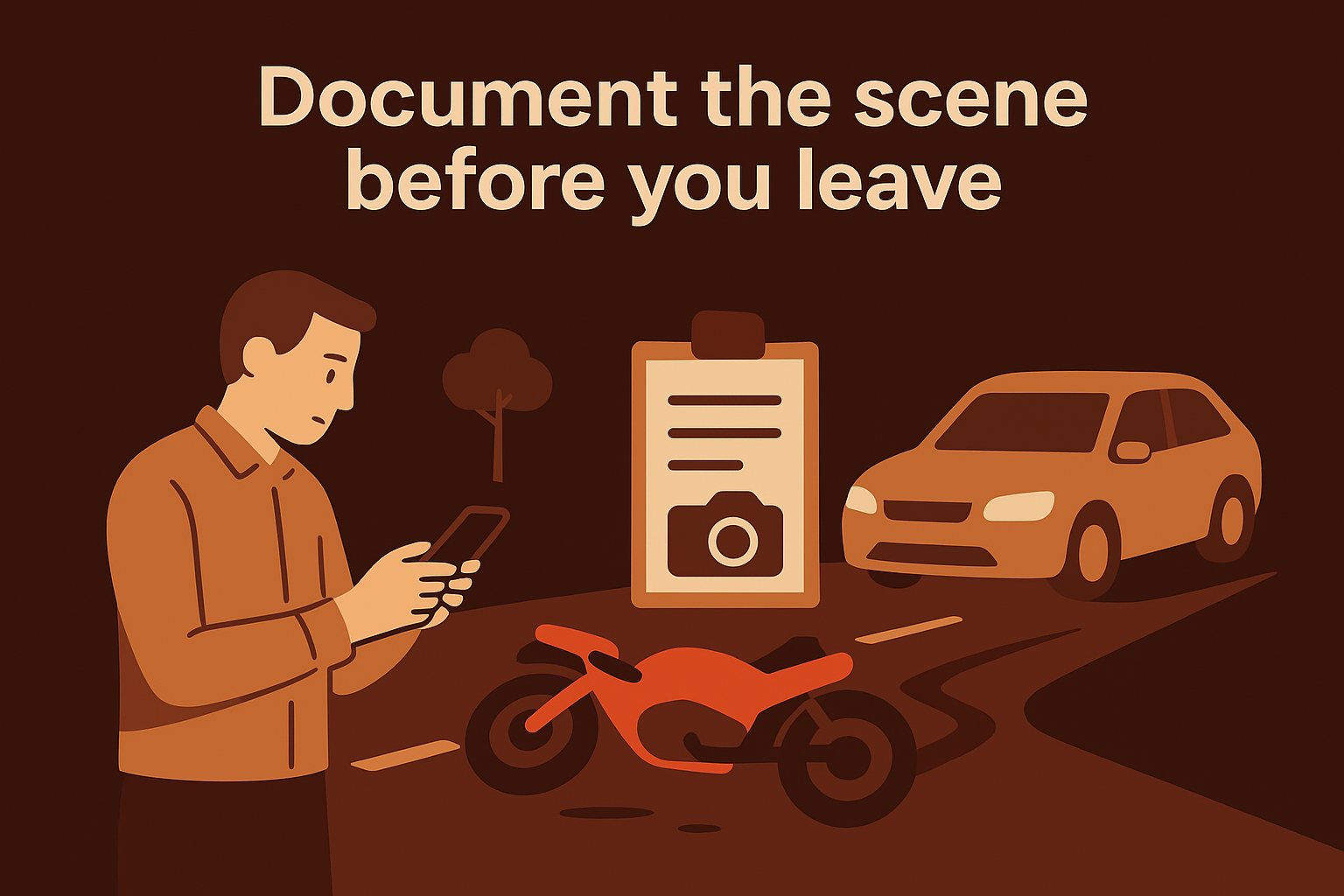
- Take photos of your bike, the other vehicle, skid marks, and the surrounding road conditions.
- Get names and phone numbers from any witnesses who saw the crash happen.
- Note the exact location, time, and weather conditions.
- Ask the responding officer for their name and badge number, and find out how to request the official police report.
- Photograph your visible injuries, protective gear, and helmet damage.
This documentation becomes the foundation your motorcycle accident injury attorney builds on later, so the more you can capture now, the stronger your case starts out.
Watch what you say at the scene and afterward
Saying "I'm sorry" or "I didn't see them" out of instinct can be twisted into an admission of fault later, even if that's not what you meant. Stick to facts when talking to police, and avoid speculating about who caused the crash or how badly you're hurt. The same rule applies once insurance companies start calling. Adjusters record these conversations and comb through them looking for anything that shifts blame onto you.
Preserve your gear and avoid quick fixes
Don't repair or discard your damaged bike, helmet, or riding gear until your attorney has had a chance to inspect it. Damaged equipment often serves as physical evidence showing the force and direction of impact. Fixing your bike too soon, or letting an insurance company's shop take it before your side documents the damage, can weaken your claim down the line.
Contact an attorney before accepting any settlement
Reaching out to a motorcycle personal injury lawyer early, ideally before you give any statement to an insurance company, gives you someone tracking deadlines, preserving evidence, and handling communication from day one. Most firms, including ours, offer a free consultation specifically so you can get guidance without adding financial pressure to an already difficult situation.
How much does a motorcycle accident lawyer cost
Money worries are often the first thing that stops injured riders from calling an attorney for motorcycle accident claims, but the cost structure is designed to remove that barrier. Nearly every personal injury firm, including ours, works on contingency, which means you owe nothing upfront and nothing out of pocket while your case moves forward. Understanding exactly how that fee works, and what it doesn't cover, helps you make a clear-eyed decision instead of avoiding legal help out of fear of a bill you can't pay.
How contingency fees work
Contingency means your motorcycle accident injury attorney only gets paid if you win a settlement or verdict, and their fee comes out of that recovery, not your bank account. The percentage typically depends on how far the case goes before it resolves.
| Stage of the case | Typical fee range |
|---|---|
| Settled before a lawsuit is filed | 25% to 33% |
| Settled after a lawsuit is filed | 33% to 40% |
| Resolved at trial | 40% or more |
Rates vary by firm and by state, so ask for the exact percentage in writing before you sign anything. A trustworthy motorcycle personal injury lawyer explains this without hesitation and puts it in your representation agreement, not buried in fine print.
If a lawyer can't tell you their exact fee percentage on the spot, that's a red flag worth paying attention to.
What costs are separate from the attorney's fee
Beyond the percentage-based fee, cases can involve case expenses that get paid out of your settlement before you receive your share. These are different from the attorney's cut and cover the actual costs of building your claim.
- Medical record and police report requests
- Expert witness fees, including accident reconstructionists or medical experts
- Court filing fees if a lawsuit becomes necessary
- Deposition and court reporter costs
- Costs tied to obtaining surveillance or traffic camera footage
Most firms advance these costs and recover them from your settlement at the end, so you're still not paying anything while the case is active. Ask upfront whether you'd owe these costs even if your case doesn't win. A firm confident in your claim usually absorbs that risk rather than passing it to you.
Why a free consultation removes the risk
Offering a free consultation exists specifically to let you evaluate your case and your attorney without spending a dime. During that first meeting, you should walk away with a clear sense of whether you have a viable claim, roughly what it might be worth, and how the fee structure applies to your specific situation. Nothing about that conversation should feel rushed or pressured toward signing on the spot.
Waiting to call because you're worried about cost almost always backfires. Evidence gets harder to gather the longer you wait, and the contingency model means the financial risk sits with the attorney, not with you. Talking to a motorcycle accident injury attorney early costs nothing and often protects thousands of dollars you'd otherwise leave on the table.
Compensation you can recover after a motorcycle accident
Money awarded in a motorcycle injury claim covers more than the obvious hospital bill. A well-built case accounts for every way the crash disrupted your life, from the medical expenses piling up now to the long-term income loss you might not feel until months later. Understanding the full range of what's on the table helps you recognize when a settlement offer falls short.
Economic damages: the costs you can add up
Economic damages are the easiest category to calculate because they come with receipts and pay stubs attached. These cover the out-of-pocket costs and lost income tied directly to the crash.
- Emergency room and hospital bills
- Surgery, physical therapy, and follow-up treatment
- Prescription medication costs
- Lost wages from time off work
- Reduced earning capacity if injuries limit future work
- Property damage to your motorcycle and gear
Non-economic damages: what a dollar figure can't fully capture
Non-economic damages compensate for the parts of your recovery that don't show up on an invoice. Pain and suffering and loss of enjoyment of life fall into this category, along with emotional distress and, in serious cases, permanent disability or disfigurement. Insurance companies and juries calculate these differently, often applying a multiplier to your economic damages based on how severe the injury turned out to be.
Non-economic damages exist because a broken spine costs you more than a hospital bill, and the law recognizes that.
Punitive damages in rare cases
Punitive damages only come into play when the at-fault driver's conduct goes beyond ordinary negligence, think drunk driving, excessive speeding, or texting behind the wheel that led directly to the crash. Courts award these damages to punish the driver and deter similar behavior, not to compensate you directly, which makes them less predictable than economic or non-economic awards. Your attorney for motorcycle accident claims will tell you early on whether the facts of your case even support pursuing them.
What determines the final number
Several factors shape the size of every settlement, and no two claims land in exactly the same place.
| Factor | Effect on compensation |
|---|---|
| Severity of injuries | More severe injuries generally mean higher awards |
| Percentage of fault assigned to you | Reduces payout under comparative negligence rules |
| Available insurance coverage | Caps how much you can collect from the at-fault driver |
| Strength of documented evidence | Stronger evidence supports higher demands |
| Impact on future earning capacity | Long-term disability increases economic damages |
Determining what your specific case is worth requires weighing all of these factors together, not just adding up bills. A motorcycle personal injury lawyer who's handled similar cases knows how to build a demand that accounts for every category of loss, not just the ones with a receipt attached.
Motorcycle accident laws in Mississippi and Tennessee
Riders crossing the Mississippi-Tennessee border regularly commute between Southaven and Memphis, and the laws governing your claim change the moment you cross that line. A motorcycle accident injury attorney who only knows one state's rules can miss deadlines or misapply fault standards that directly affect what you recover. Knowing the basics before you ever need them helps you spot when something in your case doesn't add up.
Helmet laws affect more than safety
Both states require helmets for all riders, regardless of age or experience, which puts them in the minority of states with a universal helmet law. That matters for your claim because insurance companies sometimes argue that a rider's injuries would have been less severe with a different helmet or better gear, even when the helmet met legal standards. Documenting that you wore a compliant helmet, and preserving that helmet as evidence rather than discarding it, removes one of the easiest arguments an adjuster can raise against your payout.

Statutes of limitations you can't afford to miss
Each state sets a hard deadline for filing a personal injury lawsuit, and missing it ends your case regardless of how clear the other driver's fault was.
| State | Statute of limitations for injury claims |
|---|---|
| Mississippi | 3 years from the date of the crash |
| Tennessee | 1 year from the date of the crash |
Tennessee's one-year window catches a lot of injured riders off guard, especially those still deep in medical treatment who assume they have more time. Mississippi gives more breathing room, but three years disappears fast once you factor in months of recovery and negotiation with an insurer who's in no hurry to settle.
Tennessee gives you one year to file, and once that date passes, no amount of evidence can bring your claim back to life.
Comparative negligence rules differ between the two states
Mississippi follows a pure comparative negligence rule, meaning you can recover damages even if you were 90% at fault, though your payout shrinks by that same percentage. Tennessee uses a modified comparative fault system, and under Tennessee law you can be barred from any recovery at all if you're found 50% or more responsible for the crash. That difference alone can determine whether a case is worth pursuing and how aggressively your motorcycle personal injury lawyer needs to push back on fault allegations from the other side.
Understanding which state's law applies to your crash, based on where it happened rather than where you live, shapes almost every strategic decision your attorney makes. An attorney for motorcycle accident claims who practices across both Mississippi and Tennessee knows how to apply the right rules from day one, rather than discovering a deadline or fault standard problem months into your case when it's too late to fix. You can review Mississippi's statute of limitations directly through the Mississippi Legislature's official code, or check Tennessee's version through the Tennessee General Assembly.
Moving forward after a motorcycle accident
A motorcycle wreck changes your life fast, and the weeks that follow decide how much of that damage you actually recover from financially. Insurance companies count on riders feeling overwhelmed enough to accept a fast, low offer instead of fighting for what the claim is truly worth. Bringing in an attorney for motorcycle accident claims early protects your evidence, your deadlines, and your leverage at the negotiating table before any of that gets away from you.
You don't have to figure out comparative negligence rules, insurance tactics, or settlement math on your own while you're still healing. Mayfield Law Firm has represented injured riders across Northeast Mississippi and South Memphis for over 40 years, and we know how to build a claim that holds up against insurers looking for any excuse to pay less. Schedule your free consultation with Mayfield Law Firm today and find out exactly where you stand.