Good Personal Injury Lawyer: How to Vet and Choose One
A good personal injury lawyer is one you can verify, who handles cases like yours, who is willing to go to trial, and who explains fees in writing before you sign. To find one, build a shortlist of three to five local firms, check each license and record, meet them at free consultations, and compare fee agreements side by side.
The hard part is that every firm sounds the same. Billboards promise "maximum compensation," review pages blend real clients with paid placements, and you are choosing while you are hurt, missing work, and fielding calls from an insurance adjuster. A rushed choice can cost you months and a smaller settlement.
Mayfield Law Firm, P.A. has handled injury cases from its Tupelo, Southaven, and Memphis offices since 1974, and this guide draws on that experience. It explains what separates a good lawyer from a loud one, then walks through four steps: shortlist, verify, interview, and compare fees.
What makes a personal injury lawyer good
Four traits that matter more than awards
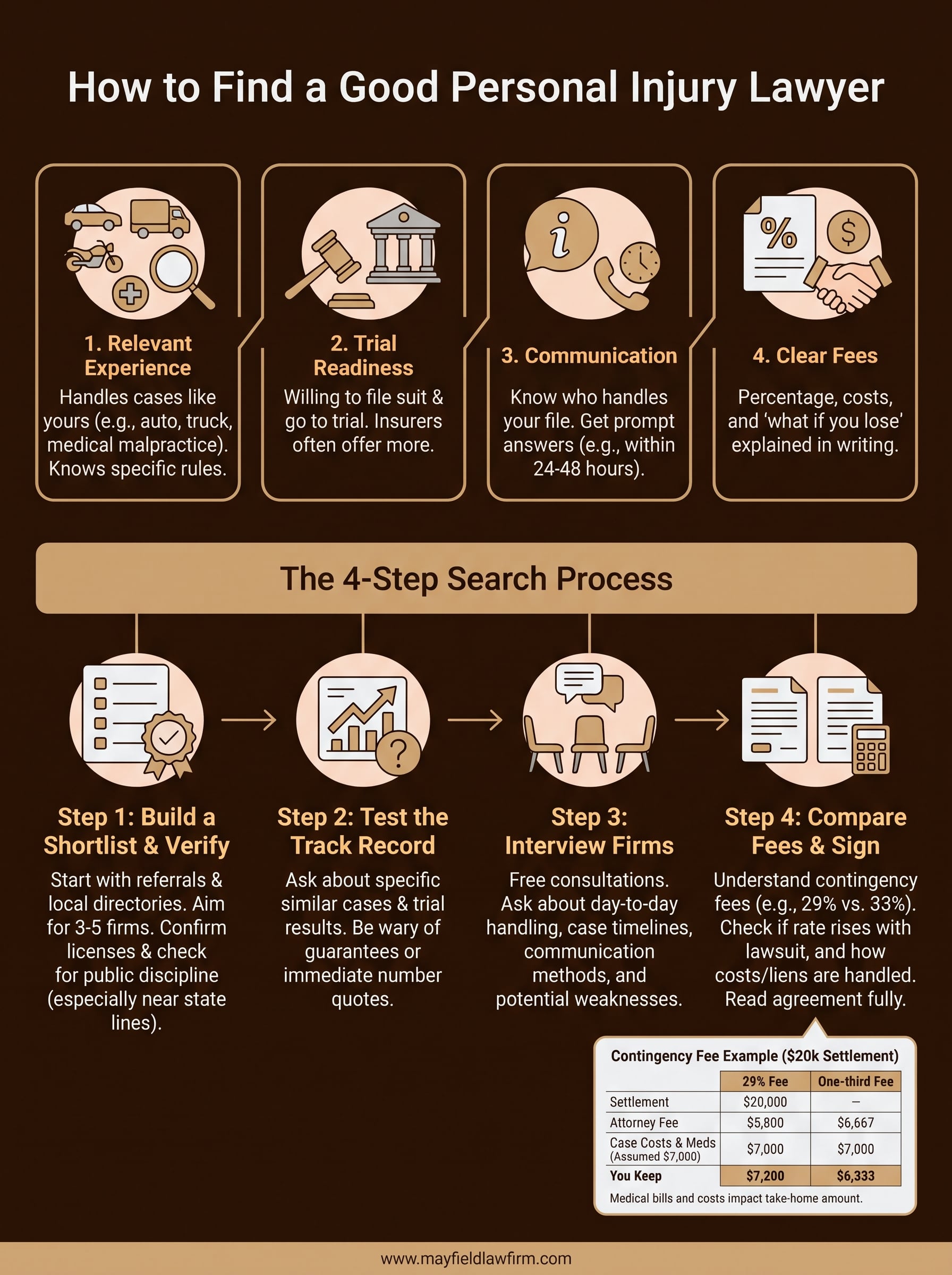
There is no single "best" lawyer. Top-ten lists mostly rank marketing budgets. What holds up is a short set of traits you can test yourself:

- Relevant experience. Truck crashes, motorcycle wrecks, and medical malpractice each run on different rules and evidence.
- Trial readiness. Insurers tend to offer more when they believe the lawyer will file suit and try the case.
- Communication. You should know who handles your file and get answers within a day or two.
- Clear fees. The percentage, the costs, and what happens if you lose are all in writing.
Judge a lawyer by what you can check, not by what the advertising claims.
When hiring a lawyer is worth it
Hiring a lawyer is usually worth it when you have medical treatment beyond one urgent care visit, missed work, a dispute over who caused the crash, or an insurer that has gone quiet or lowballed you. If you were not hurt and the damage is a small repair, you can often handle it yourself.
Mississippi is a fault-based state, so you can file a claim against the negligent driver or their insurer. Proving that fault is where a lawyer earns the fee. Most firms offer a free consultation, so asking costs you nothing.
Deadlines shape your search
Waiting is risky because time limits are short . Mississippi generally allows three years for most personal injury claims, while Tennessee allows only one year. That gap matters if you live near the state line, since a crash on one side and treatment on the other can change which rules apply. Exceptions exist, so confirm your exact deadline at the first meeting.
Step 1. Build a shortlist of local lawyers
Start with people, then add research
Begin with referrals. Ask friends, coworkers, or a lawyer you already trust whom they would hire for an injury case. Then add the state bar's lawyer referral service , peer-rated directories, and Google Business profiles.
Online forum threads can surface names, but treat them as leads, not proof. Anyone can post praise, and one person's result says little about yours. Aim for three to five names.
Read reviews for patterns
Read the three- and four-star reviews first, because they are usually the most specific. Look for repeated mentions of returned calls, honest expectations, and named staff members . Discount a review that only celebrates a large number, since case facts differ.
A cluster of five-star reviews posted in one week is a warning sign. Also favor lawyers within reach. An office near you, or a firm that offers virtual meetings, makes it easier to stay involved in your own case.
A pattern across many reviews tells you more than any single story.
Step 2. Verify the license and track record
Check the license and discipline
Confirm that each lawyer is licensed in the state where your accident happened. The Mississippi Bar and the Tennessee Board of Professional Responsibility both let you look up a lawyer and see public discipline . The check takes five minutes.
Licensing matters most near the state line. Our attorneys are licensed in both Mississippi and Tennessee, which is the kind of detail to look for if your crash, your doctors, or the at-fault driver sit on opposite sides of the border.
Test the track record
Ask each firm how many cases like yours it has handled in recent years and how many went to trial. A seasoned lawyer answers in specifics while protecting client confidentiality. Vague answers are a reason to move on.
Be wary of anyone who guarantees a result or quotes a number before seeing your medical records. Nobody can honestly do that. Treat awards with the same caution: find out who grants them and whether lawyers pay to be listed.
Specific answers about similar cases beat confident promises every time.
Step 3. Interview at least three firms
Questions to ask at the consultation
Bring the police report, photos, medical records, and insurance cards. Then ask each firm the same questions so you can compare answers:
- Who will work on my case day to day?
- How many cases like mine have you handled, and how did they end?
- Will you file a lawsuit if the insurer refuses a fair offer?
- How often will you update me, and by what method?
- What is a realistic timeline for my case?
- What could weaken my claim?
What to tell your lawyer and what to avoid
Do not hold back anything relevant. What you tell your lawyer is confidential , and the cases that go badly are usually the ones where a prior injury, an earlier claim, or your own share of fault surfaces first through the insurer.
What you should avoid is talking to the other side. Do not give a recorded statement, sign a broad medical release, post about the crash on social media, or accept a quick offer before speaking with counsel.
Walk away if a firm pressures you to sign on the spot, guarantees an outcome, or never lets you meet the lawyer. The same goes for anyone who approaches you at the hospital.
Tell your lawyer everything, and tell the insurance adjuster as little as you can.
Step 4. Compare fees and sign the agreement
How contingency fees work
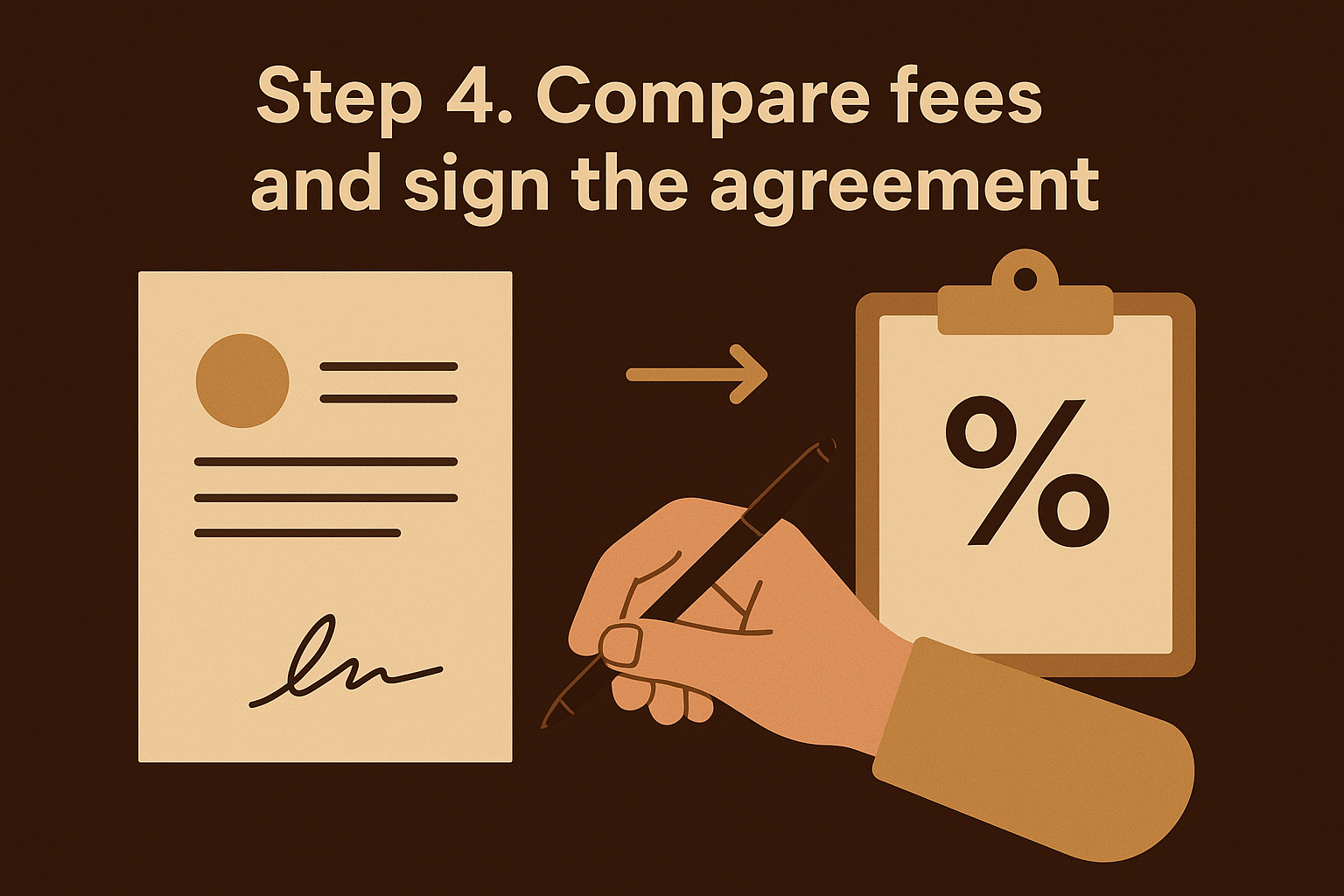
Most injury lawyers work on a contingency fee : you pay no attorney fee unless money is recovered. The fee is a percentage of the recovery. Our car accident representation, for example, is on a contingency basis with a 29% attorney fee on cases that settle. Other firms charge different rates, and some raise the percentage once a lawsuit is filed.
Here is how that plays out on a $20,000 settlement. The costs and medical bills are assumed for illustration.
| Item | 29% fee | One-third fee |
|---|---|---|
| Settlement | $20,000 | $20,000 |
| Attorney fee | $5,800 | $6,667 |
| Case costs (assumed) | $1,000 | $1,000 |
| Medical bills repaid (assumed) | $6,000 | $6,000 |
| You keep | $7,200 | $6,333 |
So you will not take home $20,000. Medical bills often matter as much as the fee, and they can sometimes be negotiated down.
Read the agreement before you sign
Take the agreement home. Check whether the percentage rises when a suit is filed , who pays case costs if you lose, and whether costs come out before or after the fee. Find out what you owe if you change lawyers midway, and how medical liens will be handled.
A good lawyer welcomes these questions. If answers come slowly or stay vague, that tells you how the relationship will go.
Never sign a fee agreement you have not read at your own kitchen table.
Choose the lawyer you can reach and verify
Finding a good personal injury lawyer comes down to checking, not trusting. Build a short local list, confirm licenses, ask every firm the same questions, and compare the fee terms in writing. The lawyer worth hiring is the one whose answers stay specific, whose record you can check, and who picks up the phone.
If you were hurt in Northeast Mississippi or the Memphis area, you can schedule a free consultation with Mayfield Law Firm, P.A. and use the questions above to judge us the same way you would judge anyone else.