7 Qualities That Make the Best Personal Injury Lawyer
You're hurt, the bills are stacking up, and an insurance adjuster is already calling with a lowball offer. Picking the wrong attorney at this point can cost you thousands, or worse, your entire case. Finding the personal injury lawyer best suited to your situation isn't about hiring the firm with the biggest billboard, it's about knowing which specific traits actually move the needle on your settlement.
So what separates the best lawyer for personal injury claims from someone who just files paperwork and hopes for the best? It comes down to a handful of concrete qualities you can check before you ever sign a retainer agreement, things like trial experience, how they communicate, and whether they've actually handled cases like yours.
This list breaks down the seven qualities we've seen matter most after decades of representing injured clients across Northeast Mississippi and South Memphis. Whether you're dealing with a car accident, a workplace injury, or a wrongful death claim, use these markers to evaluate any attorney you're considering, including us.
1. A proven track record of results
Why it matters
A lawyer's history of settlements and verdicts tells you more than any marketing brochure ever will. Case results show whether an attorney can actually build a claim, negotiate with insurance companies, and win in front of a jury if it comes to that. Insurance adjusters research the attorneys on the other side before they make an offer, and they treat firms with weak trial histories very differently than firms known for pushing hard. If you're trying to find the personal injury lawyer best equipped to handle your specific injury, whether that's a spinal injury from a truck wreck or a wrongful death claim, past results in similar cases are the clearest signal you have.
A lawyer's past settlements and verdicts predict how hard they'll fight for your case, not just what they promise in a consultation.
How to evaluate it
Don't just take a number on a website at face value. Dig into how that number was reached and whether it applies to a case like yours.
- Ask for case examples that match your injury type, not just the firm's biggest headline settlement
- Check whether results were verdicts or settlements , since some firms rarely go to trial and settle everything quietly
- Look at gross versus net figures , because a $500,000 settlement means little if fees and costs ate most of it
- Search state bar records for any disciplinary history through your state bar association's public lookup tool, one of several ways to vet an injury lawyer near you
- Read client reviews on independent platforms, not just testimonials curated on the firm's own site, and know which review sites to trust and what red flags look like
Questions to ask before hiring
A short phone call or free consultation gives you plenty of room to ask pointed questions. Pay attention not just to the answers but to how directly the attorney responds, since vague answers here often predict vague communication later.
- How many cases like mine have you handled in the last five years?
- What was the outcome in your three most recent cases similar to mine?
- Who on your team will actually work my file day to day?
- Have you tried a case like mine in front of a jury?
- What made the difference in the cases where you won versus the ones you didn't?
Straight answers to these questions tell you whether you're talking to a firm that treats results as a track record or one that treats them as a sales pitch. At Mayfield Law Firm, we walk every client through our approach to their specific type of claim, including our personal injury representation across auto accidents, workplace injuries, and wrongful death cases, before they ever sign anything.
2. Willingness to take cases to trial
Why it matters
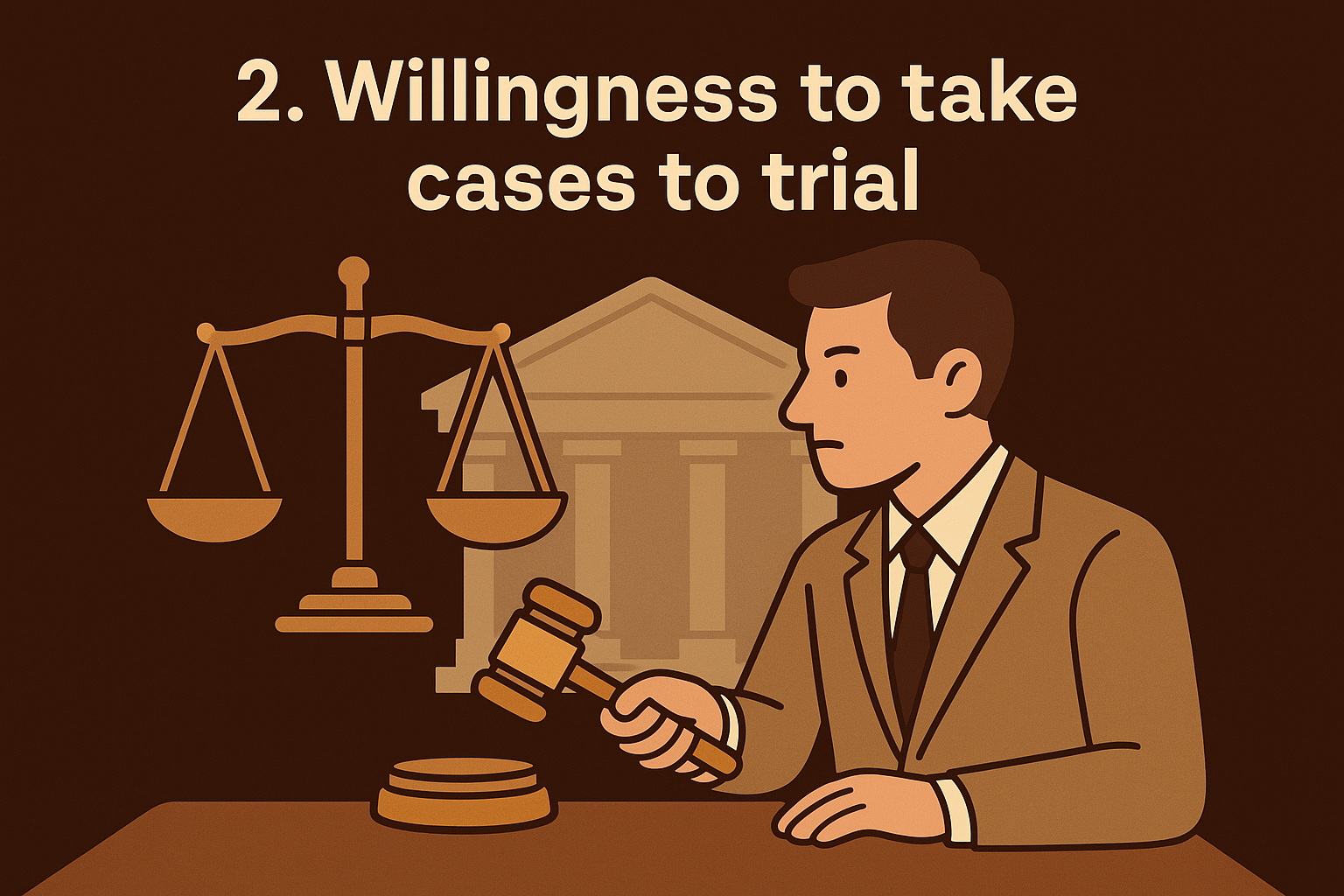
Insurance companies keep detailed files on which attorneys settle for pennies and which ones actually walk into a courtroom. Trial readiness changes the entire negotiation from day one, because an adjuster who knows a firm will file suit and prepare for a jury offers real money upfront instead of dragging out lowball tactics for months. Many firms advertise aggressively but settle nearly every file, often because they lack the staff, funding, or experience to try a case properly. That reputation follows them into every negotiation, and it costs their clients real dollars.
An attorney who's never tried a case has less leverage at the negotiating table, no matter how tough they sound on the phone.
How to evaluate it
George doesn't need to guess here. Ask the firm directly how many cases they've taken to verdict in the past two or three years, not just how many they've "litigated," since filing a lawsuit and actually trying it in front of a jury are very different things. Confirm they carry the resources to front costs like expert witnesses and depositions, because trial prep gets expensive fast and underfunded firms often fold under that pressure.
Questions to ask before hiring
- How many trials have you personally taken to verdict?
- What percentage of your cases settle versus go to trial?
- Who covers the costs of expert witnesses if my case goes to trial?
- Can you share an example where trial preparation changed the settlement offer?
Firms that answer these plainly, with specifics, are usually the ones prepared to fight rather than fold at the first offer.
3. Clear and consistent communication
Why it matters
Nothing frustrates an injured client more than calling their own lawyer's office and never hearing back. Communication gaps during a personal injury claim usually signal deeper problems, like an overloaded caseload or a firm that treats your file as an afterthought once the retainer is signed. You're dealing with medical bills, missed paychecks, and an insurance company that won't call you back either, so you need an attorney who actually answers when you have a question about your case status or a settlement offer that just landed.
If your lawyer goes silent for weeks at a time, you have no way of knowing whether your case is progressing or stalling out.
How to evaluate it
Before you sign anything, test how the firm handles a simple phone call or email during the consultation phase itself. Notice whether a real person answers, whether they return messages within a day or two, and whether they explain your case timeline , including how long a settlement usually takes, in plain language instead of legal jargon. A firm that's slow to respond before you're even a client rarely improves once you are one.
Questions to ask before hiring
- Will I speak directly with my attorney, or mainly with paralegals and case managers?
- How quickly can I expect a response to a phone call or email?
- Who do I contact if my main point of contact is unavailable?
- How often will you update me on my case's progress?
Clear answers here tell you whether you'll be kept informed or left guessing while your medical bills pile up.
4. A contingency fee arrangement
Why it matters
A contingency fee structure means you pay nothing unless your attorney wins your case, with nothing due upfront. This arrangement protects injured clients who are already missing paychecks and can't afford hourly legal bills on top of medical debt. It also aligns incentives: the firm only gets paid when you do, so a lawyer working on contingency has real motivation to push for the strongest possible outcome rather than dragging out billable hours.
If a personal injury lawyer asks for money before your case settles, that's a warning sign worth walking away from.
How to evaluate it
Get the fee percentage in writing before you sign anything, and ask whether it changes if your case goes to trial instead of settling early. Most firms charge somewhere between 33% and 40% in contingency fees, with the higher end reserved for cases that require litigation. Also clarify who covers case costs like expert witnesses, filing fees, and medical record requests if the case doesn't result in a recovery.
Questions to ask before hiring
- What percentage do you charge, and does it increase if my case goes to trial?
- Am I responsible for any costs if we don't win?
- How are case expenses deducted from my final settlement?
- Will the fee agreement be provided in writing before I sign?
Getting straight answers here protects you from surprise deductions later. Mayfield Law Firm handles every case, from auto accidents to wrongful death claims, on a contingency basis, so a free consultation never costs you anything out of pocket.
5. Focused experience in personal injury law
Why it matters
A lawyer who splits time between divorce filings, criminal defense, and the occasional injury claim can't keep up with the fast-moving rules that govern personal injury cases. Practice area focus matters because injury law involves specific deadlines, medical documentation standards, and negotiation tactics that only come from handling these claims repeatedly. Insurance companies know which firms specialize, and they adjust their offers accordingly. A generalist attorney might miss a filing deadline under Mississippi's statute of limitations or undervalue a claim because they don't see enough of them to know what similar injuries actually settle for.
A lawyer who dabbles in injury cases on the side won't spot the details that separate a fair settlement from a lowball one.
How to evaluate it
Check how much of the firm's caseload is actually dedicated to personal injury claims versus other legal work. Ask directly what percentage of their practice involves auto accidents, workplace injuries, or wrongful death claims, and look for board certifications or memberships in trial lawyer associations that require ongoing injury-specific education.
Questions to ask before hiring
- What percentage of your practice is personal injury law?
- Do you or your team handle other types of cases, like family law or criminal defense?
- Have you handled a case with injuries similar to mine before?
- What professional associations or certifications do you hold specific to injury law?
Answers here separate firms that treat injury claims as their core work from those that treat them as a side practice, and there are more questions worth asking before you hire an injury attorney. Our attorneys focus their time on auto accidents, workplace injuries, and wrongful death claims across Northeast Mississippi and South Memphis, which shapes how we build every personal injury case from day one.
6. Local knowledge of courts, judges, and insurers
Why it matters

Every county courthouse runs a little differently, and a lawyer who's tried cases in front of the same judges for years knows things an out-of-town firm never will. Local court experience shapes how a case gets filed, how quickly it moves, and even how a judge tends to rule on specific motions. Insurance companies also negotiate differently depending on which firm is across the table, and adjusters in Tupelo, Southaven, or Memphis often already know the local attorneys who've built a reputation in front of the same courts. Hiring someone who knows the terrain gives you an edge before a single document gets filed.
A lawyer who already knows the judge, the courthouse clerk, and the local insurance playbook starts your case ahead of one who's still learning the territory.
How to evaluate it
Find out where the firm's attorneys actually practice day to day, not just where their office sits on a map. Ask how many cases they've filed in your specific county, and whether they've worked directly with the insurance carriers involved in your claim. A firm rooted in Northeast Mississippi and South Memphis for decades brings relationships and courtroom familiarity that a national chain simply can't replicate.
Questions to ask before hiring
- How many cases have you filed in this specific county or district?
- Have you dealt with this particular insurance company before?
- Do you know the judges likely to hear my case?
- How does local court experience change your strategy on a claim like mine?
Specific, confident answers here mean you're hiring someone who already understands the system your case will move through.
7. Personal attention and a manageable caseload
Why it matters
Some firms sign up hundreds of clients at once and hand most files to whoever has room on their desk that week. Caseload size directly affects how much time an attorney can spend on your file, from returning calls to preparing for depositions. When you're searching for the best lawyer for personal injury representation, you want someone who still remembers the details of your accident without pulling up notes first. A firm stretched too thin tends to settle fast just to clear files, not because the offer reflects what your case is actually worth.
A lawyer juggling hundreds of active files has less time to fight for yours than one who keeps their caseload deliberately small.
How to evaluate it
Ask how many active cases the attorney and their team are currently handling, and compare that against firm size. A smaller firm with dedicated staff often gives more personal attention than a large outfit running clients through a call center model. Watch for signs during your consultation too, like whether the attorney personally reviews your medical records or delegates that entirely to someone you've never met.
Questions to ask before hiring
- How many active cases does this office currently handle?
- Will the same attorney and staff work my file from start to finish?
- How do you decide which cases get priority attention?
- What happens to my case if my attorney gets busy with a trial?
Honest answers here reveal whether your case gets real attention or gets lost in the shuffle. Our team at Mayfield Law Firm keeps caseloads manageable so clients get direct access to their personal injury attorney in Memphis, TN, not a rotating cast of strangers.

Choosing the right lawyer for your case
None of these seven qualities work in isolation. A firm with a strong track record but poor communication will still leave you anxious and uninformed. One that returns calls promptly but avoids trial will still settle for less than your case deserves. Weigh all seven together, and you'll spot the difference between a firm chasing quick settlements and one truly built to fight for you.
Gathering answers to the questions above takes an hour of your time, maybe two. Skipping that step can cost you thousands in a settlement you never should have accepted. Trust the process, ask the hard questions, and pick the attorney who answers them without hesitation.
If you're weighing your options in Northeast Mississippi or South Memphis, contact Mayfield Law Firm to talk through your case during a free consultation. We'll walk you through exactly how we handle claims like yours, no pressure, no obligation.