What Is A Wrongful Death Lawsuit? Who Can File & Damages
Losing a family member because of someone else's negligence is devastating, and the legal questions that follow can feel overwhelming. Understanding what is a wrongful death lawsuit starts with a simple idea: when a person's death is caused by another party's careless or intentional actions, surviving family members may have the right to seek financial compensation through the civil court system.
This type of claim is separate from any criminal case the state might pursue. It exists to hold the responsible party accountable and to help families recover damages for lost income, medical bills, funeral costs, and more. But not everyone can file one, and the rules vary by state, which is why getting the details right matters from the start. At Mayfield Law Firm, P.A., our attorneys have spent over 40 years handling personal injury and wrongful death cases across Northeast Mississippi and the Memphis area , and we've seen firsthand how critical it is for families to understand their legal options early.
This article breaks down who qualifies to file a wrongful death lawsuit, what grounds support a claim, how the process works, and what types of damages may be available to you.
Why wrongful death lawsuits matter
When someone dies because of another party's negligence, the loss does not stop at grief. Families face immediate financial consequences that can include unpaid medical bills from the final hospitalization, lost income that supported the household, and funeral costs that arrive before anyone has time to process what happened. A wrongful death lawsuit gives surviving family members a legal path to hold the at-fault party accountable and recover those losses through the civil court system, rather than absorbing them alone.
Civil accountability is separate from criminal charges
Many families assume that if law enforcement is investigating, a civil lawsuit is not necessary or not possible. That assumption can cost them significantly. A criminal prosecution is brought by the state and focuses on punishing the person responsible for your loved one's death. A civil wrongful death claim is brought by the family and focuses entirely on compensating them for their specific losses. The two cases can run at the same time, and one does not depend on the outcome of the other.
A defendant can be acquitted in criminal court and still be found liable in a wrongful death civil case, because the burden of proof in civil proceedings is lower than in criminal ones.
The financial impact on surviving families
Losing a primary earner or a contributing household member creates long-term financial strain that most families are not prepared for. Beyond immediate bills, your family may face years of lost wages, reduced retirement savings, and out-of-pocket expenses that the deceased once covered. Filing a wrongful death claim does not undo what happened, but it can protect your financial stability going forward and prevent the responsible party from facing no consequences at all.
What qualifies as wrongful death
A death qualifies as wrongful when another party's negligence, recklessness, or intentional conduct directly caused it. Understanding what is a wrongful death lawsuit means recognizing that not every tragedy gives rise to a legal claim; the death must connect to someone else's failure to act reasonably or to deliberate harmful behavior.
Common causes that lead to wrongful death claims
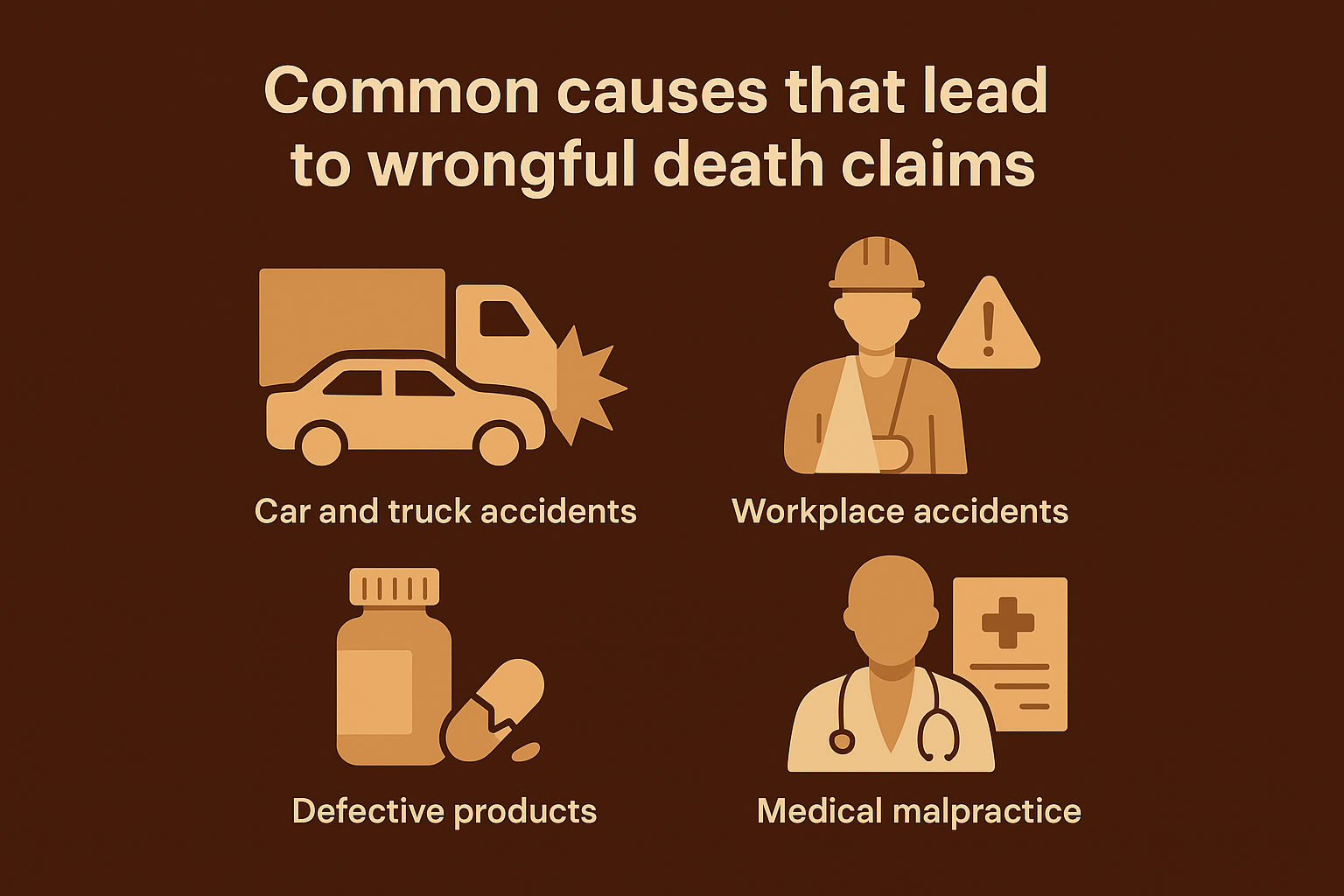
Several situations commonly support wrongful death claims. Car and truck accidents caused by distracted or impaired drivers are among the most frequent. Other qualifying events include workplace accidents , defective products, medical malpractice where a provider's error cost a patient their life, and criminal acts such as assault.
The cause of death does not need to involve criminal intent. Careless behavior that results in a fatality is enough to support a civil wrongful death claim.
The negligence standard
To succeed in your claim, you must show that the at-fault party owed your loved one a duty of care , breached that duty, and that the breach directly caused the death. Your attorney will build your case around this four-part standard : duty, breach, causation, and damages. Each element must hold up under scrutiny before compensation becomes available.
Who can file and who gets paid
State law controls who has the right to bring a wrongful death claim, and not every grieving family member qualifies. Mississippi law assigns this right based on a specific order of priority , so knowing the rules before you act matters.
Who has legal standing to file
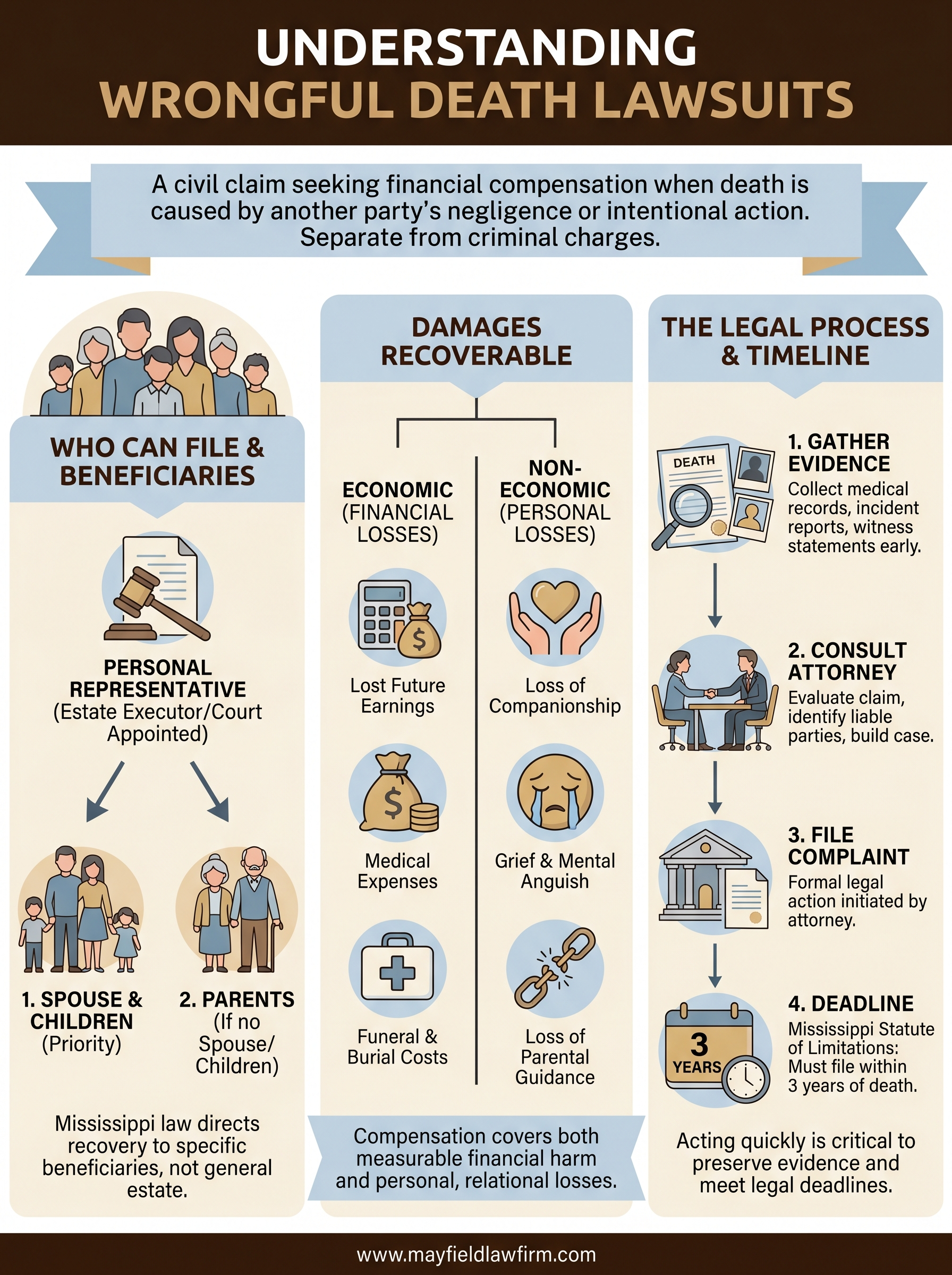
In Mississippi, the personal representative of the deceased person's estate files the claim on behalf of surviving beneficiaries. That representative is typically the executor named in a will or someone appointed by the court if no will exists.
The absence of a will does not prevent your family from pursuing a claim, because the court can appoint a representative to move the case forward.
How courts distribute the recovery
Mississippi law directs the wrongful death recovery to surviving beneficiaries rather than the general estate. The priority order puts the spouse and children first , followed by parents if neither a spouse nor children survive.
Courts oversee the distribution of funds to make sure each beneficiary receives a share that reflects their relationship to the deceased and their actual losses. Understanding what is a wrongful death lawsuit includes recognizing that compensation is designed to reach those who depended on the person most .
What damages you can recover
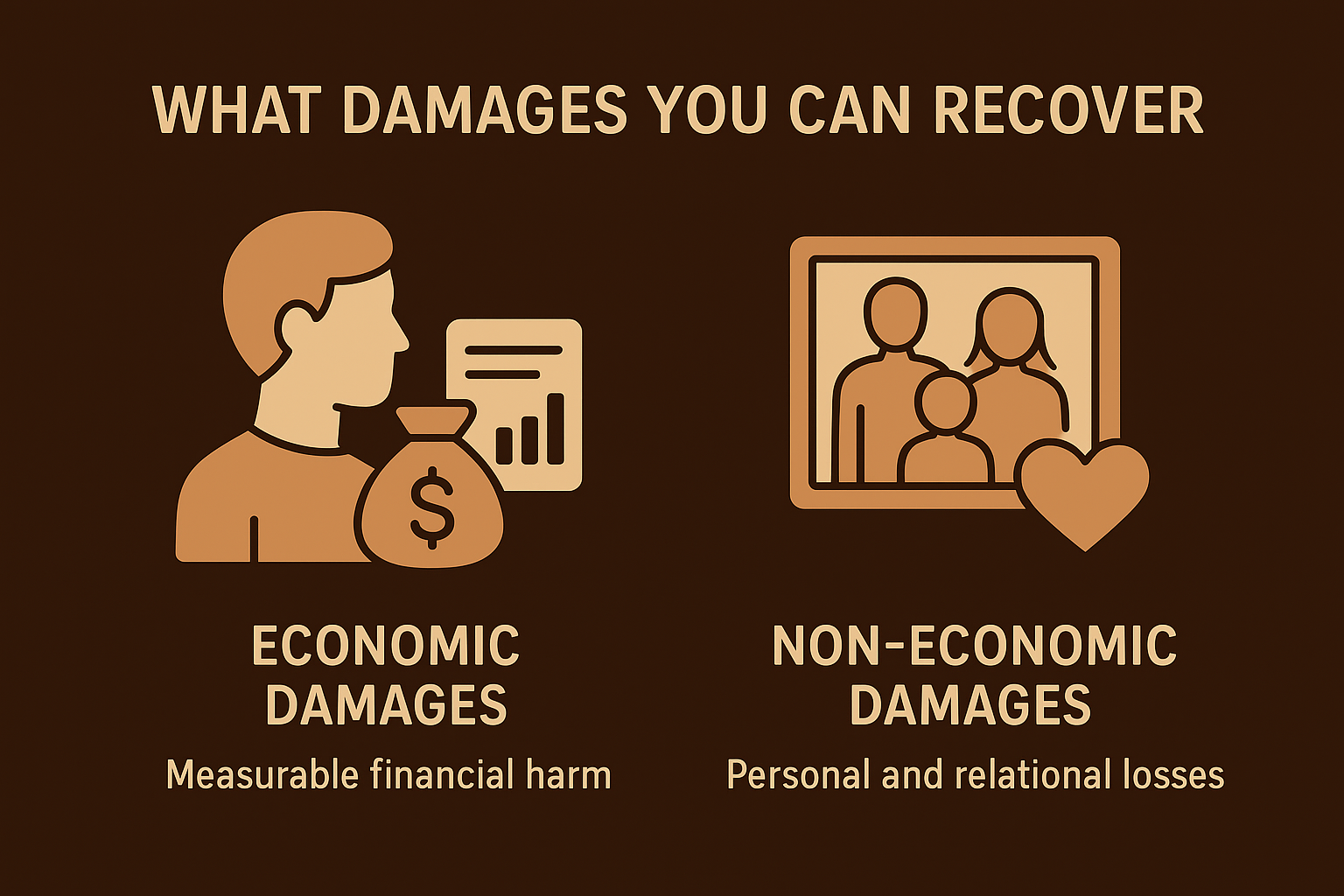
When you understand what is a wrongful death lawsuit , you quickly realize that compensation covers two distinct categories of loss. Mississippi courts allow families to recover both financial losses and personal losses , and each category carries its own set of items that your attorney will document and pursue.
Economic damages
Economic damages represent the measurable financial harm your family suffered because of the death. These include the deceased's lost future earnings , medical expenses incurred before death, and funeral and burial costs. Courts calculate lost income by considering the person's age, occupation, earning history, and expected career trajectory.
The longer your loved one's expected working years, the larger the potential economic damage calculation can be, which makes accurate documentation critical from the start.
Non-economic damages
Non-economic damages cover the personal and relational losses that do not come with a receipt. Your family can pursue compensation for loss of companionship, loss of parental guidance , grief, and mental anguish. These amounts require your attorney to present clear evidence of the relationship and its impact on your daily life.
Courts treat both categories seriously, and documenting everything early gives your legal team the strongest foundation to build your claim.
How to file a wrongful death lawsuit
Filing a wrongful death claim follows a defined legal process that your attorney will lead you through. Understanding what is a wrongful death lawsuit also means knowing that timing and documentation determine whether your case moves forward smoothly or stalls before it gains traction.
Gather your evidence first
Your attorney needs strong foundational evidence to build your claim before filing. Collecting this material early prevents gaps that the opposing party could exploit later. Key items to gather include:
- Death certificate and autopsy reports
- Medical records from the final hospitalization
- Accident or incident reports from law enforcement
- Witness contact information and statements
- Financial records showing the deceased's income and contributions
Work with an attorney to meet your deadline
Mississippi law sets a three-year statute of limitations for wrongful death claims, meaning your family must file within three years of the date of death. Missing that window typically ends your ability to recover anything at all.
Starting early gives your attorney time to investigate properly, identify all liable parties, and build the strongest possible case before the deadline.
Your attorney will file the complaint , serve the defendant, and guide your family through discovery, settlement negotiations, or trial preparation depending on how the case develops.
Next steps after a loved one dies
Understanding what is a wrongful death lawsuit gives you a starting point, but knowing what to do next is what actually protects your family. Your most important step is to contact an experienced attorney as quickly as possible. Evidence disappears, witnesses become harder to reach, and the statute of limitations moves forward whether you act or not.
Start gathering the key documents outlined earlier in this article: medical records, incident reports, and financial documentation that reflect your loved one's contributions to the household. Keep everything organized and bring it to your first consultation so your attorney can assess your claim right away.
Mayfield Law Firm, P.A. has handled personal injury and wrongful death cases across Northeast Mississippi and the Memphis area for over 40 years . If your family needs guidance after losing someone due to another party's negligence, contact our wrongful death attorneys today for a free consultation.