How Long Does Auto Accident Settlement Take: Timeline In MS
You've been in an accident, you're dealing with injuries, and now you're stuck waiting on an insurance company to do the right thing. The question on your mind is straightforward: how long does auto accident settlement take? The honest answer is that it depends, but not in a vague, unhelpful way. There are specific factors that determine whether your case resolves in weeks or drags on for months , and understanding them puts you in a stronger position.
In Mississippi, some auto accident claims settle relatively quickly when liability is clear and injuries are well-documented. Others take much longer, especially when disputed fault, serious injuries, or uncooperative insurers enter the picture. The range can be anywhere from a few months to well over a year, and knowing where your case falls on that spectrum matters when you're making decisions about medical treatment, lost wages, and bills piling up .
At Mayfield Law Firm, P.A., we've guided clients across Northeast Mississippi and South Memphis through every stage of the auto accident settlement process for over 40 years. This article breaks down the realistic timeline for settling a car accident claim in Mississippi , walks through each phase of the process, and explains exactly what can speed things up or slow things down, so you know what to expect and when to expect it .
Why settlement timing varies in Mississippi
Mississippi handles car accident claims under a fault-based system , which means the driver who caused the accident is responsible for covering the damages. That sounds straightforward, but in practice it creates multiple opportunities for delay because the at-fault driver's insurance company gets to decide how much they're willing to pay, and they rarely rush to get there. Understanding how the state's legal framework shapes your claim is the first step in knowing what kind of timeline to realistically expect.
Mississippi's fault-based insurance system
When you file a claim in Mississippi, you're typically filing against the at-fault driver's liability insurance , not your own policy. This matters for timing because you're dealing with an insurer whose financial interests run directly opposite to yours. Mississippi requires drivers to carry a minimum of $25,000 per person in bodily injury liability coverage , but minimum-coverage cases often settle faster than those involving serious injuries that push past policy limits. When your damages approach or exceed those limits, negotiations get more complicated, and the process takes considerably longer.
The gap between what an insurer initially offers and what your case is actually worth is often large, and closing that gap takes time, documentation, and patience.
The state also follows a pure comparative fault rule under Miss. Code Ann. § 11-7-15, which means your compensation can be reduced by your percentage of fault in the accident. If the insurer argues you were partially responsible, expect the negotiation to extend further while both sides gather evidence to support their respective positions.
The role of injury severity in your timeline
One of the primary reasons how long auto accident settlement takes can vary so much is the severity of your injuries . Both insurers and attorneys rely on reaching a point called maximum medical improvement (MMI) , the stage at which your treating physician determines your condition has stabilized or won't improve further with treatment. Settling before you reach MMI is risky because you may not yet know the full scope of your medical costs, future treatment requirements, or permanent limitations.
For minor soft tissue injuries , MMI can arrive in a matter of weeks. For spinal damage, traumatic brain injuries, or conditions requiring surgery, that process can stretch six months or longer . Accepting a settlement before that threshold is met often means leaving real money on the table.
Insurance company tactics that slow things down
Insurance companies in Mississippi, like elsewhere, are businesses with a financial bottom line. Their claims adjusters operate under pressure to minimize payouts , and they use specific tactics to extend the process. Common strategies include sending low initial offers shortly after the accident when you're still uncertain about your injuries, requesting repeated rounds of documentation to create administrative friction, and disputing liability even when fault is relatively clear from the evidence.
Recognizing these tactics matters because the three-year statute of limitations in Mississippi under Miss. Code Ann. § 15-1-49 gives insurers a degree of leverage. They know that many claimants are unaware of exactly where they stand on that deadline, and delay works in the insurer's favor when you're under financial pressure from medical bills and lost income.
What affects how long your claim takes
Several variables directly shape how long does auto accident settlement take in any given case. Some of these are within your control, and some aren't, but knowing which category each falls into helps you focus your energy where it actually matters.
Liability and evidence clarity
When fault is clear from the police report, witness statements, and physical evidence, insurers have less room to stall. Cases where liability is contested force both sides to gather additional evidence, sometimes including accident reconstruction experts or surveillance footage, which adds weeks or months to the process. The cleaner your evidence , the faster you move through the negotiation phase.
Your ability to document the scene immediately after the accident makes a genuine difference. Photos, witness contact information, and a prompt police report all work in your favor when the insurer starts looking for reasons to reduce your payout.
Strong, well-organized evidence from day one is the single most reliable way to shorten your claim timeline.
The insurance company you're dealing with
Not all insurers handle claims at the same pace. Some carriers have internal policies that delay initial responses or spread document requests across multiple rounds to slow the process. Others are more efficient but still push low first offers to test whether you'll accept less than your case is worth. Your leverage in negotiations increases when you can show the insurer that you understand the full value of your claim and are prepared to take it further if needed.
Recognizing which insurer you're dealing with , and understanding how they typically handle claims in Mississippi, matters more than most people realize when you're estimating your timeline.
Whether you have legal representation
Claimants who handle their own claims often accept early settlements that undervalue their injuries. Attorneys who regularly negotiate with insurers know the actual value of a case and have experience identifying delay tactics. Having legal representation signals to the insurer that you won't be pressured into a fast, low settlement, which can sometimes move the process forward by keeping negotiations focused and grounded in real numbers.
Typical auto accident settlement timeline step by step
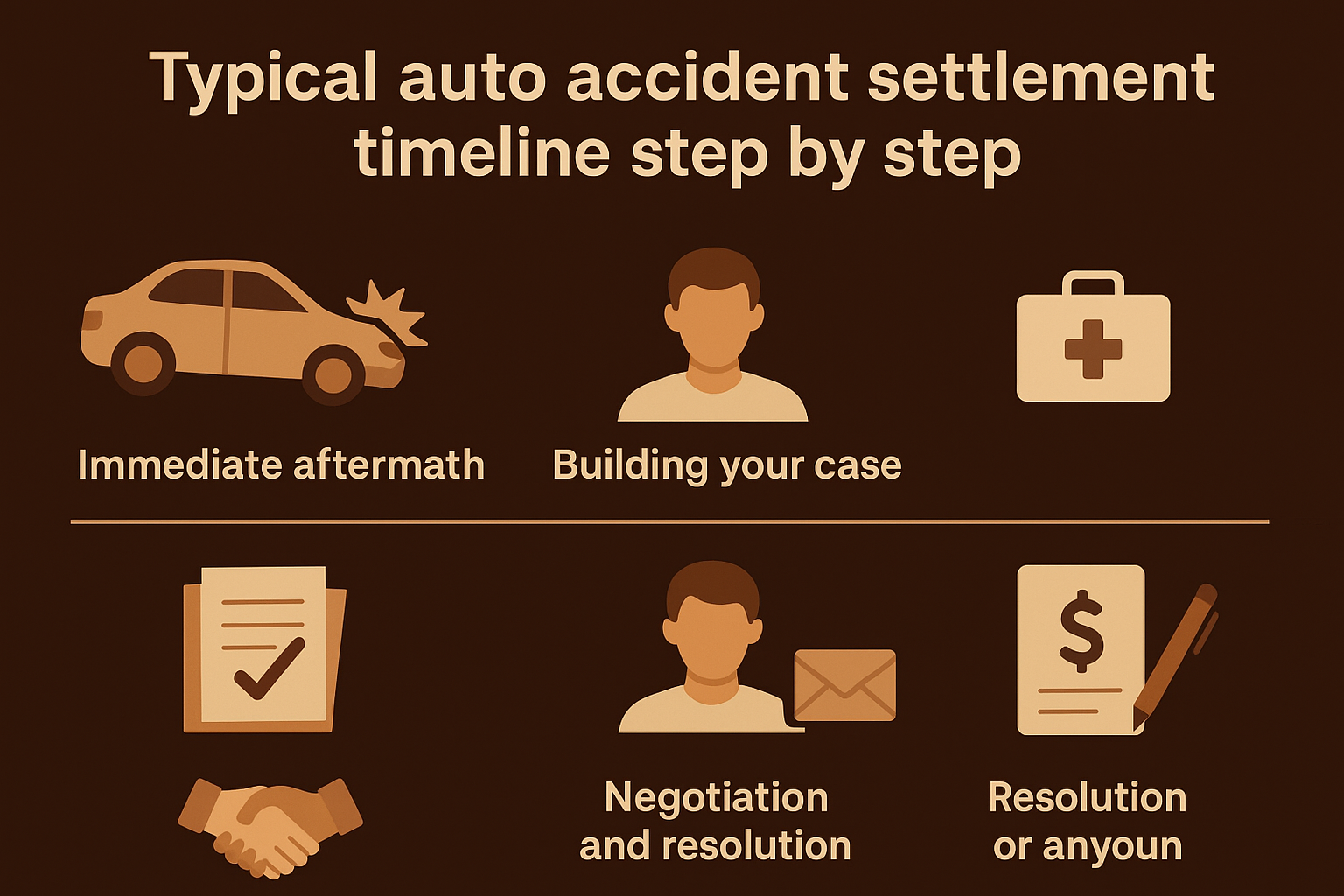
Understanding how long does auto accident settlement take becomes much clearer when you break the process into distinct phases . Each stage carries its own typical duration , and a delay at any one point pushes back everything that follows. Here is what the progression looks like for most cases in Mississippi.
Immediate aftermath: weeks one through four
Your first priority after an accident is getting medical treatment , even when your injuries seem manageable at first. During this period, you're gathering police reports, witness statements, and photographs while your attorney reviews coverage details and liability exposure . Most Mississippi insurers acknowledge a claim within 15 days of notice, though a meaningful settlement offer rarely arrives this early.
Building your case: months one through six
This phase runs largely on your medical recovery timeline . Your attorney collects treatment records, bills, and proof of lost wages while you continue receiving care. The goal is reaching maximum medical improvement before anyone puts a number on your case. Once you get there, your attorney compiles everything into a formal demand package and sends it to the insurer. The demand letter sets the negotiating floor and typically draws a response within 30 days.
The demand letter is a turning point - the insurer's response reveals exactly how seriously they're treating your claim.
Negotiation and resolution: months two through twelve or beyond
After the demand goes out, back-and-forth negotiation begins. The insurer counters, your attorney responds, and multiple rounds of offers determine whether the case closes or moves toward litigation. Most straightforward Mississippi cases settle within three to six months of the demand letter being sent. Cases involving disputed fault, severe injuries, or policy-limit complications can push well past that window.
If negotiations stall entirely, your attorney may file a lawsuit. Filing does not guarantee a trial, but it does reset the timeline and can add one to two years depending on court scheduling. Most cases still settle after a lawsuit is filed, often during the discovery or mediation phase before any trial date is set.
How long it takes to get paid after settlement
Reaching a settlement agreement feels like the finish line, but the money doesn't arrive the moment both sides agree on a number . There is a specific process that follows any settlement, and knowing what happens next keeps you from getting frustrated by a delay that is completely normal and expected. Understanding each step also helps you prepare for what actually lands in your account versus the total figure your attorney negotiated.
Signing the release
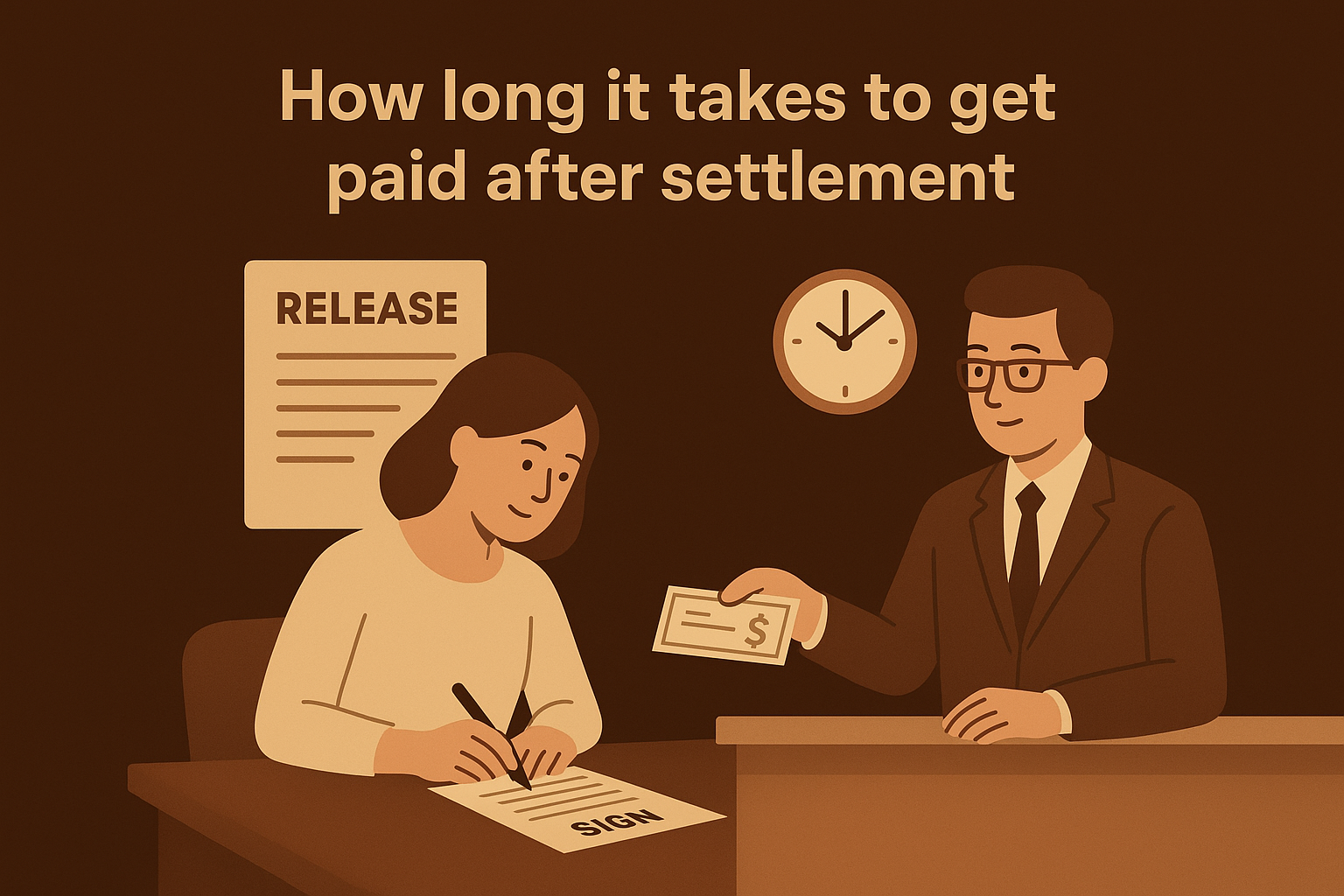
Once your attorney and the insurer agree on a number, the insurer sends over a settlement release document for you to sign. This document formally closes your claim in exchange for the agreed payment. Read it carefully before signing, because the release typically prevents you from making any future claims related to the same accident, regardless of whether new medical issues surface later. Your attorney reviews the language with you, but you need to understand what you are giving up before you put your name on it.
Signing a release before you fully understand your long-term medical picture is one of the most costly mistakes accident victims make.
Processing time after the release is signed
After you sign and return the release, the insurer typically processes payment within 14 to 21 days . Some carriers move faster; others use the full window. Once the check arrives at your attorney's office, your attorney deposits it into a client trust account and prepares a closing statement that breaks down the total settlement amount, attorney fees, outstanding medical bills, and any liens being paid from the proceeds before your share is released.
Understanding liens and deductions
Medical providers, health insurers, and government programs like Medicare or Medicaid may have filed liens against your settlement , meaning they hold a legal right to repayment from your recovery before you receive your portion. Your attorney negotiates these liens where possible to increase your net recovery , but resolving them can add one to three weeks to the timeline. In cases with no active liens, the full post-settlement process, from signing the release to receiving your funds, typically takes three to six weeks total from start to finish. That timeline answers a question many clients have after spending months wondering how long does auto accident settlement take overall.
How to avoid delays and protect your case
Several of the delays that extend how long auto accident settlement takes come from gaps in the claimant's own documentation or response time, not just insurer tactics. Taking specific, deliberate steps from the first days after your accident keeps your case on track and removes the easy justifications insurers use to slow things down.
Get medical care immediately and follow through
Gaps in your medical treatment history give insurers the opening to argue that your injuries were not serious or were caused by something unrelated to the accident. If you delay treatment or miss appointments, the insurer's adjuster will point to those gaps as evidence that your condition was not as significant as you claim. Consistent, well-documented medical care connects your injuries directly to the accident and builds the foundation your attorney needs to put a credible number on your claim.
Here are the key steps to protect your medical record from the start:
- Seek medical attention within 24 to 48 hours, even if you feel fine initially
- Attend every scheduled appointment and follow your provider's treatment plan
- Keep copies of all bills, referrals, and diagnostic reports
- Tell your doctor about every symptom, including ones that seem minor
A single missed appointment can give an insurer the narrative they need to cut your settlement offer significantly.
Document everything and respond promptly
Photographs, written records, and contact information gathered at the scene reduce the insurer's ability to dispute liability later. Beyond the accident scene itself, keeping detailed records of every communication with the insurance company, including dates, names, and what was said, gives your attorney a clear picture of how the insurer has handled your claim.
Your response time matters as well. When your attorney or the insurer requests documents, returning them quickly prevents the process from stalling on your end. Most case delays happen in stages where one party is waiting on the other, and keeping your side of that equation moving is one of the most direct ways you control the pace of your own settlement .

Next steps
Now you have a realistic picture of how long auto accident settlement takes in Mississippi, from the first days after your accident through the final check clearing your attorney's trust account. The timeline depends heavily on injury severity, liability clarity, and how quickly you build and protect your documentation , but most cases move through predictable phases that you can track and influence. What you do in the first weeks after an accident shapes almost every stage that follows.
If you are dealing with an accident claim in Northeast Mississippi or South Memphis and want to understand where your case stands and what a fair settlement actually looks like , Mayfield Law Firm, P.A. has handled these cases for over 40 years. You get a free consultation with no obligation, so there is no cost to getting real answers. Contact Mayfield Law Firm today and find out exactly what your case is worth.