
How Is Pain and Suffering Calculated? Methods Explained
After a car wreck or a bad fall, the medical bills are easy to add up. The harder question is what your pain, your stress, and your disrupted life are actually worth. If you're asking how is pain and suffering calculated , you've probably already noticed there's no simple formula printed anywhere, and insurance adjusters aren't eager to explain their math.
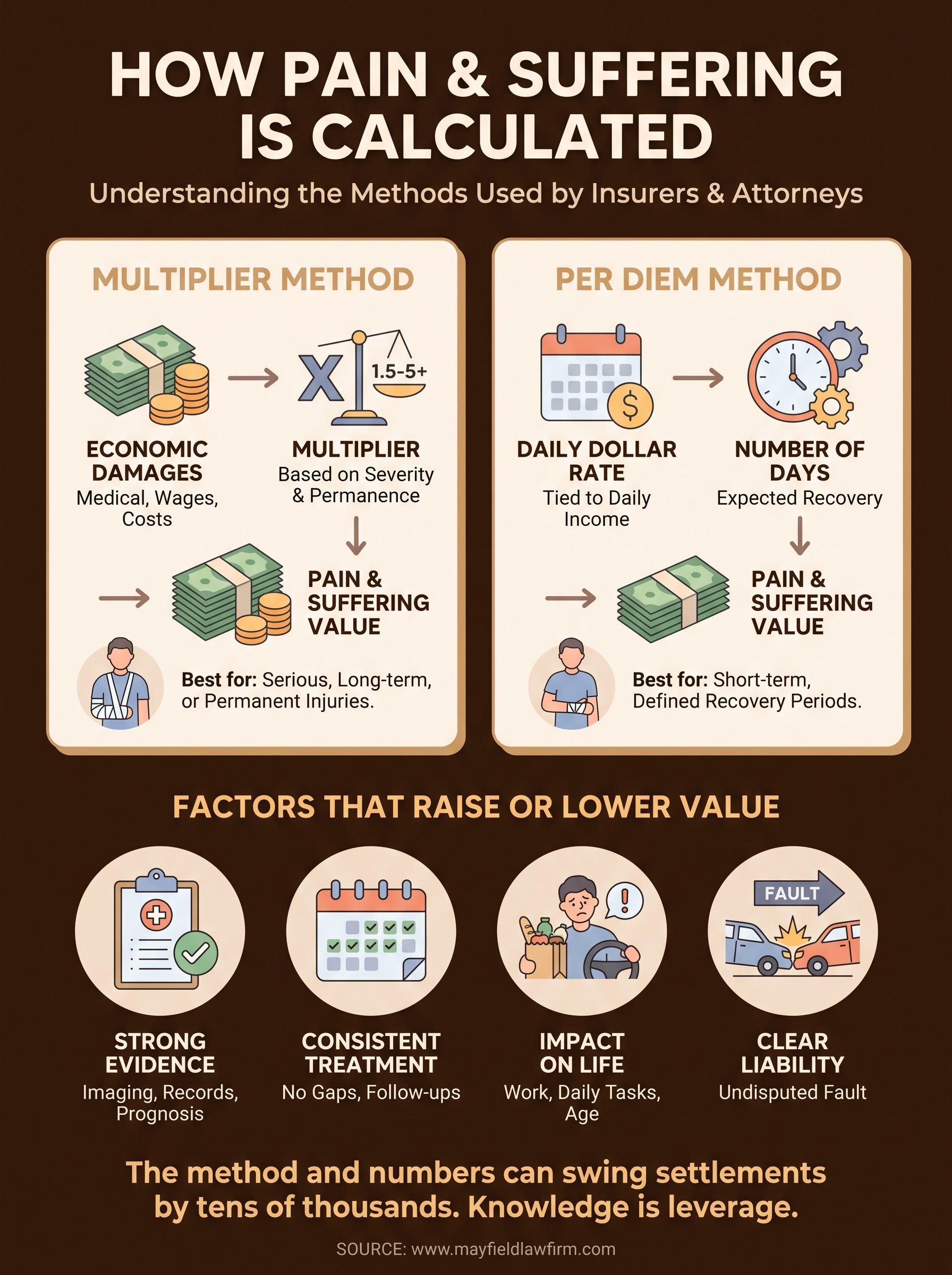
There are two methods that most insurers and attorneys rely on: the multiplier method and the per diem method . Each one turns your economic damages, like medical costs and lost wages, into a starting point for negotiating a fair non-economic damages figure. The method used, and the numbers plugged into it, can swing your settlement by tens of thousands of dollars.
Below, we break down exactly how each calculation works, what factors push your number up or down, and why insurance companies often lowball their first offer. We've watched these formulas play out in real cases across Mississippi and Tennessee, and knowing how they work is the first step toward making sure you're not shortchanged.
Why knowing the calculation methods matters for your claim
Most people file a claim assuming the insurance company will offer a reasonable number once they see the medical records. That assumption costs claimants money every day. Insurance adjusters are trained to use these same calculation methods, but they plug in numbers that favor the company, not you. If you don't understand the math behind your own settlement offer, you have no way to know whether it's fair or whether you're leaving thousands of dollars on the table.
Adjusters use your ignorance against you
An adjuster's job is to close your claim for as little as possible while keeping you satisfied enough not to hire a lawyer or push back. They know that most claimants never ask how a number was reached, so the first offer often reflects a low multiplier, a shortened injury timeline, or medical bills that were quietly trimmed before the formula was even applied. Once you understand that your pain and suffering value starts with your economic damages, you can ask direct questions: What multiplier did you use? Why? What injury duration are you assuming? Those questions alone often prompt a better offer, because the adjuster now knows they're dealing with someone who won't accept a number just because it's printed on a letter.
It shapes your negotiating leverage
Settlement negotiation is really just two sides arguing over which multiplier or per diem rate applies to your case. If you walk in without knowing the range, you're negotiating blind. If you walk in knowing that soft tissue injuries typically justify a multiplier of 1.5 to 3, while a permanent disability can justify 5 or higher, you can push back on a lowball number with specifics instead of just saying it
How to calculate pain and suffering: the multiplier and per diem methods
Both calculation methods start with the same building block: your special damages , meaning your medical bills, lost wages, and out-of-pocket costs. From there, the two approaches diverge in how they translate that dollar figure into compensation for pain, emotional distress, and disruption to your daily life. Knowing which method applies to your case, and why, tells you what kind of number you should expect before an adjuster ever makes an offer.
The multiplier method
The multiplier method takes your total economic damages and multiplies them by a number, usually between 1.5 and 5, based on the severity of your injury. A sprained wrist that heals in six weeks might justify a multiplier of 1.5 or 2. A spinal injury that leaves you with permanent limitations can justify a multiplier of 5 or higher. The formula looks like this:
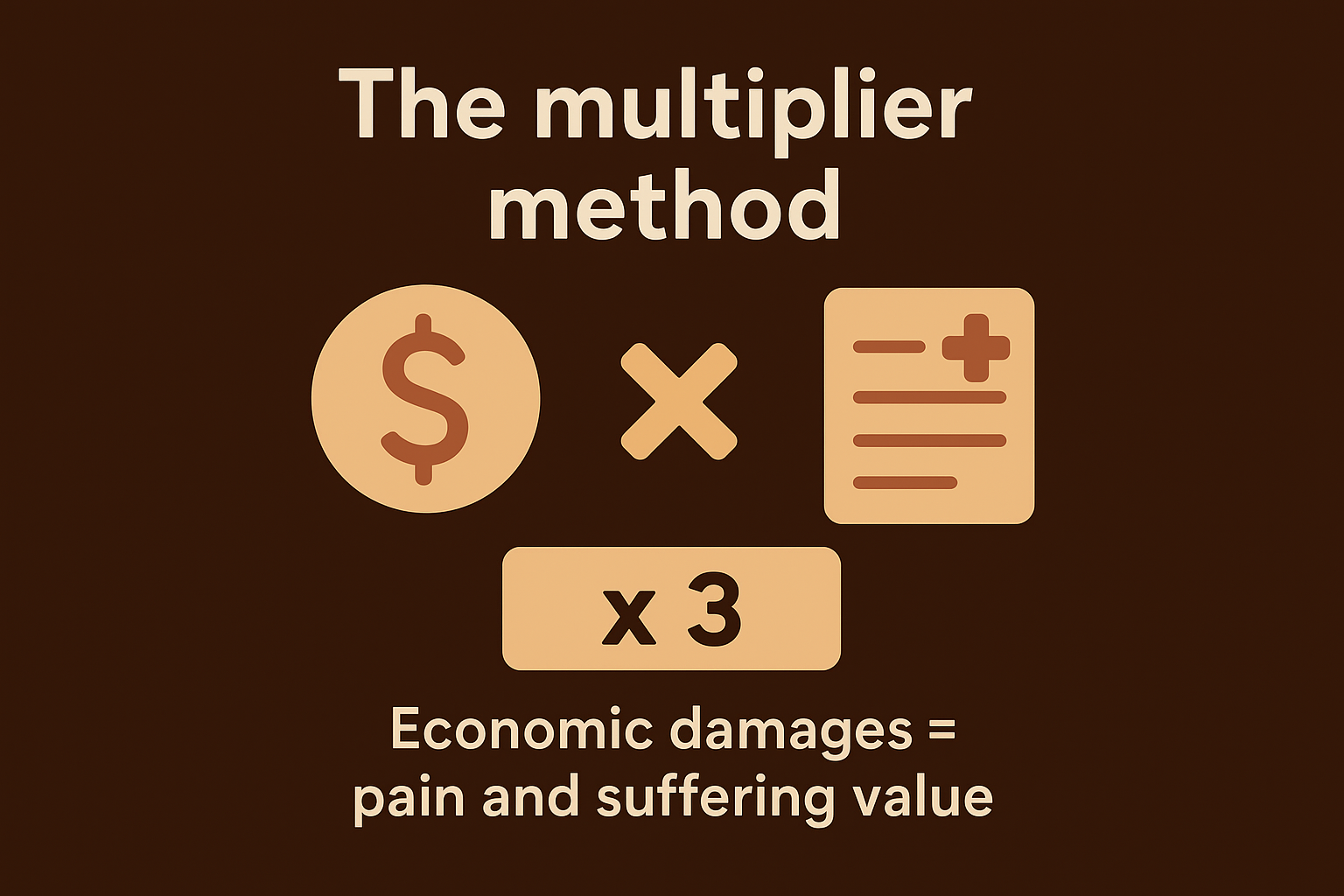
Economic damages x multiplier = pain and suffering value
So if your medical bills and lost wages total $20,000 and your injury supports a multiplier of 3, your pain and suffering claim would be valued around $60,000, before negotiation.
The multiplier isn't a fixed number, it's the single biggest thing you can negotiate in your entire claim.
The per diem method
The per diem method works differently. Instead of multiplying your damages, it assigns a daily dollar rate to your suffering, typically tied to your daily income, and multiplies that rate by the number of days you're expected to suffer from the injury. If you earn $150 a day and your recovery is expected to take 90 days, your pain and suffering value comes out to $13,500.
| Method | Best suited for | How it's calculated |
|---|---|---|
| Multiplier | Serious, long-term, or permanent injuries | Economic damages x multiplier (1.5-5+) |
| Per diem | Short-term, clearly defined recovery periods | Daily rate x number of recovery days |
Attorneys usually favor the multiplier method for anything involving surgery, permanent impairment, or lasting emotional trauma, since it scales with the true weight of the injury. Adjusters sometimes prefer per diem for quick, well-documented injuries because it keeps the number lower and harder to argue against without a lawyer's input.
Factors that raise or lower your pain and suffering value
The multiplier or per diem rate you get doesn't come out of thin air. Adjusters and attorneys look at specific facts about your injury and your life before settling on a number, and understanding how is pain and suffering calculated in practice means knowing exactly what those facts are. Two people with the same broken arm can walk away with very different settlements depending on these details.
Injury severity and permanence
A fracture that heals cleanly in eight weeks sits at the low end of any range. A herniated disc requiring surgery, or an injury that leaves you with permanent impairment , pushes the multiplier toward the top. Documentation matters here more than almost anything else: imaging, surgical notes, and a doctor's written prognosis carry far more weight than your own description of the pain.
A well-documented permanent injury will almost always outweigh a poorly documented severe one.
Recovery timeline and treatment consistency
Gaps in treatment hurt you. If you skip physical therapy appointments or wait weeks between doctor visits, adjusters argue your injury couldn't have been that serious. Consistent treatment records show a clear line from the accident to your ongoing pain, which supports a higher number under either calculation method.
Impact on daily life and work
Missed work, canceled family plans, and an inability to do basic tasks like driving or lifting groceries all factor into your value. Adjusters weigh these against your job, your age, and your prior health. A construction worker who can no longer lift heavy loads has a stronger case than someone in a desk job with the same injury.
Liability and fault
Even a devastating injury won't fetch a fair settlement if fault is contested. Clear liability, backed by a police report or witness statements, strengthens your entire claim and gives you more room to argue for a higher multiplier.
Here's a quick rundown of what typically moves the needle:
- Objective medical evidence (imaging, surgical records) versus vague complaints
- Length and consistency of treatment , including therapy and follow-up visits
- Degree of permanence , from full recovery to lifelong impairment
- Effect on work and daily activities , especially physically demanding jobs
- Clarity of fault , since disputed liability drags down every other factor
Each of these plays a role before a single dollar figure gets typed into a settlement letter.
Pain and suffering calculation examples
Numbers make these formulas easier to trust than abstract explanations. Below are three scenarios pulled from the kinds of cases we see regularly in Mississippi and Tennessee, showing how the same math produces very different outcomes depending on injury severity.
Example 1: A minor whiplash claim
Suppose you're rear-ended at a stoplight and diagnosed with whiplash that resolves after six weeks of physical therapy. Your medical bills total $4,000, and you missed four days of work at $120 a day, for $480 in lost wages. An adjuster applying the per diem method might assign $100 a day for 42 days of discomfort, landing at $4,200 for pain and suffering. Because the injury is short-term and well-documented, this number is usually close to fair without much room for a multiplier argument.
Example 2: A moderate injury with lasting symptoms
Now picture a rear-end collision that causes a herniated disc requiring six months of treatment, including injections but no surgery. Medical bills reach $18,000, and lost wages add another $3,000, for $21,000 in economic damages. Given the ongoing symptoms and documented limitations, a multiplier of 3 is reasonable, putting the pain and suffering value at $63,000. Attorneys often push for this range when treatment records show consistent visits and a doctor's note confirming lingering pain past the initial recovery window.
A moderate injury with strong documentation can be worth more than a severe injury with gaps in treatment.
Example 3: A severe, permanent injury
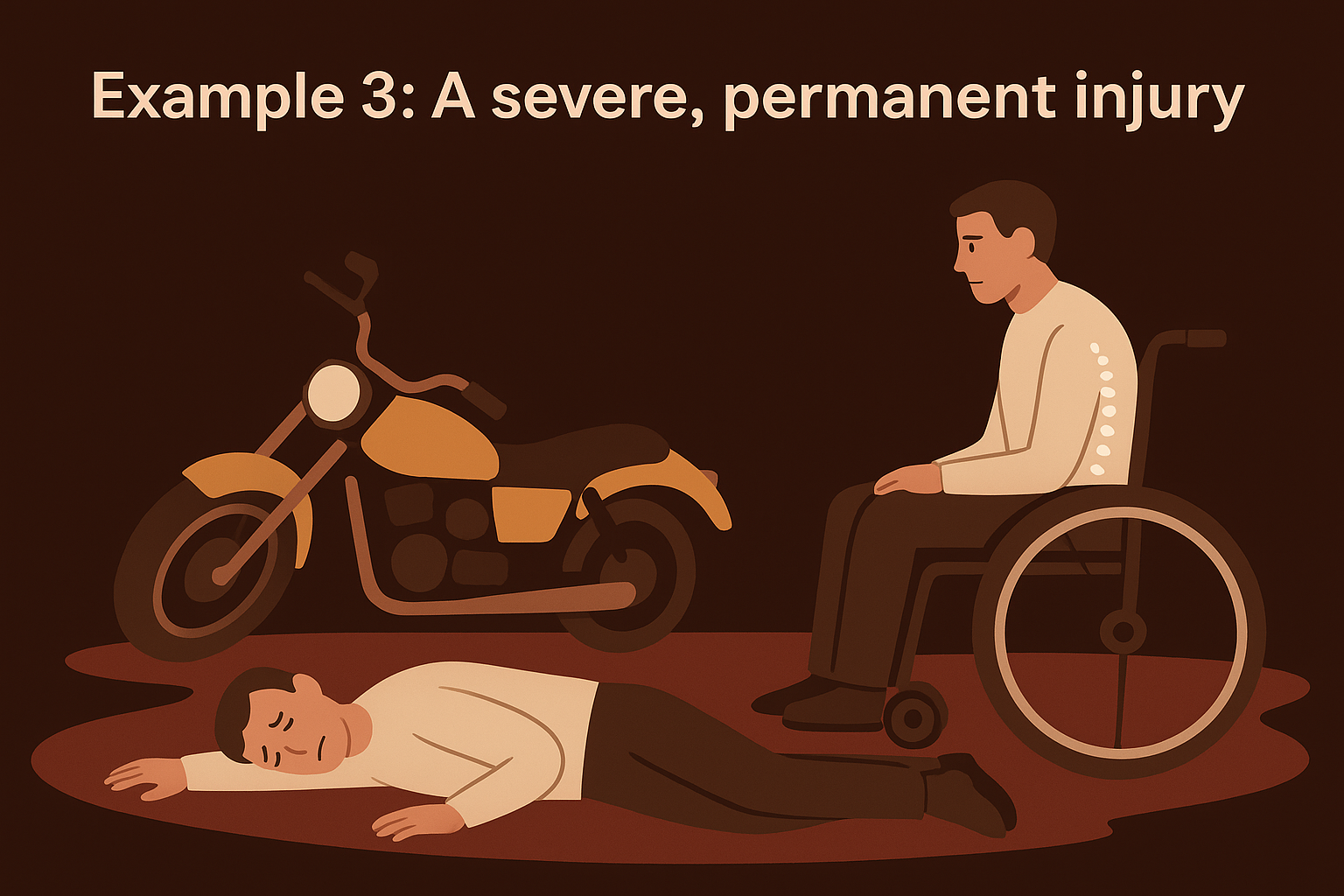
Finally, consider a motorcycle accident resulting in a spinal fracture and permanent nerve damage. Economic damages, including surgery, long-term therapy, and lost income, total $150,000. Because the injury is permanent and life-altering , a multiplier of 5 is justified, bringing the pain and suffering value to $750,000. Cases at this level almost always require an attorney, since insurers rarely offer anywhere near a fair multiplier without pressure and documented medical testimony.
| Injury type | Economic damages | Method used | Pain and suffering value |
|---|---|---|---|
| Minor whiplash | $4,480 | Per diem ($100/day x 42 days) | $4,200 |
| Moderate herniated disc | $21,000 | Multiplier (x3) | $63,000 |
| Severe spinal fracture, permanent | $150,000 | Multiplier (x5) | $750,000 |
Each of these examples shows the same principle: the calculation method matters less than the documentation and severity feeding into it.
Getting a fair value for your pain and suffering
Now you know the math behind how is pain and suffering calculated : the multiplier method, the per diem method, and the documentation that pushes your number up or down. That knowledge puts you ahead of most claimants, but knowing the formula and getting an insurer to honor it are two different things. Adjusters count on you accepting their first number because you don't know what a fair multiplier looks like for your specific injury.
You shouldn't have to guess whether $15,000 or $75,000 is the right figure for your suffering. Every case we've handled across Southaven and Memphis comes down to the same fight: proving severity and permanence with real evidence, then refusing to settle for less. If an adjuster has already sent you an offer, or you're not sure where your case falls on these ranges, talk to Mayfield Law Firm for a free consultation before you sign anything.