How to Stop Wage Garnishment: Steps That Actually Work
You open your paycheck and it's smaller again. A creditor got a court order, and now money disappears before it ever reaches your bank account. If you're searching for how to stop wage garnishment , you need answers today, not a legal lecture about how you got here.
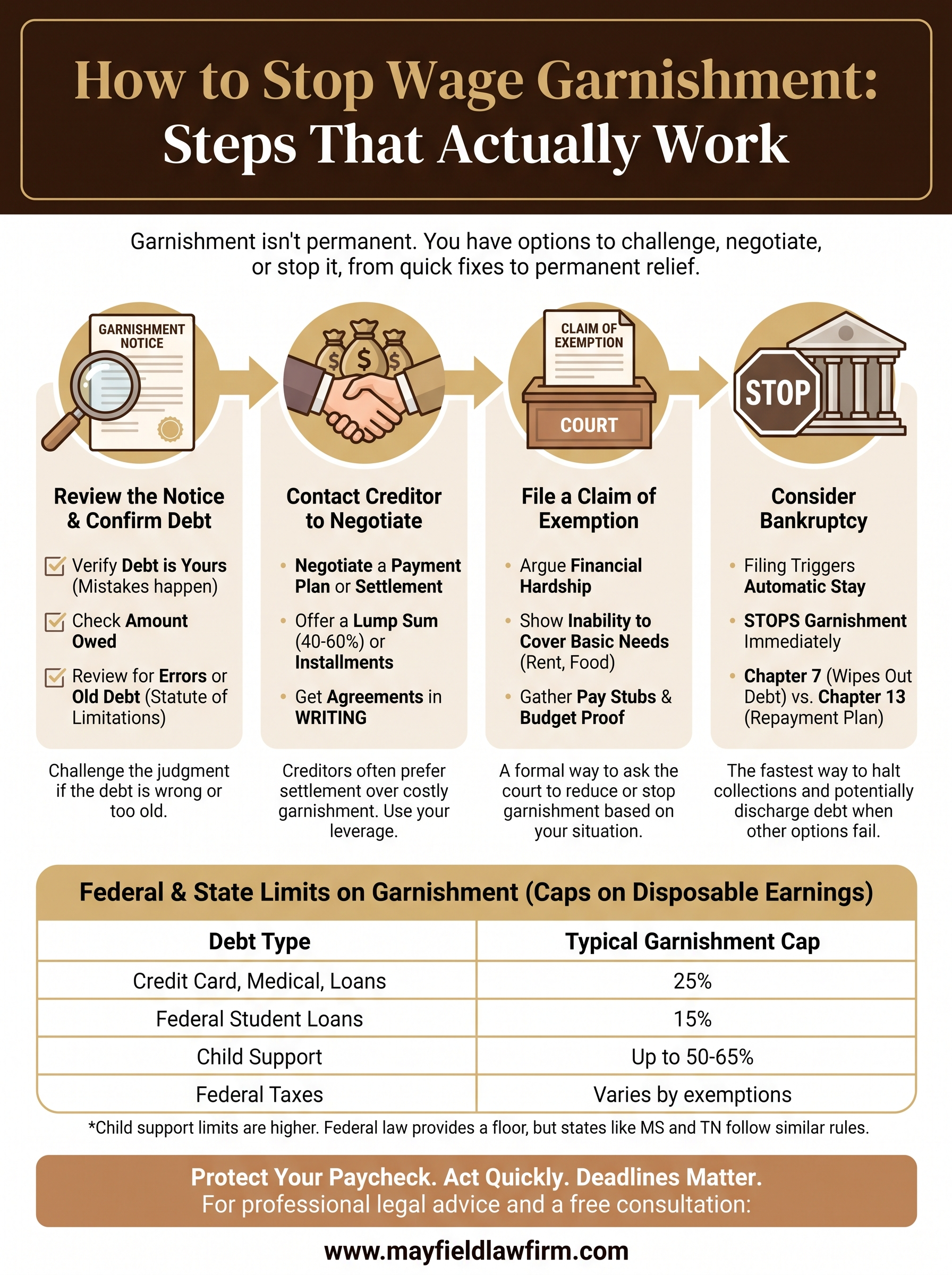
The good news is that garnishment isn't permanent, and you usually have more options than the notice on your desk suggests. You can challenge the garnishment if the creditor made a mistake or the debt is old, negotiate a payment plan directly with the creditor, file a claim of exemption if the amount taken leaves you unable to cover rent or groceries, or stop it outright through bankruptcy.
This guide walks through each of these steps in the order you should try them, starting with the fastest fixes and moving toward the ones that offer permanent relief. We've helped clients across Southaven and South Memphis stop garnishments before their next paycheck, and we'll show you exactly what worked and when bankruptcy protection becomes the smarter move.
Why your wages are being garnished and what you can do
Garnishment doesn't happen overnight. A creditor sued you (or claims you owe a debt like unpaid taxes or student loans that don't require a lawsuit first), won a court judgment , and asked the court to order your employer to hand over part of your paycheck directly. Your employer doesn't have a choice once that order arrives. Understanding which type of debt triggered the garnishment matters because your options change depending on the creditor.
What Triggers a Wage Garnishment
Most garnishments in Mississippi and Tennessee fall into a handful of categories, and each one follows different rules:
- Credit card or medical debt that went to a lawsuit and ended in a default judgment
- Unpaid federal or state taxes , which the IRS or state can garnish without ever going to court
- Defaulted student loans , which the Department of Education can also garnish administratively
- Child support or alimony arrears , which carry the highest garnishment limits of any category
- Old medical bills sold to a collection agency that then sued in your name
Federal and State Limits on How Much Creditors Can Take
Creditors can't take your whole check. Federal law under the Consumer Credit Protection Act caps most garnishments at 25% of your disposable earnings, or the amount your income exceeds 30 times the federal minimum wage, whichever is less. Mississippi and Tennessee both follow this federal floor, though child support orders can take up to 50-65% depending on your situation.
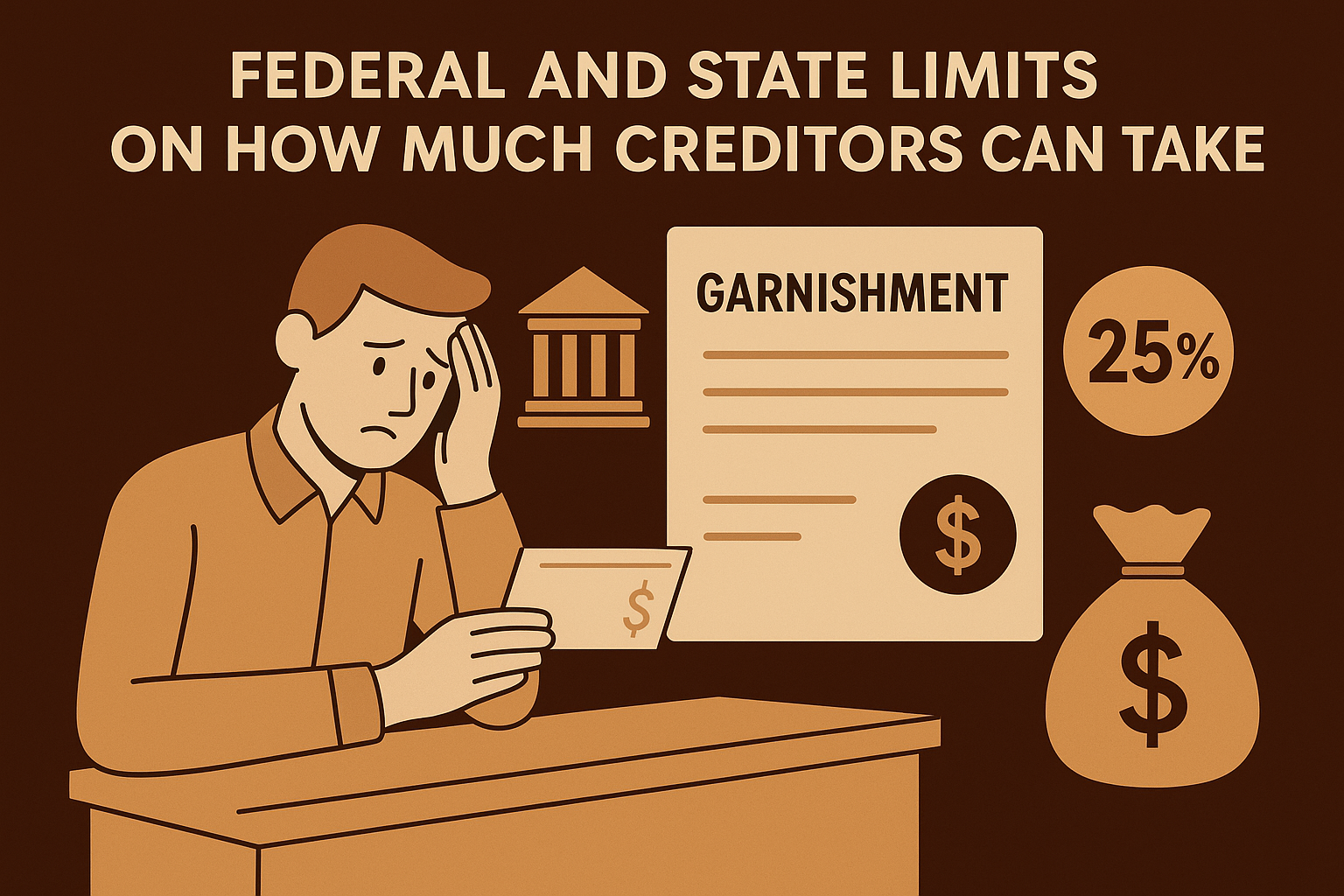
| Debt type | Typical garnishment cap |
|---|---|
| Credit card, medical, personal loan judgments | 25% of disposable earnings |
| Federal student loans | 15% of disposable earnings |
| Federal taxes | Varies by exemptions claimed |
| Child support (no other dependents) | Up to 60% |
| Child support (with other dependents) | Up to 50% |
Most creditors legally can't take more than a quarter of your paycheck, but even that quarter is often more than a tight budget can absorb.
Your Options at a Glance
Once you know why the garnishment started, you can match it to the right fix. Reviewing the notice for errors, negotiating directly with the creditor, filing a claim of exemption, or filing bankruptcy are your four real paths forward, and we'll walk through each one starting with the fastest to execute.
Step 1. Review the garnishment notice and confirm the debt
Before you negotiate anything or file paperwork, pull out the garnishment notice and read every line. Verify the debt is actually yours and that the amount matches what you remember owing. Mississippi and Tennessee courts see plenty of garnishments tied to identity mix-ups, debts already paid off, or accounts sold to a collection agency that never properly notified you before suing. If any of that sounds familiar, you may have grounds to challenge the judgment itself, not just the garnishment that came from it.
What to Check on the Notice
Walk through these items before you do anything else:
- Case number and court that issued the judgment, so you can pull the full court file
- Original creditor name versus who's currently collecting, since debts get sold and resold
- Date of the underlying judgment , because Mississippi has a statute of limitations that can make old debts uncollectible
- Amount claimed , checked against your own records or old statements
- Proof of service , meaning whether you were properly notified of the original lawsuit
A garnishment built on a debt that's wrong, too old, or never properly served on you can often be stopped before it starts.
Acting on What You Find
If you spot an error, a debt past the statute of limitations, or proof you were never served, you can file a motion to vacate the judgment or object to the garnishment directly in court. Deadlines here are short, often just a matter of days after the notice arrives, so don't sit on it. Pulling the court file yourself takes an afternoon, and it's the cheapest step in this whole process. Confirming the debt is legitimate also tells you how much leverage you have when you move to Step 2, since a creditor sitting on a shaky judgment is far more willing to negotiate.
Step 2. Contact the creditor to negotiate or settle
Once you know the debt is legitimate, pick up the phone. Creditors would rather negotiate a payment plan than keep chasing a garnishment through the courts, especially if you offer a lump sum settlement or a structured payment they can count on. Garnishments cost creditors money too, between court fees, processing paperwork with your employer, and the risk you'll file bankruptcy and wipe the debt out entirely. That risk is your leverage, and it's real.
What to Offer and How to Ask
Call the creditor or their attorney directly and be specific about what you can afford. Vague promises get ignored, but concrete numbers get results:
- Lump-sum settlement , often 40-60% of the balance if you can pay within 30 days
- Installment plan that replaces the garnishment with a fixed monthly payment
- Reduced monthly garnishment , agreed to in writing and filed with the court
Creditors settle far more often than most people expect, but only if you ask before assuming the garnishment is final.
Get Everything in Writing
A verbal agreement means nothing if the creditor keeps garnishing your check anyway. Insist on a written settlement letter or a stipulation filed with the court before you send a dime. The agreement should state the total amount, the payment schedule, and confirmation that the garnishment order will be withdrawn or reduced once you meet the terms. Send payments by cashier's check or money order and keep copies of everything.
Settling doesn't always work, particularly with debt collectors who bought your account for pennies on the dollar and have little incentive to budge, or with government creditors like the IRS, who follow their own negotiation rules entirely. If the creditor won't move, or the payment they'll accept still leaves you short on rent, the next step gives you a formal way to push back through the court itself.
Step 3. File a claim of exemption with the court
When negotiation stalls or the creditor won't budge, a claim of exemption gives you a formal way to ask the court to reduce or stop the garnishment based on your financial situation. Mississippi and Tennessee both let you argue that the current garnishment leaves you unable to cover basic living expenses like rent, utilities, or medical care. This isn't a loophole, it's a built-in protection the court expects people to use when the math doesn't work.
Grounds That Actually Hold Up in Court
Judges look for specific circumstances, not just a general complaint that money is tight:
- Head of household status , which lowers the garnishment cap under Mississippi law
- Public benefits income , like Social Security or disability, which is exempt from most creditor garnishments
- Essential expenses that exceed your remaining take-home pay after the garnishment
- Existing hardship , such as a recent job loss or medical bills piling up
Courts don't automatically know your situation is dire, so you have to spell it out on paper and back it up with documents.
Filing the Exemption Paperwork
Gather pay stubs, a monthly budget, and proof of any exempt income before you file. Most Mississippi and Tennessee courts have a standard exemption claim form available through the clerk's office, and you'll typically need to file it within a short window after the garnishment starts, often 10 to 20 days. Serve a copy on the creditor and request a hearing date. Show up prepared with documentation, because judges rule based on evidence, not sympathy. If the exemption is granted, the garnishment shrinks or stops immediately. If it's denied, or the underlying debt is simply too large to manage on any reduced garnishment, bankruptcy becomes the next real option.
Step 4. Consider bankruptcy to stop the garnishment
When the debt is simply too large to negotiate away and an exemption claim won't fix the underlying problem, filing bankruptcy stops a wage garnishment cold. The moment you file, an automatic stay kicks in under federal law, and it legally halts almost every collection action against you, including garnishment, the same day. Your employer gets notice, and the deductions stop with your next pay cycle in most cases.
Bankruptcy doesn't just slow down a garnishment, it shuts it off immediately through the automatic stay.
Chapter 7 vs. Chapter 13
Which chapter fits depends on your income, your assets, and whether the debt behind the garnishment can even be discharged:
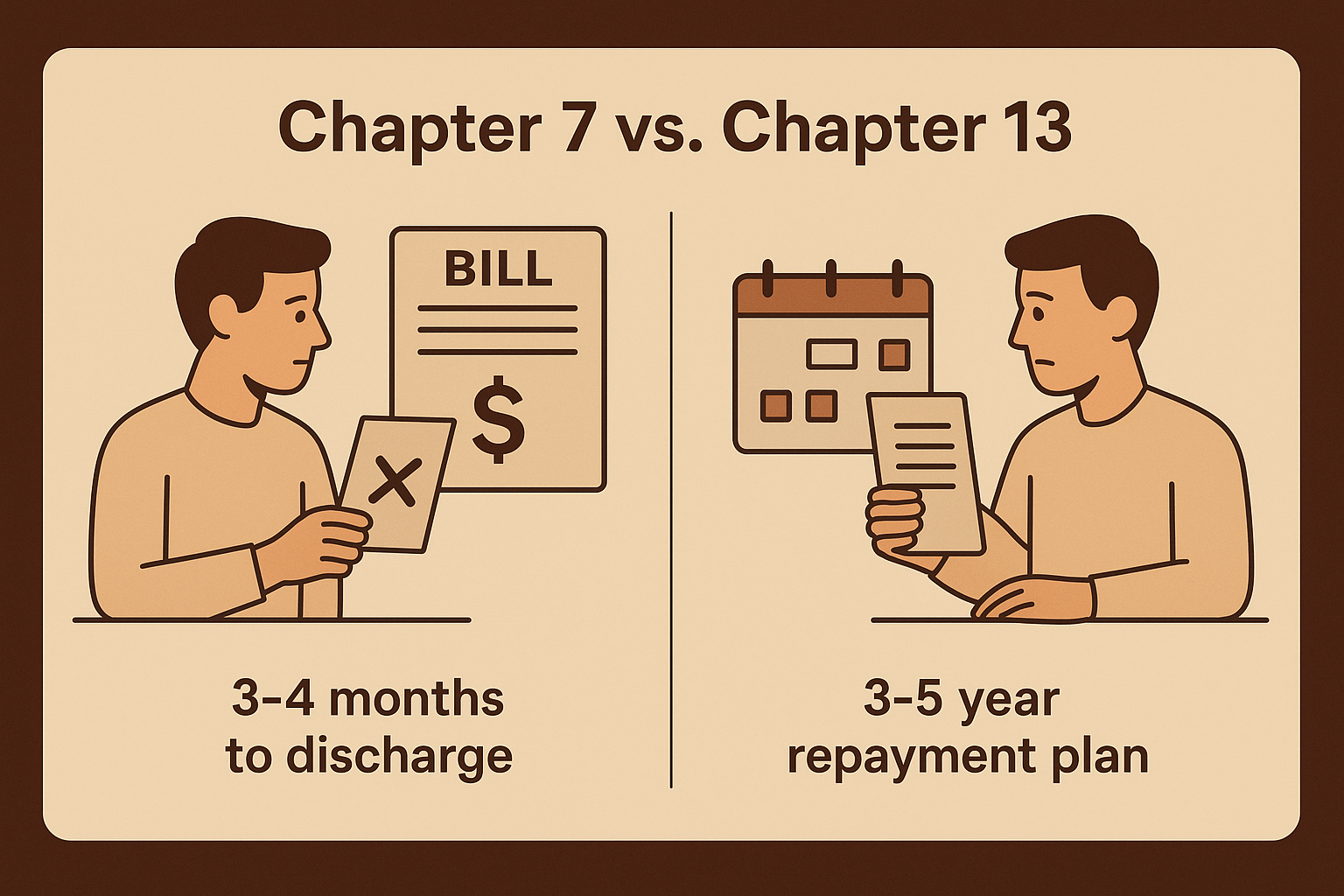
| Factor | Chapter 7 | Chapter 13 |
|---|---|---|
| Timeline | 3-4 months to discharge | 3-5 year repayment plan |
| Best for | Credit card, medical debt | Catching up on non-dischargeable debt like taxes or support |
| Garnishment for child support | Not stopped long-term | Can be managed through the plan |
| Income requirement | Must pass means test | No income cap, just feasibility |
Most of our clients garnished over credit card or medical judgments qualify for Chapter 7 and see the debt wiped out entirely. If the garnishment stems from taxes or support arrears , Chapter 13 usually makes more sense, since it lets you catch up over time while the stay keeps your paycheck intact.
When Bankruptcy Is the Right Call
Once a garnishment eats 20-25% of your check every pay period and negotiation hasn't gone anywhere, the math rarely improves on its own. Filing gives you a hard reset, and unlike a payment plan you negotiate yourself, the court enforces it. Talk to a bankruptcy attorney before your next payday if the garnishment is already active, since timing the filing correctly can mean the difference between one more garnished check or none at all.
Protecting Your Paycheck Going Forward
Garnishment feels like it's happening to you, but every step above puts you back in control of the outcome. Start with the notice , verify the debt is real, and move through negotiation, exemption, or bankruptcy based on what your situation actually calls for. Waiting rarely helps, since deadlines for exemptions and settlement leverage both shrink the longer a garnishment runs uncontested.
Your paycheck belongs to you, not the creditor waiting on the other end of a court order. The right move depends on the debt behind the garnishment, your income, and how much room you have left after basic bills, and that's exactly the kind of judgment call worth getting right the first time. If a garnishment is already eating into your check or you're worried one is coming, talk to Mayfield Law Firm for a free consultation before your next payday arrives.