
What Is Mass Tort Litigation? Process, Examples, Settlements
When a defective drug, a dangerous medical device, or a toxic chemical harms hundreds or thousands of people, each person still has their own story, their own injuries, medical bills, and losses. That's exactly what mass tort litigation is designed to address. Unlike a single personal injury lawsuit, mass tort cases bring together large groups of plaintiffs who were harmed by the same product or action, while still treating each claim individually.
These cases often involve some of the largest corporations in the country, and the legal process behind them can feel overwhelming from the outside. But understanding how mass torts work, how they differ from class actions, what the process looks like, and how settlements are reached , puts you in a much stronger position if you or someone you know has been affected. At Mayfield Law Firm, P.A., mass tort litigation is part of our personal injury practice , and we've seen firsthand how critical it is for injured people to know their rights early in the process.
This article breaks down the full picture: what mass tort litigation means, real-world examples, how cases move through the legal system, and what to expect when it comes to compensation. Whether you're researching a potential claim or just trying to understand your legal options , you'll find straightforward answers here, no legal jargon without explanation, and no unnecessary complexity .
Why mass tort litigation matters
When a company releases a product that injures thousands of people, the individual victims rarely have the resources to fight that company alone. Mass tort litigation levels that playing field by allowing injured people to pool resources and share legal costs , while each person still pursues their own claim based on their own specific injuries. That matters enormously, because a single plaintiff going up against a pharmaceutical giant or a major manufacturer is at a serious legal and financial disadvantage without that structure.
Mass tort cases exist specifically because the law recognizes that some harms are too widespread, and too well-funded on the defense side, for individuals to handle alone.
The power imbalance between individuals and corporations
Large corporations maintain full-time legal departments, high-paid defense attorneys, and nearly unlimited budgets for litigation. When you've been injured by a defective product, you're simultaneously managing medical bills, lost income, and physical recovery. Taking on a corporate legal team by yourself would overwhelm most people and likely produce a poor outcome. Mass tort litigation shifts that dynamic by creating a consolidated legal effort where attorneys can invest significant resources into investigation, expert witnesses, and discovery, with those costs shared across many plaintiffs rather than falling on any single person.
Evidence gathered across related cases also benefits your claim directly. If a drug company concealed clinical trial data showing their medication caused serious side effects, that information doesn't stay buried just because you filed separately. Through the consolidated legal process, your attorneys can access and use that evidence to support your individual case in ways that simply wouldn't be possible without the combined effort.
Why individual treatment still matters in large cases
Understanding what is mass tort litigation requires understanding one of its most important features: even though thousands of people may be involved, your case remains your own. Your compensation depends on your specific injuries, your medical history, your lost wages, and how the harm changed your daily life . Two plaintiffs in the same mass tort case can receive substantially different settlement amounts based on those individual details.
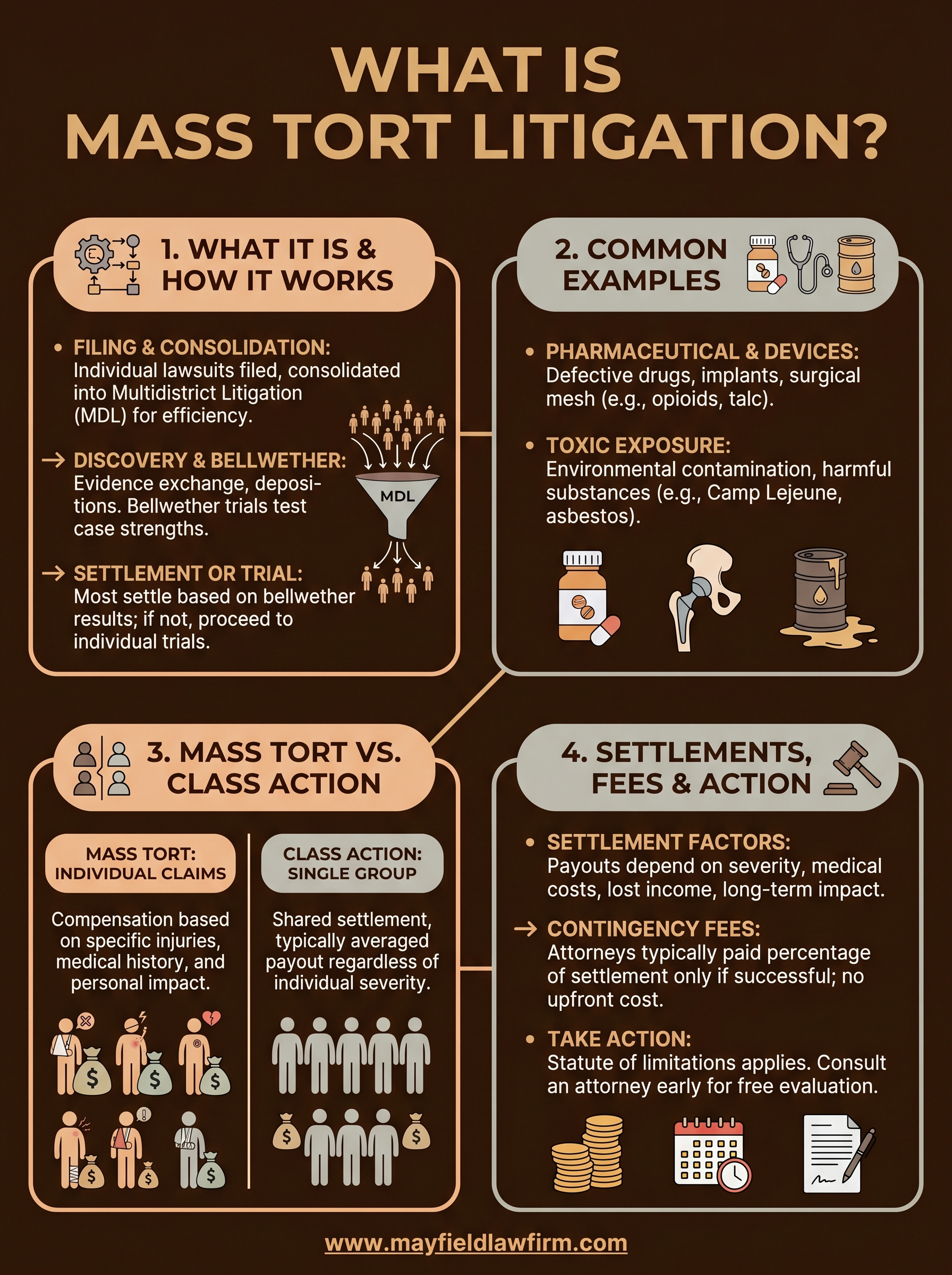
This structure protects you from being treated as just a number in a group payout. In a class action, the group shares a single settlement, which frequently means each person receives a relatively small amount regardless of how serious their injuries were. Mass tort litigation preserves your right to individual compensation that actually reflects what you went through, which is why it tends to be the stronger option for people who suffered significant, long-term harm from a dangerous product, drug, or substance.
How mass tort litigation works step by step
Mass tort litigation follows a specific legal path that differs from a standard personal injury case. The process is more complex, but understanding each stage helps you know what to expect if you're part of one of these cases.
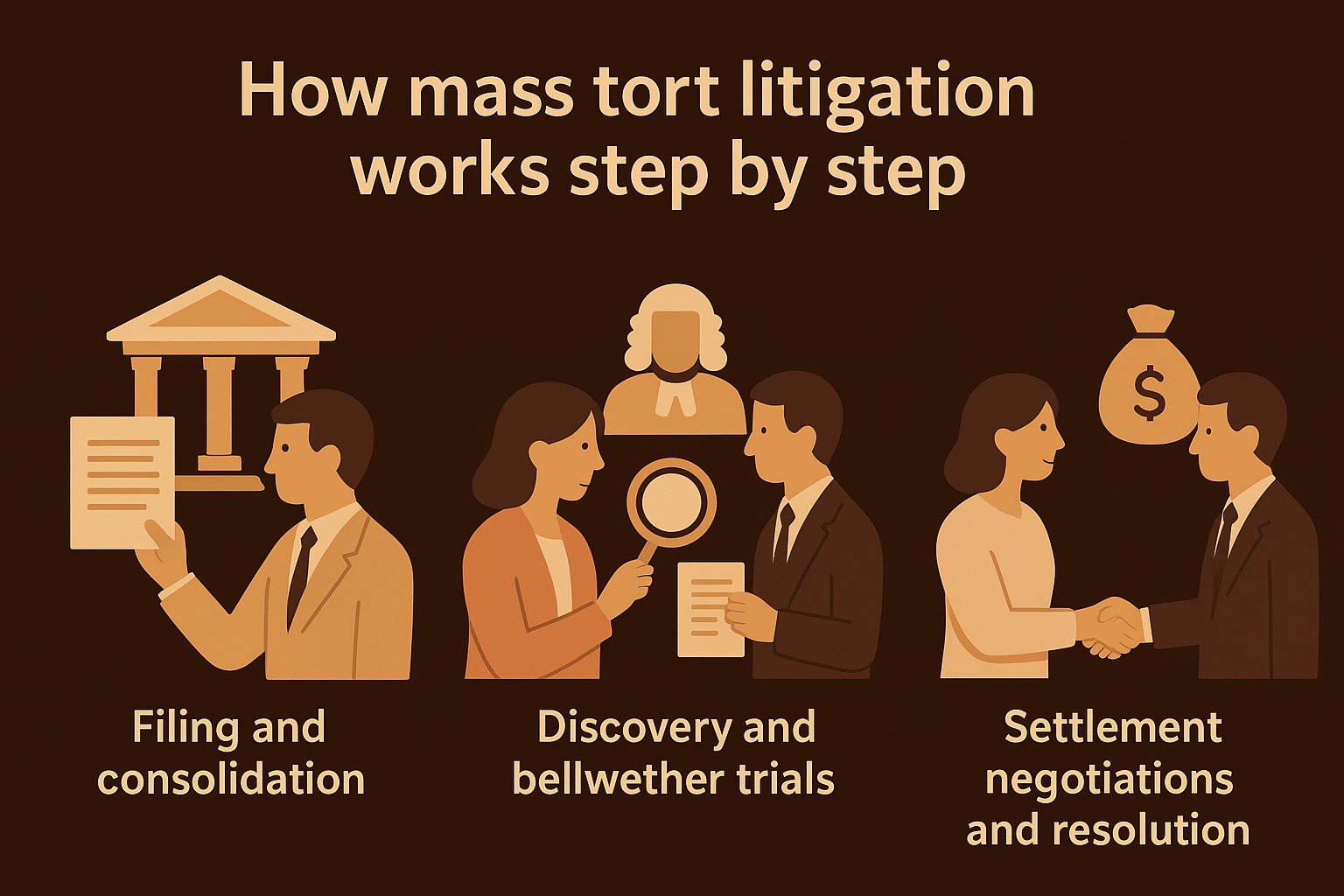
Filing and consolidation
Your case starts when you file an individual lawsuit against the defendant, typically a manufacturer, pharmaceutical company, or another large entity. Attorneys then identify other plaintiffs who suffered similar harm from the same source. Once enough related cases exist, a federal judge often consolidates them into what's called multidistrict litigation (MDL) , centralizing pre-trial proceedings before a single judge to avoid repeating discovery and motions across thousands of separate courts.
Consolidation does not merge your claim into a group. You keep your individual case. The MDL structure simply makes the shared legal work more efficient.
Discovery and bellwether trials
During discovery, attorneys on both sides exchange evidence, depose witnesses, and review internal documents from the defendant. This is often where damaging information surfaces, such as internal memos or suppressed research showing the company knew about risks. After discovery, a small number of cases go to trial as bellwether trials , which means they act as test cases to give both sides a realistic sense of how juries respond to the evidence. Those results heavily influence settlement negotiations for the remaining cases.
Settlement negotiations and resolution
Most mass tort cases settle before going to a full trial , largely because bellwether results show both sides what a verdict might look like. If the defendant agrees to settle, a settlement fund is established and a claims administrator evaluates each plaintiff's injuries individually to determine compensation. Your payout depends on factors like the severity of your injury, your documented medical expenses, and the long-term impact on your life. Cases that do not settle proceed to individual trials.
Mass tort vs class action lawsuit
People often use these two terms interchangeably, but they work very differently in practice. Both involve multiple plaintiffs and a common defendant , but the way each lawsuit treats the individuals involved separates them in ways that directly affect your compensation.
The biggest practical difference is this: in a class action, you share one outcome with everyone; in a mass tort, your outcome depends on your individual circumstances.
How they handle individual claims differently
In a class action lawsuit, all plaintiffs are treated as a single legal unit . One lead plaintiff represents the entire group, and if the case settles, the settlement gets divided among everyone based on a predetermined formula. If your injuries were far more severe than most others in the group, that formula likely does not reflect what you actually lost. Individual circumstances get averaged out , which can leave the most seriously injured plaintiffs with far less than they deserve.
Mass tort litigation takes the opposite approach. Even when thousands of plaintiffs are involved in the same MDL, your claim stays separate. Your compensation reflects your specific medical records, your lost wages, and the personal impact of the harm you suffered. That structure is central to understanding what is mass tort litigation and why it matters for people with serious, documented injuries.
Which one applies to your situation
If you suffered minor or identical harm as thousands of others, such as a data breach where everyone lost the same type of information, a class action may be appropriate. However, if a defective product, dangerous drug, or toxic substance caused you measurable physical harm with documented medical consequences , mass tort litigation is almost certainly the stronger path. The more significant and personal your injuries are, the more you stand to lose by being folded into a uniform group settlement where your story gets lost in the numbers.
Common mass tort types and real examples
To understand what is mass tort litigation in practical terms, it helps to look at the categories of cases that appear most often. These cases share a common thread: a company made a product, released a substance, or took an action that harmed a large number of people , and each of those people suffered real, documented injuries as a result.
Pharmaceutical and medical device cases
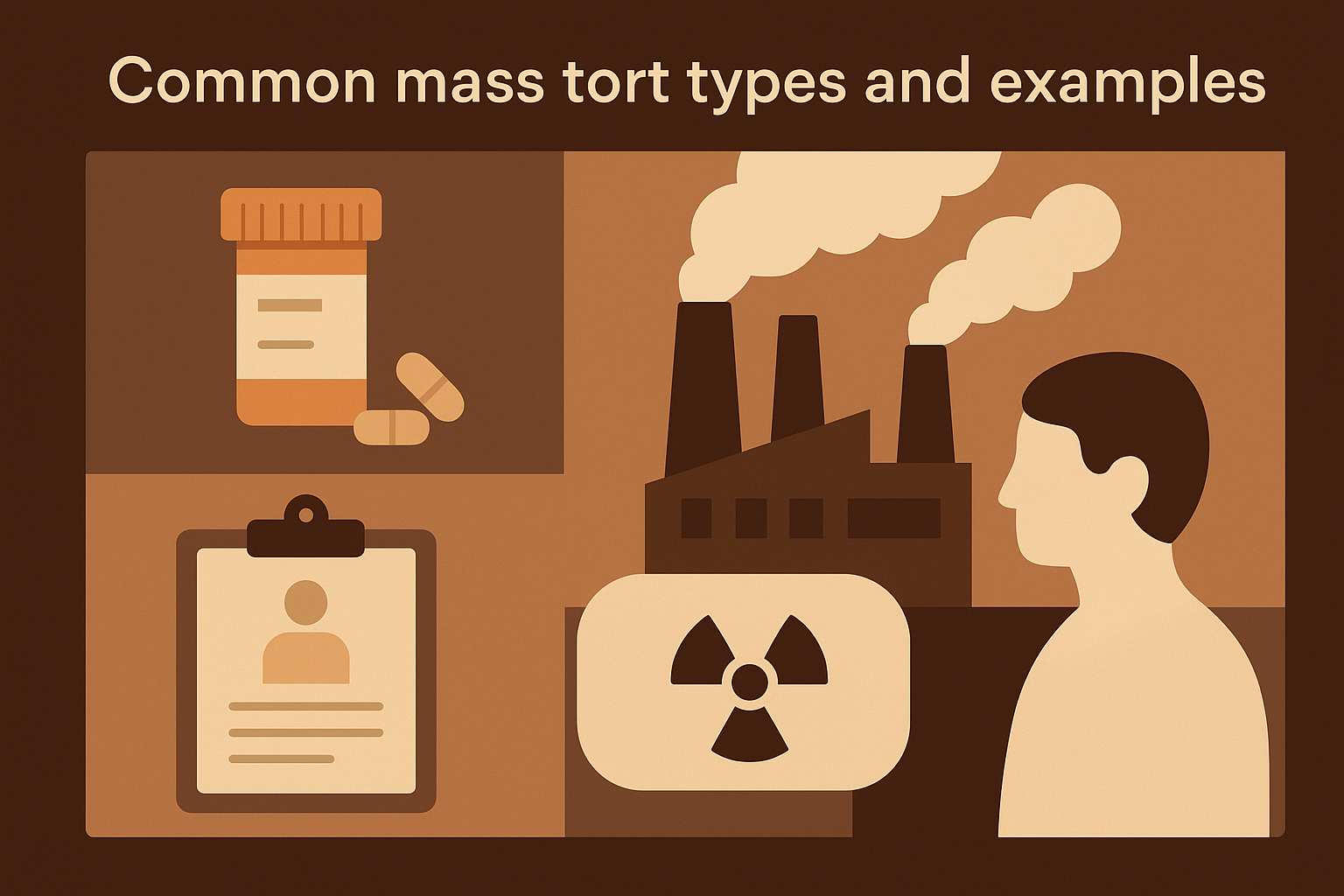
Drug and medical device cases make up a large share of mass tort litigation in the United States. When a manufacturer releases a medication or device that causes unexpected serious harm, injured patients across the country can bring individual claims against the same defendant through the MDL process. Some of the most widely recognized examples include litigation involving opioid painkillers, Roundup weedkiller, talcum powder linked to ovarian cancer, and the Bard PowerPort device. In each situation, plaintiffs alleged that the company knew or should have known about the risks but failed to warn users or continued selling the product anyway.
The defining factor in most pharmaceutical and device cases is whether the company had internal knowledge of the risk that it did not share with patients or the public.
Here are the most common product categories involved in these cases:
- Prescription drugs with undisclosed side effects
- Defective implants or surgical mesh
- Contaminated consumer products
- Herbicides and pesticides linked to cancer
Toxic exposure and environmental cases
Toxic tort cases involve exposure to harmful chemicals, pollutants, or environmental contamination that causes physical injury over time. The Camp Lejeune water contamination case, where military families were exposed to toxic chemicals for decades, is a prominent example. Workers exposed to asbestos in industrial settings represent another category that has generated mass tort litigation for many years, with mesothelioma and lung disease as documented outcomes.
Settlements, timelines, and how lawyers get paid
One of the most common questions people ask when learning what is mass tort litigation is how money actually changes hands at the end of a case. The short answer is that most mass torts resolve through negotiated settlements rather than full trials, and the compensation you receive depends heavily on the documented severity of your injuries and how well your legal team builds your individual claim within the larger case.
How settlement amounts are determined
When defendants agree to create a settlement fund , a neutral claims administrator reviews each plaintiff's case individually. The administrator looks at factors like your medical records, the duration of your treatment, any permanent disability, and your lost income during recovery . Two people in the same mass tort can receive very different amounts based on those personal details, which is why documenting your injuries thoroughly from the beginning matters so much.
The more complete your medical records and documentation, the stronger your position when the claims administrator evaluates your share of any settlement fund.
Here are the primary factors that typically influence your individual settlement amount:
- Severity and permanence of your injury
- Total medical expenses, past and projected
- Lost wages and reduced earning capacity
- Impact on your daily life and quality of life
Timelines and contingency fees
Mass tort cases take longer than most people expect . From filing to resolution, many cases run between three and seven years, depending on how complex the litigation is and whether defendants settle early or fight through discovery and bellwether trials. Your patience during that process directly affects your outcome.
Most mass tort attorneys, including our team at Mayfield Law Firm, P.A., work on a contingency fee basis , meaning you pay nothing upfront. Your attorney collects a percentage of your settlement or verdict only if you recover compensation, which removes the financial barrier to getting experienced legal representation.
What to do next
Now that you understand what is mass tort litigation , the most important step is acting before time runs out. Every state has a statute of limitations that sets a deadline for filing your claim, and waiting too long can permanently bar you from recovering compensation, regardless of how serious your injuries are. If a defective drug, dangerous medical device, toxic exposure, or defective product harmed you, the time to start is now, not after you feel better or after you finish researching.
Your next step is speaking with an attorney who handles these cases. Mayfield Law Firm, P.A. offers free consultations so you can get honest answers about your situation without any financial commitment upfront. Bring your medical records, any documentation of your injuries, and whatever information you have about the product or substance involved. Contact our personal injury team today and find out whether you have a viable claim.

