What To Do After A Car Accident: Step-By-Step Checklist
A car accident can turn an ordinary drive into a stressful, confusing situation in seconds. Your heart is racing, adrenaline is pumping, and you're trying to figure out what to do after a car accident while processing what just happened. The decisions you make in those first minutes, and the days that follow, can directly affect your health, your insurance claim, and your ability to recover fair compensation if someone else was at fault.
Most people don't think about accident procedures until they're standing on the side of the road needing them. That's a problem, because missing a single step , like failing to document the scene or delaying medical treatment, can weaken your case or cost you money down the line. At Mayfield Law Firm, P.A., we've spent over 40 years representing accident victims across Northeast Mississippi and South Memphis , and we've seen firsthand how the right actions at the right time make all the difference.
This step-by-step checklist walks you through everything you need to do after a car accident, from the moment of impact to filing your claim . Whether you're dealing with a fender bender or a serious collision, keep this guide handy so you can protect yourself and your rights when it matters most.
Before a crash: the essentials to prepare
Knowing what to do after a car accident starts before you ever get behind the wheel. Preparation takes less than 30 minutes , but it can save you hours of confusion and potentially thousands of dollars if something goes wrong on the road. Most drivers never think about accident readiness until they need it, and that's the worst possible time to start.
Keep the right documents in your car
Your glove compartment should hold everything you need to exchange information and prove your identity at an accident scene. Digging through a disorganized car while shaken up wastes critical time and increases stress when you can least afford it. Put these items in a small envelope or folder and keep them somewhere you can find them fast:
- Driver's license (carry it on your person whenever you drive)
- Vehicle registration for the car you're operating
- Proof of insurance (your current insurance card, physical or digital)
- A blank notepad and pen for writing down details at the scene
- A reminder to use your phone for photos and video documentation
Many states, including Mississippi and Tennessee , require drivers to carry proof of insurance at all times. If you cannot produce it after an accident, you may face fines on top of everything else you're already handling.
Review your insurance coverage now
Most drivers have no real idea what their policy actually covers until they file a claim and discover it doesn't include what they assumed. Take 15 minutes today to log into your insurance account or pull out your declarations page and confirm whether you carry collision coverage, uninsured motorist protection, and medical payments coverage .
Uninsured motorist coverage is especially important in Mississippi, which consistently ranks among the states with the highest rates of uninsured drivers on the road.
Understanding your deductibles and coverage limits before a crash puts you in a stronger position when you're negotiating with an insurance adjuster later. Knowing these numbers ahead of time also helps you recognize when an adjuster is offering you less than you're entitled to under your own policy.
Store emergency contacts and a basic kit
Your phone contacts should include your insurance company's claims line and the name and number of a trusted attorney you could call after a serious accident. Saving these contacts before you need them removes guesswork from an already stressful situation. Most people assume they'll search for this information afterward, but that approach leads to delays and mistakes at the worst possible time.

A basic emergency kit in your trunk also helps you handle the immediate aftermath of a crash more effectively. Consider keeping the following items on hand:
- Reflective warning triangles or flares to mark your vehicle's position
- A first aid kit for minor injuries
- A phone charger so your battery doesn't die while you're documenting the scene
- A printed accident information exchange card with prompts for what to collect from other drivers involved
Taking these steps before anything happens puts you ahead of most drivers on the road. When an accident does occur, you'll spend less time panicking and more time protecting your rights and your claim from the very first moment.
Step 1. Get to safety and check for injuries
The first thing to do after a car accident is resist the urge to jump out of your vehicle right away. Adrenaline can mask pain , and stepping out into active traffic is one of the most dangerous things you can do in the seconds after a crash. Take a breath, assess your surroundings, and then act with a clear head before anything else.
Move your vehicle out of traffic
If your car is drivable and you can do so safely, pull it to the shoulder of the road or a nearby parking lot . Leaving a disabled vehicle in an active lane creates a secondary collision risk for you, other drivers, and anyone who stops to help. Turn on your hazard lights immediately , regardless of whether you move the car or not. If your vehicle cannot move and you're on a highway, stay inside with your seatbelt fastened until emergency responders arrive, since a stopped vehicle often provides more protection than standing near fast-moving traffic.
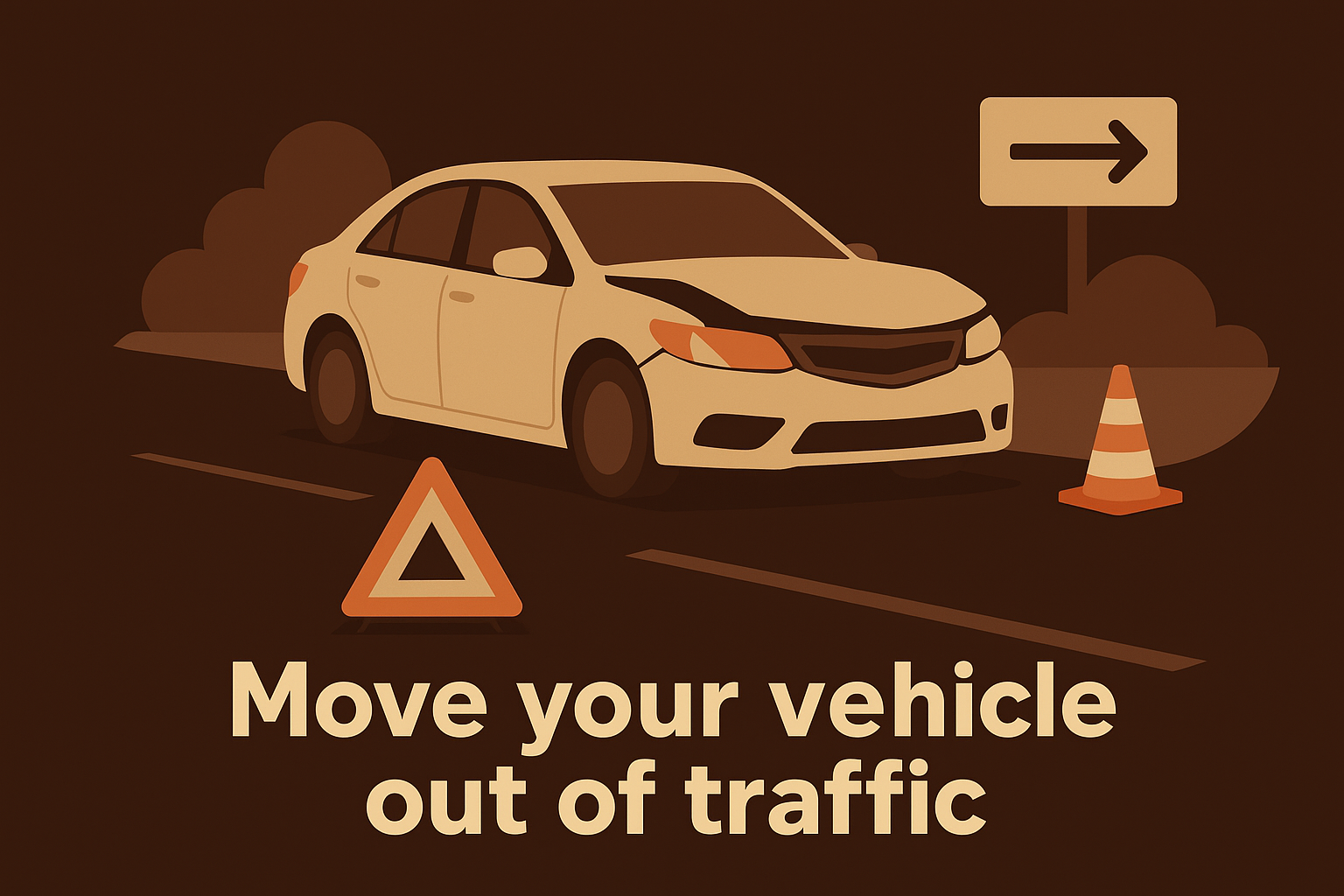
Set out your reflective warning triangles or road flares behind the vehicle if you have them and can do so without stepping into a travel lane. Visibility matters more than most drivers realize, especially at night or in low-light conditions where other drivers may not see a stopped car until they're dangerously close.
Never exit your vehicle from the driver's side if you're stopped in or near a travel lane. Use the passenger side whenever possible to stay out of the path of oncoming traffic.
Check for injuries before anything else
Once you're out of immediate danger, check yourself for pain, dizziness, or visible injuries before turning your attention to anyone else. Shock is common after a collision and it can delay your perception of how badly you're hurt, so move slowly and pay close attention to how your body feels. Then check any passengers in your vehicle and, once it's safe to approach, check the occupants of the other car.
Do not move anyone who complains of neck or back pain, appears unconscious, or shows signs of serious injury. Moving an injured person incorrectly can worsen a spinal injury , and that decision belongs to trained emergency responders, not bystanders. Your role is to keep the person calm, still, and reassured until help arrives.
Step 2. Call 911 and cooperate with police
After you've confirmed that everyone is as safe as possible, call 911 immediately. Mississippi and Tennessee both require drivers to report accidents that involve injuries, death, or property damage above a certain threshold, so making this call isn't optional in most situations. Even if the damage looks minor, having an official police report on file protects you significantly, because it creates an objective, timestamped record of the incident that insurance companies cannot easily dismiss.
When to call 911 and what to say
When the dispatcher answers, stay calm and give them the exact location of the accident first, since that's what determines which emergency units respond and how quickly they arrive. Follow that with a brief description of the number of vehicles involved and whether anyone is injured. You do not need to figure out fault or explain the entire situation during this call; dispatchers need location, vehicles, and injuries before anything else. Keep your voice steady and answer their questions directly rather than volunteering information that could be misinterpreted later.
Here's a simple template for what to say when you call:
- "I'm reporting a car accident at [intersection / mile marker / address]."
- "There are [number] vehicles involved."
- "[Number] people may be injured." or "No visible injuries at this time."
- "We are on the [side of road / in a parking lot] with hazard lights on."
Staying on the line with the dispatcher until officers arrive can also help if the situation changes or the other driver becomes confrontational.
How to handle the responding officers
When police arrive, cooperate fully and provide accurate information about your name, license, registration, and insurance. Answer questions about what happened clearly and factually, but stick to what you actually observed and experienced. Speculation about fault is one of the most common mistakes drivers make during a police interview, and anything you say can appear in the official report , which both insurance companies and attorneys will review later.
Part of knowing what to do after a car accident is understanding that you can describe events without assigning blame. Stick to the facts: where you were, what direction you were traveling, and what you saw or felt at the moment of impact. Before officers leave the scene, request the responding officer's name and badge number , and ask specifically how you can obtain a copy of the police report once it's filed, since that document will matter at every stage of your claim.
Step 3. Exchange info and document the scene
Once police have the situation under control, your next priority in knowing what to do after a car accident is gathering the right information and building a thorough record of the scene before anything is moved or altered. Documentation you collect in the first 20 minutes can become the foundation of your insurance claim or personal injury case, and gaps in that record are extremely difficult to fill after the fact. Every detail you capture now removes a point of dispute later, which matters more than most drivers realize when a claim becomes contested.
What information to collect from the other driver
Approaching the other driver calmly and exchanging information directly is standard practice, but many people freeze or forget what to ask for in the confusion that follows a collision. You need specific details to file a claim and to correctly identify every person involved. Use this reference checklist so you do not walk away missing anything critical:
- Full name and contact number of every driver involved
- Driver's license number and the state of issue
- License plate number and vehicle details (make, model, year, and color)
- Insurance company name and policy number
- Name and contact information for any passengers or bystander witnesses
If the other driver refuses to share their information or leaves the scene, report this to the responding officer immediately and note the exact time it occurred.
How to document the scene with your phone
Your smartphone is one of the most useful tools available at an accident scene, and you should start using it as soon as it is safe to do so. Walk around all vehicles involved and capture wide shots showing their positions relative to each other and the road, then follow those with close-up photos of every visible area of damage on every car.

Beyond the vehicles themselves, photograph the surrounding road conditions thoroughly. Capture skid marks, traffic signs, signal lights, road markings, and any debris scattered in the roadway. Take a photo that shows the time displayed on your phone screen to build an automatic timestamp into your records. If any witnesses stopped at the scene, ask for their name and phone number before they leave, because an independent account from a third party can carry significant weight with insurance adjusters and, if necessary, in court.
Step 4. Protect your health and your claim
After the immediate chaos settles, the steps you take in the hours and days following the accident matter just as much as what you did at the scene. Knowing what to do after a car accident means understanding that your health and your legal claim are directly connected. Delaying medical care or failing to document your symptoms can give insurance adjusters the opening they need to deny or reduce your compensation.
See a doctor, even if you feel fine
Adrenaline does a convincing job of masking pain, and injuries like whiplash, concussions, and internal bruising often don't produce noticeable symptoms until 24 to 72 hours after a collision. Go to an urgent care clinic or emergency room the same day if possible, and at the latest within 24 hours of the accident. Tell the treating provider exactly how the accident occurred and describe every symptom, no matter how minor it seems, so it goes into your medical record.
A gap between the accident date and your first medical visit is one of the most common arguments insurers use to claim your injuries weren't caused by the crash.
Follow every treatment recommendation your doctor provides, including follow-up appointments, physical therapy referrals, or imaging orders . Skipping appointments or stopping treatment early creates gaps in your medical record that can undermine your claim even if your injuries are genuine.
Keep records of everything
Building a strong claim means tracking every cost and impact connected to the accident from the day it happens. Start a dedicated folder, physical or digital, and use it consistently to store everything related to the crash . Here is what to include:
- All medical records and bills , including prescriptions, co-pays, and treatment summaries
- Receipts for any out-of-pocket expenses like transportation to appointments or medical equipment
- A written log of daily symptoms and limitations , noting how your injuries affect your work and daily routine
- Photos of visible injuries like bruising or swelling, taken over time as they develop
- Wage records if missed work days result in lost income
This documentation becomes your primary evidence , and the more detailed and consistent it is, the harder it is for an insurance adjuster to argue that your damages were minor or unrelated to the accident.
Step 5. Handle insurance, repairs, and follow-up
Filing your insurance claim is the final major phase of knowing what to do after a car accident , and how you handle it directly affects the settlement you receive. Insurance companies move quickly after a crash, and their adjusters are trained to minimize payouts. You need to move just as deliberately to protect yourself through this process.
Report the claim to your insurer
Contact your insurance company as soon as possible after the accident , ideally within 24 hours. Report the facts clearly and stick to what you documented at the scene. You are required to report the accident under the terms of your policy, but you are not required to give a recorded statement to the other driver's insurance company without first speaking to an attorney. Use this quick reference when you call your insurer:
- Date, time, and location of the accident
- The other driver's name, insurer, and policy number
- The police report number and the responding officer's name
- A factual description of damage and any injuries reported
Do not accept a settlement offer from any insurer before you have finished medical treatment and have a clear picture of your total losses.
Get your vehicle repaired the right way
Your insurer may direct you to a preferred repair shop , but you generally have the right to choose your own licensed repair facility in Mississippi and Tennessee. Get at least two written repair estimates before authorizing any work, and make sure the shop documents every area of damage in writing before repairs begin. Keep copies of all repair orders, final invoices, and any communication with the shop.
If the insurer declares your vehicle a total loss , you are entitled to its fair market value, not the lowest number the adjuster offers. You can negotiate this figure using comparable vehicle listings to support your position.
Know when to call an attorney
If you suffered any injuries, significant vehicle damage, or a disputed liability outcome , speaking with a personal injury attorney before you finalize anything with the insurance company is one of the most valuable steps you can take. Many accident victims accept low initial offers without realizing they are entitled to compensation for future medical expenses, lost wages, and pain and suffering. An experienced attorney reviews the full scope of your damages before anything is signed.
A simple recap for your next steps
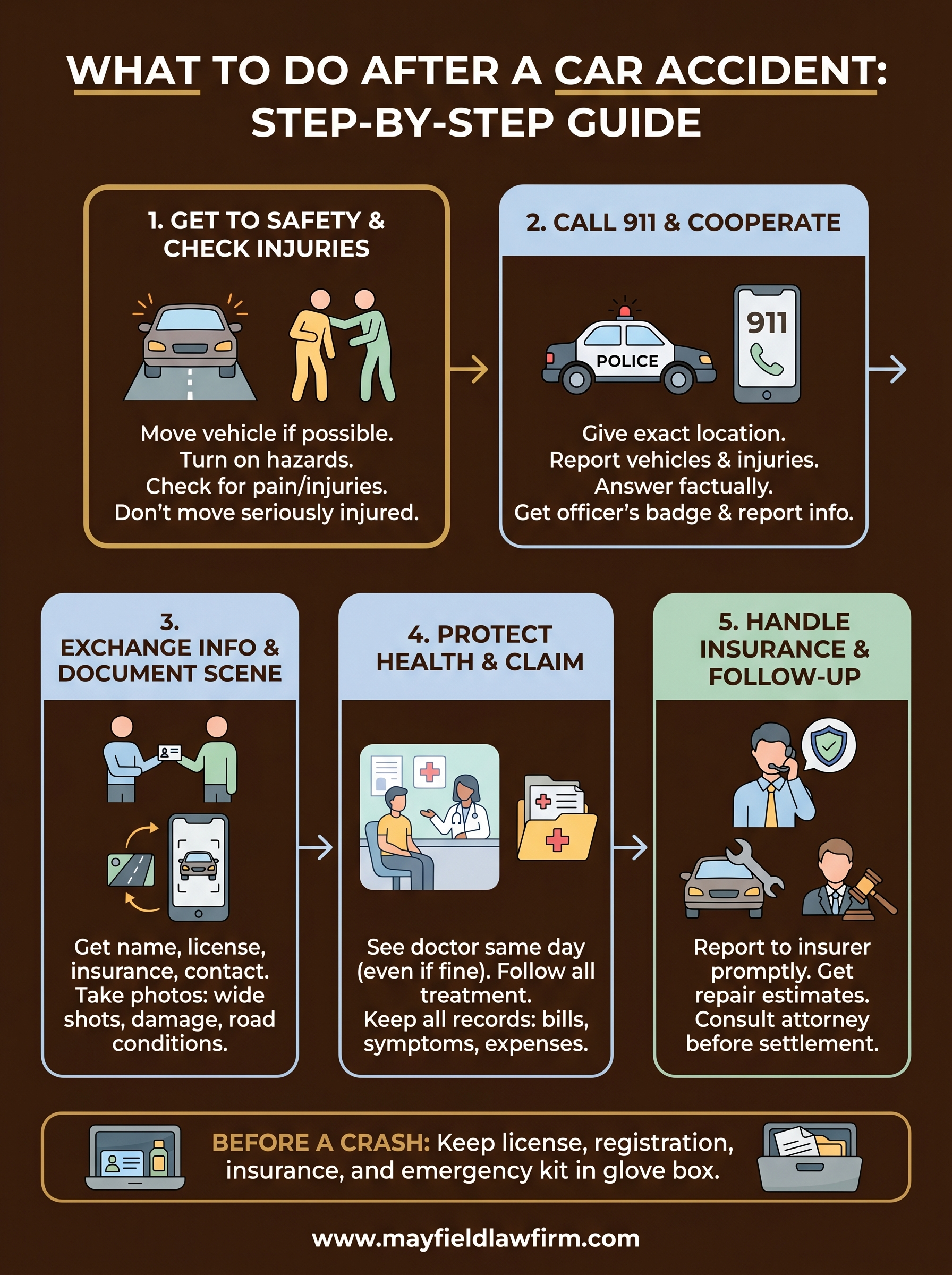
Knowing what to do after a car accident comes down to acting quickly and staying organized at every stage. Move to safety, call 911, exchange information, document the scene thoroughly, and see a doctor the same day. Each step builds on the one before it , and skipping any one of them creates gaps that insurers and opposing attorneys will use against you.
Your documentation, medical records, and consistent follow-through with treatment are the strongest tools you have when it comes time to negotiate a fair settlement. The more thorough your record, the harder it is for anyone to minimize what you experienced.
If you were injured in an accident in Northeast Mississippi or South Memphis , you do not have to navigate the insurance process alone. Contact the experienced car accident attorneys at Mayfield Law Firm, P.A. for a free consultation and get the representation your case deserves.