How Long Does Wage Garnishment Last?
Watching a chunk of every paycheck disappear before you even see it is stressful enough without wondering when it will finally stop. How long does wage garnishment last depends on what kind of debt triggered it, and the answer ranges from a few months to indefinitely, until the balance is paid in full.
Most creditor garnishments continue until the debt is satisfied , but some situations, like unpaid taxes or defaulted student loans, come with their own rules and timelines. Child support garnishments often run until the obligation ends entirely. The duration also depends on whether you take action , because garnishments don't always have to run their full course.
We've represented plenty of Mississippi and Tennessee residents dealing with garnished wages, and we know the uncertainty is often worse than the deduction itself. In this article, we'll walk through what determines how long a garnishment lasts, how different debt types compare, and the legal options, including bankruptcy, that can stop or reduce a garnishment before it runs its course.
Why wage garnishment length depends on your debt and state
Not all garnishments work the same way, and the type of debt behind yours largely determines how long it will follow you. Consumer debt garnishments , the kind tied to credit cards, medical bills, or personal loans, require a creditor to sue you and win a judgment first. Once that judgment is entered, the garnishment can legally continue until the debt, plus interest and court costs, is paid off completely. If your balance is large and your income is modest, that could stretch on for years.
Government-backed debts play by different rules. Defaulted federal student loans allow the Department of Education to garnish wages through an administrative process, without a court judgment, and that garnishment can also continue indefinitely until the loan is resolved, rehabilitated, or paid in full. The U.S. Department of Education outlines how this administrative wage garnishment works and the steps borrowers can take to challenge it, including requesting a hearing before deductions begin.
Tax debt garnishments, often called levies, come from the IRS or state revenue departments and tend to be more aggressive than private creditor garnishments. The IRS can take a larger percentage of your paycheck than most other creditors are allowed to under federal law, and the garnishment continues until you pay the debt, negotiate a settlement, or enter a formal payment arrangement. The IRS explains its wage levy process and the specific conditions under which a levy is released.
Support-related garnishments, meanwhile, are tied to an ongoing legal obligation rather than a fixed balance. Child support and alimony garnishments typically continue for as long as the underlying support order remains in effect, which could mean until a child turns 18, graduates high school, or the court modifies the order. These carry the strictest federal withholding limits under the Consumer Credit Protection Act, and they're notoriously difficult to discharge even in bankruptcy.
The type of debt behind your garnishment, not your paycheck, decides whether it lasts a few months or several years.
State law adds another layer, since some states set shorter statutes of limitations on judgment enforcement or cap how long a garnishment order stays active before a creditor has to renew it. Mississippi and Tennessee each have their own quirks here, which we'll cover in detail further down.
| Debt Type | Typical Trigger | How Long It Lasts |
|---|---|---|
| Credit cards, medical bills | Court judgment | Until debt is paid in full |
| Federal student loans | Administrative default | Until resolved or rehabilitated |
| IRS/state taxes | Levy after notice | Until paid, settled, or arranged |
| Child support/alimony | Court support order | Until order ends or is modified |
Understanding which category your garnishment falls into is the first step toward knowing what to expect, and more importantly, what legal tools might shorten the timeline.
How to stop or reduce a wage garnishment
Several legal tools can cut a garnishment short, and which one fits your situation depends on the type of debt and how much you owe. Negotiating directly with the creditor works well for private debts like credit cards or medical bills, especially if you can offer a lump sum or a payment plan that avoids further legal costs on their end. Filing an objection or claim of exemption with the court can also reduce or eliminate a garnishment if the amount taken leaves you unable to cover basic living expenses, though the exact exemption rules vary by state.
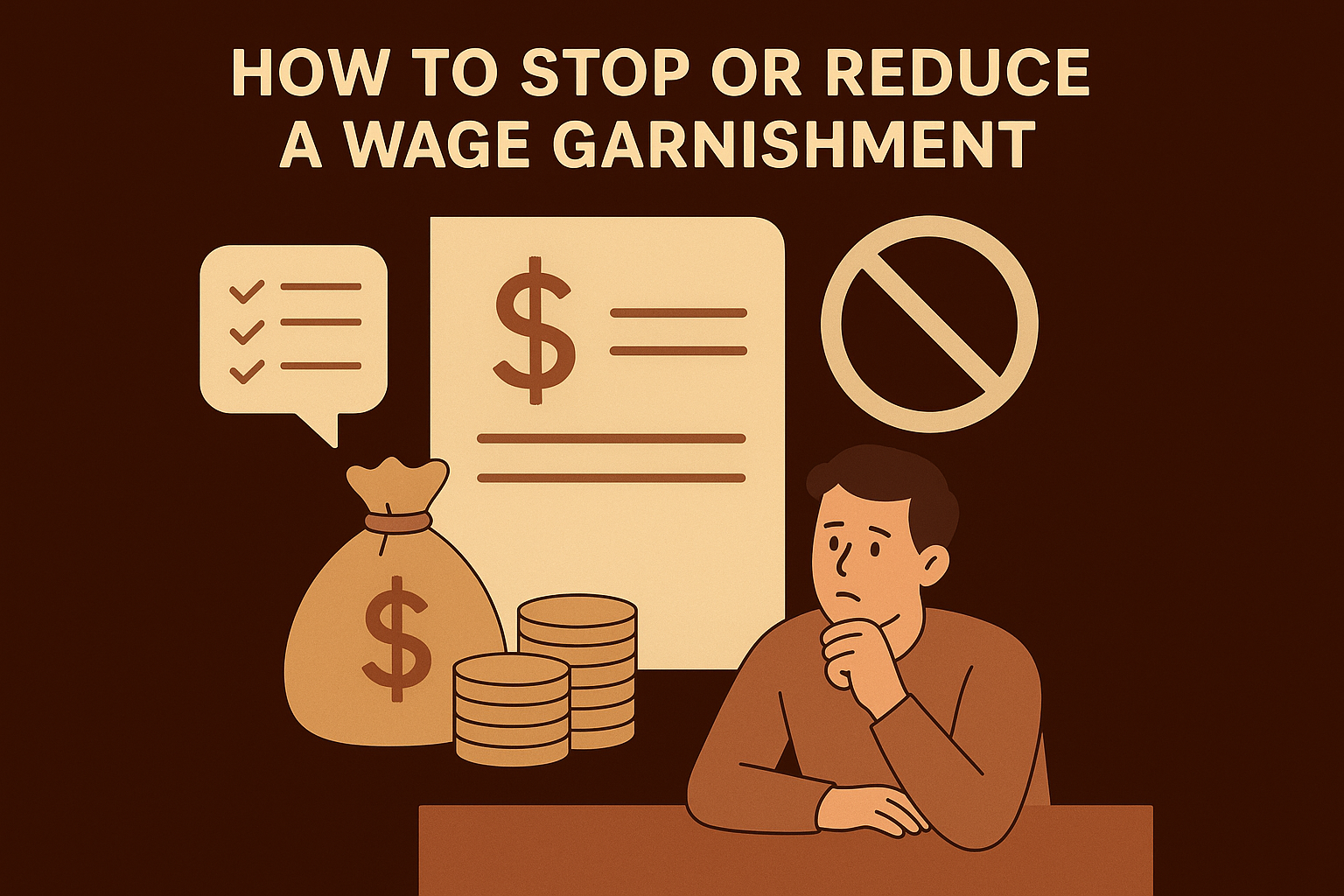
For tax debt, setting up an installment agreement with the IRS or requesting a hardship status called Currently Not Collectible can pause or stop the levy. Federal student loan borrowers can request a hearing or enter loan rehabilitation to end administrative wage garnishment, a process the Department of Education outlines in detail.
Bankruptcy is often the fastest way to stop a garnishment tied to consumer debt. The moment you file, an automatic stay goes into effect under federal bankruptcy law, and it legally halts most wage garnishments immediately, often within a day or two of filing.
Filing bankruptcy triggers an automatic stay that stops most wage garnishments the same week you file.
Here's a quick breakdown of common options:
- Negotiate a settlement directly with the creditor to end collection efforts
- Request a hearing to challenge the garnishment amount or the underlying debt
- Claim an exemption if the garnishment causes undue financial hardship
- Enter an IRS payment plan to release a tax levy
- Rehabilitate a defaulted student loan to stop administrative garnishment
- File Chapter 7 or Chapter 13 bankruptcy to trigger an automatic stay
Child support garnishments are the hardest to stop since courts rarely modify support obligations without a formal request and evidence of changed circumstances. If you're unsure which route applies to your debt, talking to someone who handles these cases regularly saves time and prevents costly missteps.
Wage garnishment rules in Mississippi and Tennessee
Both states follow the federal Consumer Credit Protection Act as a baseline, but each adds its own wrinkles that affect how long a garnishment order can stay active on your paycheck. Knowing these differences matters if you're trying to figure out how long wage garnishment will last for your specific situation, since state law often decides whether a creditor has to keep renewing the order or can let it ride indefinitely.
Mississippi's approach to garnishment
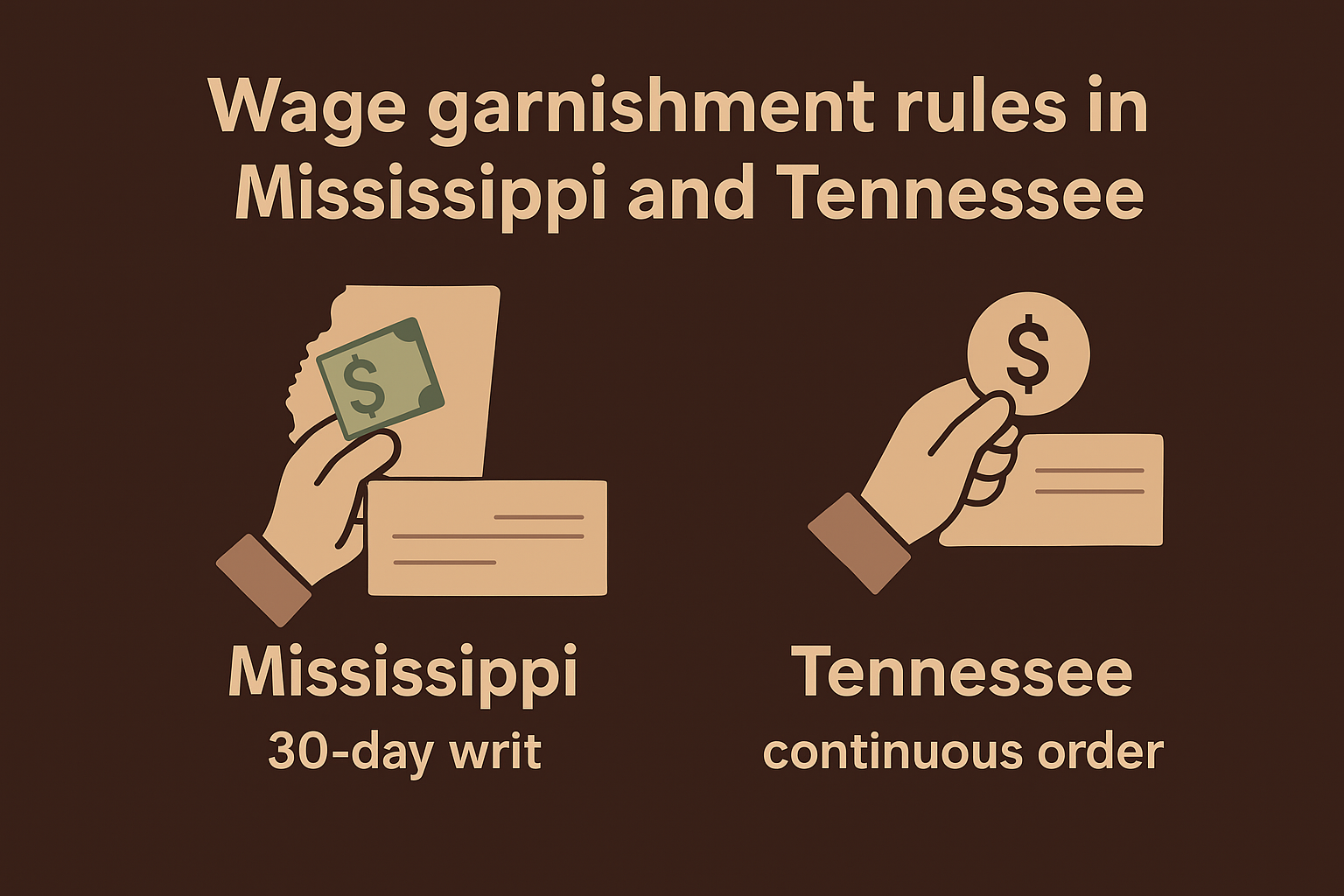
Mississippi allows creditors to garnish wages for up to 30 days at a time under a single writ, which means a creditor holding a consumer debt judgment has to keep filing renewal writs to continue collecting until the balance is gone. That renewal requirement gives debtors a recurring opportunity to negotiate, object, or file bankruptcy before the next 30-day cycle begins. Mississippi also exempts the first $25 per week in wages from garnishment, on top of the federal exemption limits.
Tennessee's approach to garnishment
Tennessee, by contrast, generally allows a continuous garnishment order that stays in place until the debt is paid or the court modifies it, so employers keep withholding without the creditor needing to refile every month. Tennessee does offer a slightly higher exemption for the head of a household, protecting an additional amount per dependent beyond the standard federal formula.
A Mississippi garnishment gets renewed every 30 days, while a Tennessee garnishment often runs continuously until the debt is resolved.
- Mississippi: 30-day writs, $25 weekly wage exemption, frequent renewal filings
- Tennessee: continuous withholding orders, added exemption per dependent for heads of household
Because these rules shift the timeline in different directions, someone garnished in Southaven may have more built-in leverage points than someone garnished across the state line in Memphis, which is exactly why local legal guidance matters.

Getting back on solid financial ground
Whether your garnishment lasts a few months or drags on for years comes down to the debt behind it, your state's rules, and whether you take action. Consumer debt gives you the most leverage , since negotiation, exemption claims, or bankruptcy can all cut a garnishment short. Tax levies and student loan garnishments respond to their own federal processes, while child support obligations rarely bend without a court order changing the underlying terms.
Sitting back and hoping a garnishment runs its course rarely works out in your favor, especially when every paycheck cycle brings another deduction you can't recover. Mississippi and Tennessee residents facing garnished wages have real options, but the right one depends on details specific to your case. If you're ready to stop guessing and start acting, schedule a free consultation with Mayfield Law Firm and let us map out the fastest path back to a paycheck that's actually yours.