
How To File A Wrongful Death Claim: Step-By-Step Guide
Losing a family member because of someone else's negligence is devastating, and the legal process that follows can feel just as overwhelming. If you're trying to understand how to file a wrongful death claim , you're likely dealing with grief while facing urgent questions about your rights, deadlines, and what steps to take first. You deserve clear answers , not legal jargon that leaves you more confused than when you started.
Mississippi and Tennessee each have specific rules about who can file a wrongful death lawsuit, what evidence you'll need, and how long you have to act. Missing a critical deadline or filing incorrectly can cost your family the compensation it's owed. That's why understanding the process from the outset, before mistakes happen, matters so much. At Mayfield Law Firm, P.A., we've spent over 40 years representing families across Northeast Mississippi and South Memphis through wrongful death and personal injury cases , and we know how high the stakes are.
This guide breaks down the wrongful death claim process into concrete, actionable steps. You'll learn who qualifies to file , what damages you can recover, how to gather evidence, and when to get an attorney involved. Whether you're just starting to explore your options or you've already been told your loved one's death may have been preventable, this step-by-step walkthrough will help you move forward with confidence.
What a wrongful death claim is and who can file
A wrongful death claim is a civil lawsuit filed when someone dies because of another party's negligent, reckless, or intentional conduct . Unlike a criminal case, which the government prosecutes, a wrongful death claim is brought by surviving family members or a representative of the deceased person's estate. The goal is to recover financial compensation for the measurable and personal losses the death caused. Common scenarios include fatal car accidents, medical malpractice, workplace incidents, defective products, and nursing home neglect.
Who qualifies to file
Mississippi law (Miss. Code Ann. § 11-7-13) sets a specific order of priority for who can bring a wrongful death claim. Immediate family members , including a surviving spouse, children, or parents, typically have the first right to file. If none of those relatives survive, the right may pass to siblings or the estate's personal representative . In Tennessee, the right to file generally rests with the surviving spouse or the deceased's children, and the personal representative can also bring the action on behalf of all beneficiaries. Both states have distinct rules, so identifying your standing early is critical.
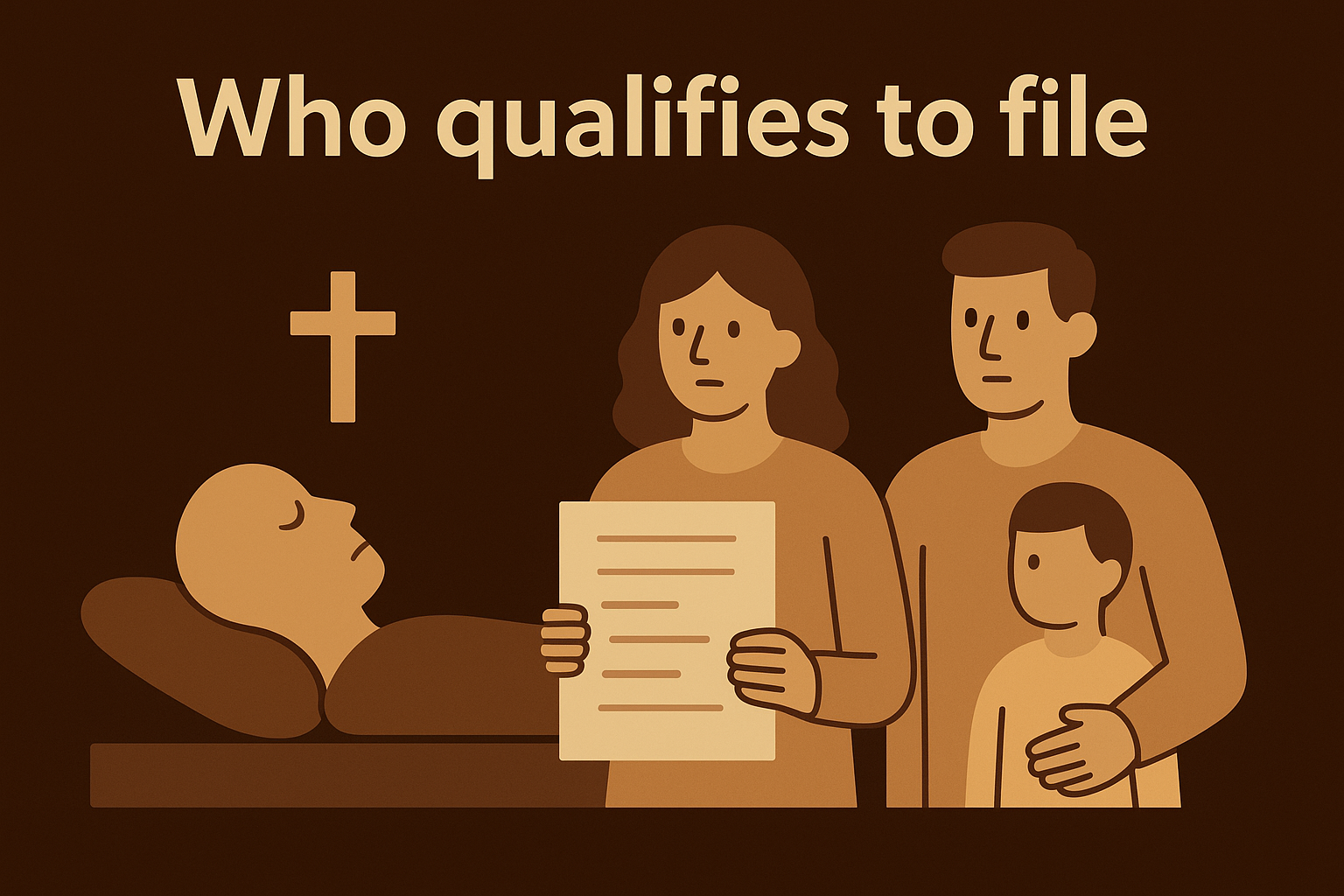
If multiple family members qualify, they typically must pursue the claim together in a single lawsuit rather than filing separately.
Understanding whether you qualify is one of the first things to resolve when learning how to file a wrongful death claim , because filing by the wrong party can result in an automatic case dismissal before you ever reach a resolution.
What damages you can recover
Wrongful death damages fall into two broad categories: economic losses and non-economic losses. Economic losses include medical bills incurred before death, funeral and burial costs, and the income your family would have received if your loved one had lived. Non-economic losses cover grief, loss of companionship , and the emotional support your family no longer receives. Courts may also award punitive damages in cases where the defendant's behavior was especially reckless or deliberate, though these are less common and depend on the specific facts of your case.
Step 1. Confirm eligibility and the filing deadline
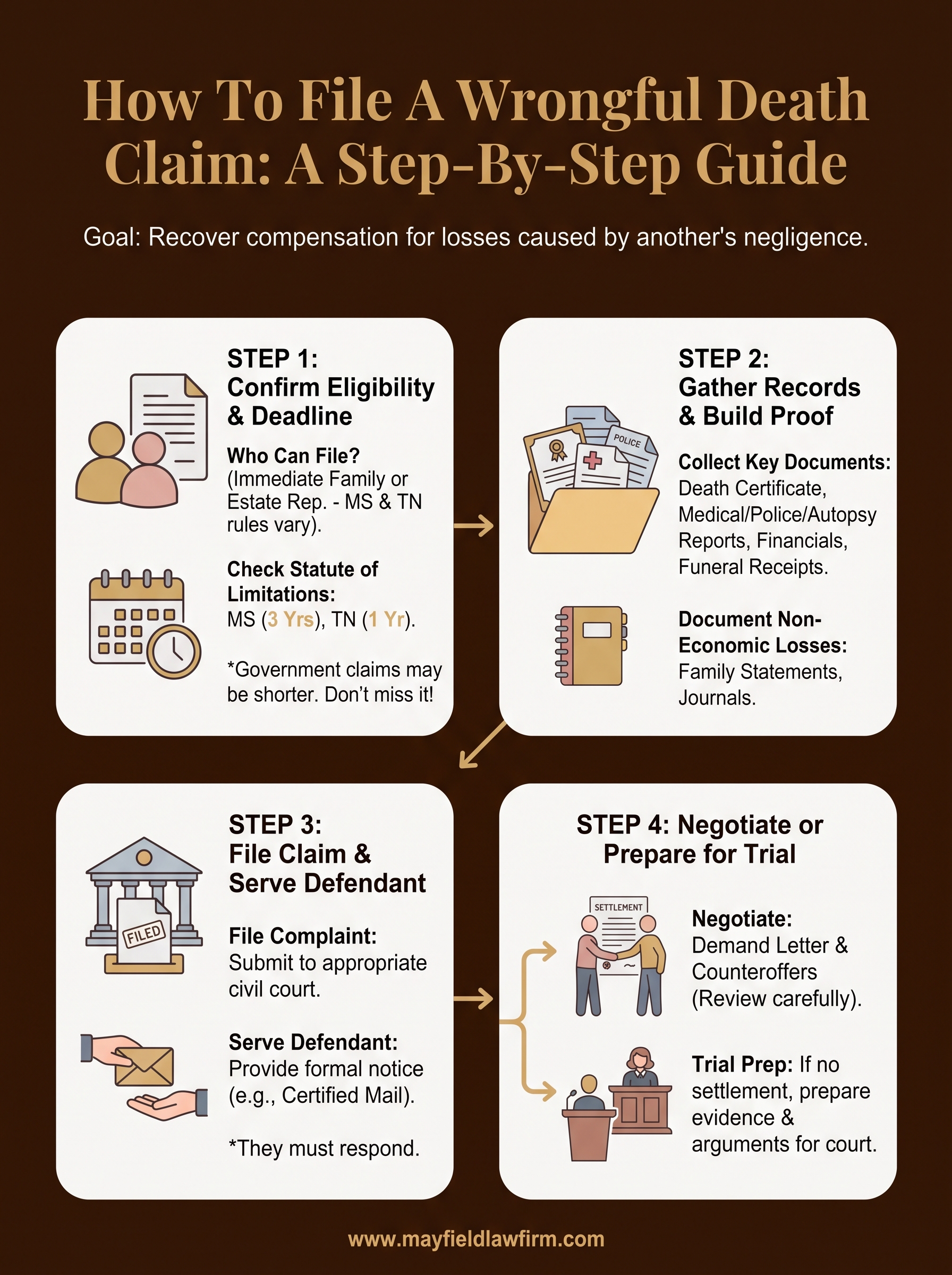
Before you take any other action in how to file a wrongful death claim , you need to confirm two things: whether you have legal standing to sue and whether you're still within the filing window your state allows. Getting either of these wrong early can end your case before it ever reaches a courtroom.
Check your state's statute of limitations
Mississippi gives eligible family members three years from the date of death to file a wrongful death lawsuit(Miss. Code Ann. § 15-1-36). Tennessee sets a shorter window of one year from the date of death for most wrongful death cases (Tenn. Code Ann. § 28-3-104). If the defendant is a government entity, that deadline can shrink further, and you may need to file a separate notice of claim first.
Missing your state's filing deadline almost always results in a permanent loss of your right to pursue compensation, no matter how strong the evidence is.
| State | Standard Deadline | Government Defendant |
|---|---|---|
| Mississippi | 3 years from date of death | May be shorter; consult an attorney |
| Tennessee | 1 year from date of death | Notice of claim required first |
Verify your standing before filing
Confirming your relationship to the deceased matters just as much as meeting the deadline . Courts require the person filing to have recognized legal standing under state law. If you're unsure whether your relationship qualifies, an attorney can assess your position quickly so you don't lose time filing under the wrong name.
Step 2. Gather records and build the proof you need
Solid evidence is the foundation of how to file a wrongful death claim successfully. Without the right records, even a legitimate case can stall or fail at negotiation. Start collecting documents as soon as possible, because some records become harder to obtain as time passes and witnesses' memories fade.
Documents to collect immediately
Your case will rely on two categories of evidence : records that prove how the death occurred and records that establish your financial losses . The list below covers the most critical items to gather.
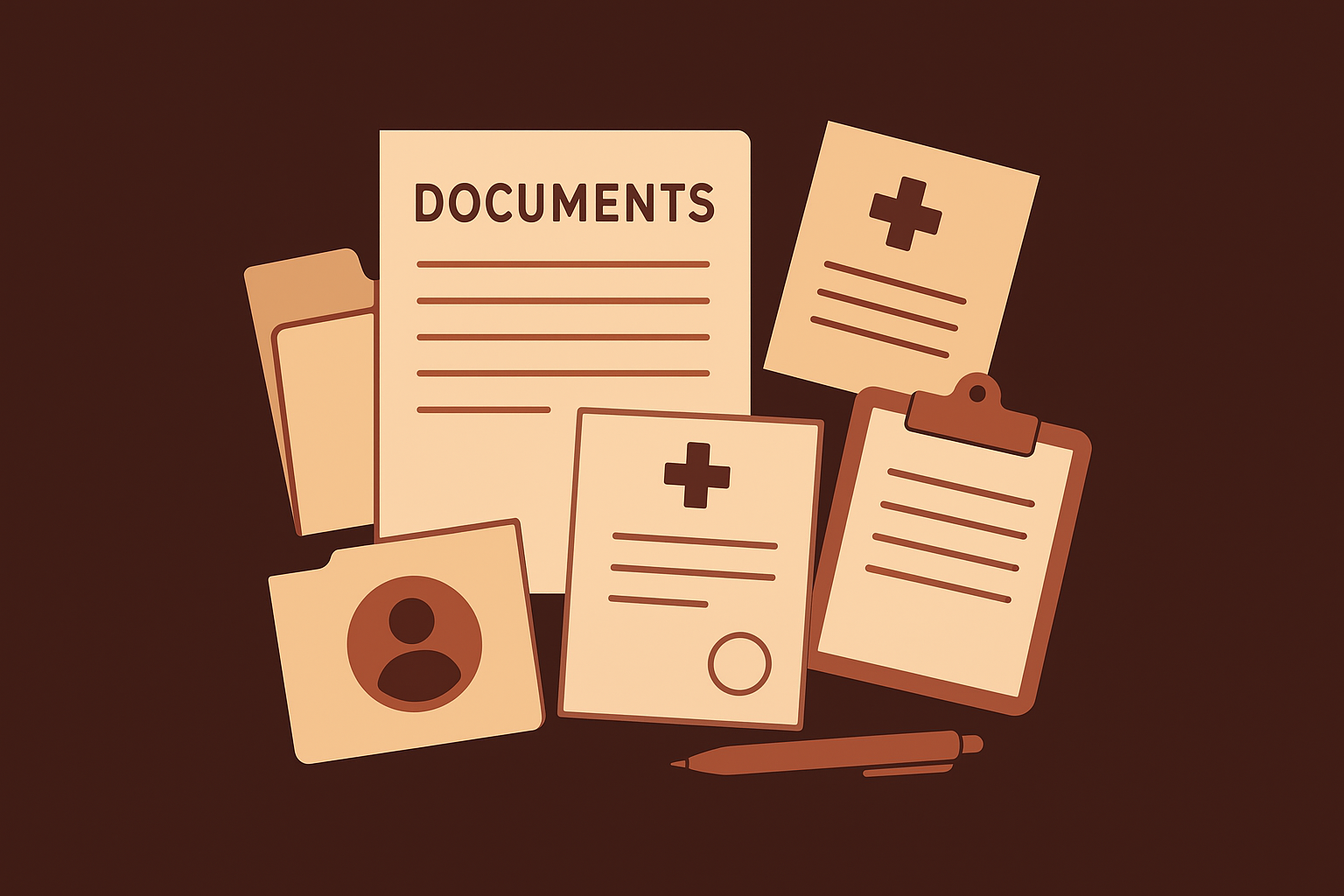
- Death certificate (official copy from the county or state)
- Medical records and bills from the final treatment or hospitalization
- Police or incident reports related to the accident or event
- Autopsy report , if one was conducted
- Employment records and pay stubs showing your loved one's income
- Funeral and burial receipts for all out-of-pocket costs
Request these records in writing and keep copies of every request you send, so you have a paper trail if documents are delayed or disputed.
Documenting non-economic losses
Written statements from family members describing the emotional impact of the loss can strengthen your claim. Keep a personal journal recording how the death has affected daily life, relationships, and mental health. These entries serve as supporting evidence during settlement negotiations or trial.
Step 3. File the claim or lawsuit and serve the defendant
Once you've confirmed eligibility and gathered your evidence, the next phase of how to file a wrongful death claim involves formally submitting your lawsuit and notifying the defendant. Filing with the correct court and following proper procedures keeps your case moving without unnecessary delays or technical dismissals that can set you back weeks.
Where and how to file
Your attorney will file a complaint in the appropriate civil court , typically the circuit court in the county where the death occurred or where the defendant resides. The complaint must identify the parties involved, describe the defendant's negligent or reckless conduct, and state the specific damages your family is seeking. Once filed, the court assigns a case number and officially stamps your documents as received, creating a formal record that the lawsuit exists.
Filing in the wrong jurisdiction or omitting required information from the complaint can result in dismissal before your case ever reaches a judge.
Serving the defendant
After filing, you must formally serve the defendant with a copy of the complaint and a court-issued summons. Both Mississippi and Tennessee require proper legal service, meaning the defendant receives official notice that a lawsuit has been filed against them. Acceptable service methods typically include certified mail, delivery by a sheriff's deputy, or a licensed process server. Once served, the defendant generally has 30 days to file a formal response, after which the case moves into the discovery and negotiation phase.
Step 4. Negotiate a settlement or prepare for trial
After the defendant files a response, both sides enter the discovery phase , where attorneys exchange evidence, take depositions, and evaluate the strength of each position. Most wrongful death cases resolve before trial through settlement negotiations , and your attorney will use the evidence you gathered in earlier steps to push for the full value of your claim.
Understanding the settlement process
Your attorney will open negotiations by sending the opposing party a demand letter that outlines your damages and the compensation amount you're seeking. The defense will typically respond with a lower counteroffer, and both sides negotiate from there. A strong demand letter in a wrongful death case typically includes:
- A summary of how the defendant's conduct caused the death
- All documented economic losses , including medical bills, lost income, and funeral costs
- A clear statement of the non-economic damages your family has suffered
- The specific dollar amount your family is requesting
Never sign a settlement release without having your attorney review it first, since those documents are legally binding and final.
Preparing for trial if needed
If settlement talks stall, your attorney will move forward with trial preparation , which includes organizing exhibits, identifying expert witnesses, and building arguments for the jury. Knowing how to file a wrongful death claim is only part of the process; presenting that evidence persuasively in court determines the outcome. Trials take longer than settlements but can result in higher compensation when the evidence is strong.
A simple way to get help moving forward
Understanding how to file a wrongful death claim gives you a clear picture of the process, but managing deadlines, gathering evidence, and negotiating with insurance companies while grieving is genuinely difficult. Each step carries real legal consequences , and small mistakes at any point can reduce or eliminate the compensation your family is owed.
Working with an experienced wrongful death attorney makes a direct difference in the outcome. At Mayfield Law Firm, P.A. , our attorneys have over 40 years of experience handling wrongful death and personal injury cases across Northeast Mississippi and South Memphis. We take on the legal work so you can focus on your family during an already painful time. Your initial consultation is free, and we'll give you a straightforward assessment of your case and your next steps.
Contact Mayfield Law Firm today to speak with an attorney who understands what your family is going through.