
Who Can File a Wrongful Death Lawsuit? Eligibility Rules
Losing a family member because of someone else's negligence is devastating, and the legal questions that follow can feel just as overwhelming. One of the first and most critical questions families face is who can file a wrongful death lawsuit on behalf of the person they lost. The answer isn't the same everywhere, and filing rules vary by state , which means understanding your specific eligibility matters before you take any legal step.
In Mississippi and Tennessee, the law defines a specific group of people who have the right, known as legal standing, to bring a wrongful death claim. Sometimes it's a surviving spouse or child. Other times, it's a personal representative of the deceased person's estate . Getting this wrong can result in a case being dismissed outright, regardless of how strong the underlying facts are. That's why eligibility is one of the first things our attorneys at Mayfield Law Firm, P.A. evaluate during a consultation.
This article breaks down exactly who qualifies to file, how state laws shape that determination, and what steps eligible parties need to take to pursue a claim.
Why filing eligibility matters in wrongful death
Filing a wrongful death lawsuit isn't something anyone connected to the deceased can do. Courts treat wrongful death claims differently from other civil cases because the person who suffered the actual harm, the deceased, can no longer speak for themselves. State law steps in to define who holds the right to act on their behalf, and that definition is narrow. If you file without standing, the court can dismiss the case entirely, even if the evidence against the at-fault party is clear.
Filing without legal standing can end a valid case before it even starts, which is why confirming eligibility is the first step, not an afterthought.
The legal and financial stakes of getting it wrong
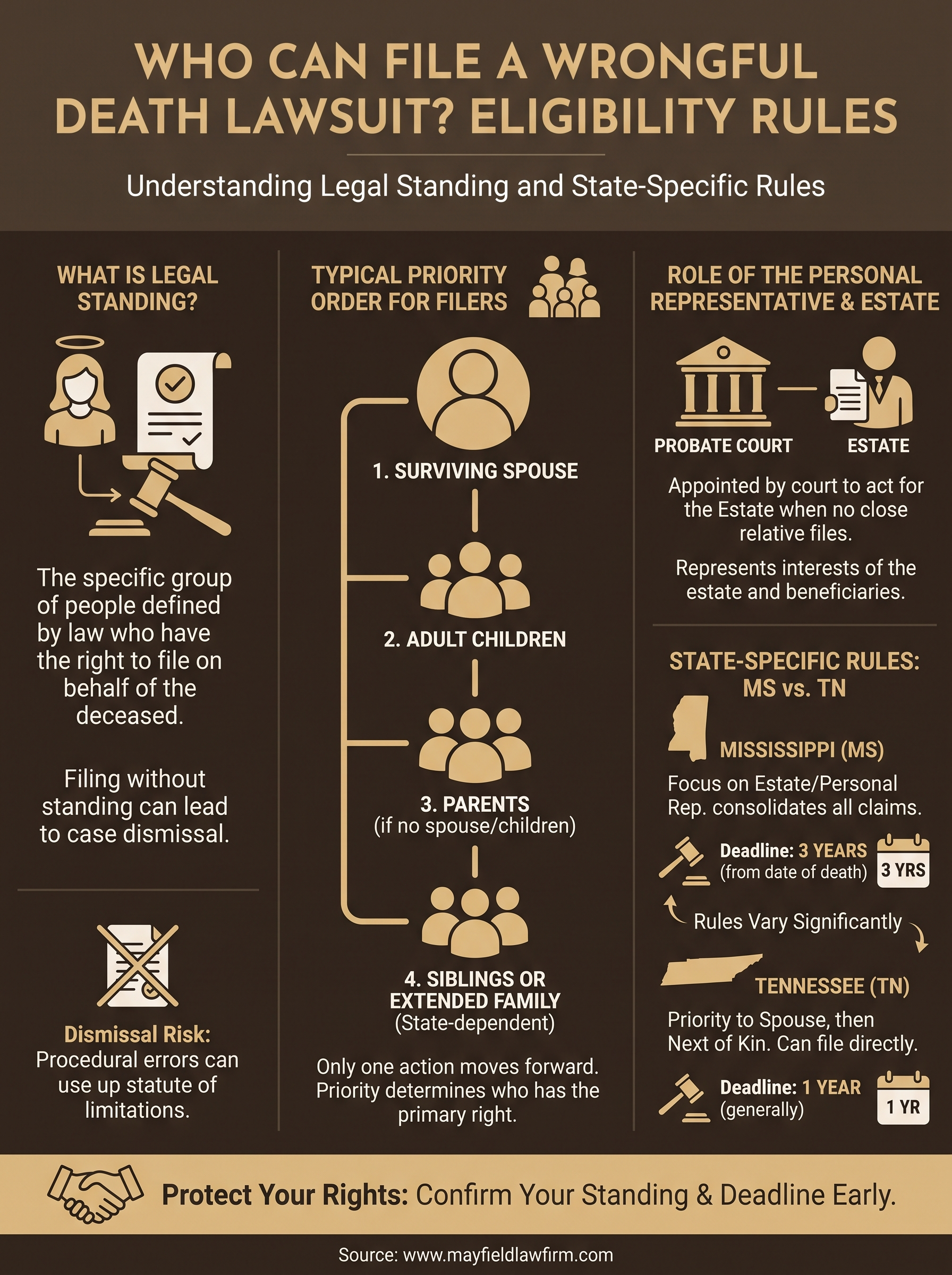
When the wrong person files a wrongful death claim, the dismissal doesn't just delay the case . In many situations, it uses up part of the statute of limitations, the legal deadline for filing. Mississippi gives you three years from the date of death to file under Miss. Code Ann. § 11-7-13, while Tennessee generally allows one year under Tenn. Code Ann. § 20-5-110. Losing months to a procedurally defective filing can push a legitimate case past that deadline, leaving your family with no legal recourse.
Beyond the dismissal risk, eligibility also determines who receives any financial recovery. Wrongful death damages , which can include medical expenses, funeral costs, lost income, and compensation for grief and loss of companionship, go to specific parties defined by law. If you're trying to understand who can file a wrongful death lawsuit and whether you qualify, you also need to understand what you stand to recover, because those two questions are connected. The law ties filing rights directly to recovery rights , and sorting that out early protects your family's ability to pursue the full compensation the case may support. Starting that process with the correct party in place keeps the claim on solid legal ground from day one.
Who usually has standing to file
Most states start with the closest surviving relatives when deciding who can file a wrongful death lawsuit. The law prioritizes people who had direct financial or emotional ties to the deceased, because those individuals carry the most measurable loss.
The typical priority order for eligible filers
Your relationship to the deceased determines whether you have standing, and state law ranks those relationships in a specific order. Surviving spouses typically come first, followed by adult children, then parents, and in some states, siblings or other dependents. If a higher-priority relative exists and chooses to file, you generally cannot bring a separate competing claim.
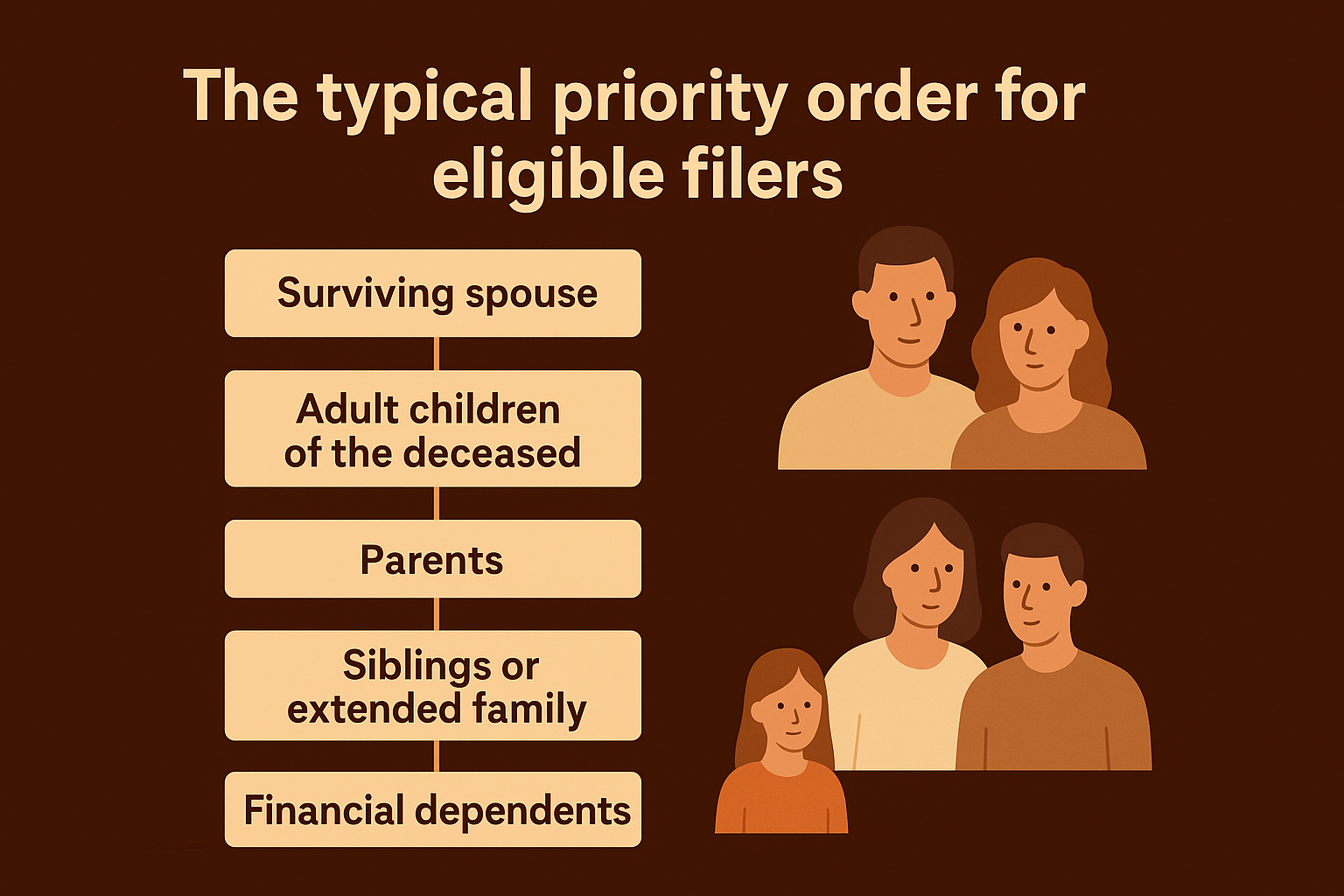
The law is designed so that only one wrongful death action moves forward, which means knowing where you fall in the priority order matters from the start.
Here is how that order typically looks across most states:
- Surviving spouse
- Adult children of the deceased
- Parents , if no spouse or children survive
- Siblings or extended family , where state law allows
- Financial dependents , including stepchildren or others the deceased supported
Each category only becomes eligible if no one from the category above it exists or chooses to act. Minor children always hold a protected interest , but a guardian or legal representative must act on their behalf since they cannot file independently.
How the personal representative and estate work
When no close relative has standing or chooses to file, the deceased person's estate steps in as the legal vehicle for pursuing the claim. A personal representative , sometimes called an executor or administrator, is appointed by the probate court to act on behalf of the estate. This person carries the legal authority to file a wrongful death lawsuit and manage any resulting recovery.
What a personal representative actually does
The personal representative doesn't personally benefit from filing in most cases. Their job is to represent the interests of the estate and its beneficiaries , which often includes surviving family members who may not have had direct standing on their own. The probate court appoints this person through a formal process, and without that court appointment , no one can legally act in this capacity.
If the estate needs to file, confirming the personal representative's appointment through probate is the first legal step before any wrongful death action can move forward.
In some situations, a surviving spouse or adult child also serves as the personal representative, combining two forms of standing into one party. That overlap can simplify the process, but it still requires proper court authorization to hold that role officially.
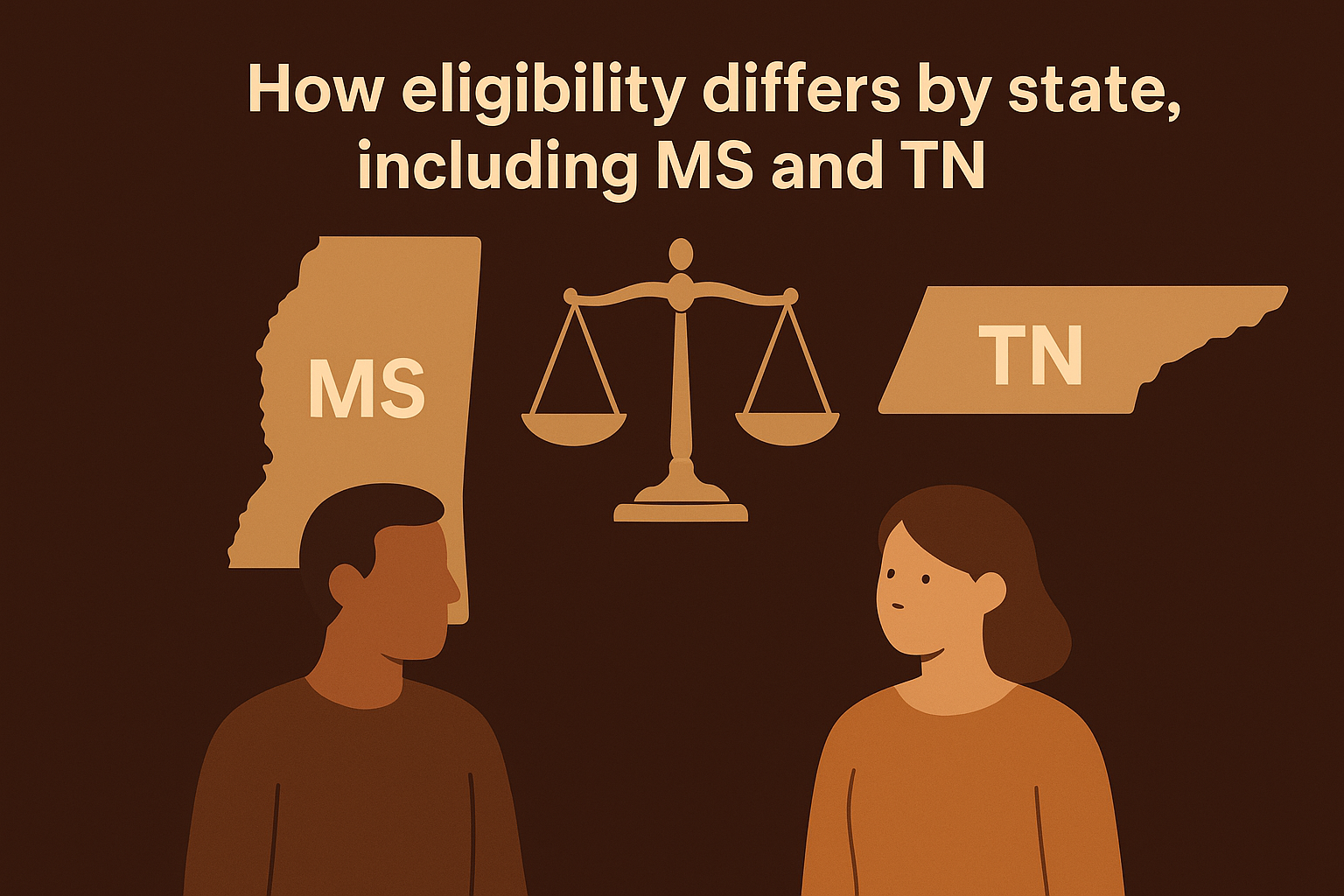
How eligibility differs by state, including MS and TN
State laws set their own rules for who can file a wrongful death lawsuit , and those differences can be significant. What qualifies you in one state may not hold in another, which makes knowing your specific jurisdiction a required first step before taking any legal action.
Mississippi's Filing Rules
Under Miss. Code Ann. § 11-7-13 , Mississippi allows the personal representative of the estate to file on behalf of all eligible beneficiaries, which includes the surviving spouse, children, and parents. One key distinction is that Mississippi consolidates all beneficiary interests into a single action , so individual family members generally cannot bring separate competing claims. This structure keeps the case organized but requires a proper probate appointment before the claim can move forward.
In Mississippi, the personal representative controls the claim, meaning securing that court appointment is often the first legal task your family must complete.
Tennessee's Filing Rules
Tennessee's wrongful death statute under Tenn. Code Ann. § 20-5-106 gives priority to the surviving spouse, followed by children, then the next of kin. Unlike Mississippi, Tennessee permits the surviving spouse or next of kin to file directly without first going through the estate's personal representative. This gives eligible family members more immediate access to the courts, but the priority order still governs who holds that right.
How to confirm you can file and what to do next
Before taking any legal action, you need to verify your standing under the law in your specific state. If you are considering whether who can file a wrongful death lawsuit includes you, the starting point is identifying your relationship to the deceased and checking whether anyone with higher priority exists or has already acted.
Confirming eligibility before filing protects your claim from procedural dismissal and keeps the statute of limitations from running out on a preventable mistake.
Steps to take before you file
Your first step is to gather documentation that establishes your relationship to the deceased, such as a marriage certificate, birth certificate, or adoption records. Once you have those, review whether the estate has an appointed personal representative already, because that appointment may affect your ability to file independently depending on your state.
Here is a practical checklist to work through:
- Confirm your relationship to the deceased
- Check if a personal representative has been appointed through probate
- Identify your state's filing deadline
- Consult an attorney to confirm you hold legal standing
- Avoid filing independently if a higher-priority relative exists
An attorney can review all of these factors in a single consultation and tell you exactly where you stand before any paperwork is submitted.
Next steps after a wrongful death
Understanding who can file a wrongful death lawsuit is the foundation, but taking action within your state's deadline is what actually protects your family's legal rights. In Mississippi, you have three years. In Tennessee, you have one year. Every day that passes without confirmed standing and a filed claim is a day that works against you.
You don't need to figure out eligibility, probate requirements, and deadlines on your own. An experienced wrongful death attorney can review your relationship to the deceased, confirm your standing, and handle the procedural steps that courts require before a case can move forward. Mayfield Law Firm, P.A. offers free consultations , so you can get clear answers without any upfront cost.
If you lost someone due to another party's negligence, contact Mayfield Law Firm, P.A. today to speak with an attorney who can confirm your eligibility and protect your right to file .