
How Long Does A Wrongful Death Case Take? Full Timeline
Losing a family member because of someone else's negligence is devastating, and the legal process that follows can feel like it stretches that pain out even further. One of the first questions families ask is how long does a wrongful death case take , and the honest answer is that it depends. Some cases settle in a matter of months. Others take two years or more to reach a resolution.
The timeline hinges on factors like the complexity of the evidence, whether liability is disputed, how many parties are involved, and whether the case goes to trial. Understanding these stages upfront helps you set realistic expectations and make informed decisions rather than feeling blindsided by delays. It also helps you recognize when a quick settlement offer undervalues your claim .
At Mayfield Law Firm, P.A., we've spent over 40 years representing families across Northeast Mississippi and South Memphis in wrongful death and personal injury cases. Below, we break down the full timeline of a wrongful death case , from the initial investigation through settlement negotiations or trial, so you know what to expect at each stage .
Typical wrongful death case timeline
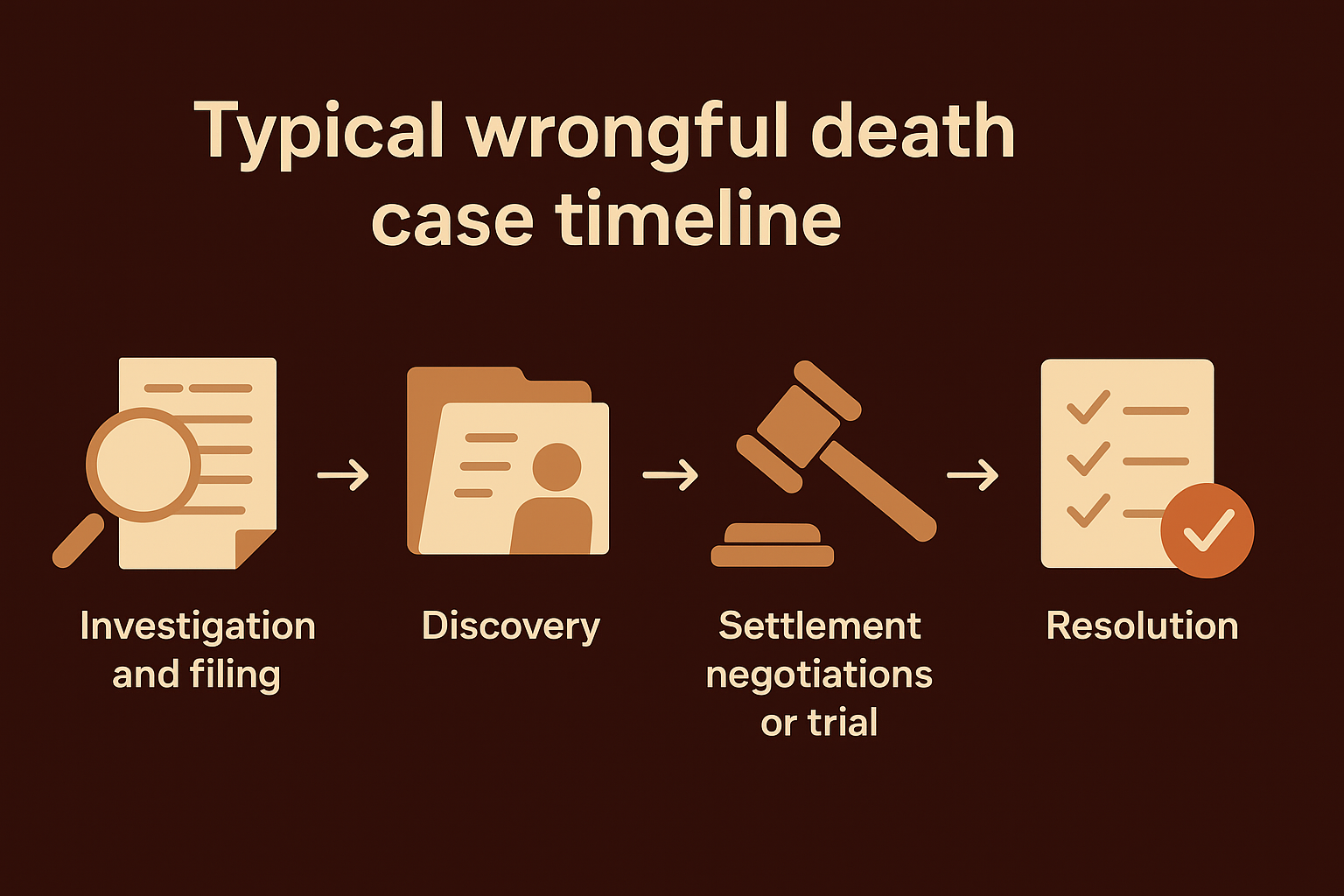
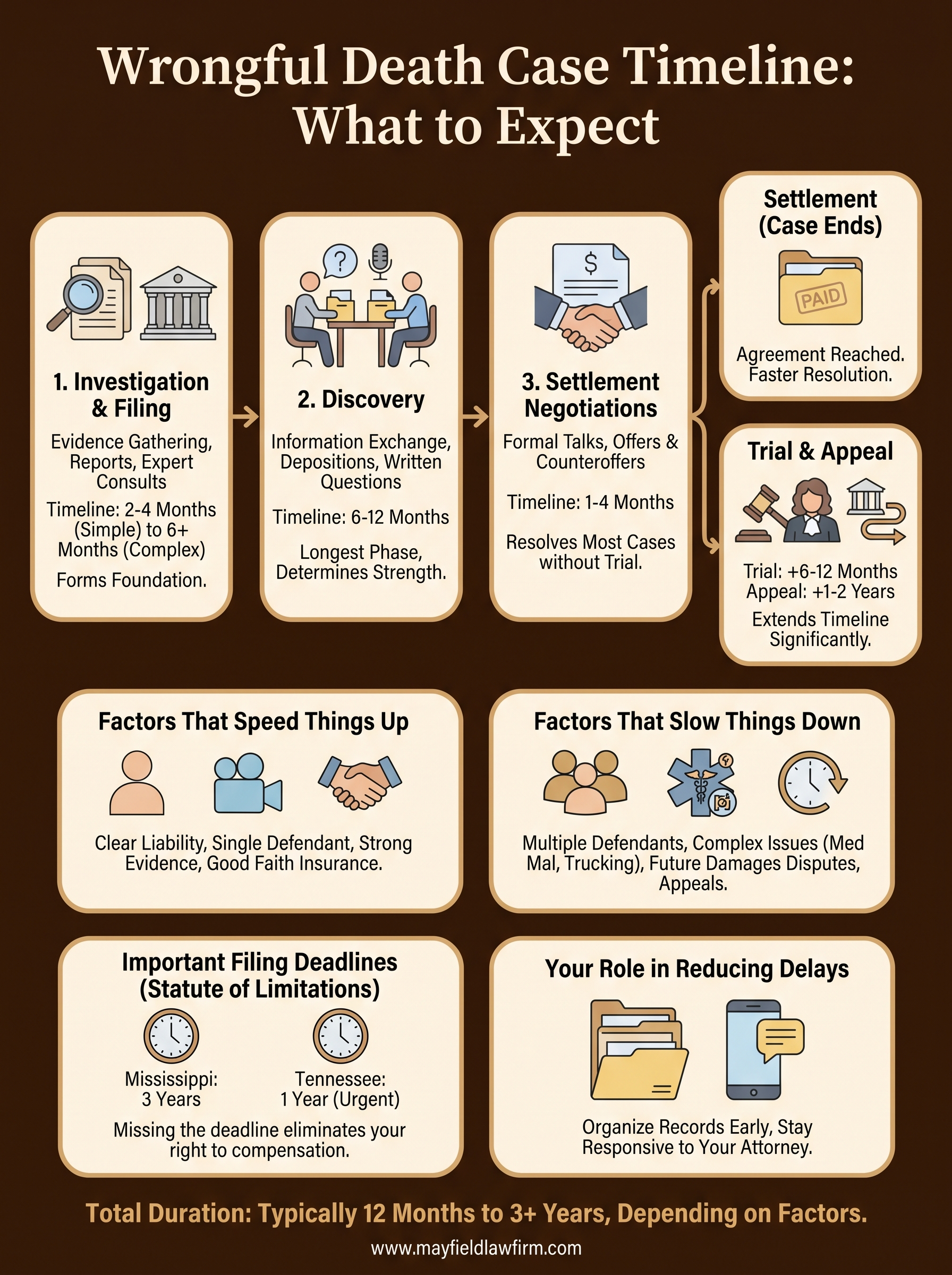
Most wrongful death cases move through four distinct phases , each with its own timeline. When you understand what happens at each stage, you can follow your case more closely and avoid being caught off guard. The overall process typically takes anywhere from 12 months to three or more years , depending on how each phase unfolds.
Investigation and filing
Before your attorney files anything in court, they need to gather evidence and build the foundation of your claim . This phase includes reviewing police and accident reports, obtaining autopsy and medical records, interviewing witnesses, and consulting with experts. For straightforward cases, this can take two to four months . In complex situations, such as a crash involving a commercial trucking company or a medical malpractice claim, the investigation alone can run six months or longer.
Once the investigation is complete, your attorney files the wrongful death lawsuit with the appropriate court, which formally starts the legal clock.
Discovery
Discovery is the longest phase in most wrongful death cases, and it is where both sides exchange evidence, take depositions, and respond to written questions. This stage commonly runs six to twelve months , though cases with multiple defendants or extensive medical evidence can push that further. Depositions of witnesses and expert testimony often happen during this phase and can add considerable time if scheduling conflicts arise.
The discovery phase often determines whether a case settles or goes to trial, because both sides get a clearer picture of the evidence's strength.
Settlement negotiations or trial
After discovery closes, the parties typically enter formal settlement negotiations . Many wrongful death cases resolve at this stage, which can take one to four months. If both sides cannot agree on a fair number, the case proceeds to trial. A trial adds six to twelve additional months to the total timeline, and if either side appeals the verdict, you could be looking at another one to two years on top of that. Understanding how long a wrongful death case takes means accounting for each of these stages realistically before you set expectations.
What makes a case faster or slower
When families ask how long does a wrongful death case take , the answer often comes down to specific variables that either push the case forward or create significant delays. Some of these factors are within your control, and recognizing them early helps you and your attorney make smarter decisions throughout the process.
Factors that speed things up
Clear liability is the single biggest driver of a faster resolution. When video footage, police reports, or eyewitness accounts leave little room for dispute, the defense has less reason to drag things out. Cases that tend to resolve faster typically share these traits:
- One primary defendant with no complex multi-party disputes
- Strong physical or digital evidence directly supporting your claim
- An insurance carrier willing to negotiate in good faith
- Limited disagreement over the value of damages
The clearer the evidence of fault, the less leverage the opposing side has to stall negotiations.
Factors that slow things down
Multiple defendants require coordinating separate legal teams and court schedules, which adds months to the process on its own. Cases involving medical malpractice, defective products, or commercial trucking accidents often require expert witnesses whose reports take considerable time to prepare, and whose availability creates additional scheduling conflicts.
Disputes over future damages also extend timelines significantly. When the defense challenges claims tied to future lost earnings or long-term financial support for dependents, both sides dig in, and resolution takes longer regardless of how solid your liability evidence is.
Settlement vs trial and appeals
Understanding the difference between settling and going to trial is one of the most important factors shaping how long does a wrongful death case take . A settlement ends the case without a judge or jury deciding the outcome, which typically saves months of additional time. If you accept a settlement, your case closes once both parties sign the agreement and the payment clears.
Settling before trial
Most wrongful death cases settle before trial , and that path typically saves significant time and emotional strain. Settlement negotiations usually run one to four months after discovery closes, though cases with high damages or strongly disputed liability can push that longer. The trade-off is that accepting a settlement permanently closes your right to pursue further legal action on the same claim.
Common reasons families choose to settle rather than go to trial:
- Faster resolution with a guaranteed outcome
- Lower legal costs and reduced emotional burden on the family
- The defense presents a fair and comprehensive offer
Settling quickly for less than your case is worth can leave your family without the full financial support you need long-term.
Going to trial and beyond
When settlement negotiations fail, your case moves to trial, which typically adds six to twelve months to the overall timeline. A trial requires scheduling court dates, presenting witness testimony, and waiting for a verdict, all of which take considerable time.
After a verdict, either side may file an appeal , adding another one to two years. Factor this possibility into your expectations before deciding whether to accept a settlement offer or push forward.
What you can do to avoid delays
Your actions during the case have a direct impact on how long does a wrongful death case take . Families who stay organized and responsive consistently help their attorneys move through each phase faster, while gaps in communication or missing records create delays that compound over time.
Organize your documents early
One of the most practical steps you can take is gathering key records before your attorney even requests them. Having these materials ready shortens the investigation phase considerably:
- Medical records and bills related to your loved one's treatment
- Death certificate and autopsy report
- Employment and income records showing the financial support your loved one provided
- Insurance policies, police reports, and any witness contact information
Stay responsive to your attorney
Your attorney will periodically need signed authorizations, answers to discovery questions, or your availability for depositions. Responding quickly to every request keeps the case on schedule and prevents unnecessary continuances. Delays often come from the client side, not the courtroom.
Missing a deadline or failing to respond to a discovery request can push your case back by weeks or even months.
Choosing the right attorney from the start also reduces delays significantly. An experienced wrongful death attorney knows how to anticipate procedural hurdles, communicate with opposing counsel efficiently, and keep your case moving through every stage without unnecessary setbacks.
Key Mississippi and Tennessee timing rules
When you're asking how long does a wrongful death case take , the legal deadline to file matters just as much as the case timeline itself. Missing the filing deadline eliminates your right to pursue compensation entirely, regardless of how strong your claim is.
Mississippi's filing deadline
Mississippi gives you three years from the date of death to file a wrongful death lawsuit under Miss. Code Ann. § 15-1-36. That window sounds generous, but the investigation phase, medical record retrieval, and expert consultations eat through that time quickly. Starting early is not optional. Waiting until the second or third year to contact an attorney significantly limits the time available to build a thorough case.
Three years moves faster than most families expect when grief, financial pressure, and paperwork all compete for your attention at once.
Tennessee's filing deadline
Tennessee applies a much shorter deadline : one year from the date of death under Tenn. Code Ann. § 28-3-104. If your case falls under Tennessee's jurisdiction, including incidents in the South Memphis area, that one-year window demands immediate action . Delaying even a few months to consider your options can leave your attorney with too little time to investigate properly, negotiate effectively, or prepare for trial if needed.
Families in both states benefit from contacting an experienced wrongful death attorney as soon as possible after the loss to protect their legal rights before any deadline narrows their options.
Final thoughts
Knowing how long does a wrongful death case take gives your family a realistic foundation for the road ahead. Cases vary widely, from settlements reached within months to trials and appeals that stretch beyond three years, and the specific facts of your situation determine where your case lands on that range. What you do early matters: organizing records, contacting an attorney before deadlines close, and staying responsive throughout the process all reduce unnecessary delays and protect the value of your claim.
Your family deserves full and fair compensation , not a rushed settlement that leaves long-term financial needs unmet. The decisions you make in the first weeks after a loss shape everything that follows, including how strong your case is and how efficiently it moves through each stage. If you're ready to talk through your situation with an experienced team, contact Mayfield Law Firm, P.A. for a free consultation today.