How to Find and Hire a Personal Injury Car Accident Lawyer
To hire the right personal injury car accident lawyer , get medical care first, then shortlist three or four local lawyers who handle crash injuries every week. Verify each license, test each lawyer in a free consultation, and sign only a written contingency fee agreement you understand. If your injuries go beyond minor soreness, make those calls within days, not months.
The pressure starts fast. The other driver's insurance adjuster often calls within a day or two, asks for a recorded statement, and floats a quick offer before you know what your treatment will cost. State law adds to the pressure. Filing deadlines can be as short as one year, and a share of fault can shrink or erase your recovery. Search results do not help either, because most law firm pages look alike and many directory listings are paid placements.
This guide walks you through the decision in six steps, from protecting your claim to managing the case after you hire. The rules cited are those of Mississippi and Tennessee, where Mayfield Law Firm, P.A. has represented injured clients since 1974 from offices in Tupelo, Southaven and Memphis. Follow the steps in order and you will know when you need a lawyer, who to call, and what to ask.
When a car accident injury calls for a lawyer
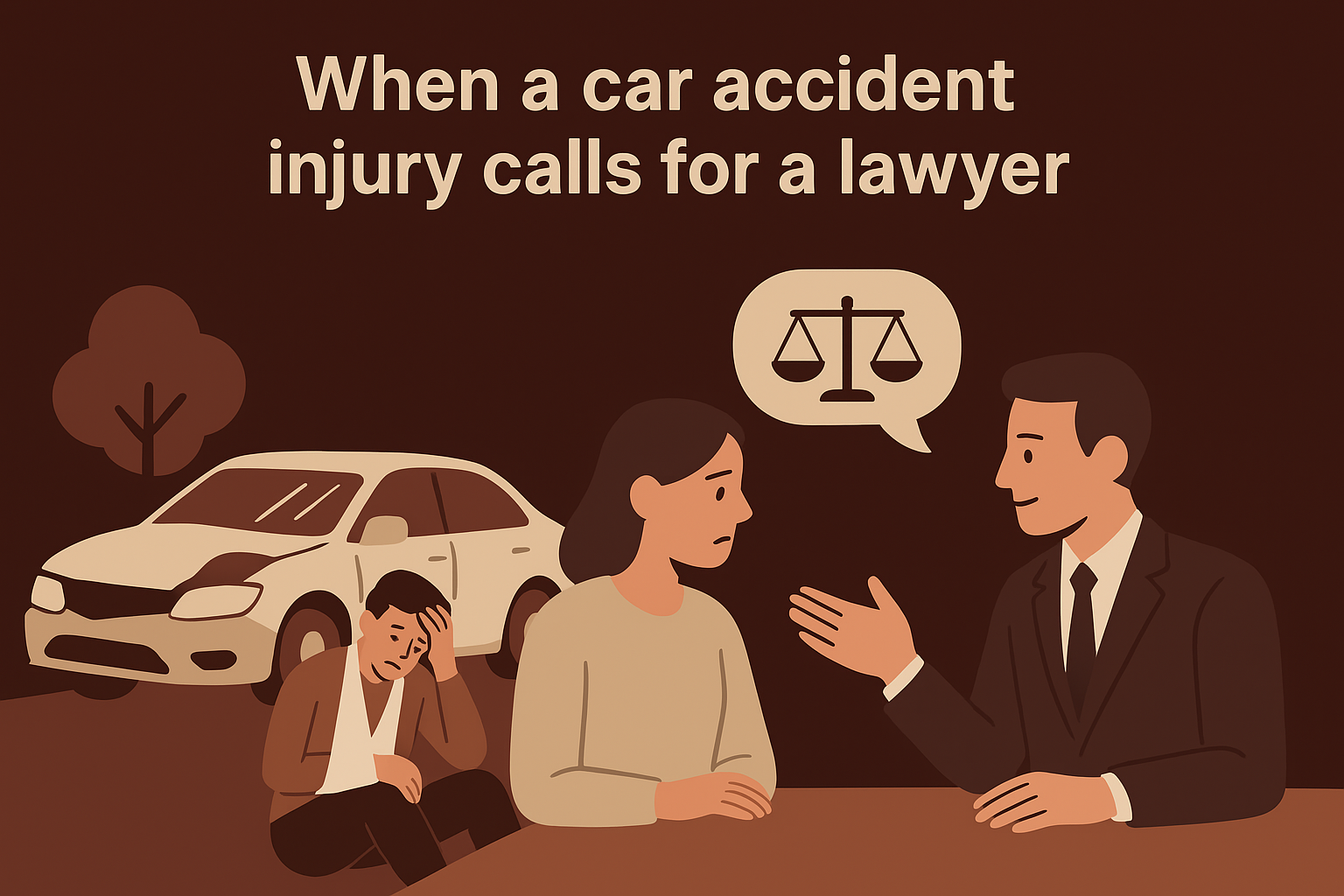
You need a lawyer when someone was hurt badly enough to need ongoing treatment or miss work, when fault is disputed, or when an insurer pushes a fast settlement. You can usually skip one when the crash caused only car damage and nobody was injured.
Situations that call for a lawyer
Call a lawyer when any of these apply:
- You went to the emergency room, or you are still in treatment after a few weeks.
- You missed work, or you cannot do your job the way you did before.
- The other driver or the insurer says you caused the crash.
- The crash involved several vehicles, a commercial truck, a delivery van, a rideshare car or a company vehicle.
- The other driver was uninsured, underinsured or drove off.
- The insurer denies your claim, stalls, or offers less than your medical bills.
- A city, county or state vehicle was involved.
- Someone died.
The common thread is money you cannot measure yet. Injuries that seem minor on day one often turn into months of treatment, and a settlement you sign early closes the claim for good. Many people ask whether they still need a lawyer when the crash clearly was not their fault. If you were hurt, yes. Clear fault gets you to the table, but it does not decide how much the insurer pays or whether it values your pain, future care and lost earnings fairly.
Being right about fault does not tell you what your injury claim is worth.
When you can probably handle it yourself
A property-damage-only claim is usually safe to handle alone. You document the damage, get repair estimates, and negotiate with the adjuster. A free consultation is still a cheap way to confirm that nothing is hiding behind the dents.
A minor injury is a gray zone. If you healed within days, your bills are small, fault is undisputed, and the offer covers every bill and every missed hour of work, you may settle on your own. If any one of those points is uncertain , spend thirty minutes with a lawyer before you sign a release.
Why deadlines and fault rules raise the stakes
State law sets two clocks and one scoreboard. The clocks are the filing deadline and the insurance limits. The scoreboard is how your own share of fault is counted. In most cases the law of the state where the crash happened controls, which matters if you live in Mississippi and crashed in Memphis.
| Rule | Mississippi | Tennessee |
|---|---|---|
| Deadline to file most injury lawsuits | 3 years | 1 year |
| Fault rule | Pure comparative fault: your recovery is reduced by your percentage of fault | Modified comparative fault: you recover nothing if you are 50% or more at fault |
| Minimum liability insurance | $25,000 per person, $50,000 per accident, $25,000 property | $25,000 per person, $50,000 per accident, $25,000 property |
Claims against a government body, such as a city bus or a county truck, follow shorter deadlines and special notice rules in both states, so raise that fact at once. Also note the minimums. A single hospital stay can exceed $25,000, which is why your own uninsured and underinsured motorist coverage often matters as much as the other driver's policy.
In Tennessee, one year is the filing deadline, so waiting to see how you feel can cost you the claim.
Step 1. Protect your claim before you call anyone
Protect your claim by getting medical care, documenting the crash, and saying very little to insurance adjusters. None of this costs money, and all of it shapes how a lawyer can value your case later.
Do these things in the first 48 hours
Work through this list as soon as you are safe:
- See a doctor or go to urgent care, even if you feel fine. Adrenaline hides pain, and a gap before your first visit lets an insurer argue that something else caused the injury.
- Get the police report number and the responding officer's name.
- Photograph the vehicles, the road, signs, skid marks and your visible injuries. Keep photographing bruises as they develop.
- Collect witness names and phone numbers, plus the other driver's insurance details.
- Start a symptom journal with pain levels, sleep problems, missed activities and missed workdays.
- Keep every bill, receipt and letter. Do not repair or scrap your car before it has been photographed and, if fault is disputed, inspected.
Follow your doctor's plan exactly. Skipped appointments hand the adjuster a reason to say you were not hurt as badly as you claim.
Medical records created in the first days are the strongest evidence your claim will ever have.
Handle the insurance calls carefully
Tell your own insurer about the crash promptly, since most policies require timely notice. Give the facts of what happened and leave out opinions about fault or injuries.
With the other driver's insurer, give only your name, the date and the location . Politely decline a recorded statement until you have spoken with a lawyer. Do not guess about your injuries, because "I'm fine" on day one gets quoted back to you in month three. Do not sign a broad medical authorization or a release, and do not cash a check marked as a final payment until you know what it settles.
Be careful online too. Adjusters search social media, and a photo from a cookout can be framed as proof you recovered. Set your accounts to private and pause posting about the crash, your health and your activities.
Step 2. Build a shortlist of local lawyers
Build a shortlist of three or four lawyers who handle car accident injuries as a core practice, are licensed in the state where the crash happened, and are within reach. Three or four is enough to compare, and few enough to interview in a week.
Where to look for candidates
Start with people. Friends and relatives who went through an injury claim can tell you how a lawyer communicated, which a website cannot. Lawyers you already know from a home purchase or a will can also point you to an injury specialist they respect.
Then add online sources. A search for a personal injury lawyer near you will show law firm sites and map listings. Directories can help, but many mark certain listings as sponsored, and paid placement is not a quality ranking . State bar referral services are another option, though they usually match you by practice area, not by skill.
Check local fit before you call
Local matters for practical reasons. A lawyer who works your area knows the courthouse, the judges, the regional adjusters and the treating providers. Many firms, Mayfield Law Firm among them, also welcome virtual meetings, so distance does not have to block a good fit.
Use this table to cut the list down:
| Check | What a good answer looks like |
|---|---|
| Licensed where the crash happened | Mississippi crash, licensed in Mississippi. Tennessee crash, licensed in Tennessee. |
| Practice focus | Car, truck and motorcycle injury cases are a regular part of the work |
| Office or virtual access | You can meet in person nearby or by video |
| Cross-border ability | Attorneys licensed in both states if you live in one and crashed in the other |
| Free consultation | Offered without obligation |
The cross-border row is easy to miss. A firm with offices in Tupelo, Southaven and Memphis and attorneys licensed in both Mississippi and Tennessee, as Mayfield Law Firm has, can follow a case across the state line without handing you off.
A lawyer who is licensed in the wrong state cannot file your lawsuit, so check this before anything else.
Step 3. Vet each lawyer's experience and credentials
Vet each lawyer by confirming a clean license, a real car accident caseload and a willingness to try cases. Websites make every firm sound the same, so you have to check the facts yourself.
Verify the license and discipline record
Look up each attorney on the state's official lookup. The Mississippi Bar and the Tennessee Board of Professional Responsibility both publish attorney information, including license status and public discipline. A lawyer who is not in good standing should come off your list immediately.
Do this before the consultation, not after. It takes five minutes and removes the worst risks before you share any details of your case.
Judge the experience that matters
Years in practice help, but the better questions are about this type of case. Ask what share of the caseload is car, truck and motorcycle injury work. Ask how many cases the lawyer has taken to a verdict, because insurers price claims partly on whether the lawyer will actually try them. A lawyer who always settles often gets lower offers.
Then ask about staffing. In a team-based firm, a paralegal may handle daily contact, which is fine when an attorney still makes the decisions. Ask who you will call, and how quickly calls are returned. Also ask whether the firm can pay for experts such as accident reconstructionists or treating-physician testimony if your case needs them.
Read reviews and badges with caution
Read reviews for patterns, not for star counts. Repeated comments about unreturned calls or surprise fees matter more than one angry post. Be skeptical of badges and "top lawyer" labels. Programs differ in how winners are chosen, so ask what the badge actually required.
The best proof of a lawyer's skill is a track record in cases like yours, including cases that went to court.
Step 4. Use the free consultation to test fit
Treat the free consultation as a two-way interview. You bring your documents and tell the whole story, and you ask questions that show how the lawyer would run your case. Mayfield Law Firm, for example, offers a free consultation in person or virtually, and a good consultation does not obligate you to hire anyone.
What to bring and what to tell
Bring what you have, even if it is incomplete:
- The police report or report number
- Photos and videos of the scene, vehicles and injuries
- Your insurance card and policy declarations page, which shows your uninsured and underinsured coverage
- Medical records, bills and appointment dates
- Pay stubs or a letter from your employer showing lost time
- Any letters, emails or voicemails from insurers
The most common question here is what not to tell your lawyer. The answer is that you should hold nothing back from your own lawyer . Conversations with your lawyer are confidential, and surprises hurt you. Mention if you were on your phone, if you were over the limit, if you had the same injury before, or if you skipped treatment for a month. The insurer will find those facts, and your lawyer needs to hear them first.
Questions to ask in the meeting
Ask these, and note how direct the answers are:
- How many car accident injury cases did you handle in the last year?
- Who will work on my case every day, and who makes the decisions?
- What is the biggest obstacle you see here: fault, damages or insurance limits?
- Which filing deadline applies to me, and what is the date?
- What is your fee, and are case expenses charged separately?
- How often will I get updates, and by what method?
- Do you take cases to trial when offers are too low?
- Roughly how long do cases like mine take?
Listen for honesty. A good lawyer names the weak spots in your case , and sometimes declines it or refers you elsewhere. Be wary of anyone who promises a result in the first meeting.
You are hiring someone to tell you hard truths, so choose the lawyer who gives you straight answers.
Step 5. Compare fees and what you keep
Car accident lawyers almost always work on contingency. You pay no attorney fee unless money is recovered, and the fee is a percentage of that recovery. Compare the percentage, the treatment of expenses, and what you actually take home.
How contingency fees work
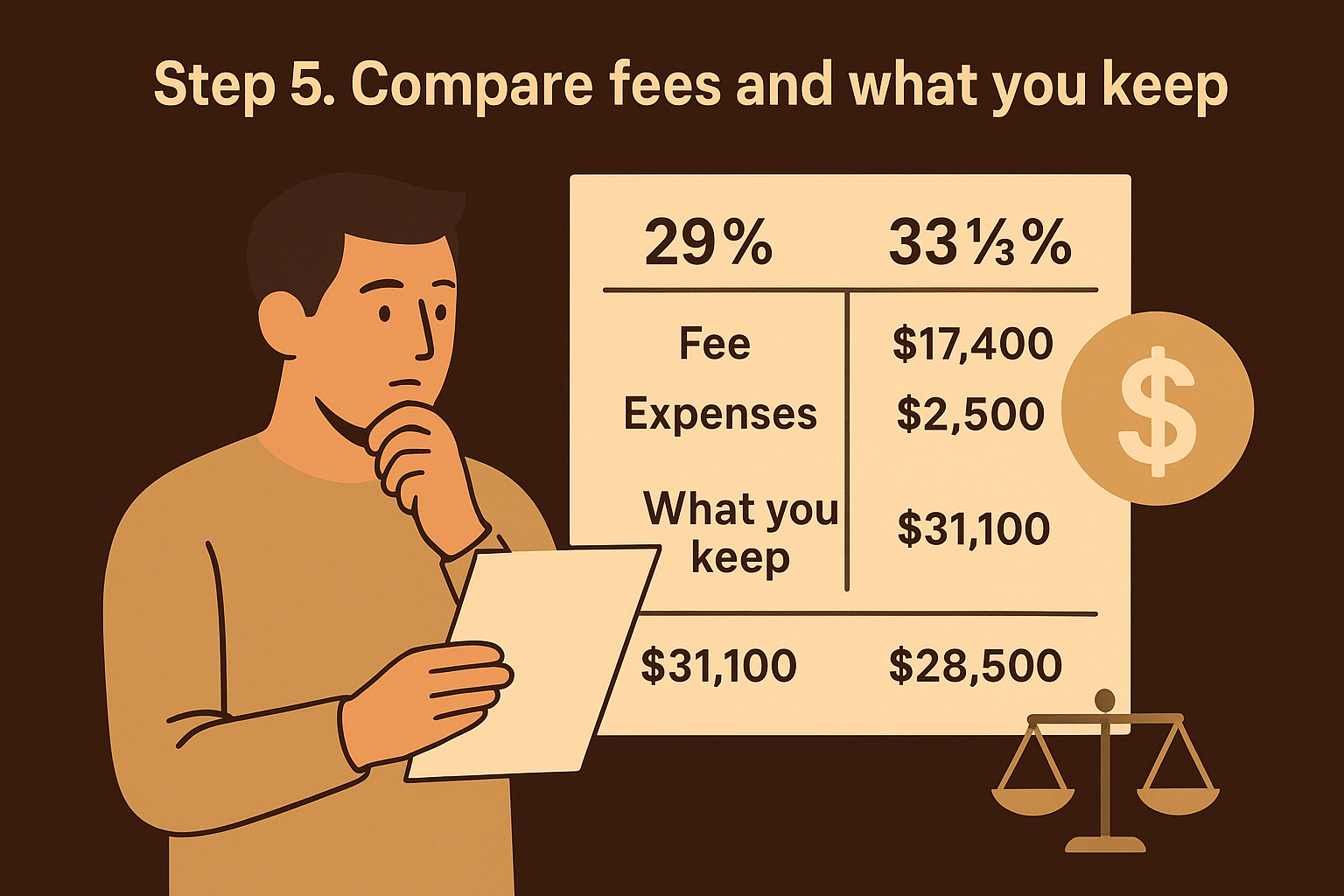
The percentage is set in a written agreement before work starts. A common arrangement is one third of the recovery, and some firms raise the percentage if a lawsuit is filed or the case goes to trial. Mayfield Law Firm handles car accident cases on a contingency basis and lists an attorney fee of 29% for cases that settle. Ask any firm, including that one, what percentage applies if your case goes beyond settlement .
Separate the fee from case expenses. Expenses are the costs of building the case, such as records, filing fees, expert reports and depositions. Ask whether expenses come out before or after the fee is calculated, and whether you owe them if there is no recovery.
A worked example
Say your claim settles for $60,000. Assume $2,500 in case expenses and $9,000 owed to a health insurer and a hospital. The table compares a 29% fee with a one-third fee, with the percentage taken on the full settlement. Expenses and liens here are illustrative.
| Line | 29% fee | 33⅓% fee |
|---|---|---|
| Settlement | $60,000 | $60,000 |
| Attorney fee | $17,400 | $20,000 |
| Case expenses | $2,500 | $2,500 |
| Medical liens and reimbursements | $9,000 | $9,000 |
| You receive | $31,100 | $28,500 |
The 4.33-point gap here is worth $2,600. A lower fee is not automatically better, though. A lawyer who builds a stronger case can win a higher settlement, so compare skill and fee together.
Ask about liens
Many settlements carry repayment claims. Health insurers, hospitals, and programs like Medicare or Medicaid may be owed money from what you recover. A good lawyer identifies these early and negotiates them down where the rules allow. Ask whether that work is included in the fee, and have the lawyer explain a full settlement breakdown before you approve any offer.
Compare what you keep after fees, expenses and liens, not the headline percentage alone.
Step 6. Sign on and manage your case
Sign only after you have read the written fee agreement and had your questions answered. After that, your lawyer runs the legal work while you focus on treatment, records and staying quiet with the insurer.
What happens after you hire
Most car accident claims move through the same stages:
- Investigation. Your lawyer gathers the police report, photos and witness accounts, and sends preservation requests for evidence such as truck data or video.
- Treatment. You treat until your doctor says you have healed or reached a stable point. Settling before then risks undercounting future care.
- Demand. Your lawyer sends the insurer a package of records, bills and wage proof with a settlement demand.
- Negotiation. Offers and counteroffers follow. Most claims settle at this stage.
- Lawsuit. If the insurer will not pay fairly, your lawyer files suit before the deadline.
- Discovery, mediation and trial. Both sides exchange evidence, try to settle with a mediator, and go to trial only if needed.
Timing varies. Many claims resolve within months after treatment ends, and lawsuits usually take longer. A lawyer who promises a date is guessing.
Your role, and how to judge an offer
Your job is simple. Keep your appointments, keep your journal, tell your lawyer about new symptoms or new bills, and send all insurer contacts to your lawyer.
There is no reliable average settlement, because the number depends on injuries, bills, lost income, insurance limits and fault. Think of it in two parts. Economic losses are measurable, such as $20,000 in medical bills plus $6,000 in lost wages for $26,000. Non-economic losses such as pain and lost enjoyment of life have no formula, and rules of thumb about multipliers are unreliable.
Whether a claim is hard to win depends on three things: how clear the fault is, how well the injuries are documented, and how much coverage exists. A lawsuit is worth considering when the insurer's offer falls short of your bills, lost income and future care. Filing also keeps your claim alive past the deadline, and the credible threat of trial often moves the offer .
A fair offer covers your past losses, your future care and your pain, after liens, and not only the bills you have today.
Red flags that should end the search
Walk away from any lawyer whose pitch or paperwork makes you uneasy. These warning signs are easy to spot once you know them.
Warning signs in the pitch
- Guaranteed results. No honest lawyer can promise a dollar amount or a win.
- Pressure to sign on the spot. A good firm lets you take the agreement home.
- Unsolicited contact right after the crash. A lawyer or "case manager" who finds you first, rather than the reverse, deserves extra scrutiny.
- No clear answer on who handles the file. You should know your attorney's name and your day-to-day contact.
Warning signs in the paperwork and communication
- No written fee agreement, or one you are not allowed to take home and read.
- Upfront fees or retainers for a car accident injury claim, which is normally handled on contingency.
- Vague answers about expenses and liens. If they cannot explain it now, the settlement statement will surprise you later.
- Slow replies before you have even hired them. Response times rarely improve after you sign.
Trust your instincts on all of these. If a lawyer's answers feel evasive in the consultation, the rest of the case will feel the same .
Next steps after your search
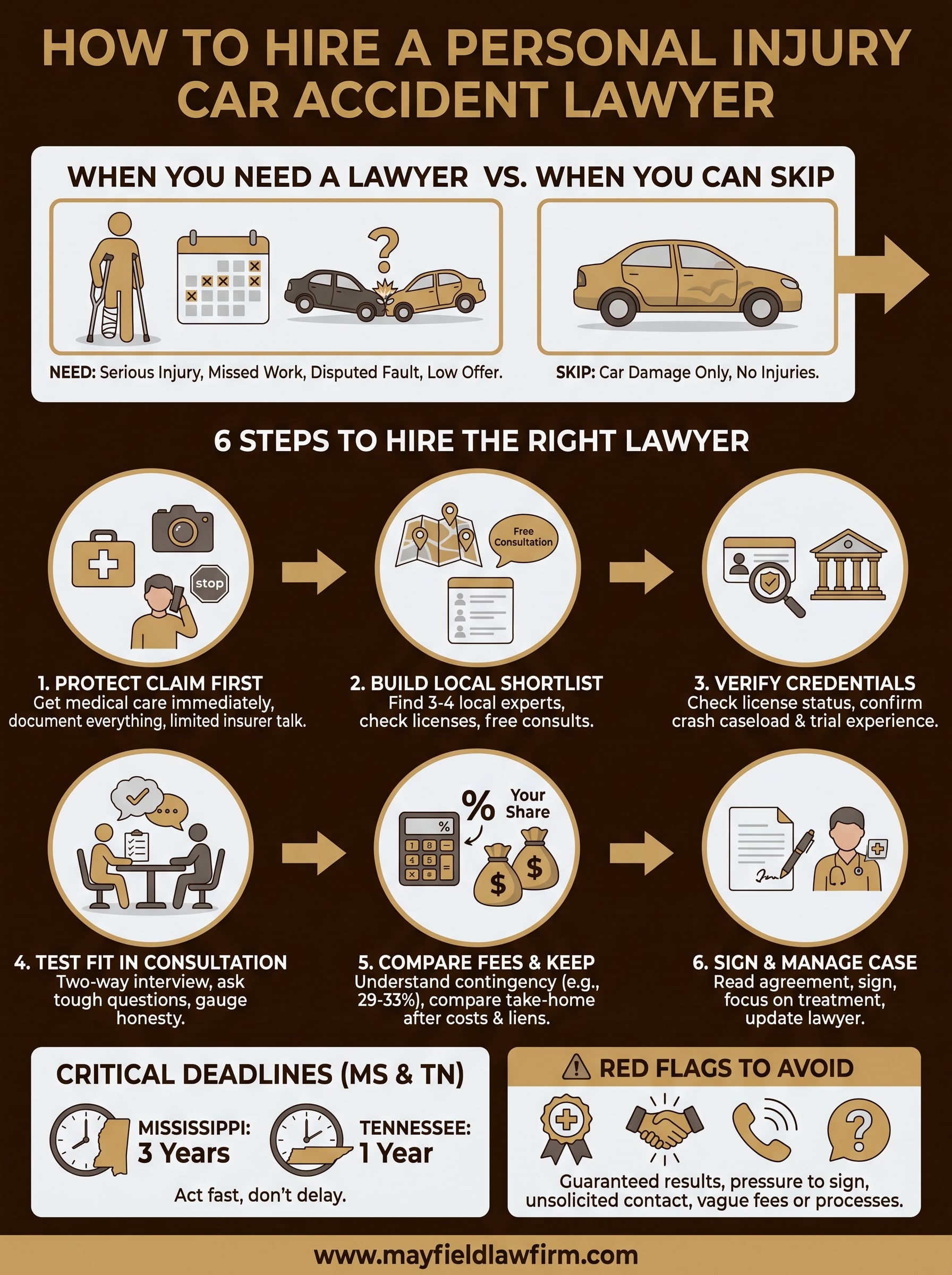
Hiring well comes down to six steps. Protect your claim, build a local shortlist, verify credentials, use the free consultation, compare what you actually keep, and read the agreement before you sign. Deadlines of one year in Tennessee and three years in Mississippi will not wait for you to feel ready, and early evidence is stronger than late evidence.
If you were hurt in a crash in Northeast Mississippi or the Memphis area, talk with Mayfield Law Firm about your car accident claim. The consultation is free.