How to Hire a Personal Injury Lawyer You Can Trust
You got hurt because someone else made a mistake, and now you're stuck deciding who should handle your claim. Searching for a personal lawyer injury case can feel overwhelming when every firm's website promises the same things: aggressive representation, millions recovered, free consultations. But not every lawyer who takes your case will actually fight for it, and picking the wrong one can cost you thousands in a lowball settlement.
This article gives you a straightforward way to separate the lawyers worth hiring from the ones chasing a quick payout. You'll learn exactly what to ask during a free consultation , which red flags mean you should walk away, and how to judge experience beyond a flashy billboard or TV ad.
We put this list together based on what actually matters when a case goes to negotiation or trial, not just marketing claims. Whether you're dealing with a car accident, a workplace injury, or a wrongful death claim, you'll come away knowing how to spot a trustworthy attorney who has handled cases like yours before and has the track record to prove it.
1. Look for proven experience in personal injury law
Experience in personal injury law isn't the same as experience practicing law in general, and the qualities that make the best personal injury lawyer go well beyond a long bar record. A lawyer who spends most of their time on divorces or wills won't know how to value a herniated disc or negotiate with an insurance adjuster who's trying to close your file cheap. When you're vetting a personal lawyer injury case requires, dig into their actual case history, not just the number of years since they passed the bar exam.
What to look for
Check how many cases similar to yours the attorney has handled, whether they've taken cases to trial (not just settled everything on the courthouse steps), and what kind of results they've gotten. Mayfield Law Firm has built its practice around this kind of depth, with over 40 years handling auto accidents, workplace injuries, wrongful death, and medical malpractice claims across Northeast Mississippi and South Memphis. Look at whether the firm's attorneys have courtroom experience, since insurance companies negotiate differently with lawyers they know will actually go to trial.
Why it matters
Insurance adjusters research the lawyers on the other side before they make an offer. If your attorney has a reputation for settling quickly regardless of value, you'll get a lowball number. If they know your lawyer has tried cases in front of a jury and won, they negotiate in good faith from the start.
A lawyer's willingness to go to trial, not just their years in practice, is what actually drives a fair settlement offer.
Experienced firms also spot damages that newer attorneys miss, like future medical costs or lost earning capacity, which can significantly increase what you recover.
Questions to ask
During your first call or consultation, ask direct questions that reveal real experience rather than marketing language, and review the full list of things to ask before hiring an injury lawyer ahead of time:
- How many personal injury cases like mine have you handled in the past year?
- What percentage of your cases go to trial versus settle?
- Can you share an example of a similar case and its outcome?
- Who on your team will actually work on my file day to day?
Their answers should be specific. Vague responses about "years of combined experience" without concrete numbers or case types are a sign to keep looking.
2. Confirm a contingency fee arrangement
Most personal injury lawyers work on contingency, meaning you pay nothing upfront and nothing at all unless they win your case. But the details of that arrangement vary more than most clients realize, and a personal lawyer injury clients trust should explain those details before you sign anything.
What to look for
Get the fee percentage in writing before you agree to representation, and know how contingency fee percentages and case costs shape your final recovery. Ask whether the percentage changes if your case settles early versus going to trial, since some firms charge more once a lawsuit is filed. Find out who covers costs like expert witnesses, medical record requests, and court filing fees, and whether those costs come out of your settlement even if you lose.
Why it matters
A contingency fee structure , sometimes called a no win, no fee agreement, protects you from paying legal bills while you're already dealing with medical expenses and lost wages. It also aligns your lawyer's interests with yours, since they only get paid when you do.
If your lawyer doesn't win, you shouldn't owe a dime, and any firm that suggests otherwise deserves a second look.
Understanding the fee arrangement upfront prevents ugly surprises when your settlement check finally arrives.
Questions to ask
- What percentage do you take if my case settles versus goes to trial?
- Am I responsible for case expenses if we don't win?
- Will I see an itemized breakdown of fees and costs before the settlement is finalized?
3. Ask how your case will be handled and communicated
One of the biggest frustrations clients report isn't losing a case, it's never knowing what's happening with it. A personal lawyer injury victims can count on should set clear expectations about who handles the file and how often you'll hear from them, before you ever sign a retainer agreement.
What to look for
Find out whether a paralegal or case manager handles your day-to-day questions, or if the attorney you met at the consultation stays involved throughout, and get clear on the daily duties a personal injury lawyer handles on your behalf. Mayfield Law Firm structures its case management approach so a dedicated team tracks your claim from the initial consultation through settlement negotiations, trials, and appeals, so nothing slips through the cracks while medical treatment and documentation pile up.
Why it matters
Gaps in communication often mean deadlines get missed or evidence gets collected too late to matter. Clients who feel ignored also tend to accept lower settlements just to end the frustration.
A firm that goes silent for weeks at a time isn't protecting your interests, it's neglecting them.
Regular updates also let you make informed decisions about settlement offers instead of guessing at your case's actual value.
Questions to ask
- How often will I get updates on my case status?
- Who do I contact with questions, and how fast do they respond?
- Will you tell me before accepting or rejecting a settlement offer on my behalf?
4. Take advantage of a free consultation
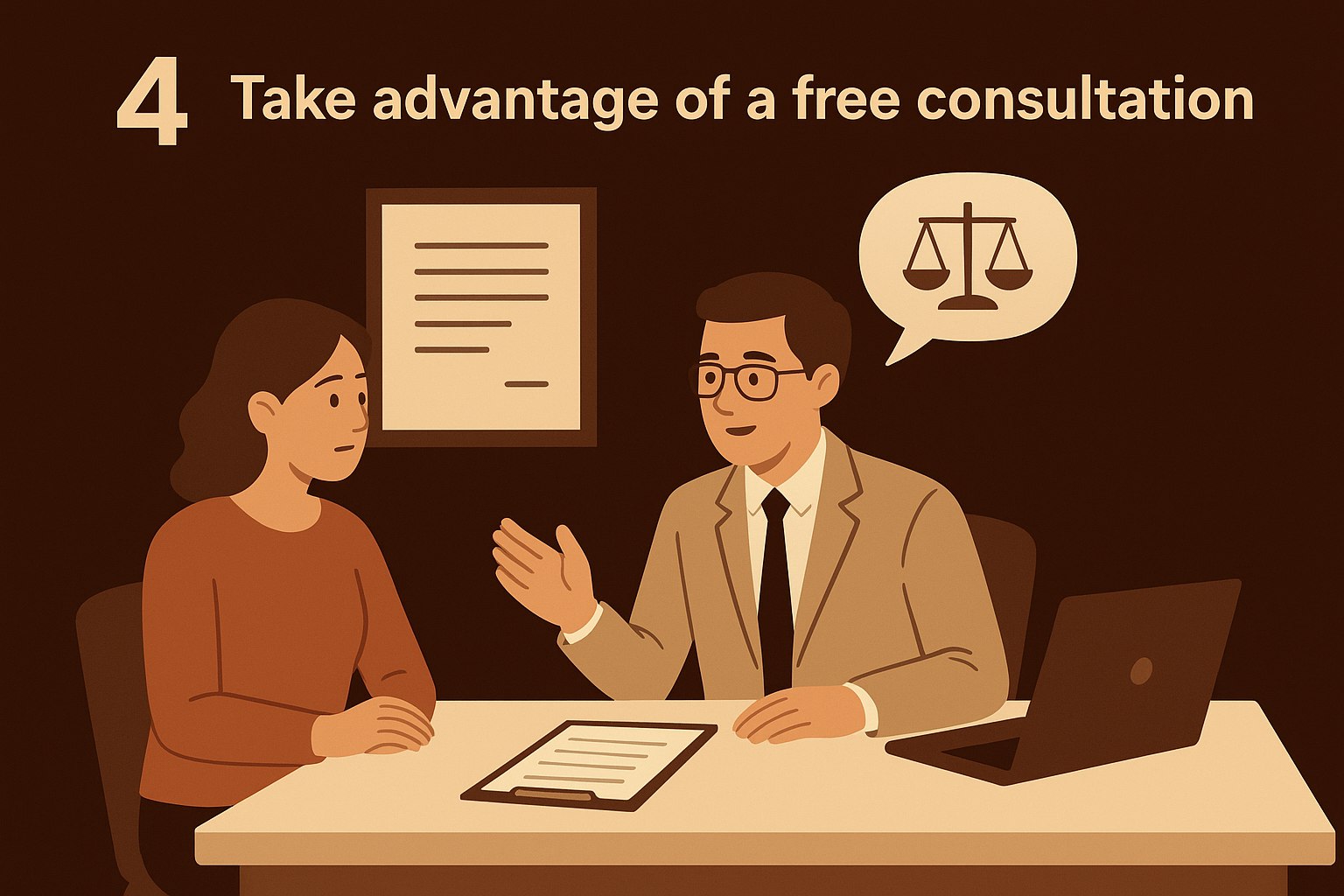
A free consultation is your chance to interview the firm before they interview you, so it helps to know what happens at a personal injury attorney's free consultation before you walk in. Treat it as a working meeting, not a formality, and bring your accident report, medical records, and any insurance correspondence so the attorney can give you real feedback instead of generic reassurance. Any personal lawyer injury claimants consider hiring should offer this meeting without pressure to sign anything on the spot.
What to look for
Pay attention to whether the attorney actually reviews your documents during the call or just recites a sales pitch. Mayfield Law Firm offers a free consultation where you speak directly about your accident, your injuries, and what recovery might realistically look like, not a rushed intake form handed off to a stranger.
Why it matters
Consultations reveal how a firm treats prospective clients before money changes hands. Firms that rush you through the meeting or dodge specifics about your case often treat active clients the same way once the retainer is signed.
How a firm treats you during the free consultation is usually how they'll treat you for the rest of your case.
Comparing more than one initial consultation also gives you leverage to spot inflated promises.
Questions to ask
- What do you think my case is realistically worth?
- What documents or evidence should I gather next?
- Is there any cost or obligation tied to this consultation?
5. Choose a lawyer with local, accessible offices
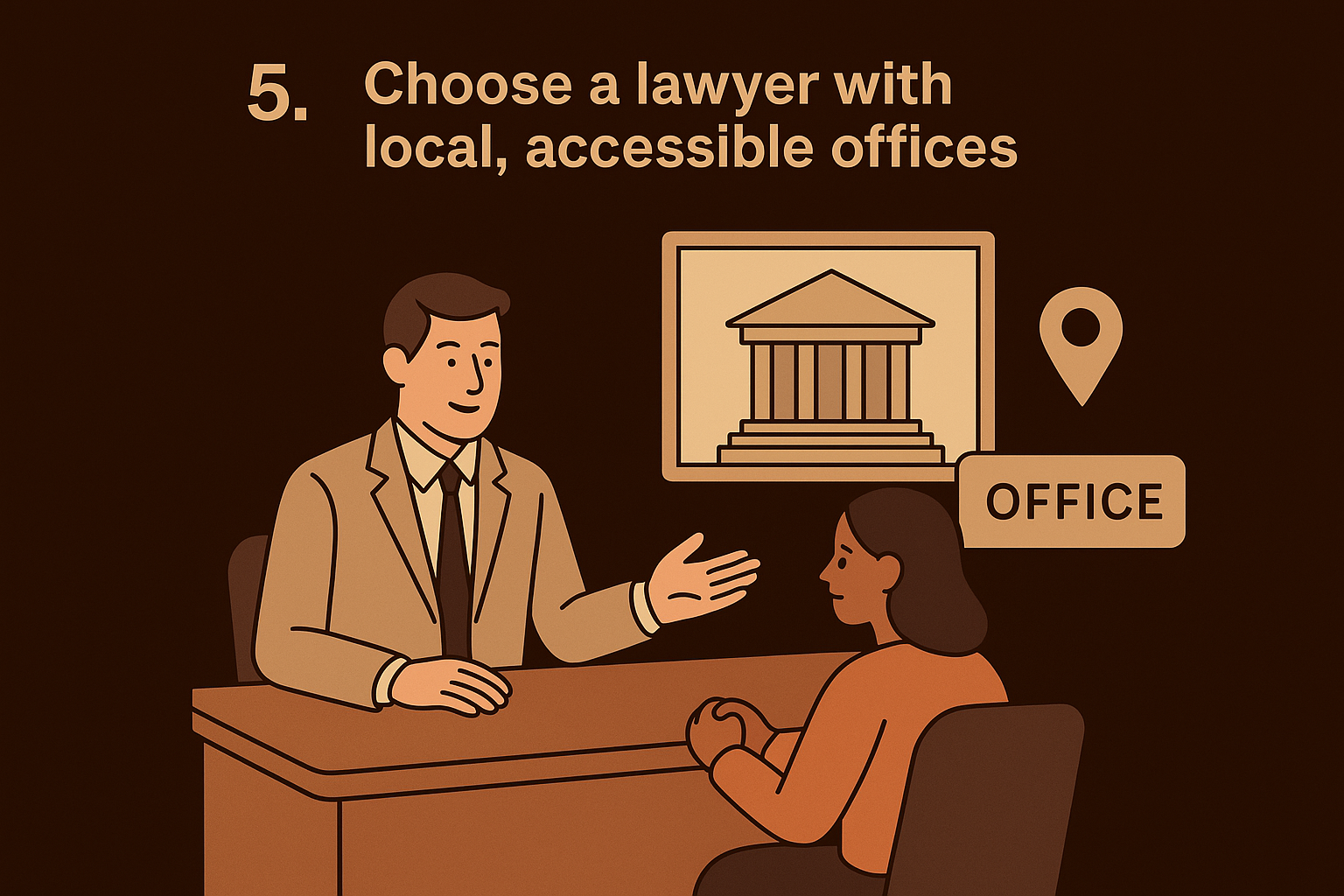
A lawyer who knows your local courts, judges, and insurance adjusters has an edge over an out-of-state firm running ads in your area, which is why finding the best injury lawyer near you usually beats hiring the biggest name on TV. Choosing a personal lawyer injury clients can actually meet face to face matters more than most people realize, especially once your case moves toward depositions or trial dates that require you to show up in person.
What to look for
Check whether the firm has a physical office near you, not just a call center with a local phone number. Mayfield Law Firm keeps offices in Tupelo, Southaven, and Memphis specifically so clients across Northeast Mississippi and South Memphis can walk in for a meeting instead of dealing with a distant call center. Ask how far you'd need to travel if your case requires an in-person meeting or a court appearance.
Why it matters
Local counsel understands regional jury tendencies, local insurance practices, and which judges expect what kind of documentation. That familiarity often speeds up negotiations and prevents procedural mistakes that delay your settlement.
A lawyer who knows your local courthouse can move your case faster than one learning the terrain as they go.
Accessibility also means you can drop off documents or ask questions in person when something can't wait for email.
Questions to ask
- Where is your nearest office, and can I meet there in person?
- Have you handled cases in the county where mine was filed?
- Will someone local be available if I need to appear in court?
6. Check reputation, reviews, and peer recognition
Anyone can post a five-star review, but a pattern of honest feedback across multiple platforms tells you something a website never will. Before you hire a personal lawyer injury case demands real trust for, look past the testimonials on the firm's homepage and search independently for what past clients actually experienced.
What to look for
Search Google reviews, state bar records, and local news mentions for the attorney's name, and learn the best sites for personal injury lawyer reviews along with the red flags that give fake ratings away. Watch for consistent client feedback about communication, honesty about case value, and follow-through on promises, not just praise for winning big. Peer recognition matters too. Awards from state bar associations or invitations to speak at legal conferences suggest other attorneys respect the lawyer's courtroom skill, not just their marketing budget.
Why it matters
Reviews reveal patterns that a single consultation can't. A firm with dozens of complaints about unreturned calls or surprise fees will likely treat you the same way once you're a client, no matter how polished the sales pitch sounded.
A lawyer's reputation among past clients tells you more than any billboard ever will.
Genuine peer recognition from bar associations also signals that other attorneys, including the insurance company's own lawyers, take this firm seriously at the negotiating table.
Questions to ask
- Can you provide references from past clients with cases similar to mine?
- Are you in good standing with the state bar, with no disciplinary history?
- Have you received any peer awards or recognition in personal injury law?
7. Understand the full legal process from claim to settlement
Getting hurt is confusing enough without wondering what actually happens after you sign a retainer. A personal lawyer injury case moves through distinct stages, from investigation and demand letters to negotiation and, if necessary, a lawsuit, and you deserve a clear map of that timeline before you commit.
What to look for
Ask the firm to walk you through every stage of the personal injury lawsuit process in plain language: evidence gathering, medical record review, the demand letter, negotiation with the insurance company, and what triggers a lawsuit if talks stall. Mayfield Law Firm manages cases through this entire arc, from the initial consultation through settlement negotiations, trials, and appeals, so clients always know which stage they're in and what comes next.
Why it matters
Understanding the settlement process helps you recognize when an insurer's early offer is a lowball tactic rather than a fair number. Clients who don't know the stages often accept quick money out of fear the case is stalling, when in reality patience usually pays more.
Knowing the stages of your case keeps you from settling out of fear instead of facts.
A lawyer who explains the roadmap upfront also builds the kind of trust that keeps you calm during the inevitable slow periods.
Questions to ask
- What are the typical stages of a case like mine, start to finish?
- How long does each stage usually take, and what factors decide how long a personal injury case takes?
- What would push my case toward a lawsuit instead of a settlement?
Making the right choice for your case
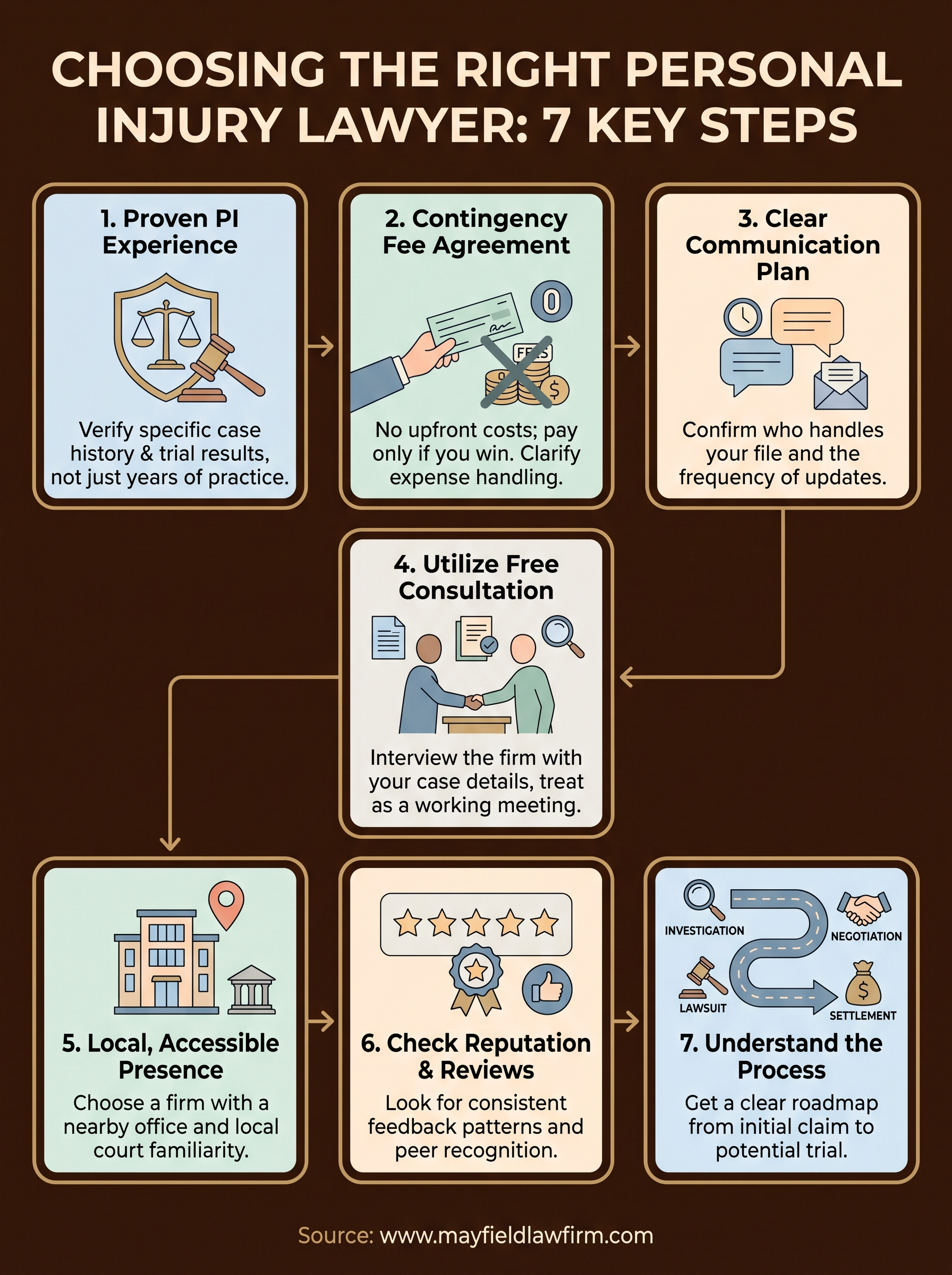
Hiring the right attorney comes down to checking real evidence, not sales pitches. Proven trial experience, a clear contingency fee, honest communication, local offices, and a solid reputation all point to a firm that will fight for a fair outcome instead of a quick close. Skip any of these checks and you risk settling for less than your injuries actually cost you.
Going through this list takes an hour or two, but it protects a settlement that could affect years of your life. Trust the process you just read, ask the hard questions, and don't sign with the first firm that calls you back.
Mayfield Law Firm has spent over 40 years handling cases like yours at its law offices in Tupelo, Southaven, and Memphis, with attorneys who show up in court and communicate along the way. If you're ready to talk through what happened and what your case might be worth, schedule your free consultation with Mayfield Law Firm today.