Auto Accident Injury Lawyer: What They Do and When to Hire One
You got hit by another driver, and now you're dealing with medical bills, a totaled car, and an insurance adjuster who keeps calling. That's usually the moment people start searching for an auto accident lawyer injury claim requires, wondering if it's actually worth hiring one or if you can just handle the insurance company yourself.
Here's the short answer: an auto accident injury lawyer investigates your crash, deals with insurance adjusters on your behalf, and fights to get you compensation for medical bills, lost wages, and pain and suffering. You need one when injuries are serious, fault is disputed, or the insurance company's offer doesn't come close to covering what you've actually lost.
This article breaks down exactly what these lawyers do day to day, the signs that tell you it's time to call one instead of negotiating alone, and how the process typically unfolds from that first call through settlement or trial. Mayfield Law Firm has handled these cases across Northeast Mississippi and South Memphis for over 40 years, so we'll walk through what actually matters when you're deciding on representation.
Why hiring an auto accident injury lawyer matters
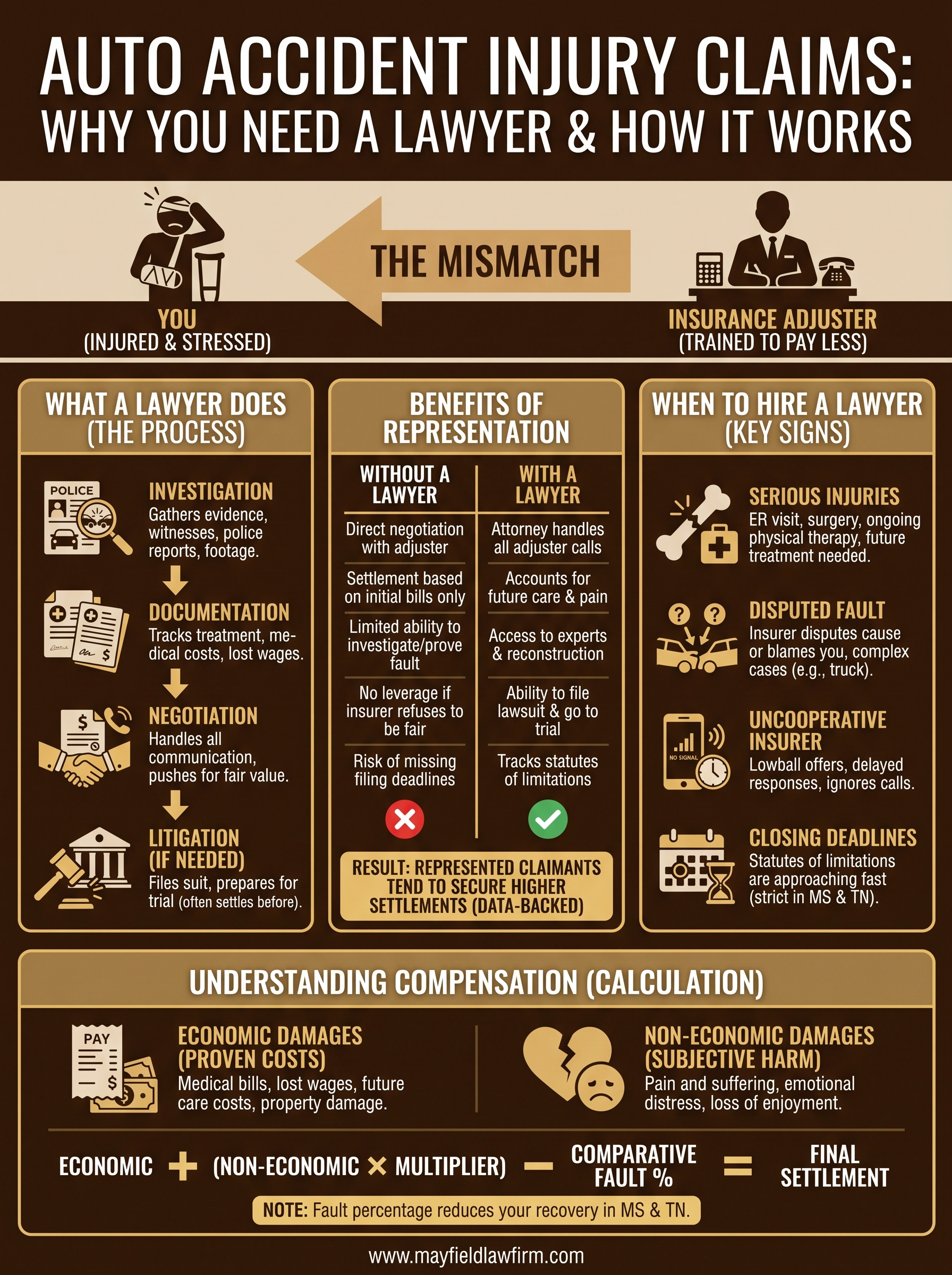
Most people don't realize how much they're up against until they're already deep into a claim. Insurance companies employ trained adjusters whose job is to close claims for as little money as possible, and they do it professionally, every single day. You're doing it once, injured, stressed, and probably still missing work. That mismatch is exactly why an auto accident lawyer injury case usually turns out better with a personal injury auto accident lawyer than without one.
Insurance adjusters work for the insurance company, not you
Adjusters are polite. They'll call to check on you, ask how you're feeling, and offer a quick settlement "to help you move on." What they won't tell you is that early offers almost always come in before you know the full extent of your injuries or the total cost of your care. Once you sign a release, that's it, you can't come back later if your injury turns out worse than expected. A lawyer knows this pattern because they see it in nearly every case, and they know how to slow the process down until your damages are fully documented instead of guessed at.
An insurance adjuster's first offer is designed to close the file cheaply, not to make you whole.
The data backs up hiring representation
This isn't just a sales pitch lawyers make. Independent research on claims outcomes has consistently found that people who hire attorneys after an accident recover more money on average than those who negotiate on their own, even after accounting for legal fees. The Insurance Information Institute has published research on claims behavior showing represented claimants tend to secure higher settlements because they have someone documenting damages, pushing back on lowball offers, and, when needed, filing suit.
Here's a simple breakdown of what changes when you bring in legal representation:
| Without a Lawyer | With a Lawyer |
|---|---|
| You negotiate directly with a trained adjuster | An attorney handles all adjuster communication |
| Settlement often based on initial medical bills only | Settlement accounts for future care, lost earning capacity, and pain and suffering |
| Limited ability to investigate fault or gather evidence | Access to accident reconstruction, witness follow-up, and records requests |
| No leverage if the insurer refuses to negotiate fairly | Ability to file a lawsuit and go to trial if necessary |
| Risk of missing filing deadlines | Attorney tracks statutes of limitations and procedural rules |
What a lawyer catches that you might miss
Beyond the negotiation itself, a lawyer's real value shows up in the details you'd never think to check. Fault in a crash isn't always obvious, especially in multi-car pileups or when a commercial truck is involved. Comparative negligence rules in Mississippi and Tennessee can reduce your recovery if you're found partially at fault, so how the accident gets framed matters enormously. Someone who handles these cases regularly knows how to gather police reports, pull traffic camera footage, and line up medical experts who can connect your injuries directly to the crash, not to some pre-existing condition the insurer will try to blame instead.
There's also the paperwork most people underestimate. Between property damage claims, health insurance liens, and correspondence with multiple insurers if more than one policy is in play, the administrative load on a serious injury case adds up fast. Handling that alone while you're recovering physically is a lot to ask of anyone. Mayfield Law Firm's personal injury attorneys take that load off your plate from the first phone call, which is often the biggest relief clients mention once they've signed on. When your case involves serious injuries, disputed fault, or an insurance company that's stalling, that kind of support isn't optional, it's the difference between a fair outcome and a settlement that leaves you covering costs the crash caused in the first place.
How to know when it's time to hire a lawyer
Not every fender bender needs an attorney. If you walked away without injuries and the other driver's insurance company already accepted fault and paid for your repairs, you probably don't need to call anyone. But most accidents aren't that clean , and the moment things get complicated is exactly when you need someone who handles this for a living. The question isn't whether you got hurt at all, it's whether the situation has moved past what you can safely manage on your own.
Your injuries are more than a scrape
Any time you're dealing with more than a minor bruise, you should at least talk to a car accident injury attorney before signing anything from the insurer, and there are key signs that tell you it's time. Watch for these signals:
- You needed an ER visit, surgery, or ongoing physical therapy
- A doctor mentions you might need future treatment or a specialist referral
- You've missed work, or you're not sure when you'll be able to return
- Your pain hasn't improved weeks after the crash
- You were diagnosed with a soft tissue injury, which insurers routinely undervalue
If your injury involves ongoing treatment, missed work, or a doctor who isn't sure when you'll fully recover, that's your cue to call a lawyer before you talk to the adjuster again.
The insurance company isn't cooperating
Sometimes the injury itself is straightforward, but the claims process turns into a fight. That's one of the times bringing in representation is clearly worth it. Trouble usually shows up as one of the following:
- The adjuster disputes who caused the accident, even when it seems obvious
- You're offered a settlement that doesn't cover your medical bills, let alone lost wages
- The insurer stops returning calls or keeps delaying a decision
- Multiple vehicles or drivers were involved, and liability is split across policies
- A commercial truck, rideshare vehicle, or government-owned car was involved, since these often have layered insurance coverage and separate legal rules
When you see two or more of these patterns together, that combination is a strong argument for hiring counsel rather than continuing to negotiate solo, because the longer you wait, the more evidence and leverage you tend to lose.
Deadlines are closing in
Understand that Mississippi and Tennessee both impose strict injury claim filing deadlines, and missing that window can end your case regardless of how strong it was. If it's already been several months since your accident and you haven't resolved anything with the insurer, don't wait for a clearer sign. A quick, free consultation with a lawyer costs you nothing and tells you exactly where you stand, whether that means moving forward with a claim or confirming you're already handling things correctly on your own.
What happens after you hire an accident lawyer
Once you sign a representation agreement, the entire dynamic of your claim shifts. Adjusters who ignored your calls suddenly return them the same day, because they know they're now dealing with someone who understands the process. A personal injury attorney takes over communication immediately, which means you stop fielding calls asking you to give a recorded statement or sign paperwork you don't fully understand.
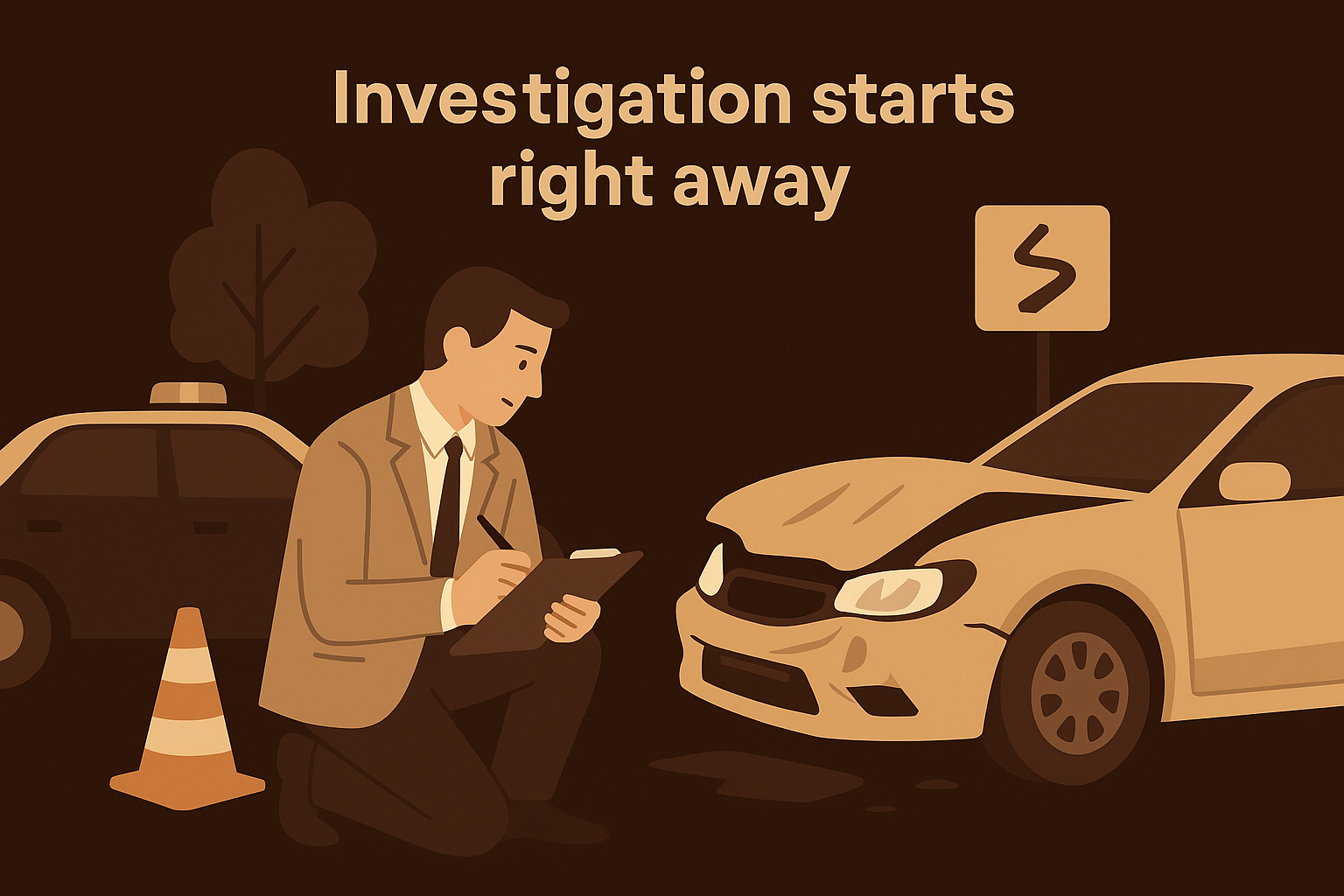
Investigation starts right away
First, your legal team pulls the police report, photographs the scene if it hasn't already been cleared, and requests any available traffic or dashcam footage before it gets deleted. Insurance companies and businesses often only keep video for a matter of weeks, so timing matters here. Your attorney also sends preservation letters to anyone who might have relevant evidence, locks down witness statements while memories are still fresh, and starts building the file that will eventually support your demand.
Your medical treatment gets documented, not guessed at
Next, your lawyer works with you and your providers to make sure your treatment is properly recorded, because gaps in care are one of the first things insurers exploit to argue your injury wasn't serious. This doesn't mean the lawyer tells you how to be treated, but it does mean someone is tracking your records, bills, and any work restrictions so nothing falls through the cracks when it's time to calculate damages.
A well-documented case rarely comes down to a guessing game about what your injury was worth.
The demand and negotiation phase
Once you've reached maximum medical improvement or your treatment plan is clear, your attorney compiles a demand package covering medical costs, lost wages, and pain and suffering, then sends it to the insurer. From there, negotiation typically follows a settlement timeline that looks like this:
- The insurer responds with a counteroffer, usually well below the demand
- Your attorney pushes back with supporting documentation and case law where relevant
- Several rounds of counteroffers follow, often over a few weeks
- A fair settlement is reached, or negotiations stall and litigation becomes the next step
If a lawsuit becomes necessary
Finally, if the insurer refuses to negotiate in good faith, your attorney files suit before the statute of limitations runs out. Filing a lawsuit and moving through the court process doesn't necessarily mean a trial. Most cases still settle during the discovery process, once the other side sees depositions, expert reports, and evidence lined up against them. Mayfield Law Firm's auto accident attorneys prepare every case as though it's headed to trial, because insurers negotiate more seriously with a firm that's genuinely ready to go the distance rather than one looking for a quick payout.
How compensation is calculated in injury claims
Every accident claim boils down to a dollar figure that's supposed to represent what the crash cost you, but figuring out that number involves more than adding up medical bills. Insurance adjusters and attorneys both work from two broad categories of damages: economic losses you can document with receipts, and non-economic losses that compensate for harm that doesn't come with a price tag attached. Understanding how each gets calculated helps you spot a lowball offer before you accidentally accept one.
Economic damages: the costs you can prove
Documentation drives this category, since every dollar claimed needs a receipt, bill, or pay stub behind it. This typically includes:
- Emergency room and hospital bills
- Ongoing treatment, physical therapy, and prescription costs
- Future medical care your doctor expects you'll need
- Lost wages from missed work
- Reduced earning capacity if your injury affects your ability to work long-term
- Property damage to your vehicle
Non-economic damages: harder to price, just as real
Assigning value here requires more judgment, since pain and suffering, emotional distress, and loss of enjoyment of life don't come with invoices attached. Insurers often use the multiplier method for valuing pain and suffering, taking your total economic damages and multiplying them by a number, usually between 1.5 and 5, based on the severity of your injury. A broken arm that heals in eight weeks lands on the low end. A permanent injury that changes how you live lands much higher. This is one area where having a personal injury attorney on your side matters, because insurers routinely lowball this multiplier when no one is pushing back on it.

The size of your settlement often comes down to how well your pain and suffering gets documented, not just how much it actually hurt.
Comparative fault reduces what you collect
Fault percentages change the final number even when your damages are otherwise clear. Mississippi and Tennessee both follow modified comparative negligence rules, meaning your compensation gets reduced by your percentage of fault, and in Memphis car crash claims you're barred from recovering anything if you're found 50% or more at fault. Suppose a jury or adjuster decides you were 20% responsible for a $100,000 claim, you'd walk away with $80,000 instead. This is exactly why insurers push hard to shift blame onto you, even in cases where fault seems obvious from the outset, and it's why having a car accident injury attorney contest that percentage matters as much as proving the damages themselves.
What to look for when choosing the right attorney
Choosing counsel matters just as much as deciding to hire one at all. Not every auto accident lawyer injury case gets the same result, and the difference often comes down to experience, resources, and how much personal attention your file actually gets versus being passed off to a paralegal you never speak to. Before you sign a retainer agreement, ask a few pointed questions that reveal whether a firm is set up to fight for you or just process your case.
Track record with cases like yours
Experience in the specific type of crash you had counts for more than a general personal injury background. A firm that regularly handles truck accidents, motorcycle cases, or multi-vehicle pileups understands the layered insurance policies and liability disputes those cases bring, while a firm that mostly does slip-and-falls may not. Ask directly how many similar cases the attorney has settled or tried, and check licensing and settlement history to see what kind of outcomes clients typically get.
An attorney's experience with your exact type of crash matters more than years in practice alone.
Fee structure and upfront costs
Most reputable personal injury firms, including Mayfield Law Firm, work on contingency fees , meaning you pay nothing upfront and the attorney only gets paid if you recover compensation. Confirm how the fee percentage and case costs come out of your recovery before signing, and ask what happens to expenses like expert witness fees if you don't win. A free consultation should also be genuinely free, with no obligation attached, so use that meeting to gauge how clearly the attorney explains your options.
Local knowledge and courtroom readiness
Familiarity with Mississippi and Tennessee courts, local judges, and regional insurance adjusters gives an attorney an edge that out-of-state or national firms simply don't have. Readiness to actually go to trial matters too, since insurers negotiate differently with firms known for settling everything quietly versus ones prepared to litigate. Here's a quick checklist of questions to ask a local auto accident lawyer before you commit:
- Does the attorney practice regularly in your county's courts?
- Have they taken cases to trial, or do they settle everything?
- Do they have relationships with local medical experts and accident reconstructionists?
- Can they explain your case's strengths and weaknesses honestly, not just optimistically?
Communication and personal attention
Finally, pay attention to how the firm treats you during that first call. Do you speak with an actual lawyer, or does everything route through an intake coordinator who never follows up? Personal attention from someone who knows your case by name, not just by file number, tends to produce better communication throughout the claim and fewer surprises later. Mayfield Law Firm's attorneys have built their reputation on that kind of direct client relationship across four decades of practice in the region, which is exactly the standard you should expect from anyone you hire.
Taking the next step after your accident
Getting hit by another driver puts you in a position you never asked for, and the insurance company counting on you not knowing your rights makes it worse. An auto accident lawyer injury claim requires isn't just paperwork, it's someone who investigates the crash, documents your losses properly, and pushes back when adjusters lowball you. Whether you're dealing with a disputed fault call, a stalled claim, or injuries that keep getting worse instead of better, waiting only costs you leverage and, eventually, your legal deadline to file at all.
You don't need to figure this out alone, and you don't need to pay anything to find out where you stand. Mayfield Law Firm has represented injured drivers across Northeast Mississippi and South Memphis for over 40 years, and that same direct, personal approach is available to you right now. Reach our offices in Tupelo, Southaven, and Memphis today for a free consultation and find out what your claim is actually worth.