How to Find the Best Motorcycle Accident Attorney
A motorcycle crash changes everything fast. One minute you're riding, the next you're dealing with medical bills, a totaled bike, and an insurance adjuster who barely returns your calls. Finding the best motorcycle accident attorney shouldn't be another headache added to an already rough situation, but with so many firms advertising on billboards and late-night TV, it's hard to know who actually fights for riders versus who just wants a quick settlement.
Here's the direct answer: the right attorney combines motorcycle-specific case experience with a track record of taking insurers to trial when they lowball you. Not every personal injury lawyer understands bike dynamics, road rash injuries, or the bias jurors sometimes hold against riders. That distinction matters more than a flashy commercial.
This guide walks you through exactly what to look for, from credentials and case results to communication style and fee structures. We've spent 40+ years handling injury claims across Northeast Mississippi and South Memphis, and we know what separates a lawyer who talks a good game from one who actually delivers. By the end, you'll know how to vet candidates, ask the right questions during a free consultation, and pick someone who'll treat your case like it matters, because it does.
1. Proven experience with motorcycle accident cases
Why it matters
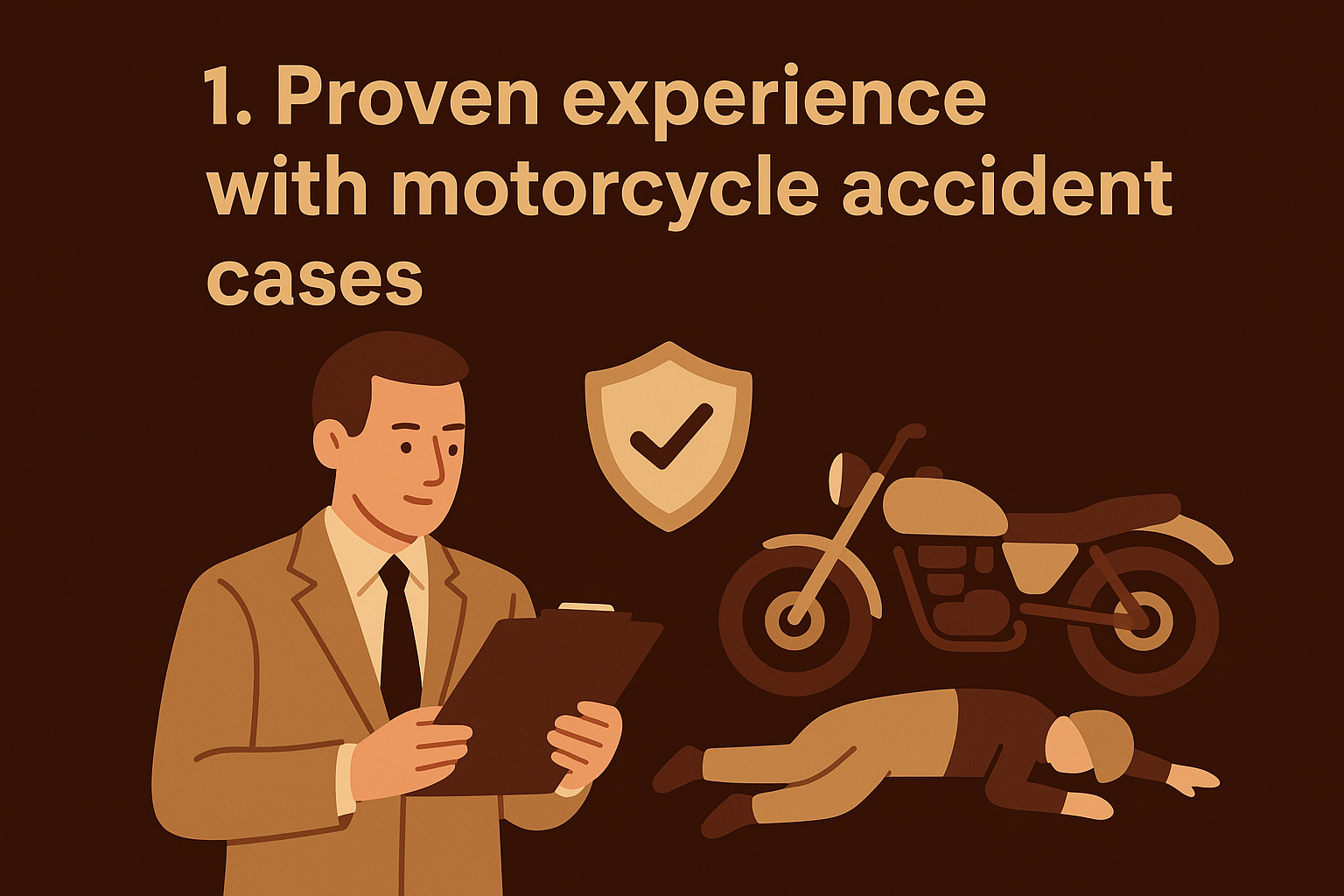
Motorcycle crashes don't behave like car wrecks, and a lawyer who mostly handles fender-benders may miss critical details that make or break your claim. Injuries like road rash, degloving, and traumatic brain injury from helmet impact require a specific understanding of biomechanics that generic personal injury firms often lack. Insurance adjusters also know which attorneys have actually tried motorcycle cases before a jury, and they adjust their offers accordingly. Hiring someone without that background risks leaving real money on the table simply because the other side doesn't take the threat of litigation seriously.
The lawyer's motorcycle case history matters more than their overall win rate.
What to look for
Ask directly how many motorcycle accident cases the attorney has handled in the past five years, not just personal injury cases in general. Look for firm websites, case results, and reviews that specifically mention motorcycle crashes rather than generic "auto accident" language, which is the same test that applies when you're finding the right motorcycle accident lawyer near you. A firm that understands riders will also know how to counter the common defense tactic of blaming the crash on the motorcyclist's visibility or lane position, a bias that shows up constantly in Mississippi and Tennessee courtrooms. Local presence matters too. An attorney with offices in Tupelo, Southaven, and Memphis who's argued cases in the same counties where you'll likely file knows the judges, the court staff, and the tendencies of local juries.
Questions to ask during a consultation
During your free consultation, come prepared with pointed questions to ask a motorcycle accident lawyer rather than general ones:
- How many motorcycle-specific cases have you handled, and what were the outcomes?
- Have you worked with accident reconstruction experts on bike crashes before?
- Do you understand comparative negligence laws in my state and how they apply to riders?
- Who on your team will actually manage my file day to day?
A confident answer to each of these tells you whether you're talking to a genuine motorcycle claims specialist or someone learning on your case.
2. A track record of favorable settlements and verdicts
Why it matters
Numbers don't lie, and a firm's settlement history tells you more than any marketing slogan. A top motorcycle injury lawyer builds leverage from prior results because insurance companies research opposing counsel before making an offer. If a firm's past cases settled quickly for modest sums, that pattern often continues, meaning you could be leaving compensation unclaimed simply by hiring the wrong team.
A firm's past verdicts predict how hard they'll fight for your payout.
What to look for
Search for published case results and reviews from past clients on the firm's website or verified through state bar records, and pay attention to whether settlements involved motorcycle-specific injuries like fractures, spinal damage, or long-term disability. Compare figures against similar cases in your region rather than national averages, since Mississippi and Tennessee juries value claims differently than coastal states.
Questions to ask during a consultation
Bring these questions to your meeting so you're comparing apples to apples across firms:
- What's the average settlement value for motorcycle cases you've handled?
- Can you share examples of cases that went to verdict rather than settling?
- How do you decide when a settlement offer is fair versus when to push back?
Honest, detailed answers reveal whether a firm negotiates from strength or simply accepts whatever the insurer offers first.
3. A contingency fee structure with no upfront costs
Why it matters
Most riders facing a crash are already stretched thin, dealing with medical bills, lost wages, and repair costs, so paying a retainer upfront isn't realistic. A contingency fee arrangement means the attorney only gets paid if you win, which aligns their financial interest with yours from day one. This structure also signals confidence. A firm willing to invest time and resources without guaranteed payment believes in your case's strength.
If your lawyer only wins when you do, you know their incentives match yours.
What to look for
Confirm the exact percentage the firm takes, typically between 33% and 40% depending on whether the case settles or goes to trial. Ask whether case expenses like expert witness fees, court filings, or accident reconstruction costs come out of your settlement or get billed separately regardless of outcome. A reputable motorcycle accident lawyer will put this arrangement in writing before you sign anything, so it helps to know what no win no fee really means and to request a free consultation to review those terms without pressure.
Questions to ask during a consultation
During your meeting, clarify these financial details before committing:
- What percentage do you take if we settle versus if we go to trial?
- Am I responsible for any costs if we lose the case?
- How are expert witness and investigation fees handled?
Clear, written answers here protect you from surprise deductions later.
4. Personal attention and clear communication
Why it matters
Getting handed off to a paralegal after your initial meeting is a common complaint among riders who hired the wrong firm. You want an attorney who treats your case as more than a file number, someone who returns calls within a day and explains legal jargon in plain terms. Clear communication builds trust, and trust matters when you're making decisions about your medical treatment, your finances, and whether to accept a settlement offer.
A lawyer who won't return your calls before you sign won't return them after.
What to look for
Notice how the firm treats you during the free consultation itself. Does the attorney or a knowledgeable team member answer your questions directly, or does someone rush you through paperwork? A firm with personal attention built into its process, small enough that you know who's handling your case but experienced enough to fight for you, tends to produce better outcomes than a high-volume settlement mill.
Questions to ask during a consultation
Ask these to gauge responsiveness before you commit:
- Who is my main point of contact, and how quickly do you respond to calls or emails?
- Will I meet with an actual attorney, or mostly staff?
- How often will you update me on my case's progress?
5. Willingness to take your case to trial
Why it matters
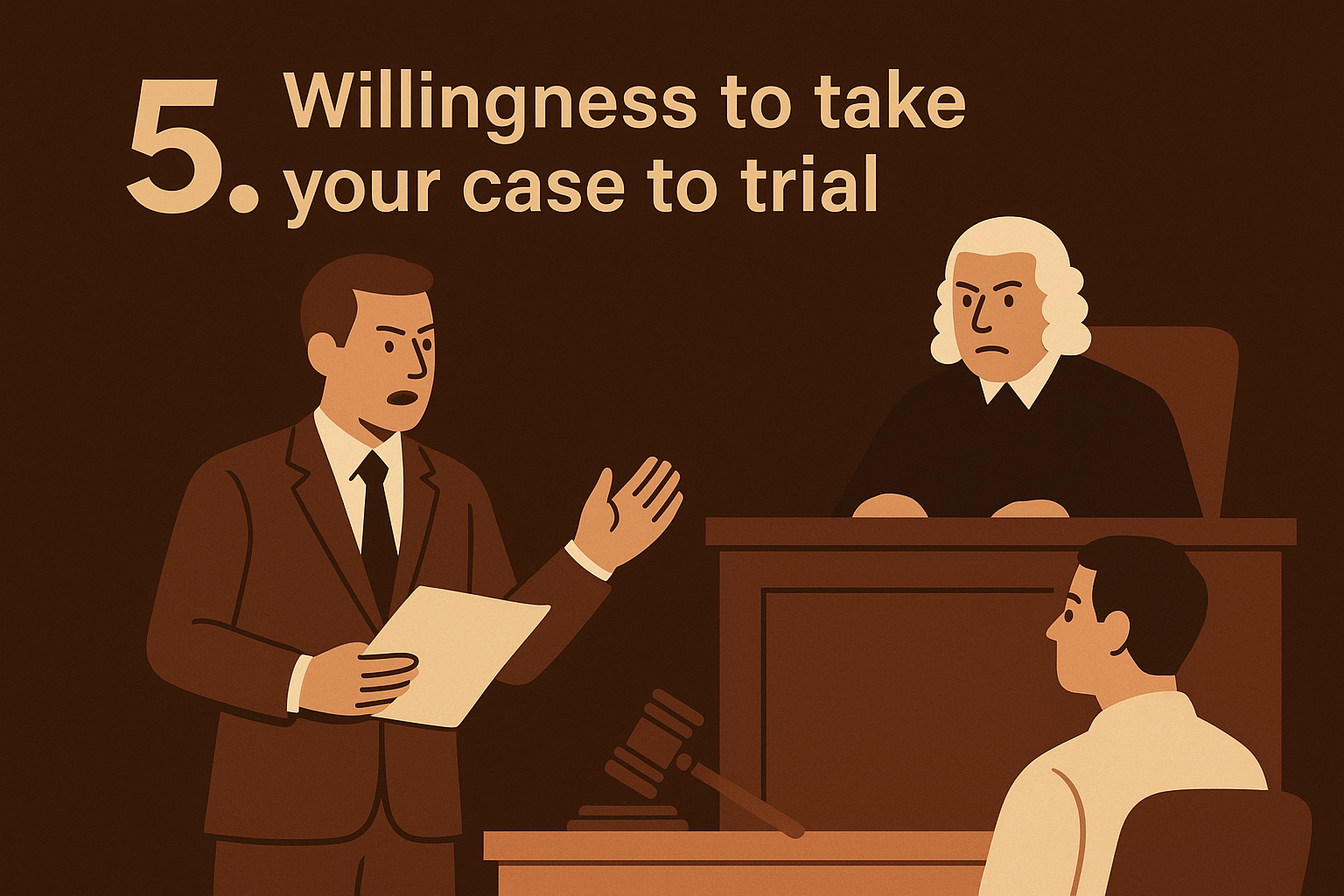
Insurance companies keep detailed files on which attorneys settle every case and which ones actually show up in a courtroom. A firm known for taking cases to trial gets better offers from the start, because adjusters know a lowball number risks a jury verdict that costs far more. Riders who hire a settlement-only lawyer often accept less than their claim is worth, simply because the insurer knows there's no real threat behind the negotiation.
An insurer's first offer reflects how much they fear your lawyer in a courtroom.
What to look for
Examine the firm's litigation history, and how a lawsuit actually unfolds step by step, rather than just its settlement numbers. Has the attorney tried motorcycle cases in front of a jury, and how did those verdicts compare to the insurer's original offer? A genuine trial-ready reputation shows up in case results, not just marketing copy. Ask whether the same lawyer who negotiates your settlement would also argue your case in court, since some firms quietly refer trial work to outside counsel at the last minute.
Questions to ask during a consultation
Use these questions to separate trial lawyers from settlement mills:
- How many of your cases have gone to verdict in the past few years?
- Would you personally try my case, or would it be handed off?
- What's your process for deciding when a settlement offer is too low to accept?
6. Familiarity with local motorcycle and insurance laws
Why it matters
Mississippi and Tennessee handle comparative negligence differently, and that difference can swing your payout by tens of thousands of dollars depending on how much fault an insurer tries to pin on you, which is a large part of why riders need an attorney for motorcycle accident claims. A lawyer who practices mainly in one state, or worse, in neither, may not know the filing deadlines, helmet law nuances, or insurance minimums that apply to your specific crash location. Local knowledge isn't a bonus feature here. It's the difference between a claim that holds up and one that gets picked apart in negotiation.
The lawyer who knows your state's fault rules wins arguments before they start.
What to look for
Confirm the firm has licensed attorneys actively practicing in the state where your accident occurred, not just a mailing address there. Ask about their experience with local insurance carriers , since adjusters at regional companies often negotiate differently than national ones, and a firm familiar with those patterns knows what leverage actually works.
Questions to ask during a consultation
Bring these questions to confirm the firm's regional knowledge runs deep:
- Are you licensed to practice in the state where my accident happened?
- How does comparative negligence work here, and how might it affect my claim?
- Have you dealt with this specific insurance company before?
Making your decision with confidence
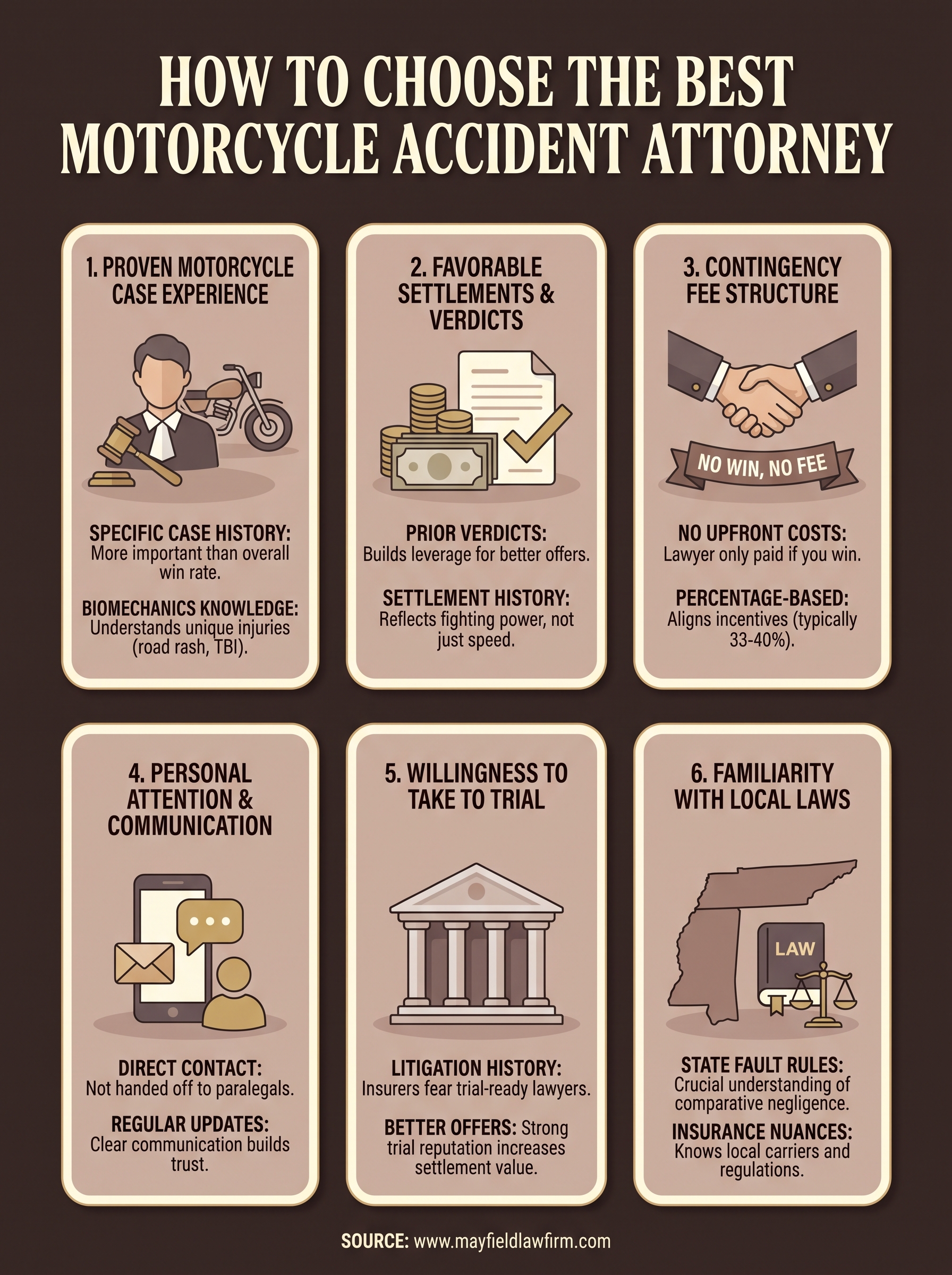
Finding the best motorcycle accident attorney comes down to six markers: real motorcycle case experience, a strong settlement history, a contingency fee that protects your wallet, genuine personal attention, a willingness to fight in court, and deep familiarity with the laws in your state. Skip any one of these, and you risk hiring someone who treats your crash like just another file.
Go into your free consultations with the questions from this guide in hand, and pay attention to how directly each firm answers them. A lawyer who's honest about their track record and process is usually the one who'll fight hardest when an insurer tries to lowball you.
You rode through the crash. You don't need to ride through a bad legal experience too. If you're ready to talk to a team that's handled these cases across Mississippi and Tennessee for over 40 years, contact the Memphis motorcycle accident lawyers at Mayfield Law Firm today.