
Motorcycle Accident Lawyers Near Me: How to Find the Right One
You're lying in a hospital bed or sitting at your kitchen table with a stack of medical bills, and your phone browser has a dozen tabs open from searching motorcycle accident lawyers near me . That search alone tells you something: this isn't a case you want to handle solo, and it isn't a case for just any attorney. Motorcycle crashes carry their own set of problems, biased jurors, aggressive insurance adjusters, and injuries that get dismissed as "road rash" when they're actually life-altering.
Finding the right lawyer means looking past the first page of ads and checking for real trial experience with motorcycle cases specifically, not just general auto accidents. You want someone local who knows the roads, the courts, and the insurance companies operating in Northeast Mississippi and South Memphis, and who will sit down with you for a free consultation before you sign anything.
This article walks through exactly what to look for, the questions to ask before hiring, and the red flags that signal a firm is more interested in volume than in your recovery. Mayfield Law Firm has spent over 40 years handling these cases in this exact region, and we'll show you what that kind of hands-on legal representation actually looks like.
Why hiring a local motorcycle accident lawyer matters
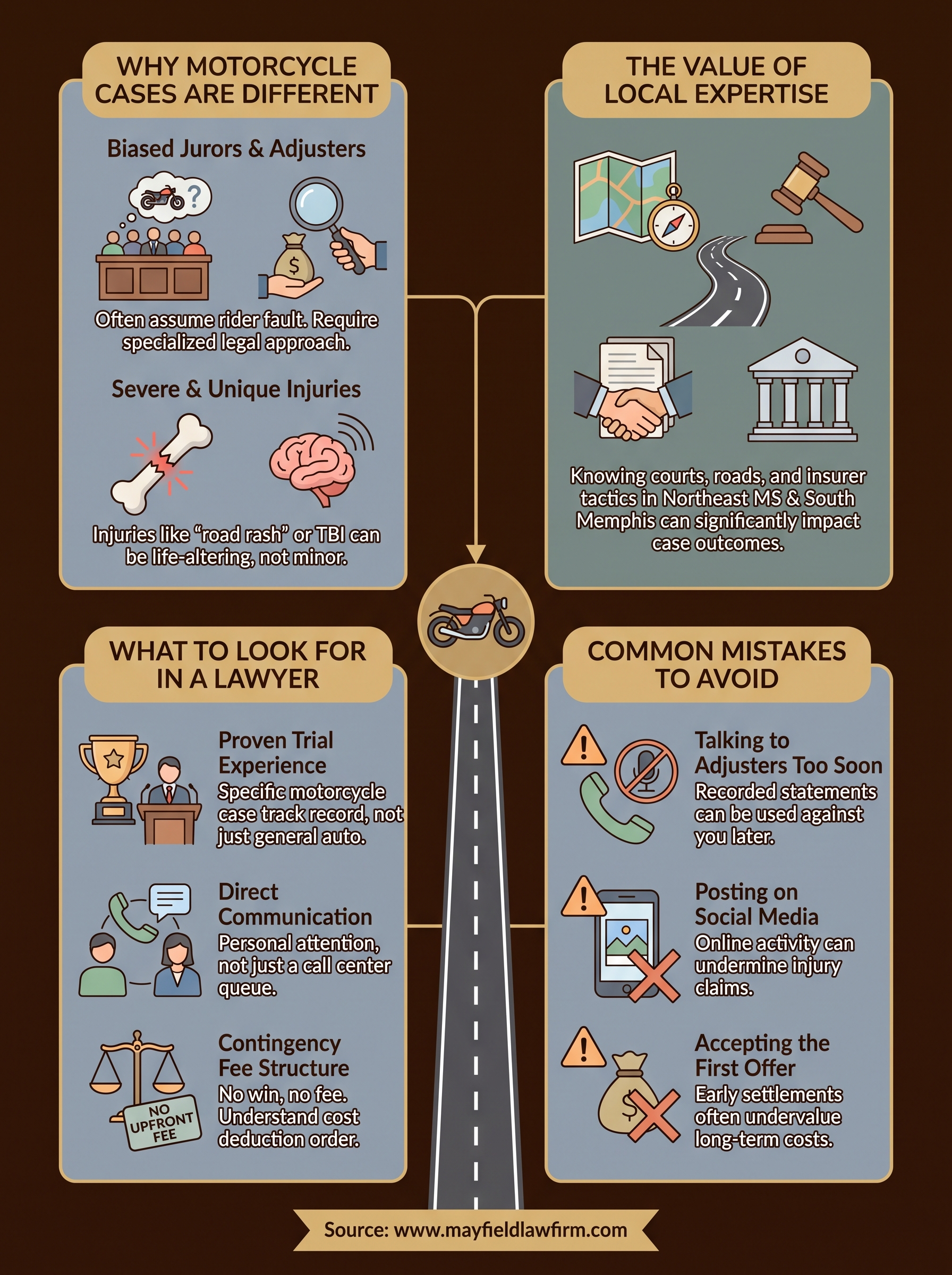
Motorcycle crash cases don't play by the same rules as fender-benders between two sedans. Insurance companies know that jurors in Mississippi and Tennessee often carry an unconscious bias against riders, assuming they were speeding, lane-splitting, or riding recklessly even when the evidence says otherwise. A lawyer who handles these cases regularly knows how to counter that bias before it ever reaches a jury box, and knows which local judges and claims adjusters tend to lean that direction so they can prepare accordingly.
A lawyer who's argued motorcycle cases in your local courts already knows the biases you're up against, and how to beat them.
Local knowledge changes case outcomes
Roads matter more than people think. Local familiarity with the specific intersections, highway on-ramps, and rural stretches around Southaven, Desoto County, and South Memphis gives your lawyer an edge when reconstructing how a crash happened. Someone who's driven Highway 51 or knows the traffic patterns on I-55 near the state line can spot inconsistencies in a police report faster than an out-of-state firm working off a map. That local knowledge extends to relationships too. Attorneys who've practiced for decades in the same courthouses often know the clerks, the opposing counsel, and even the tendencies of specific insurance adjusters who handle claims in the region.

Here's what local experience typically brings to your case:
- Familiarity with regional accident hotspots and how local law enforcement typically documents motorcycle crashes
- Established relationships with local medical providers who understand motorcycle injuries and can testify credibly
- Knowledge of court tendencies in Northeast Mississippi and South Memphis, including how judges in those jurisdictions have ruled on similar cases
- Faster response times for site visits, witness interviews, and evidence preservation before it disappears
Insurance companies treat riders differently
Insurers have entire departments dedicated to minimizing motorcycle claims, often because the payouts tend to be larger due to the severity of injuries involved. Adjusters are trained to ask leading questions early, sometimes within days of the crash, hoping you'll say something that shifts blame onto you. A local motorcycle accident lawyer knows these tactics because they've seen the same insurance companies use them again and again in similar cases across the region.
Without representation, you're negotiating against a company that settles thousands of claims a year while you've never negotiated one in your life. That imbalance shows up in the numbers. The Insurance Information Institute has tracked how liability claims and payouts differ significantly based on vehicle type, and motorcycle claims consistently involve higher average injury severity than passenger vehicle claims ( https://www.iii.org/fact-statistic/facts-statistics-motorcycle-crashes). Knowing that data, and how to use it, is part of what separates an experienced motorcycle attorney from a general practice lawyer taking on a case outside their usual work.
Injury severity demands specialized experience
Motorcycle crashes produce injuries that don't fit neatly into standard settlement formulas. Road rash sounds minor until you learn it can require skin grafts. A shattered femur or traumatic brain injury changes a person's earning capacity for years, sometimes permanently. Lawyers who haven't handled these cases before may undervalue the claim simply because they don't know what long-term treatment for these injuries actually costs or requires.
Specialized experience means your attorney already knows which medical experts to bring in, how to document future care needs, and how to calculate lost earning potential for someone who may never return to physical labor. Generalist firms sometimes settle too early because they don't recognize warning signs of injuries that worsen over time, like spinal damage or internal bleeding that doesn't show symptoms immediately after the crash.
What clients in this region actually need
People searching for help after a crash in Southaven, Memphis, or the surrounding counties usually need more than legal advice. They need someone reachable, someone who understands that missing work means missing rent, and someone who will explain the process in plain language instead of legal jargon. Choosing a firm rooted in your community means you're not just a file number in a call center queue. You're a neighbor whose case gets the same attention the firm has given hundreds of others in these same towns for decades.
How to find and choose the right lawyer near you
Searching motorcycle accident lawyers near me pulls up dozens of names, but narrowing that list down takes more than picking whoever shows up first. Start by looking for firms that specifically mention motorcycle cases in their practice areas, not just "auto accidents" as a catch-all category. A motorcycle injury attorney who treats these cases as a niche, rather than an afterthought, is more likely to understand the bias jurors bring and the unique injury patterns involved.
Verify credentials before you call
Before you pick up the phone, spend ten minutes checking a lawyer's background. Every state bar association maintains a public directory where you can confirm license status and check for any disciplinary history. The Mississippi Bar and Tennessee Board of Professional Responsibility both offer free lookup tools, and running a quick search takes less time than filling out a contact form. Bar standing tells you the attorney is in good standing to practice, but it won't tell you much about their actual experience with motorcycle claims, which is why the next step matters just as much.
The right lawyer for your motorcycle case has handled motorcycle cases before, not just car accidents in general.
Look past star ratings to real case history
Online reviews help, but they rarely tell you whether a firm has actually tried motorcycle cases or negotiated settlements involving serious injuries. Ask directly during any initial call: how many motorcycle cases has this firm handled in the past few years, and what were the outcomes? A firm confident in its track record will answer specifically instead of giving vague reassurances.
| What to look for | Why it matters |
|---|---|
| Local office in your area | Faster response, familiarity with local courts and roads |
| Motorcycle-specific case experience | Understands injury severity and jury bias |
| Free consultation offered | Lets you evaluate fit before paying anything |
| Clear fee structure explained upfront | Avoids surprises later in the process |
| Direct attorney access, not just staff | Personal attention instead of a call center feel |
Ask people you trust
Word of mouth still carries weight in smaller communities like Southaven and South Memphis. Ask around, a coworker, a family member, even a local mechanic who's seen plenty of wrecked bikes come through their shop. Personal referrals often surface firms that don't spend heavily on ads but have built a reputation through decades of steady, local work. Combine that with your own research rather than relying on referrals alone, since what worked for a friend's fender-bender case may not translate to a motorcycle injury claim with more at stake.
Schedule more than one consultation
Don't feel obligated to hire the first firm you speak with. Most reputable firms, including ones handling auto accident and personal injury claims across Mississippi and Tennessee, offer free consultations specifically so you can compare how different attorneys explain your options. Bring your accident report, any medical records you already have, and a list of questions. How you're treated in that first meeting, whether you feel rushed or genuinely heard, tells you a lot about how you'll be treated for the rest of the case.
Questions to ask during your free consultation
Walking into a free consultation without a plan wastes the one chance you get to size up a lawyer before signing anything. Treat this meeting like an interview, because that's exactly what it is. You're evaluating whether this person and this firm can actually carry your motorcycle case through negotiations, litigation, or trial if it comes to that. Bring a notepad, write down the answers, and compare them across every firm you talk to.
Questions about experience with motorcycle cases specifically
Ask direct questions and expect direct answers. A firm that dodges specifics or gives you a rehearsed line about "years of experience" without naming numbers is telling you something.
- How many motorcycle accident cases has this firm handled in the last three to five years?
- What percentage of those cases settled versus went to trial?
- Have you handled cases involving injuries similar to mine, such as traumatic brain injury, spinal damage, or amputation?
- Who specifically will handle my case day to day, you or a paralegal?
- Have you dealt with the insurance company involved in my accident before?
If a lawyer can't tell you how many motorcycle cases they've actually handled, that's your answer right there.
Questions about communication and case management
Getting a case handled poorly often comes down to poor communication, not bad legal strategy. Understanding how a firm operates day to day tells you whether you'll be an active part of your own case or an afterthought buried in someone's caseload. Find out who answers your calls, how quickly, and whether you'll ever speak directly with the attorney whose name is on the door.
| Question | What a good answer sounds like |
|---|---|
| How often will I hear updates on my case? | Regular check-ins, not silence for months |
| Who do I contact with questions? | A direct name and number, not a general line |
| How long do similar cases typically take? | A realistic range based on past cases, not a guess |
| Will you personally review my medical records? | Yes, with specifics on what they're looking for |
Specific answers signal a firm that treats your case as more than a file number. Vague reassurances signal the opposite.
Questions about strategy and case value
Once you've covered experience and communication, push into strategy. Push the lawyer to explain, in plain terms, how they plan to build your case. Understanding a firm's approach to case valuation early on helps you spot whether they're thinking long-term about your recovery or looking for a quick settlement to close the file. Ask what evidence they'll gather first, whether they plan to bring in accident reconstruction experts, and how they calculate damages for lost wages or future medical care.
Red flags that should end the meeting
Certain answers, or the lack of them, should send you looking elsewhere. Watch for these signs during any consultation:
- Pressure to sign a contract before you've asked your questions
- Refusal to discuss past case outcomes or client references
- Vague or shifting answers about who handles your case
- No clear explanation of fees until after you've signed
- A rushed meeting that feels more like a sales pitch than a conversation
Trust your read of the room. Someone offering hands-on legal representation for the long haul won't rush you out the door in fifteen minutes.
What to expect during the claims process
Once you hire a lawyer, the case doesn't move overnight. Motorcycle injury claims typically unfold in stages, and knowing what each stage involves helps you set realistic expectations instead of checking your phone every day wondering why nothing seems to be happening. Understanding the timeline upfront also helps you avoid the trap of accepting a fast, lowball settlement just because you're tired of waiting.
The investigation phase comes first
Before anything gets filed or negotiated, your attorney needs to build the foundation of your case. This means gathering the police report, photographing the crash scene and the bike itself, interviewing witnesses while their memories are still fresh, and pulling any available traffic camera or dashcam footage. Attorneys with local investigative resources move faster here because they already know which agencies to contact and how long records requests typically take in Northeast Mississippi and South Memphis courts.
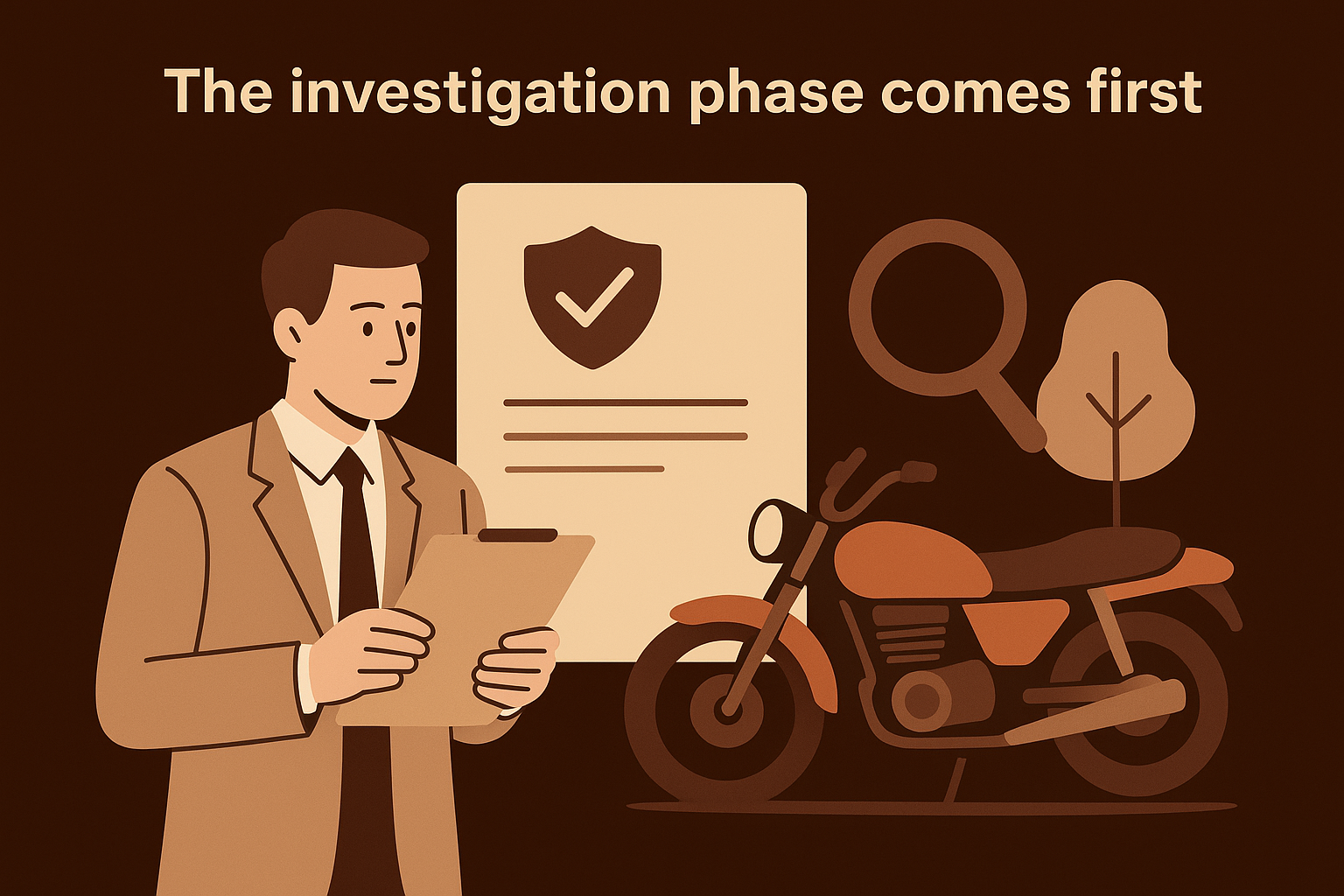
Rushing the investigation phase almost always costs you money later, because evidence disappears fast and doesn't come back.
Medical treatment and documentation continue in parallel
While the investigation moves forward, your medical treatment keeps going, and it should. Settling before you reach maximum medical improvement, meaning the point where doctors say your condition has stabilized or fully healed, almost always leaves money on the table. Consistent treatment records matter here too. Gaps in care give insurance adjusters an opening to argue your injuries weren't as serious as claimed, so your attorney will likely encourage you to keep every follow-up appointment and document how your injuries affect daily life along the way.
Negotiating with the insurance company
Once your medical picture is clear, your lawyer typically sends a demand letter outlining the facts of the crash, your injuries, and the compensation you're seeking. From there, negotiations begin, and they rarely wrap up in one phone call. Insurance adjusters often start with a low counteroffer to see how you respond, and a firm with motorcycle-specific experience knows how to push back with the right evidence rather than caving to move things along faster.
A typical claims timeline looks something like this:
- Weeks 1-4: Investigation, evidence gathering, and initial medical treatment
- Months 1-6: Continued treatment and documentation of injuries
- Months 3-9: Demand letter sent, negotiations with the insurance company begin
- Months 6-18: Settlement reached, or lawsuit filed if negotiations stall
- 12-24+ months: Litigation, discovery, and trial, if the case doesn't settle
If your case goes to litigation
Sometimes an insurance company simply won't offer a fair number, and filing a lawsuit becomes the only way to get one. Litigation adds time, discovery, depositions, and possibly a trial, but it also puts real pressure on insurers who know a firm is prepared to see the case through. Firms without trial experience sometimes fold at this stage, which is exactly why asking about trial history during your consultation matters as much as it does. Going the distance isn't common, most cases settle before trial, but your attorney's willingness to file suit and prepare for court often determines how seriously the other side takes your claim from day one.
Understanding attorney fees and costs
Money worries after a crash make people hesitate before even calling a lawyer, worried that legal help will add another bill on top of medical debt. That hesitation usually disappears once you understand how motorcycle accident lawyers actually get paid. Most personal injury firms, including motorcycle cases, work on contingency, which means you owe nothing upfront and nothing at all unless your lawyer wins or settles your case. Knowing this structure before your consultation lets you ask sharper questions instead of nodding along to unfamiliar terms.
How contingency fees work
Under a contingency fee arrangement , your attorney takes a percentage of whatever settlement or verdict you receive, rather than billing you hourly or charging a flat fee. That percentage typically ranges from 33% to 40%, depending on whether the case settles early or ends up in litigation. Cases that go to trial often carry a higher percentage because of the added time, expert witnesses, and court costs involved.
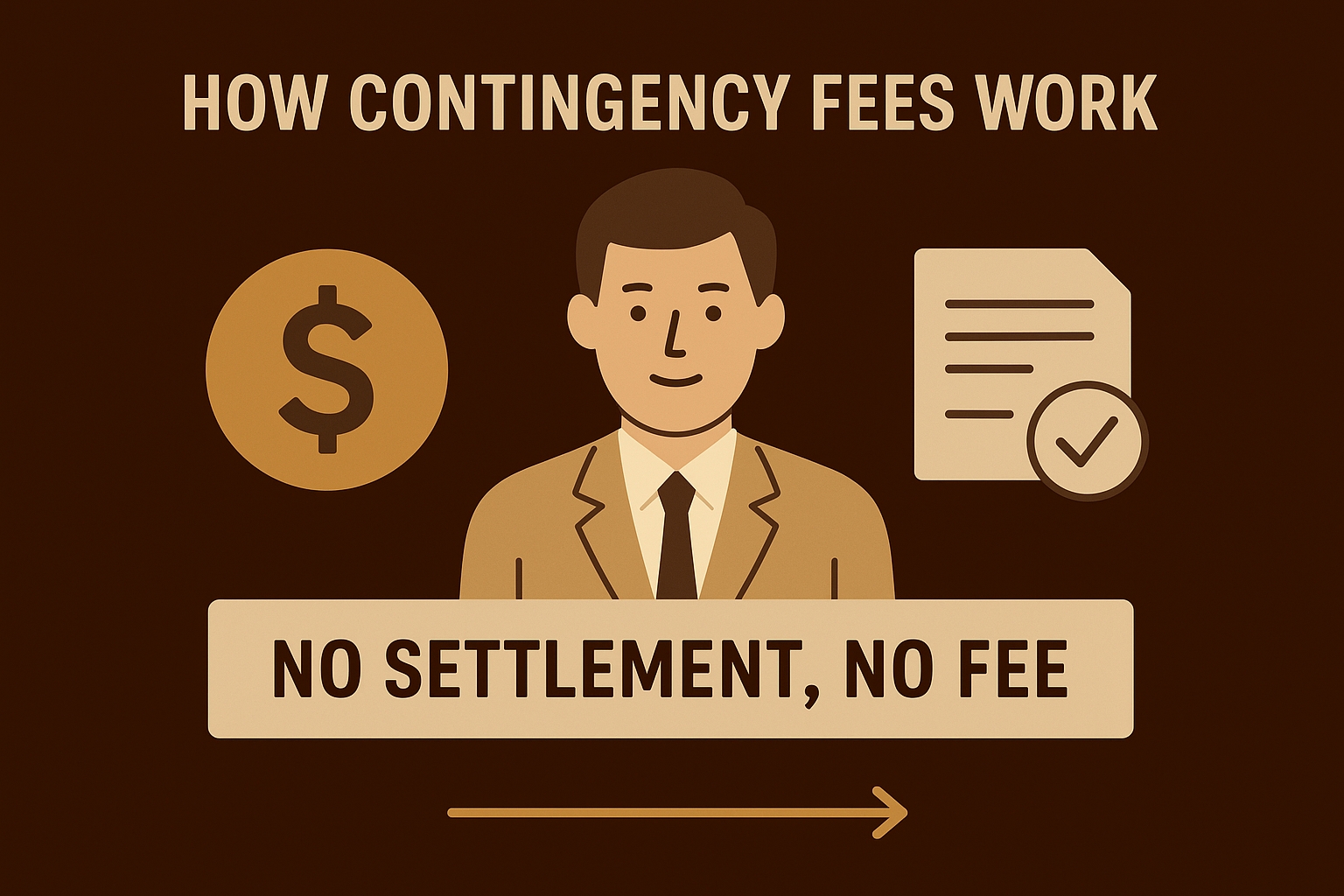
No settlement, no fee. That's the deal a legitimate contingency arrangement guarantees you.
Here's a simple breakdown of how percentages commonly shift based on case stage:
| Case Stage | Typical Fee Percentage |
|---|---|
| Settled before filing a lawsuit | 33% |
| Settled after filing a lawsuit | 35-38% |
| Resolved through trial or appeal | 40% |
These numbers vary by firm and by state, so always get the exact percentage in writing before signing anything.
Costs versus fees, and why the difference matters
Separate from the attorney's fee, every case involves out-of-pocket costs : filing fees, medical record requests, expert witness charges, and sometimes accident reconstruction specialists. Reputable firms usually front these costs and deduct them from your settlement at the end, rather than asking you to pay as the case moves along. Ask directly whether costs come out before or after the attorney's percentage is calculated, since that order affects how much money actually lands in your pocket.
Questions to clarify before signing
Before you sign a representation agreement, get clear, written answers to these:
- What percentage do you take at each stage of the case?
- Who covers costs like expert witnesses and medical record requests?
- Are costs deducted before or after your fee is calculated?
- What happens to fees and costs if we don't win?
- Will I ever be billed directly, under any circumstance?
A firm confident in its process will walk through these answers without hesitation, often pointing to the exact language in the signed agreement.
Why fee transparency protects you
Firms that avoid discussing fees until after you've signed paperwork are worth a second look. Transparency about attorney fees and costs early in the process signals a firm that respects your financial situation, which matters even more when you're already missing paychecks because of injuries from the crash. The Federal Trade Commission offers general guidance on evaluating professional service agreements and spotting unclear fee structures, a useful resource if you want a second opinion on any contract before signing ( https://consumer.ftc.gov). Ultimately, a free consultation should include a plain-language walkthrough of fees, not a rushed mention buried at the end of the meeting.
Common mistakes that can hurt your claim
Even a strong motorcycle accident case can lose value fast if you make the wrong move in the days and weeks after a crash. Insurance companies watch for these missteps because they give adjusters a reason to lower a payout or deny a claim outright. Knowing what not to do matters just as much as knowing what to do, especially before you've hired one of the motorcycle accident lawyers near me you've been researching.
Talking to the insurance adjuster too soon
Adjusters often call within days of a crash, sometimes while you're still in the hospital, asking friendly questions that feel routine. Recorded statements given before you understand your injuries or before a lawyer reviews the facts can lock you into details that hurt your claim later. Early statements frequently get used against riders, since adjusters look for any wording that suggests you were speeding, distracted, or partially at fault. Politely decline to give a statement until your attorney has reviewed the situation with you.
Anything you say to an adjuster before hiring a lawyer can end up working against you later.
Delaying medical treatment
Skipping the ER or waiting weeks to see a doctor because you feel "okay" creates a gap in your medical record that insurers exploit. Delayed treatment suggests to adjusters that your injuries weren't serious, even when the opposite is true, particularly with injuries like concussions or soft tissue damage that worsen over time. Get checked out immediately after any crash, even if you think you walked away fine.
Posting about the accident on social media
A quick post about the crash, or even unrelated photos showing you out and active, can be used to argue your injuries aren't as limiting as claimed. Insurance companies and their investigators routinely monitor social media activity during open claims. Keep your accounts private and avoid discussing your case, your injuries, or your recovery online until the claim resolves.
Accepting the first settlement offer
Early offers usually come in low, timed to arrive when medical bills are piling up and you're most likely to accept quickly. Signing before you reach maximum medical improvement means you could be locked into a number that doesn't cover future surgeries, therapy, or lost income. Below are the mistakes that show up most often in motorcycle claims:
- Giving a recorded statement to the adjuster without legal advice
- Delaying or skipping medical treatment after the crash
- Posting photos or updates about the accident on social media
- Accepting a quick settlement before understanding the full extent of injuries
- Missing follow-up medical appointments, creating gaps in treatment records
- Repairing or discarding the motorcycle before it's been inspected for evidence
Waiting too long to hire a lawyer
Evidence disappears, memories fade, and Mississippi and Tennessee both have statutes of limitations that cap how long you have to file a claim. Waiting months to call a motorcycle injury attorney can mean losing access to traffic camera footage, witness statements, or even the vehicle itself if it's already been repaired or scrapped. The earlier a lawyer gets involved, the more evidence they can preserve on your behalf.
Taking the next step after your accident
Finding the right lawyer after a motorcycle crash comes down to a few things: local experience, honest answers about fees, and a firm that treats your case like more than a file number. You've seen what separates a serious motorcycle injury attorney from a firm chasing volume, the questions worth asking, and the mistakes that quietly shrink a settlement before you even hire anyone. None of that matters if you sit on it too long. Evidence fades, deadlines pass, and insurance adjusters get more comfortable with their lowball number every week you wait.
Mayfield Law Firm has spent over 40 years representing riders across Northeast Mississippi and South Memphis, and we know exactly what these cases demand. If you're still searching motorcycle accident lawyers near me , stop scrolling and talk to someone who's handled cases like yours for decades. Schedule your free consultation with Mayfield Law Firm today and find out what your case is actually worth.