Auto Accident Settlement Timeline: Steps, Delays, And Payouts
After a car accident, one of the first questions you'll ask is: "How long until I get paid?" The honest answer is that your auto accident settlement timeline depends on several moving parts, from how quickly you recover from your injuries to how cooperative the insurance company decides to be. Some claims wrap up in a few weeks , while others stretch out over a year or more.
At Mayfield Law Firm, P.A., we've spent over 40 years handling auto accident and personal injury cases across Northeast Mississippi and South Memphis . We've seen what speeds claims up and what grinds them to a halt. That experience gives us a clear picture of what clients should realistically expect at each stage of the process.
This guide breaks down every step of a car accident settlement, from the moment you file your claim through the final payout. You'll learn what happens during each phase, which factors cause the biggest delays , and what you can do to keep things moving. Whether you're just starting the process or stuck waiting on an offer, this article will help you understand where you stand and what comes next.
What controls an auto accident settlement timeline
No two car accidents follow the same path to resolution. Your specific circumstances shape your auto accident settlement timeline more than anything else. Understanding the variables upfront helps you set realistic expectations and make smarter decisions throughout the entire process.
Injury severity and medical treatment
The single biggest factor in how long your claim takes is how serious your injuries are and how long your medical treatment lasts. Attorneys and insurance adjusters both need to know the full extent of your medical costs before they can calculate a fair settlement number. That means your case typically cannot settle until you reach " maximum medical improvement," or MMI, the point when your doctor determines your condition has stabilized.
A soft tissue injury that heals in six to eight weeks moves through the process far faster than a broken bone, spinal injury, or traumatic brain injury that requires surgery, physical therapy, and months of follow-up care. For example, a straightforward whiplash case might resolve in two to three months, while a back surgery case can take a year or longer to reach the right settlement number.
Settling before you know the full cost of your injuries locks you into a final number you cannot change later, even if new medical bills appear.
Liability disputes
When fault is clear, the process moves faster. When the other driver, their insurer, or multiple parties dispute who caused the accident , the timeline stretches significantly. Insurance companies routinely challenge liability to reduce what they owe. They may request police reports, witness statements, traffic camera footage, and accident reconstruction reports before agreeing to accept any responsibility.
Mississippi courts apply pure comparative fault rules , meaning your compensation gets reduced by your percentage of fault in the crash. If the insurer argues you share responsibility, expect a longer negotiation period before both sides reach an acceptable number.
Insurance company behavior
The insurance company on the other side of your claim controls a significant portion of your timeline. Some adjusters respond quickly and negotiate in good faith. Others use deliberate delay tactics to pressure you into accepting a lower offer before you fully understand your damages.
Common delay tactics include requesting duplicate documentation, scheduling repeated independent medical exams, and slow-walking internal review processes. Recognizing these tactics lets you push back with specific written deadlines and documented follow-up requests rather than waiting passively for a response that may not come.
Whether the case goes to court
Most accident claims settle outside of court through direct negotiation with the insurance company. However, if the insurer refuses to offer a fair amount, filing a lawsuit becomes necessary. Once filed, the case enters formal discovery, depositions, and potentially a trial, which adds six months to two or more years to the overall timeline.
Filing a lawsuit does not always mean going all the way to trial. The majority of cases still settle after filing, often during or after the discovery phase. The threat of litigation and the real cost of defending a case in court frequently pushes insurers to improve their offers once an experienced attorney steps in.
Step 1. Protect your claim in the first 72 hours
The first three days after a crash have more impact on your auto accident settlement timeline than most people realize. Insurance adjusters begin building their defense file almost immediately, so the steps you take right now directly shape your ability to negotiate from a position of strength later.
Document the scene and report the crash
Your first priority is to gather as much evidence as possible before anything gets moved, cleaned up, or forgotten. Call the police and make sure an officer files an official crash report, even if the damage looks minor. A police report creates an independent record of the incident that you can reference throughout the entire claims process.
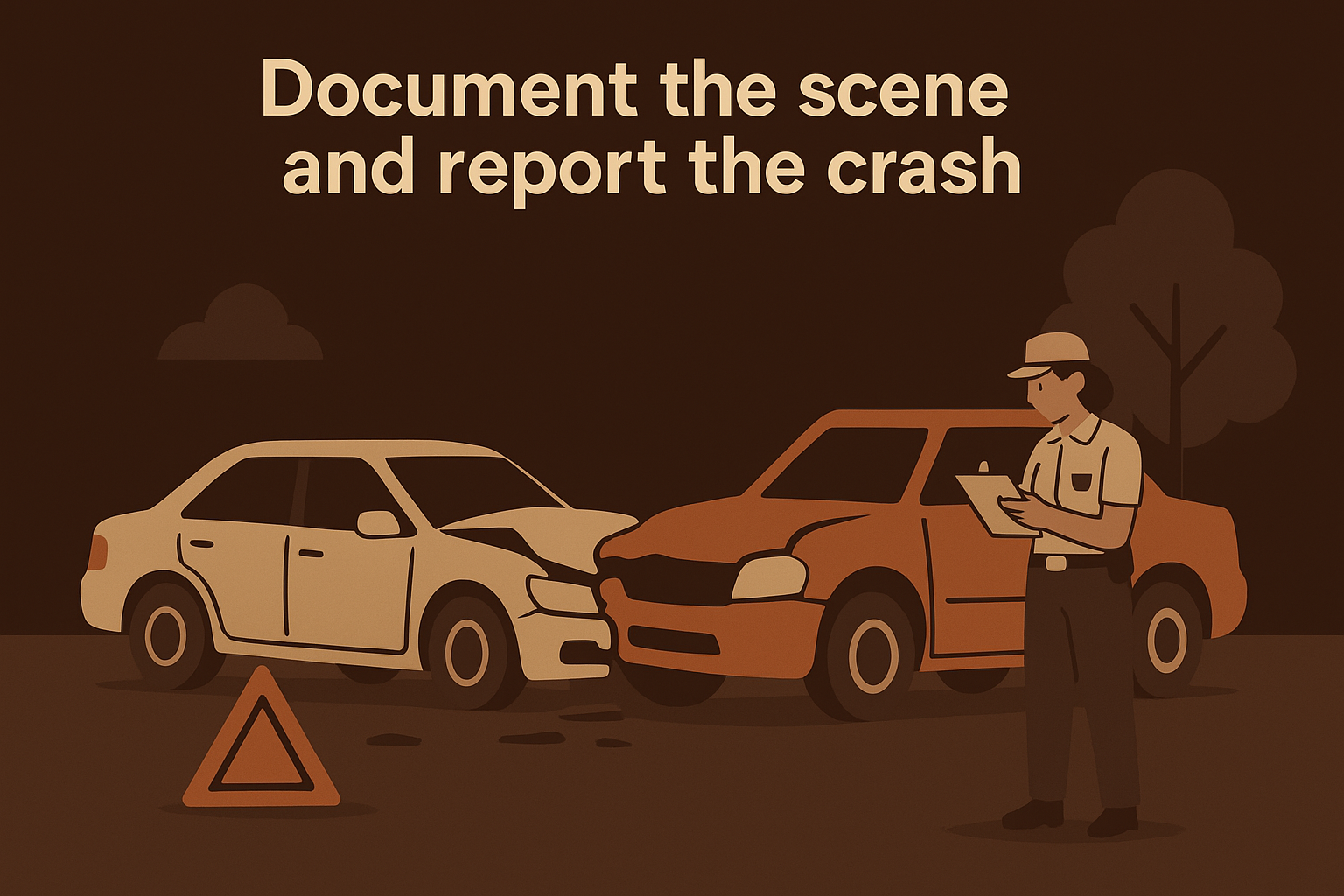
At the scene, document the following before you leave:
- Photos of all vehicle damage , skid marks, road conditions, traffic signs, and any visible injuries
- Names, phone numbers, and insurance information from every driver involved
- Contact details from any witnesses who saw the crash happen
- The responding officer's name and badge number so you can request the report later
- Any statements the other driver makes admitting fault or apologizing
Avoid giving a recorded statement to the other driver's insurance company before you speak with an attorney. Adjusters use recorded statements to lock you into details that may later be used to reduce your payout.
Notify your own insurance and get medical care
Report the crash to your own insurance carrier the same day, even if the other driver was clearly at fault. Most policies include a prompt-reporting requirement, and delaying that call can create unnecessary complications with your own coverage.
Seek medical evaluation within 24 to 48 hours regardless of how you feel. Adrenaline routinely masks pain after a collision, and injuries like soft tissue damage or internal bruising may not become obvious until the next day. A medical record created close to the date of the accident ties your injuries directly to the crash, which is critical evidence when the insurance company tries to argue your injuries came from somewhere else.
Step 2. Build the value of your injury claim
Once you've secured your evidence and started medical treatment, your next job is to document everything that supports your damages . The strength of your injury claim determines your final settlement number, and insurers only pay for losses you can prove. This phase runs parallel to your medical treatment and directly shapes where your auto accident settlement timeline ends up in terms of total compensation.
Track every medical visit and expense
Your medical records are the backbone of your claim. Keep a running file of every doctor visit, physical therapy session, prescription, and medical bill tied to your injuries. Do not rely on your memory or assume your providers will keep organized records on your behalf.
Use a simple tracking sheet like the one below to stay organized:
| Date | Provider | Service | Cost | Out-of-Pocket |
|---|---|---|---|---|
| Example: 03/15 | Dr. Smith | MRI scan | $1,200 | $300 |
| Example: 03/22 | PT Clinic | Physical therapy session | $150 | $40 |
The more complete and consistent your medical records are, the harder it becomes for an adjuster to argue your injuries were minor or unrelated to the crash.
Gaps in treatment give insurance companies ammunition to argue you were not seriously hurt. If your doctor recommends follow-up care , go to those appointments and keep every receipt.
Document how the injury affects your daily life
Beyond your medical bills, you also have the right to compensation for pain, suffering, and disruption to your normal life . This is harder to prove without a written record, so start keeping a short daily log of how your injuries affect you.
Note specific things like: days you could not work, activities you had to stop doing, help you needed from family members, and nights you could not sleep due to pain. These concrete, dated entries give your attorney real material to use when negotiating for non-economic damages, which often represent a significant portion of a final settlement figure.
Step 3. Negotiate, settle, or file a lawsuit
Once you reach maximum medical improvement, your attorney assembles your complete file and sends a formal demand letter to the insurance company. This is the phase that most directly affects your auto accident settlement timeline because the back-and-forth negotiation can move quickly or drag out depending on the insurer's response and the complexity of your injuries.
Send a demand letter
Your demand letter is your opening position in the negotiation. It summarizes your injuries, your treatment history, your total documented losses, and the specific dollar amount you are requesting to resolve the claim. A well-organized demand letter makes it harder for the adjuster to dispute the facts and gives the negotiation a clear starting point.

Use this basic structure when putting together your demand package:
- Summary of the accident : date, location, what happened, and why the other driver is at fault
- Injury description : diagnosis, treatment received, and current condition
- Medical expenses : itemized list of every bill tied to the crash
- Lost wages : pay stubs or employer letters confirming missed work and income lost
- Pain and suffering : brief description supported by your daily injury log
- Settlement demand : your total requested amount with a response deadline, typically 30 days
When the insurer counters
Insurance companies almost never accept the first demand. Expect a counteroffer that comes in well below your requested amount. Do not read a low counteroffer as a sign that you need to accept less; it is a standard negotiating move designed to see how far you will drop.
Your attorney will respond with a revised demand and supporting documentation that justifies your position. Most cases settle after two to four rounds of offers and counteroffers, provided both sides are negotiating in good faith.
If an insurer stops responding, misses agreed deadlines, or keeps offering an unreasonably low number, those are signs that filing a lawsuit is the right next step.
Filing a lawsuit if negotiations fail
Filing does not mean going to trial. Most cases settle during the discovery phase after both sides exchange evidence and depose witnesses. The filing itself often motivates insurers to improve their offers significantly, especially once they see that your attorney is prepared to take the case all the way.
Step 4. Get paid after settlement
Reaching an agreement does not mean money lands in your account the next day . The final phase of your auto accident settlement timeline involves paperwork, legal requirements, and distribution steps that typically take two to six weeks to complete. Knowing what to expect keeps you from assuming something went wrong while the process works through its normal course.
Sign the release and wait for the check
Once both sides agree on a number, the insurance company sends a settlement release form for your signature. This document is binding and final, so read it carefully before signing. It releases the insurer and the at-fault driver from any further liability related to this specific accident, which means you cannot come back later for additional compensation even if your condition worsens.
Never sign a release before your attorney reviews it and confirms that the language accurately reflects the agreed terms and covers only this specific claim.
After you sign and return the release, the insurer typically issues the settlement check within 14 to 21 days . The check is usually made payable to both you and your attorney's firm, and it gets deposited into a client trust account before any funds are distributed.
How your settlement funds get distributed
Your attorney does not simply hand you the full check amount. Before you receive your portion, several deductions come out of the gross settlement . Your attorney will provide you with a settlement statement that breaks down every line item clearly.
Here is what a standard settlement distribution looks like:
| Item | Example Amount |
|---|---|
| Gross settlement | $45,000 |
| Attorney's contingency fee (33%) | -$14,850 |
| Medical liens and outstanding bills | -$8,200 |
| Case expenses (filing fees, records, etc.) | -$1,100 |
| Your net payout | $20,850 |
Your attorney is legally required to pay outstanding medical liens from your settlement before releasing your portion. These include balances owed to hospitals, treating physicians, and any health insurer that covered your accident-related care. Once all deductions are applied and verified, your attorney releases the remaining funds directly to you.

If you need help moving things forward
Your auto accident settlement timeline moves faster when you have someone managing deadlines, pushing back on delay tactics, and making sure every piece of your claim is documented correctly. Most people attempt to handle initial negotiations on their own, only to find out later that they accepted far less than their injuries were actually worth.
At Mayfield Law Firm, P.A. , our attorneys have handled auto accident and personal injury cases across Northeast Mississippi and South Memphis for over 40 years. We take cases on a contingency basis , which means you pay nothing unless we recover money for you. That structure lets you get experienced legal representation without any upfront cost, regardless of your current financial situation.
Contact Mayfield Law Firm, P.A. today for a free consultation and get a clear picture of where your claim stands and what your next step should be.