Personal Injury Lawyer for Slip and Fall: What To Know
A slip and fall accident can happen in seconds, a wet grocery store floor, an uneven sidewalk, a poorly lit stairwell, but the injuries that follow can affect your life for months or even years. Broken bones, head trauma, herniated discs, and torn ligaments are common outcomes, and the medical bills start piling up fast . If someone else's negligence caused your fall, hiring a personal injury lawyer for slip and fall cases is one of the most important steps you can take to protect your right to compensation.
But not every attorney handles these cases the same way. Slip and fall claims fall under premises liability law, which means you need a lawyer who understands how to prove a property owner knew about a hazard , or should have known, and failed to fix it. That burden of proof is where many cases are won or lost, and it's where experienced legal representation matters most .
At Mayfield Law Firm, P.A., we've spent over 40 years representing injured clients across Northeast Mississippi and the Memphis, Tennessee area. Our team handles slip and fall cases from the initial consultation through settlement negotiations , trial, or appeal. This article breaks down what a personal injury lawyer actually does in a slip and fall case, how premises liability works, what your claim may be worth, and how to choose the right attorney for your situation.
Why a slip and fall lawyer matters
Most people assume that if they fell on someone else's property and got hurt, the property owner's insurance will simply pay for it. That assumption is one of the most expensive mistakes an injured person can make. Slip and fall cases are among the most contested personal injury claims in the legal system, because property owners and their insurers fight hard to avoid paying out, often by arguing that you were careless, that the hazard was obvious, or that your injuries weren't as serious as you claim.
The burden of proof falls on you
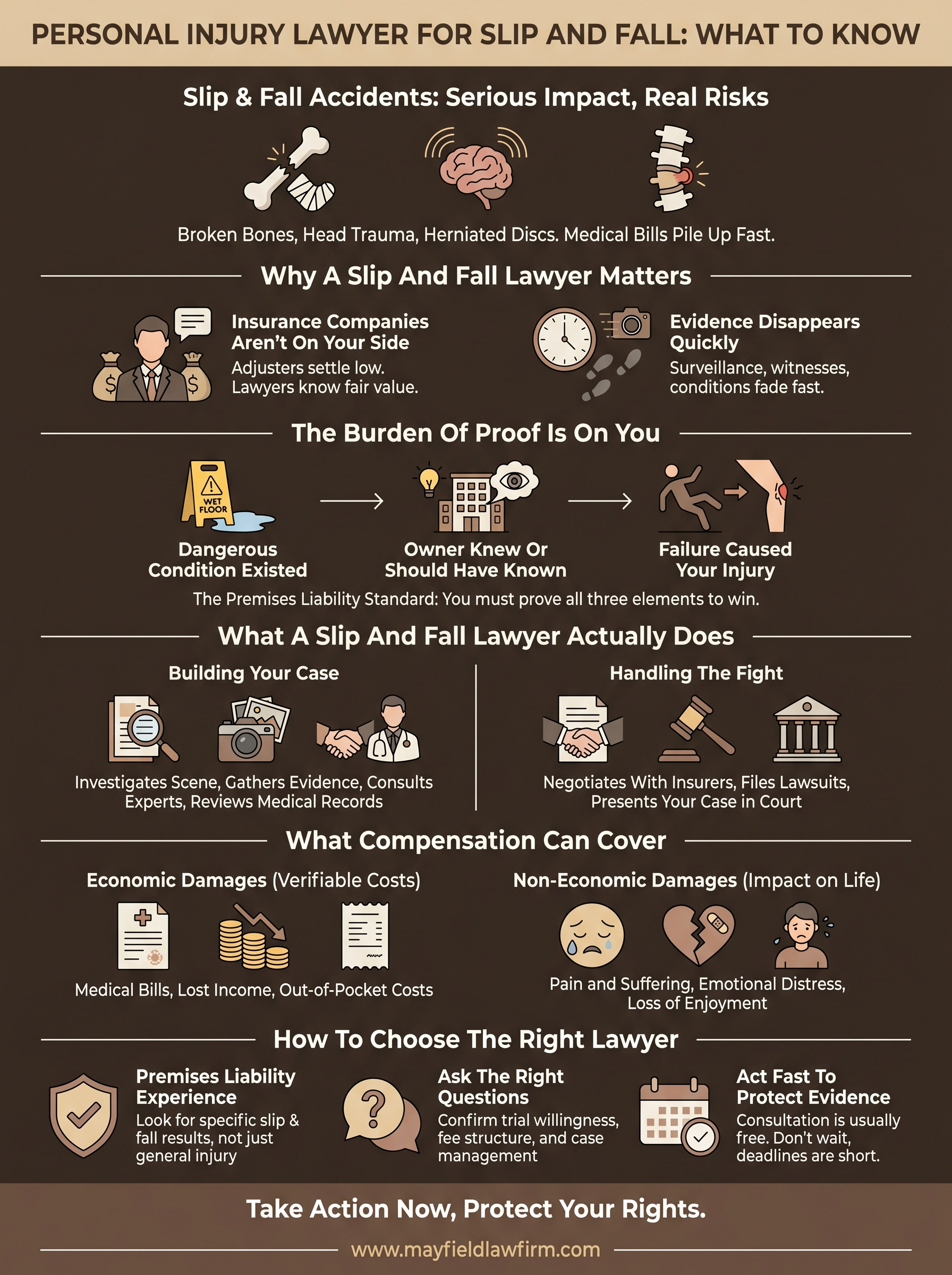
Proving a slip and fall claim requires more than showing you got hurt on someone else's property. You must demonstrate that the property owner knew about the dangerous condition (or reasonably should have), that they failed to correct it within a reasonable amount of time, and that their failure directly caused your injury. That's a multi-step legal standard, and each element requires specific supporting evidence to hold up under scrutiny.
Without the right evidence gathered at the right time, even a legitimate claim can fall apart before it ever reaches a settlement.
Many injured people try to handle this on their own, not realizing how quickly critical evidence disappears. Surveillance footage gets overwritten within days, witnesses move on, and wet floor signs sometimes appear in incident reports that weren't there when you fell. A lawyer who gets involved early knows how to preserve and present evidence in a way that strengthens your case before anything gets lost.
Insurance companies don't work in your favor
The adjuster who contacts you after a slip and fall is not on your side. Their job is to settle your claim for as little as possible , and they are specifically trained to do it. They may ask you to provide a recorded statement, then use your own words against you later. They may also push a quick settlement offer that sounds fair on the surface but fails to account for ongoing medical treatment , future surgery, or income you lost while recovering.
Hiring a personal injury lawyer for slip and fall claims changes that dynamic immediately. Once you have legal representation, all communication goes through your attorney, which removes the risk of saying something that inadvertently weakens your case. Your lawyer also knows what a fair settlement actually looks like based on the full scope of your injuries, not just the first number an adjuster puts on the table.
Statutes of limitations are shorter than most people expect
In Mississippi, you generally have three years from the date of your injury to file a personal injury lawsuit. Tennessee gives you only one year for most personal injury claims, which is one of the shortest filing windows in the country. Miss that deadline for any reason, and you lose your right to sue, no matter how strong your case is.
There are additional requirements if your fall happened on government-owned property. Claims against municipalities can require written notice within 90 days of the injury. Most people don't know these rules exist until it's too late to act on them. Getting a lawyer involved early keeps your legal options open and makes sure no procedural deadline closes the door on your claim before it ever gets started.
What a slip and fall lawyer actually does
When you hire a personal injury lawyer for slip and fall cases, you're not just getting someone to fill out paperwork. You're getting a legal professional who takes on the work of building, proving, and fighting your claim while you focus on recovering. Understanding exactly what that work looks like helps you see why representation makes such a concrete difference in how your case plays out.
Building your case from the ground up
Your attorney starts by investigating the accident scene and gathering every piece of evidence that supports your claim. That means sending preservation letters to property owners demanding that they retain surveillance footage before it gets erased, collecting incident reports, interviewing witnesses, and documenting the conditions that caused your fall. In many cases, your lawyer also brings in expert witnesses , such as safety engineers or medical professionals, who can explain to a jury or adjuster exactly why the property was dangerous and how your injuries resulted from that specific hazard.
The investigation phase is where many cases are won or lost, and it has to happen quickly before evidence disappears or memories fade.
Your lawyer also pulls together your full medical picture , which includes current treatment records, specialist evaluations, and projections for future care. This documentation is what anchors the dollar figure in your claim to something concrete and defensible.
Handling negotiations and litigation
Once the evidence is organized, your attorney takes over all communication with the property owner's insurance company . That means your lawyer handles every demand letter, every counter-offer, and every negotiation tactic the insurer tries to use against you. You stop dealing with adjusters directly, which protects you from making statements that could be used to reduce your payout.
If the insurance company refuses to offer a fair settlement , your lawyer files a formal lawsuit and takes your case to court. That includes drafting legal filings, conducting depositions, arguing pre-trial motions, and presenting your case before a judge or jury. Most slip and fall cases resolve before trial , but having an attorney who is fully prepared to litigate gives you real leverage during settlement talks.
How slip and fall cases work in plain English
Slip and fall claims fall under premises liability law , which holds property owners legally responsible for maintaining reasonably safe conditions for people who enter their property. The legal process can feel overwhelming if you've never dealt with a personal injury claim before, but the core structure is straightforward once you break it down. Knowing how the process works helps you make smarter decisions from day one and avoid the missteps that cost injured people money.
The three elements you must prove
Your case rests on three connected legal requirements. You need to show that a dangerous condition existed on the property , that the owner knew about it or should have known through reasonable inspection, and that this hazard directly caused your injury. All three elements must hold up, not just one or two.
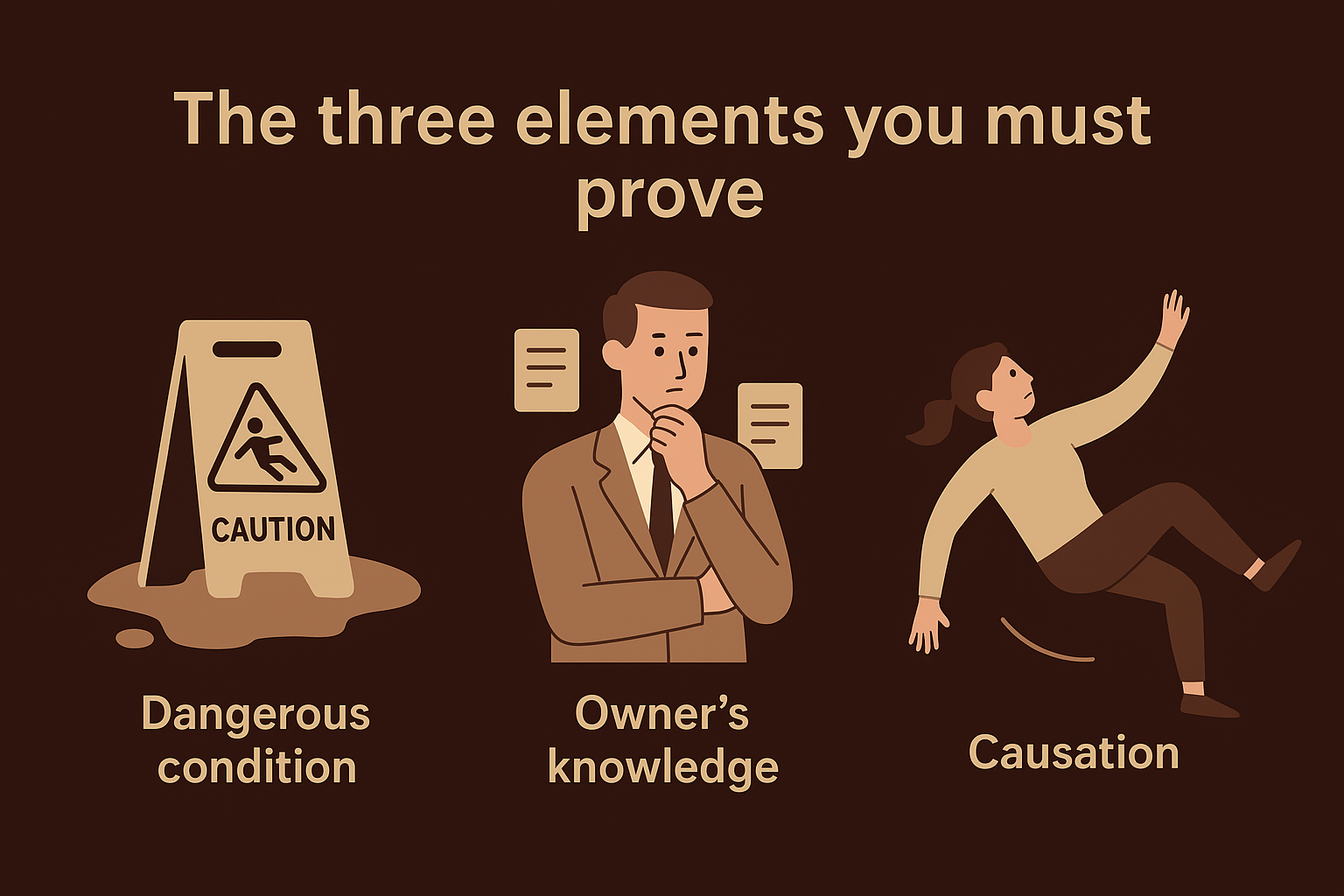
If you can only prove the hazard existed but not that the owner knew about it, a property owner's insurance company will use that gap to deny or reduce your claim.
Here's a quick breakdown of what each element typically requires:
- Dangerous condition: A hazard like a wet floor, broken step, or uneven pavement that creates unreasonable risk
- Owner's knowledge: Evidence such as prior complaints, maintenance records, or how long the hazard existed before your fall
- Causation: Medical documentation directly linking the hazard to your specific injuries
What happens after you file
Once you or your personal injury lawyer for slip and fall claims submits a demand to the insurance company, the insurer reviews the evidence and either accepts, rejects, or counter-offers your claim. Most cases go through a back-and-forth negotiation phase before a number both sides accept. This process can take weeks or several months depending on the severity of your injuries and how strongly the other side contests liability.
If negotiations break down, your attorney files a formal lawsuit and the case enters civil court proceedings , which include discovery, depositions, and potentially a trial. The large majority of slip and fall cases settle before a jury ever hears them, but the strength of your legal preparation directly shapes the settlement you can realistically expect.
Evidence that can make or break your claim
In a slip and fall case, the outcome often comes down to what evidence exists and whether it was preserved in time . Property owners and insurers routinely challenge the injured person's version of events, so your ability to prove what happened, and when, directly affects the value and outcome of your claim. A personal injury lawyer for slip and fall cases knows exactly what to look for and how to secure it before it disappears.
The first 48 to 72 hours after a fall are the most critical window for evidence collection, and most people don't realize that until it's already too late.
Physical and documentary evidence
The condition of the accident scene is the foundation of your claim. Photographs taken immediately after your fall are among the most powerful pieces of evidence you can have. They capture the hazard as it existed at the moment you were hurt, before any repairs, cleanup, or alteration by the property owner. If you are physically able to, take photos of the exact spot where you fell, any wet floor signs (or the absence of them), poor lighting, broken surfaces, or other contributing conditions.
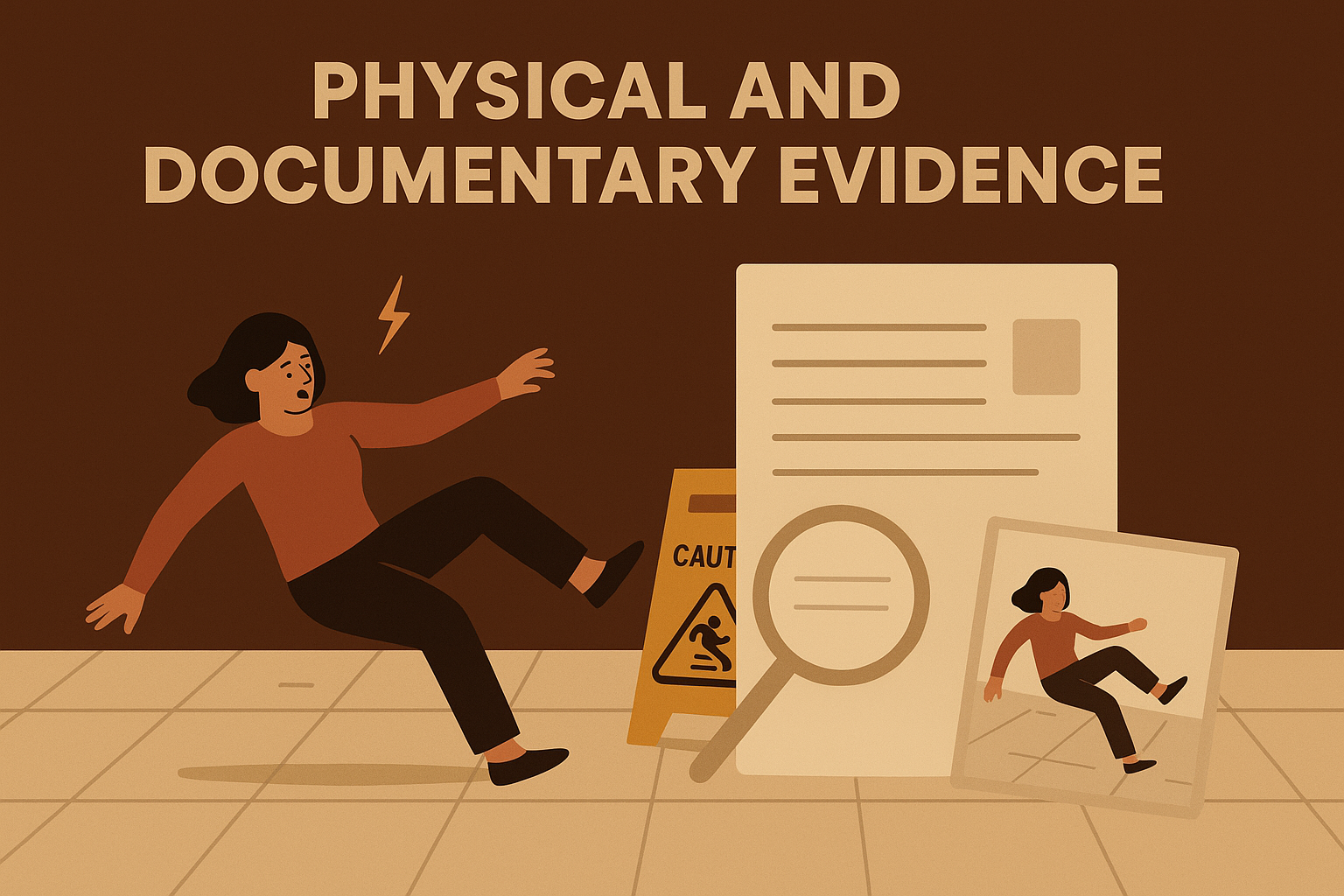
Beyond photos, your lawyer will also request maintenance logs, inspection reports, and prior incident records from the property owner. These documents can show whether the owner knew about the problem and ignored it, or whether similar accidents had happened before. That history of neglect significantly strengthens your negligence argument.
Witness and medical evidence
People who saw you fall or who noticed the hazard beforehand can provide testimony that supports your account of events. Witness statements carry real weight in negotiations and at trial, especially when they come from individuals who have no connection to you or the property owner. Your attorney will identify and contact witnesses quickly, before memories fade or people become difficult to reach.
Your medical records are equally critical because they link the accident directly to your injuries. Every emergency room visit, diagnosis, follow-up appointment, and treatment recommendation creates a paper trail that shows the real impact of the fall on your health. Gaps in medical treatment give insurers ammunition to argue your injuries weren't serious, which is why consistent documentation from the day of your accident forward matters so much.
What compensation can cover and how value is set
One of the first questions people ask after a slip and fall is how much their case is worth. The honest answer depends on several factors, but understanding the categories of compensation available gives you a realistic baseline for what to expect. A personal injury lawyer for slip and fall claims will calculate your damages based on both what you've already lost and what you're likely to face going forward.
Economic damages: the costs you can document
Economic damages cover every financial loss tied directly to your injury . These are the numbers you can verify with bills, pay stubs, and receipts. Medical expenses are usually the largest component, including emergency care, surgery, physical therapy, prescription medications, and any future treatment your doctor expects you to need. Lost wages count too , both the income you've already missed during recovery and the earning capacity you may lose if your injuries limit your ability to work long-term.
Here are the main types of economic damages in a slip and fall case:
- Medical bills: Past and future treatment costs
- Lost income: Wages missed during recovery and reduced future earnings
- Out-of-pocket costs: Transportation to appointments, home modifications, and medical equipment
Non-economic damages: the costs that don't come with a receipt
Not every loss shows up on a bill. Pain and suffering refers to the physical discomfort and emotional distress your injury causes, and it can represent a significant portion of your total compensation. Courts and insurers typically calculate this using either a multiplier applied to your economic damages or a daily rate for the time you lived with your injuries.
The more thoroughly your attorney documents how your injury affected your daily life, the stronger your non-economic damage claim becomes.
Other non-economic damages can include loss of enjoyment of life, anxiety, depression, and the impact your injuries had on your relationships. These are harder to quantify, but they are real and compensable. Your attorney builds this part of your claim using medical records, personal statements, and testimony from people close to you who witnessed how the injury changed your life.
How to choose and hire the right lawyer
Not every personal injury attorney handles premises liability cases regularly, and the difference between a generalist and a lawyer with real slip and fall experience shows up directly in your outcome. Before you hire anyone, you need to evaluate whether the attorney you're considering has the specific background, resources, and approach to take your case seriously and fight for its full value.
Look for experience in premises liability cases
A personal injury lawyer for slip and fall claims should have a clear history of handling premises liability cases, not just general injury work. Ask directly whether they've handled cases like yours, what their results have looked like, and whether they've taken slip and fall cases to trial. Attorneys who only push for quick settlements may not get you the full value of your claim, especially if the insurer knows they won't litigate when pushed.
The right lawyer won't pressure you into a fast settlement; they'll push for the number that actually covers your losses.
You also want to confirm that the firm has the resources to investigate your case properly , including access to expert witnesses, the ability to send preservation letters fast, and staff who will actively manage your file rather than let it sit.
Ask the right questions before you sign anything
Before you commit to representation, a free initial consultation gives you a direct look at how the attorney communicates and whether they treat your situation with real attention. Use that time to ask specific questions rather than just listening to a general pitch.
Here are questions worth asking every lawyer you consider:
- How many slip and fall cases have you handled in Mississippi or Tennessee?
- Do you take cases to trial, or do you primarily settle?
- Who will actually work on my case day to day?
- How do your fees work, and what happens if we don't recover anything?
Contingency fee arrangements are standard in personal injury cases, meaning you pay nothing upfront and the lawyer only collects if you win compensation. Confirm that structure before signing anything, and make sure you understand what percentage the firm charges and how litigation costs are handled if your case goes to court.
What to do next
If you were hurt in a fall on someone else's property, the steps you take right now directly shape what your case is worth . Get medical attention immediately, document everything you can at the scene, and do not give any recorded statements to the insurance company before you speak with an attorney. Evidence disappears fast , and every day you wait is a day something useful gets lost.
Hiring a personal injury lawyer for slip and fall claims early gives you the best chance of building a complete case while the evidence is still available. You need someone who understands premises liability, knows how to negotiate with insurers, and will take your case to trial if that's what it takes to get a fair result.
Mayfield Law Firm, P.A. has represented injured clients across Northeast Mississippi and the Memphis area for over 40 years. Your consultation is free , so reach out to our personal injury team today and find out where your case stands.