Car Accident Lawyer: What They Do and Why It Matters
You got hit by another driver, and now you're staring down medical bills, a totaled car, and an insurance adjuster who calls three times a day asking you to sign something. That's the moment most people start searching for a car lawyer accident victims can actually trust, and it's worth understanding what that person does before you sign anything.
A car accident lawyer handles the parts of your claim that insurance companies count on you not understanding: proving fault, calculating what your injuries and lost wages are really worth, and negotiating so you don't settle for the first lowball offer. If a fair settlement never comes, they take the case to court. That's the direct answer to why so many crash victims search for an accident auto lawyer instead of dealing with claims adjusters alone.
Below, we'll walk through exactly what a car accident lawyer does day to day, when hiring one actually changes your outcome, and how firms like ours in Tupelo, Southaven, and Memphis handle these cases from the first phone call through settlement or trial.
Why hiring a car accident lawyer matters after a crash
The first days after a crash decide more of your case than most people realize. Insurance adjusters start building their file within hours, and every recorded statement you give becomes evidence they can use later. Finding a car lawyer accident victims trust early in that window changes the entire trajectory of a claim, because it stops the insurance company from controlling the narrative before you've even seen a doctor twice.
Insurance companies aren't working for you
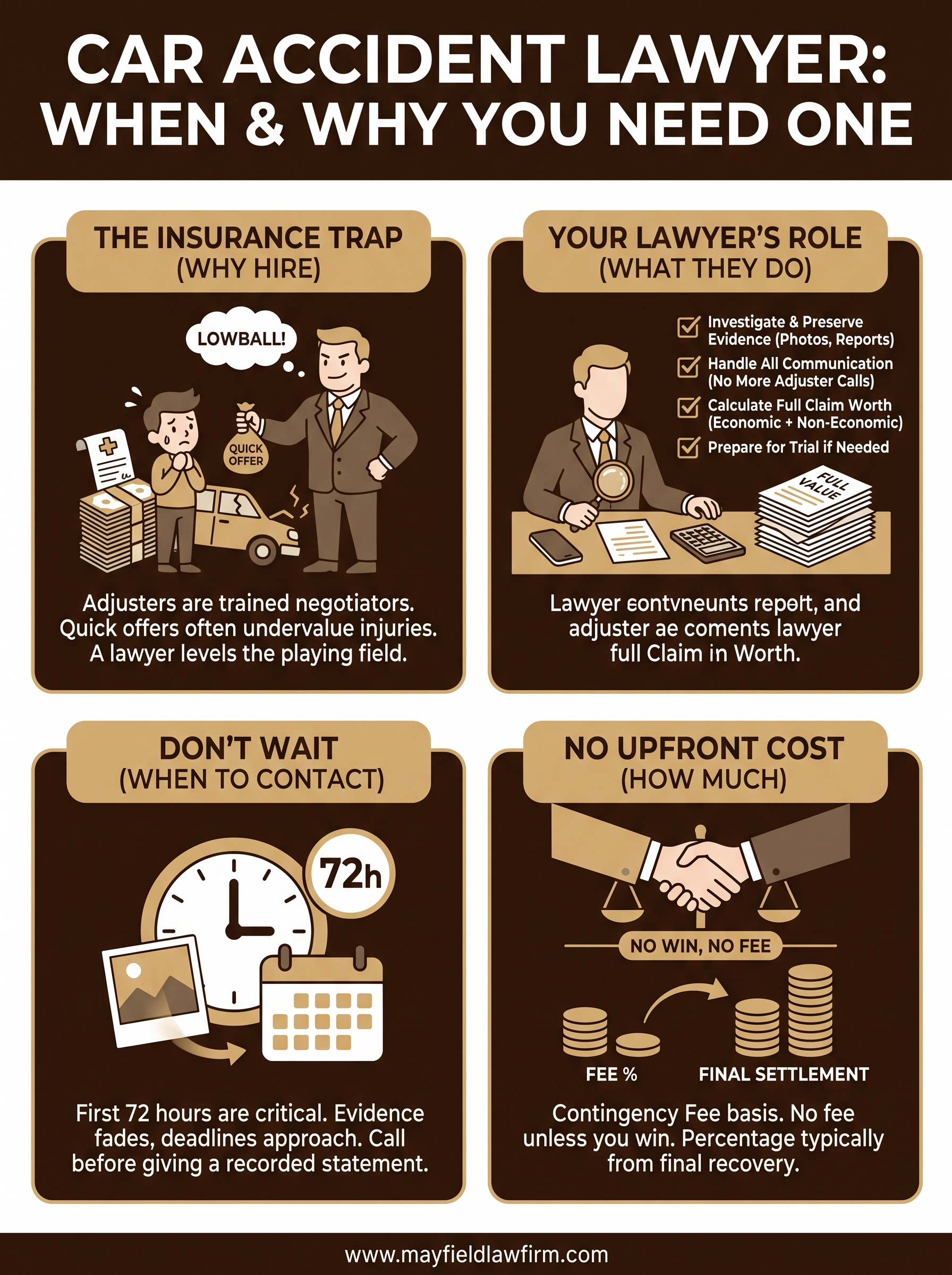
Adjusters aren't villains, but their job is to close claims for as little money as possible. Claims adjusters are trained negotiators who handle hundreds of files a year, while most accident victims handle one claim in their entire lives. That mismatch is exactly why insurers often extend a quick settlement offer within days of a wreck, before you know the full extent of your injuries or how much work you'll miss.
An insurance company's first offer is almost never its best offer.
Recognizing that gap early keeps you from signing away your right to more money down the road, especially once you realize an injury needs surgery or months of physical therapy you didn't expect.
What happens when you negotiate alone
Without legal representation, most claimants accept whatever number the adjuster proposes because they don't have an independent way to value the claim. Insurers count on that. An accident auto lawyer brings in medical records, wage statements, and sometimes expert opinions to build a number the insurance company can't wave away. Here's how the two paths typically compare:
| Factor | Without a lawyer | With a lawyer |
|---|---|---|
| Who calculates your damages | The insurance adjuster | Independent review of medical bills, lost wages, and future care costs |
| Negotiation leverage | Take-it-or-leave-it offer | Counteroffers backed by documentation and the threat of litigation |
| Deadline tracking | You track the statute of limitations yourself | Your attorney monitors and protects filing deadlines |
| Disputed fault | Your word against the other driver's insurer | Police reports, witness statements, and accident reconstruction when needed |
That table isn't theoretical. It's the pattern we see in nearly every case that walks through our doors after someone tried to handle the claim solo first.
Evidence disappears faster than you think
Skid marks fade, dashcam footage gets overwritten, and witnesses move or forget details within weeks. Gathering crash evidence quickly, things like traffic camera footage, the other driver's cell phone records, or vehicle black box data, often makes the difference between a claim that gets paid and one that gets denied for lack of proof. According to the National Highway Traffic Safety Administration, millions of police-reported crashes happen every year in the U.S., and in a large share of them, fault is disputed by at least one insurance company involved. A lawyer who moves fast can lock down proof before it disappears.
Deadlines you can't afford to miss
Mississippi's three-year deadline to file an injury lawsuit runs from the date of the crash, and Tennessee gives you just one year. Miss that window and you lose the right to recover anything, no matter how strong your case was. People assume they have plenty of time because the insurance company keeps talking to them, but conversations with an adjuster don't pause the clock. Working with local Tupelo and Memphis attorneys at our offices across Mississippi and Tennessee who already know these deadlines means nobody in your case gets caught off guard when the filing window is closer than it looks.
The bottom line is simple: hiring a lawyer isn't about distrust of the process, it's about leveling a playing field that starts tilted against you the moment the other driver's insurance company opens a file on your claim.
How to choose the right car accident lawyer for your case
Not every attorney who advertises on a billboard actually tries cases in a courtroom, and that distinction matters more than most people realize when they're picking who represents them. Finding the right car lawyer accident victims can trust takes more than a quick Google search and a phone call to whoever answers first, so it helps to follow the steps for finding a good car accident lawyer. A few specific questions during your free consultation will tell you almost everything you need to know before you sign a representation agreement.
Prioritize local, hands-on experience
General practice attorneys sometimes take car accident cases as a side offering, but insurance companies know which firms actually litigate and which ones fold at the first counteroffer. Ask how many crash cases the attorney has personally handled in the past year, and whether those cases involved injuries similar to yours, whiplash, broken bones, or something requiring long-term care. A firm with decades of courtroom experience in Northeast Mississippi and South Memphis already knows local judges, opposing counsel, and which insurers tend to lowball claims from the start, which is one reason a nearby lawyer for a car accident beats a national name.
Ask whether they'll actually go to trial
Some firms settle every case regardless of what it's worth, because trial takes time and resources they'd rather not spend. That approach caps your recovery before negotiations even begin.
A lawyer who's never taken a case to trial has no real leverage at the negotiating table.
During your consultation, ask directly: "How many of your cases have gone to trial, and what happened?" An honest answer, including cases that didn't end in a win, tells you more than a polished sales pitch ever will.
Check reviews, then verify what you find
Car accident lawyer reviews are a starting point, not the whole picture. Cross-reference what you read with your state bar association's attorney lookup tool, which shows disciplinary history and confirms the lawyer is actually licensed to practice where you live. Look for patterns across reviews rather than one glowing or scathing comment, and pay attention to whether past clients mention responsiveness, since that's usually the first thing to slip once a firm takes on more cases than it can handle well.
Confirm fees and communication upfront
- Is the initial consultation actually free, with no obligation to hire?
- What percentage does the firm take if the case settles versus if it goes to trial?
- Who will be your main point of contact, the attorney or a case manager?
- How often can you expect updates on your case?
- Are there office locations near you for in-person meetings?
Regional firms with multiple offices, like our locations in Tupelo, Southaven, and Memphis, tend to answer these questions faster because in-person accessibility is part of how they operate day to day. If a firm hesitates to explain its fee structure clearly during a free case evaluation , treat that as a warning sign rather than an oversight. You can review what happens at a free case review with an injury attorney and schedule one with Mayfield Law Firm to see the difference firsthand before committing to anyone.
What a car accident lawyer actually does for your claim
Once you hire a car lawyer accident representation stops being a mystery and starts looking like a checklist of what a car accident lawyer does that someone else manages for you. From the day you sign the agreement, your attorney takes over the tasks that used to fall on your shoulders while you're trying to heal: gathering records, talking to the insurance company, and figuring out what your case is actually worth. Understanding each piece of that work helps you see why a case takes weeks or months instead of days.
Investigating the crash and preserving evidence
Before anyone talks numbers, your attorney reconstructs what happened. That means pulling the police report, requesting traffic camera footage before it's deleted, and sometimes sending a preservation letter to the other driver's insurer demanding they keep vehicle data intact. Common evidence a firm gathers early includes:
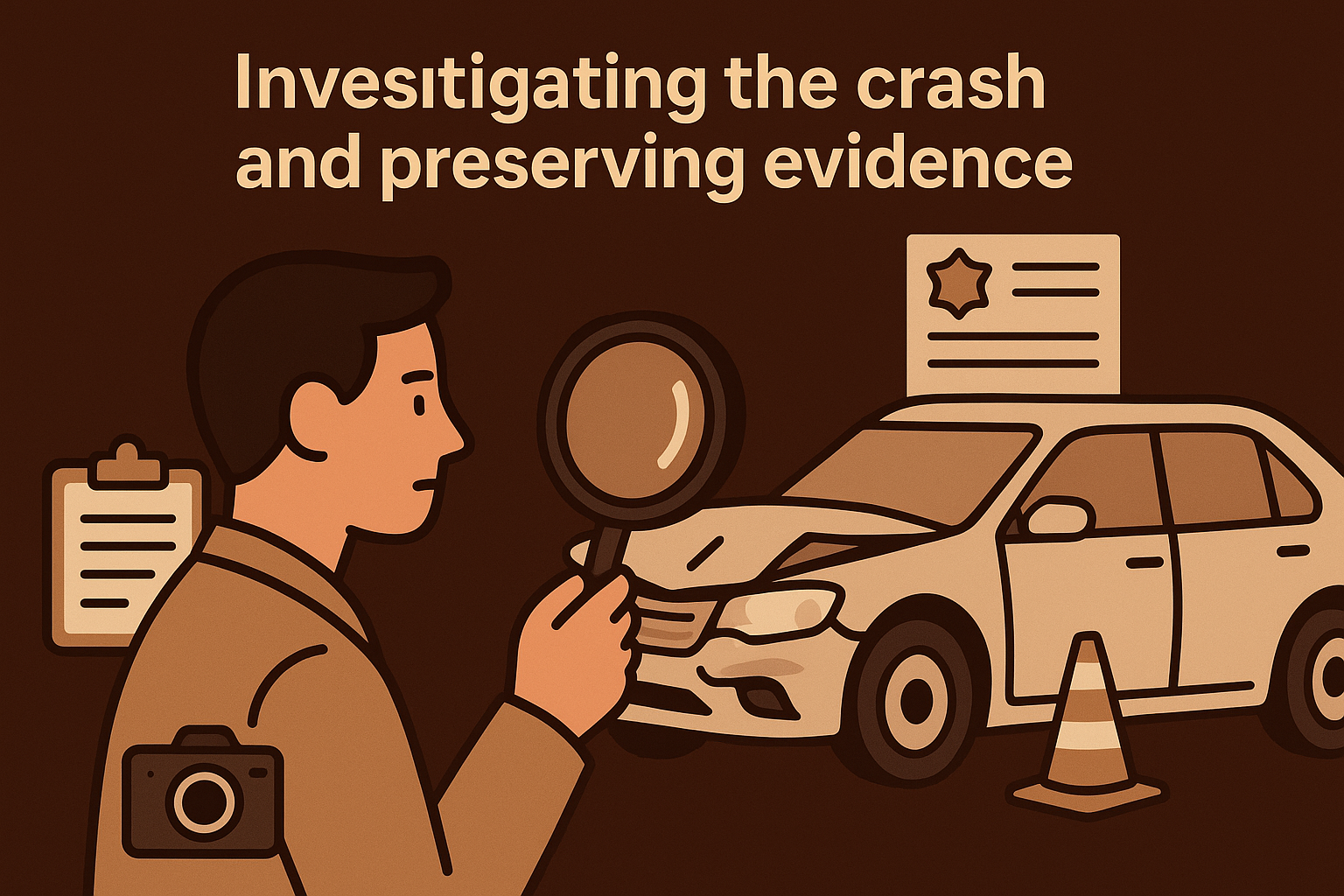
- Police reports and officer statements
- Photos and video from the scene or nearby businesses
- Witness contact information and recorded statements
- Vehicle damage estimates and repair records
- Medical records tying your injuries directly to the crash
Gathering this fast matters because memories fade and footage gets overwritten within days in a lot of cases.
Dealing with the insurance company so you don't have to
Handling every phone call, letter, and settlement offer from the adjuster is one of the most immediate reliefs a lawyer provides. Instead of you fielding calls that ask leading questions designed to minimize your claim, your attorney becomes the single point of contact, which means adjusters can no longer catch you off guard while you're still recovering. Insurers tend to shift their tone once they know an experienced accident auto lawyer is reviewing every offer, because they know a lowball number won't get accepted without pushback.
Once an attorney takes over communication, the insurance company stops negotiating against someone who doesn't know the playbook.
Calculating what your claim is really worth
Insurance adjusters use software that spits out a number based on limited inputs, but that figure rarely accounts for future medical care or how an injury affects your ability to work long-term. Your attorney builds a fuller picture instead, factoring in current bills, projected treatment costs, lost income, and how the injury changes your daily life. Medical experts sometimes get pulled in for cases involving surgery, permanent impairment, or disputed causation, since their opinion carries weight an adjuster can't easily dismiss.
Filing suit and preparing for trial if the offer isn't fair
Negotiation only works when the other side believes you're prepared to walk away from the table, and filing a lawsuit is how your attorney proves that. Preparing a case for court involves depositions, formal discovery requests, and sometimes hiring an accident reconstruction expert to testify about how the crash actually happened. Firms that regularly file suit, rather than treating litigation as a last resort, tend to see better settlement offers earlier in the process simply because insurers know the case won't sit unresolved indefinitely.
Every one of these steps runs in parallel, not in a strict sequence, which is part of why having someone track deadlines, paperwork, and negotiations at the same time keeps your claim from stalling while you focus on getting better.
When to contact a lawyer after an accident
Timing changes everything in a car accident claim, and waiting too long to call a car lawyer accident victims trust can cost you money and evidence you'll never get back. The honest answer is that you should reach out to an auto accident injury lawyer before you give a recorded statement to any insurance company, ideally within the first few days after the crash. Waiting doesn't make your case stronger, it just gives the other side more time to shape the story before you have a chance to.
The first 72 hours matter most
Specific things happen fast after a wreck that make early legal help valuable. Traffic camera footage from nearby businesses often gets overwritten within a week. The other driver's insurer may already be reviewing the police report and preparing a settlement offer designed to close the file quickly. Meanwhile, you're dealing with pain, missed work, and a car that might not be drivable, none of which leaves much energy for negotiating with a claims adjuster who does this for a living.
Every day you wait to call a lawyer is a day the insurance company spends building its version of events.
Contacting an attorney doesn't mean you're committing to a lawsuit. A free consultation simply gets someone in your corner who can tell you what evidence needs to be preserved right now, before it disappears.
Signs you shouldn't wait any longer
Some situations make hiring a lawyer immediately, rather than later, the difference between a fair settlement and a denied claim. Reach out right away if any of these apply to your situation:
- The other driver's insurance company has already called asking for a recorded statement
- Fault for the crash is disputed or unclear from the police report
- Your injuries required emergency room treatment, surgery, or ongoing physical therapy
- You missed work and don't know how you'll cover bills in the meantime
- The at-fault driver was uninsured, underinsured, or fled the scene in a hit and run
- A family member died as a result of the crash
Any one of these on its own is reason enough to talk to an accident auto lawyer before you respond to the insurance company at all.
Don't let a quick offer rush your decision
Insurers sometimes extend a settlement offer within days of the crash, before you've even finished initial treatment. Accepting that money closes your case permanently, even if you later discover you need surgery or months of missed work you didn't anticipate. Once you sign a release, you can't go back and ask for more, no matter how much your medical bills grow. A lawyer reviewing the offer before you sign anything protects you from locking in a number that doesn't reflect what your injuries actually cost you.
Deadlines are closer than you think
Mississippi law gives you three years from the date of the crash to file a personal injury lawsuit, while Tennessee only gives you one year, according to each state's statute of limitations. That sounds like plenty of time until you factor in the months it takes to gather medical records, negotiate with an insurer, and build a case that can actually go to trial if needed. Calling a lawyer early gives your attorney room to work the case properly instead of racing a deadline that's suddenly weeks away. Whether your crash happened yesterday or a few months ago, the sooner you get an attorney reviewing your file, the more options you'll have when it's time to negotiate or file suit.
How much does a car accident lawyer cost
Money worries after a crash make people hesitant to even call a lawyer, but most car lawyer accident representation costs nothing upfront. Nearly every personal injury attorney, including our firm, works on a contingency fee basis, what a no win no fee car accident agreement really means, so you pay nothing out of pocket unless the case results in a settlement or verdict in your favor. That structure exists specifically so injured people aren't forced to choose between paying rent and hiring someone to fight for fair compensation.
How contingency fees actually work
Under a contingency agreement, your attorney's fee comes directly out of the money recovered at the end of the case, not from your bank account while the claim is pending. Fees typically fall between 33% and 40% of the total recovery, depending on whether the case settles early or requires a lawsuit and trial. Some firms structure the percentage in tiers:
| Stage of the case | Typical contingency fee |
|---|---|
| Settles before a lawsuit is filed | 33% |
| Settles after a lawsuit is filed | 35%-38% |
| Goes to trial or arbitration | 40% |
These numbers vary by firm and by state, so ask for the exact percentage in writing before you sign anything.
Why the percentage climbs as the case progresses
Higher fees at trial reflect the additional work involved: depositions, expert witnesses, and courtroom preparation all take significantly more time than a straightforward settlement negotiation. Understanding this tiered structure upfront prevents surprises later, especially if your case doesn't resolve quickly. An accident auto lawyer who explains this clearly during your first meeting is showing you exactly the kind of transparency you want from someone handling your recovery.
No recovery means no fee, full stop, and that arrangement is what makes legal help accessible to people who can't afford an hourly rate.
What costs come out of your settlement besides the fee
Beyond the attorney's percentage, certain case expenses get deducted from your final settlement too. These typically include:
- Filing fees for a lawsuit, if one becomes necessary
- Costs for obtaining medical records and police reports
- Expert witness fees, such as an accident reconstructionist or medical specialist
- Deposition and court reporter costs
- Postage, copying, and administrative expenses tied directly to your case
Reputable firms front these costs and only recover them from your settlement, so you're never billed while the case is active. Ask specifically whether these expenses are deducted before or after the attorney's percentage is calculated, since that detail changes what actually lands in your pocket at the end.
Free consultation doesn't mean free representation, but it's still risk-free
Offering a free case evaluation lets you find out whether you have a viable claim without spending a dime or committing to anything. During that meeting, a lawyer reviews the basic facts of your crash, tells you honestly whether pursuing a claim makes sense, and explains exactly how fees would work if you decide to move forward. Signing a contingency agreement afterward doesn't obligate you financially unless the case succeeds, which removes the biggest barrier that keeps injured people from calling a lawyer in the first place. If cost has been holding you back from reaching out, that hesitation isn't necessary once you understand how the fee structure actually protects you rather than the firm.
What compensation you can recover after a car accident
Most people search for a car lawyer accident case because they don't actually know what they're entitled to beyond a repair bill. Compensation after a crash usually falls into two broad categories, economic and non-economic damages, and understanding both helps you recognize when a settlement offer falls short of what your claim is genuinely worth.
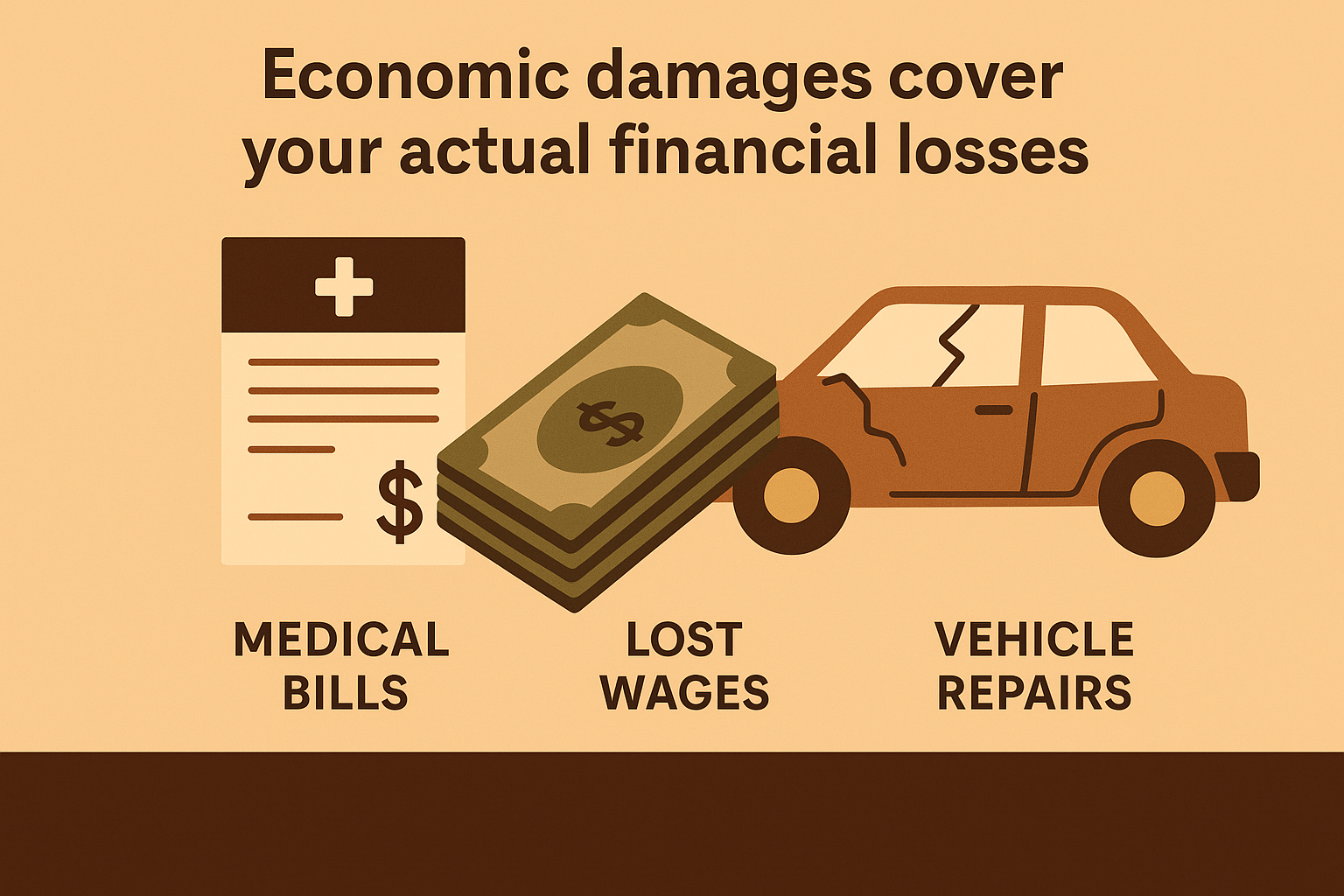
Economic damages cover your actual financial losses
Economic damages are the easiest to calculate because they come with receipts, invoices, and pay stubs attached. These include medical bills from the emergency room visit, follow-up appointments, physical therapy, and any future treatment a doctor documents as necessary. Lost wages count too, both the income you've already missed and, in serious injury cases, your reduced earning capacity going forward if you can't return to the same job. Vehicle repair or replacement costs, along with out-of-pocket expenses like rental cars and prescription medications, round out this category.
Non-economic damages compensate for what a bill can't capture
Pain and suffering, emotional distress, and loss of enjoyment of life fall under non-economic damages, and how those losses get valued is where an accident auto lawyer earns their keep. Insurance adjusters often try to minimize these numbers because there's no invoice to point to, but a documented injury that limits your ability to work, sleep, or spend time with your family has real value a jury recognizes even without a receipt.
A crushed knee that keeps you from coaching your kid's soccer team is worth something, even without a price tag attached.
| Damage type | Examples | How it's calculated |
|---|---|---|
| Economic | Medical bills, lost wages, property damage | Documented costs and projected future expenses |
| Non-economic | Pain and suffering, emotional distress | Multiplier applied to economic damages or jury discretion |
| Punitive | Rare, reserved for reckless conduct | Set by a judge or jury as punishment, not compensation |
Punitive damages are the exception, not the rule
Punitive damages exist to punish especially reckless behavior, like driving drunk or fleeing the scene, rather than to compensate you directly. Courts award them far less often than economic or non-economic damages, and they typically only come up when a defendant's conduct goes well beyond ordinary negligence. Your attorney will tell you honestly whether your case even qualifies, since overpromising here does you no favors.
Wrongful death claims follow a different formula
When a crash takes someone's life, surviving family members can file a wrongful death lawsuit for funeral expenses, loss of financial support, and loss of companionship. Both Mississippi and Tennessee allow wrongful death claims, though the process for who can file and how damages get distributed among family members varies by state. This is one area where working with local Tupelo and Memphis attorneys who already understand each state's rules matters, since filing errors here can delay or reduce what a grieving family ultimately recovers.
How uninsured motorist coverage works adds another layer worth checking, since Mississippi and Tennessee don't require drivers to carry much liability coverage. If the at-fault driver's policy limits fall short of your damages, your own policy may fill the gap, but only if you know to make that claim before deadlines close in on you.
Taking the next step after your accident
A crash upends your life fast, and the insurance company counting on you to settle before you understand your injuries or your rights. The whole point of hiring a car lawyer accident victims trust is closing that gap: someone who preserves evidence while it still exists, calculates what your claim is actually worth, and pushes back when an adjuster tries to close your file cheap. None of that costs you anything upfront, and waiting only helps the other side.
If you're still weighing whether to call an accident auto lawyer , remember that a consultation doesn't commit you to anything except finding out where you stand. Talk to someone before you sign a release or give a recorded statement you can't take back. Reach out to our Tupelo car accident attorneys today and get a straight answer about your case before that deadline sneaks up on you.