Lawyers near Me for Medical Malpractice: How to Choose
Searching "lawyers near me medical malpractice" usually means something already went wrong. A misdiagnosis, a surgical error, a medication mistake, and now you're dealing with the aftermath while trying to figure out what to do right after a medical error and who can actually help. Medical malpractice cases are technical, time-sensitive, and hard to evaluate on your own, which is exactly why picking the right attorney matters more here than in almost any other type of injury claim.
The short answer: you want a local attorney with real trial experience, a track record with medical negligence claims specifically, and a firm that offers a free consultation so you can size them up before committing to anything. Not every personal injury lawyer handles malpractice well. It requires medical record review, expert witnesses, and knowledge of Mississippi and Tennessee's specific filing deadlines and damage caps.
This guide walks through exactly what to look for when you're comparing options in Tupelo, Southaven, or Memphis. We'll cover the questions to ask during your first call, red flags that signal a firm won't fight for you, and how firms like Mayfield Law Firm structure fees so you're not paying out of pocket while your case is still building.
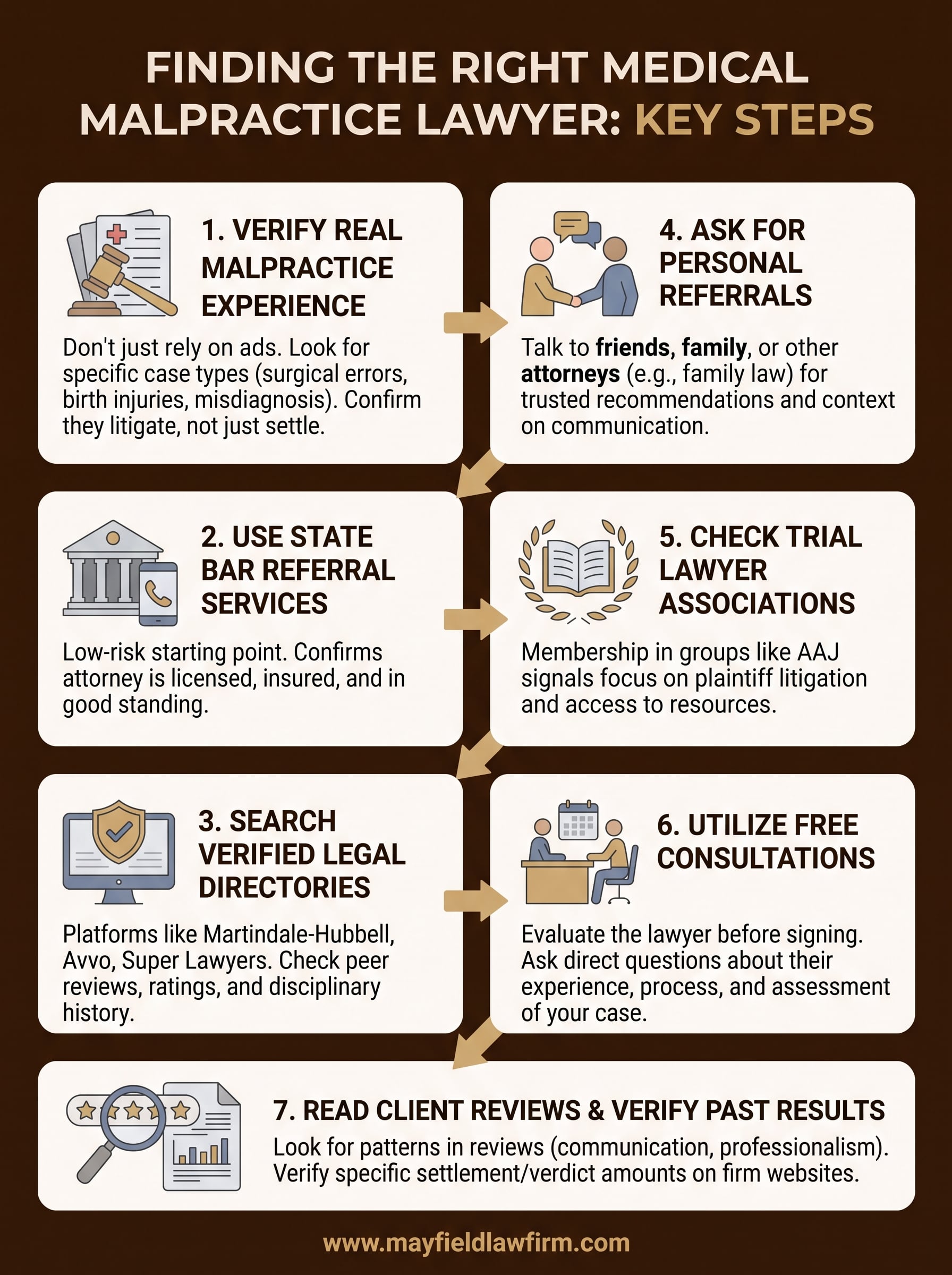
1. Contact a firm with real medical malpractice experience
Medical malpractice claims aren't like a fender-bender case. You're going up against a hospital's legal team, an insurance company built to deny claims, and a body of medical evidence that takes real skill to interpret. Before you call anyone, confirm the firm has actually litigated malpractice cases , not just personal injury claims in general. A quick way to check: look at the firm's own practice area page, like Mayfield Law Firm's Tupelo medical malpractice practice area, and see if they name specific case types such as surgical errors, birth injuries, or diagnostic failures.
How it works
Start by calling the firm directly and asking pointed questions: How many malpractice cases have you handled? Do you work with medical experts to build the case? Have you tried a malpractice claim in front of a jury? A firm with genuine experience will answer without hesitation and explain how they'll pull your medical records, consult with a qualified expert witness, and build a timeline of what went wrong, which is the core of the four elements and evidence a malpractice claim requires.
A lawyer who can't name a single malpractice case they've handled isn't the lawyer you want reviewing your medical records.
Who it's for
This approach suits anyone who suspects a misdiagnosis, surgical error, medication mistake, or birth injury caused real harm, and it helps to understand what a medical malpractice lawyer actually does before you call. It's especially important if your injury involves long-term disability, a wrongful death, or damages that could run into six figures, because these cases require deeper resources and more aggressive advocacy than a general practice attorney typically provides.
What to expect
Once you contact an experienced firm, expect a detailed intake process. They'll ask for your medical records, the names of treating providers, and a timeline of your symptoms and treatment. From there, most firms send records to an independent medical expert to determine whether the standard of care was breached. This step alone can take several weeks within the full malpractice case timeline, since Mississippi and Tennessee both require expert certification before a malpractice suit can proceed. Patience here pays off: rushing this stage weakens your case later.
Cost
Most medical malpractice attorneys, including Mayfield Law Firm, work on contingency fees. That means you pay nothing upfront, and the firm only collects a percentage of your settlement or verdict if they win. Below is a general breakdown of what to expect:
| Fee Structure | Typical Range | When You Pay |
|---|---|---|
| Contingency fee | 33%-40% of recovery | Only after settlement or verdict |
| Case expenses (experts, filing fees) | Often advanced by firm | Deducted from final recovery |
| Consultation | Free at most firms | No cost, no obligation |
This structure matters because malpractice cases can drag on for a year or more, and you shouldn't have to fund expert witness fees and other case expenses out of pocket while you're already dealing with medical bills.
2. Use your state bar association's lawyer referral service
If you're still typing "lawyers near me medical malpractice" into a search bar and getting nowhere, your state bar association is one of several ways to track down the top malpractice attorneys nearby and can shortcut the guesswork. Both the Mississippi Bar and the Tennessee Bar Association run lawyer referral services that connect you with vetted attorneys who carry malpractice insurance and stand in good standing. It's a free, low-risk starting point before you commit to any firm.
How it works
Most referral services work the same way: you call or fill out an online form describing your case, and the bar matches you with a licensed attorney who practices in that area. The Mississippi Bar's lawyer referral program typically charges a small fee for the initial consultation, separate from any contingency arrangement you'd later sign with the firm.
A bar referral confirms one thing fast: the lawyer is licensed, insured, and not a scam operation.
Who it's for
This route suits people who don't have a personal network to draw referrals from, or who just moved to Tupelo, Southaven, or Memphis and don't know which firms have a real presence there. It's also useful as a second opinion , a way to confirm that a firm you're already considering has a clean disciplinary record.
What to expect
Expect a general match, not a specialist match. Bar referral services rarely filter for malpractice-specific experience, so you'll still need to ask the attorney directly about their track record with negligence claims once you're connected.
Cost
Referral services themselves are usually free or charge a nominal fee, often $25 to $50, for a short initial consultation with the matched attorney. Any work beyond that consultation follows whatever fee structure the individual attorney sets, which is typically the same contingency model discussed above.
3. Search verified legal directories and rating platforms
Typing "lawyers near me medical malpractice" into Google often surfaces paid ads before it shows you attorneys with real credentials. Verified legal directories cut through that noise by requiring lawyers to submit bar numbers, disciplinary history, and peer endorsements before they're listed. Platforms like Martindale-Hubbell, Avvo, and Super Lawyers rank attorneys based on peer reviews and case outcomes, giving you a more reliable starting point than a generic search result.
How it works
You search by practice area and location, filtering for "medical malpractice" in Tupelo, Southaven, or Memphis specifically. Most platforms display a peer rating , years of practice, and disciplinary status pulled directly from state bar records. Some, like Avvo, also show whether the attorney answers legal questions publicly, which tells you something about how responsive they are.
A directory listing with zero peer endorsements after a decade of practice tells you something the marketing copy won't.
Who it's for
This method works best for people who want a quick credibility check before making a call. If you're comparing three or four firms and need to narrow the list fast, cross-referencing directory ratings against a firm's own website and what past clients say about working with them saves time and helps you avoid firms padding their reputation with a slick homepage and little substance behind it.
What to expect
Expect ratings to vary by platform since each uses different scoring criteria. A firm with a 9.5 on one site might show up unrated on another simply because they haven't claimed that profile. Treat directory scores as a screening tool , not a final decision, and always confirm malpractice-specific experience directly with the firm afterward.
Cost
Searching these directories costs nothing. Attorneys pay directories for premium placement or profile enhancement, but reading reviews, checking bar status, and comparing ratings is free to anyone doing the research.
4. Ask for referrals from friends, family, or other attorneys
Word of mouth still beats most online searches when you need a medical malpractice lawyer . If someone you trust went through a similar ordeal, whether a birth injury, a delayed cancer diagnosis, or a surgical mistake, their experience tells you more than a five-star review ever could. Personal referrals also come with context: you'll hear how the lawyer communicated, how long the case took, and whether the firm actually fought for a fair settlement or folded early.
How it works
Ask around before you search "lawyers near me medical malpractice" again. Talk to friends, coworkers, or even other attorneys you know, since lawyers outside personal injury often keep a mental list of firms they'd trust with a malpractice claim. A family law or bankruptcy attorney in Tupelo or Southaven, for instance, may know exactly which malpractice firms get results and which ones settle too fast.
The best referral rarely comes from an ad. It comes from someone who already lived through the process and would hire that lawyer again.
Who it's for
General referrals suit people who value a trusted recommendation over a cold search result. This route works especially well if you know someone who filed a similar claim in Northeast Mississippi or South Memphis, since local knowledge often matters more than national rankings.
What to expect
Expect a mixed bag of names. Not every referral will specialize in malpractice, so you'll still need to know what to check before hiring a malpractice attorney and weigh each recommendation against the firm's actual case history and courtroom experience before signing anything.
Cost
Asking for referrals costs nothing beyond a phone call or conversation. Any resulting consultation typically follows the same free, no-obligation model most malpractice firms offer, with contingency fees applying only after a case moves forward.
5. Check national and state trial lawyer associations
Trial lawyer associations like the American Association for Justice (AAJ) and the Mississippi Association for Justice maintain member directories filled with attorneys who focus on plaintiff-side litigation, including medical negligence. Membership isn't automatic. Attorneys typically join because they want access to continuing education , case strategy resources, and a network of peers who litigate against hospitals and insurance defense firms for a living. That focus alone sets these directories apart from a general search for "lawyers near me medical malpractice."
How it works
Visit the American Association for Justice website or your state's trial lawyer association page and search their member directory by practice area and location. Filter for medical malpractice or medical negligence, then cross-check any names against the firm's own website to confirm they still handle these claims actively in Mississippi or Tennessee.
Membership in a trial lawyer association signals a firm built for the courtroom, not just the settlement table.
Who it's for
This route fits people who want extra confirmation that a firm isn't just claiming malpractice experience but actively engaging with the plaintiff's bar on strategy and case law. It's a smart secondary check after you've already narrowed your list through referrals or directories.
What to expect
Expect a smaller, more curated list than a general legal directory produces. Trial lawyer association members tend to skew toward attorneys who try cases rather than settle everything quietly, which matters if your claim ends up needing a jury trial to get fair compensation.
Cost
Searching these directories costs nothing, since membership dues are paid by the attorneys themselves, not the public. Any consultation you schedule afterward follows the standard free, no-obligation format most malpractice firms use, with fees only kicking in once a contingency agreement is signed.
6. Take advantage of free consultations before you commit
A free consultation isn't just a courtesy call, it's your best chance to evaluate a lawyer before you sign anything. Most firms handling medical malpractice claims, including Mayfield Law Firm, offer this first meeting at no cost precisely because they want serious cases, not a quick sale. Use that meeting to interview the attorney as much as they're evaluating your claim.
How it works
Bring whatever medical records, bills, and correspondence you already have, along with a written timeline of what happened. During the call or office visit, ask direct questions, since which questions matter most at that first meeting can decide everything: Will you personally handle my case or hand it to a junior associate? What's your assessment of the standard of care issue here? How long do you expect this to take? A firm confident in its process will answer clearly instead of dodging specifics.
If a lawyer can't give you a straight answer during a free consultation, they won't give you one after you've signed a contract.
Who it's for
This step matters for everyone comparing malpractice attorneys, regardless of how you found them, whether through a bar referral, a directory search, or a friend's recommendation. It's especially valuable if you're weighing two or three firms and need a side-by-side read on how each one communicates and strategizes.
What to expect
Expect the attorney or an intake specialist to ask detailed questions about your treatment history, symptoms, and any prior communication with the healthcare provider involved. Some firms schedule a follow-up call once an initial medical review is done, since a real answer on case viability often takes more than one conversation.
Cost
Consultations are free at most reputable malpractice firms, with no obligation to proceed. If a firm charges upfront just to discuss your case, treat that as a red flag rather than standard practice, since it usually signals a firm unwilling to invest in the case before getting paid.
7. Read client reviews and verify past case results
Online reviews tell you how a firm treats people once the contract is signed, not just how they sound on a sales call, as long as you know which rating sites to trust and how to spot fake reviews. Verified case results add another layer: they show whether a firm actually wins malpractice claims or just files them and settles for whatever the insurer offers first. Together, these two sources give you a much clearer picture than anything you'll find by searching "medical malpractice lawyers near me" and clicking the top result.
How it works
Check Google reviews, but also look at case results published directly on the firm's website, since these often list settlement or verdict amounts tied to specific injury types. Look for patterns rather than isolated complaints:
- Do multiple reviews mention slow communication or a lawyer who never returned calls?
- Are settlement amounts specific, or vague claims of "millions recovered" with no case detail?
- Do reviews mention the actual attorney, or just office staff?
A firm that hides its case results usually doesn't have many worth bragging about.
Who it's for
This step suits anyone making a final decision between two or three firms after narrowing their list through referrals, directories, or trial association searches. It's also useful for someone whose case involves significant damages , where a firm's track record with similar injuries matters more than a generic five-star rating.
What to expect
Expect a mix of glowing reviews and the occasional complaint, since no firm satisfies every client. Focus on how firms respond to negative reviews. A thoughtful, professional response tells you more about their communication style than the negative review itself.
Cost
Reading reviews and case results costs nothing. It's the cheapest, fastest verification step available before you commit to a contingency fee agreement , and it takes far less time than a bad experience with the wrong firm would cost you later.
Taking the Next Step With Your Claim
Finding the right lawyer near you for a medical malpractice claim comes down to verifying real experience, checking credentials through trusted sources, and using every free consultation to ask hard questions before you sign anything. Skip the firm that dodges specifics about trial experience or hides its case results, since those are the clearest warning signs you'll get before committing to a contingency agreement. Combine referrals, directory checks, and a direct conversation with the attorney, and you'll walk into your case with a clear-eyed view of who's actually going to fight for you.
Medical negligence cases move fast on deadlines and slow on resolution, so the sooner you talk to someone with real courtroom experience, the better positioned you'll be. If you're weighing your options, book a free case review at one of Mayfield Law Firm's three offices and find out where your claim actually stands.