Personal Injury Lawyer near Me: How to Find the Best Fit
You got hurt, the bills are stacking up, and the insurance adjuster keeps calling with an offer that feels low. Now you're typing lawyer personal injury near me into your phone at midnight, hoping something useful comes up. That search alone tells you what you already suspect: you need someone in your corner who knows how these cases actually play out, not just a name on a billboard.
Finding the right attorney isn't about picking the first ad you see. It means knowing what questions to ask, what red flags to watch for, and how to tell a firm that fights for real settlements from one that just processes files. Whether you're hurt from a car wreck, a workplace accident, or something worse, the goal is the same: local representation that treats your case like it matters.
This article walks through exactly how to evaluate a personal injury attorney near me , from experience and track record to communication style and fee structure. We'll cover the questions to ask during a free consultation, the warning signs of a firm that won't fight for you, and why local knowledge of courts and insurers in your area can make a real difference in your outcome.
1. Choose a firm with genuine local personal injury experience
When you search lawyer personal injury near me , the results usually mix national chains, referral mills, and small local firms that actually try cases in your county. That distinction matters more than most people realize before they've hired the wrong one.
What it means
Genuine local experience means the attorney has handled cases in front of the same judges, insurance adjusters, and defense firms you'll be dealing with. It's not enough for a firm to have a website with your city's name plastered across it. Local courtroom experience shows up in how quickly a firm can predict how a specific insurer will respond, or which judge tends to favor plaintiffs on comparative negligence disputes. A firm like Mayfield Law Firm, which has represented injured clients across Tupelo, Southaven, and Memphis for more than 40 years, has built relationships and case history in those exact communities. That's different from a call center that routes your case to whichever attorney has room on their docket.
A lawyer who knows your local courts and insurers by name will almost always outperform one who's never set foot in your county.
Why it matters
Insurance companies keep detailed records on which firms settle quickly and which ones push back. If your attorney has a reputation for folding at the first lowball offer, adjusters know it and price accordingly. An injury law attorney near me who's tried cases locally and earned a reputation for pushing back tends to get better initial offers, because the insurer knows a lawsuit is a real possibility, not an empty threat. Local experience also means faster access to records, quicker communication with local hospitals and police departments, and a better read on what a jury in your area is likely to award.
What to ask or check
Before you sign anything, work through a short list of questions worth putting to any injury firm and get specific answers about the firm's actual footprint in your area. Don't settle for vague reassurances that they "handle cases like yours all the time."
- How many personal injury cases has the firm handled in your specific county or city in the past five years?
- Does the attorney who signs you up also handle the case, or does it get passed to a junior associate?
- Can they name specific local courts, judges, or insurance adjusters they've dealt with recently?
- Do they have physical office locations near you, or is it a call center with no local presence?
- Ask directly: "What percentage of your caseload is personal injury, and how much of that is local to this area?"
If a firm dodges these questions or gives you generic marketing language instead of specifics, treat it as a warning sign. You want an attorney who can speak to your case with the same confidence they'd use describing a case they settled last month down the street.
2. Confirm they offer a free, no-obligation consultation
Most people searching for a best personal injury attorney near me are already stressed about money, so the last thing you need is a consultation that costs you out of pocket just to find out if you have a case. A legitimate firm removes that barrier entirely.
What it means
A free consultation means exactly that: no fee, no pressure, and no obligation to hire the firm afterward, and knowing what a free injury consultation should cover helps you judge one firm against another. You sit down, describe what happened, and the attorney gives you a realistic read on whether you have a claim worth pursuing. This isn't a sales pitch dressed up as legal advice. It's a genuine evaluation where the attorney reviews your accident details, injuries, and any documentation you've gathered so far, then tells you honestly whether pursuing a claim makes sense.
Why it matters
Skipping this step, or paying for an initial meeting, filters out people who can't afford to explore their options in the first place. That defeats the purpose of hiring a lawyer to fight for you when you're already financially strained. No-obligation consultations also let you compare firms without financial risk. You can meet with two or three attorneys, get a feel for how they communicate, and decide who you trust before committing to anything.
If a firm charges you just to hear your story, that's your answer before the meeting even starts.
What to ask or check
Confirm the consultation terms in writing or over the phone before you show up. Ask these questions directly:
- Is the initial consultation completely free, with no hidden fees for document review or case evaluation?
- Will I meet with the actual attorney, or a paralegal who screens cases first?
- How long is the consultation, and what should I bring with me?
- Am I under any obligation to sign with the firm after this meeting?
Mayfield Law Firm offers free consultations across all three practice areas, so you can walk in, ask hard questions, and leave with clarity instead of a bill.
3. Understand how contingency fees work
Money worries shouldn't stop you from getting legal help after an accident that wasn't your fault. That's exactly why nearly every personal injury attorney near me works on contingency, meaning you pay nothing upfront and nothing out of pocket while your case moves forward.
What it means
Contingency fee arrangements mean the attorney only gets paid if you win, taking an agreed percentage of your settlement or verdict instead of charging hourly rates or retainers. Typically that percentage runs between 33% and 40%, depending on whether the case settles early or goes to trial, so it pays to know what those percentages and case costs actually cover. Contingency fee structure shifts the financial risk from you to the firm, since they only recover costs if they win your case. If you lose, you owe the attorney nothing for their time, which is what no win, no fee looks like in practice.
Why it matters
This fee model levels the playing field between everyday people and big insurance companies with unlimited legal budgets. Without it, most injured workers and accident victims simply couldn't afford representation at all. Fair fee arrangements also align your interests with your attorney's, since they only profit if you get compensated fairly, giving them real incentive to push for the highest possible settlement rather than a quick, low payout.
No win, no fee isn't a slogan, it's the entire reason ordinary people can afford to fight insurance companies.
What to ask or check
Get the fee agreement in writing before you sign anything, and read every line before you commit.
- What exact percentage does the firm take, and does it change if the case goes to trial?
- Are case costs (expert witnesses, filing fees, medical record requests) deducted separately from the settlement?
- What happens to those costs if you lose the case?
- Is the fee structure explained clearly, or buried in dense legal language?
Ask for a sample breakdown showing exactly how a hypothetical settlement would be divided before you agree to anything.
4. Look for a track record of settlements and verdicts
Anyone can put "aggressive representation" on a billboard. What actually tells you something is a documented history of results, case after case, in front of the same insurers and courts you'll be facing. A best personal injury attorney near me should be able to point to specific numbers, not just promises, and results are one of the traits worth looking for in a top injury lawyer.
What it means
A track record means the firm can show you real settlement amounts and jury verdicts from past cases, ideally ones similar to yours in injury type and severity. This isn't about one lucky multimillion-dollar verdict from a decade ago. It's about consistent results across dozens of cases, including the smaller, everyday claims that make up most of a firm's actual workload. Documented case results give you a realistic sense of what to expect, rather than a sales pitch built on best-case scenarios.
Why it matters
Insurance companies research the firms they negotiate against. If a firm has a history of walking away from lowball offers and winning at trial, adjusters factor that risk into their opening numbers. A firm with a thin or vague track record often gets treated as an easy settlement, which can cost you thousands.
A firm's past settlements tell you more about your future outcome than anything in their sales pitch.
What to ask or check
Push past the marketing page and get specifics before you commit to representation.
- Can they show recent settlement or verdict amounts for cases similar to yours?
- What's the average settlement range for the type of injury you suffered?
- How many cases actually went to trial versus settled out of court?
- Are these results specific to the attorney you're meeting, or borrowed from other lawyers at the firm?
Ask for references from past clients if the firm can share them, and read third-party reviews to confirm the numbers match what former clients actually received.
5. Check experience with your specific type of case
Not all personal injury cases are the same, and a firm that mostly handles slip-and-falls may not know the medical or technical details behind a serious truck accident or a medical malpractice claim. Finding the right injury near me attorney means matching your specific situation to a firm's actual area of depth, not just their general practice label.
What it means
Having experience with your specific case type means the attorney understands the particular evidence, expert witnesses, and legal standards that apply to it. A car accident case might hinge on traffic camera footage and police reports, while a workplace injury claim could involve OSHA regulations and third-party liability. Case-specific expertise shows up in how quickly an attorney can identify what evidence you need and which experts to bring in, whether that's an accident reconstructionist or a medical specialist who can testify about long-term prognosis.
Why it matters
General practice attorneys sometimes take injury cases outside their comfort zone just to keep revenue flowing, and that gap in knowledge can cost you real money. A firm handling wrongful death claims, mass tort litigation, or motorcycle crash claims regularly will spot issues a generalist might miss entirely, like a defective product angle hiding inside what looks like a routine crash.
The attorney who's handled your exact type of injury before already knows the mistakes to avoid.
What to ask or check
Get specific about the firm's experience with cases like yours before you sign anything.
- How many cases involving your specific injury type (workplace accident, motorcycle crash, medical malpractice claims) has the firm handled recently?
- Do they bring in specialized experts when a case requires it?
- Can they explain the unique challenges your type of case presents?
- Have they handled cases involving similar long-term injuries or disabilities?
A firm like Mayfield Law Firm handles workplace injury claims, wrongful death, medical malpractice, and mass tort cases alongside standard auto accidents, giving you a realistic gauge of whether they've truly seen a case like yours before.
6. Evaluate their willingness to go to trial
Some firms settle every case, no matter how low the offer, because trial work costs time and money they'd rather not spend. When you're searching for an attorney injury near me , you need to know upfront whether the firm you're considering actually litigates or just negotiates and hopes for the best.
What it means
A trial-ready firm prepares every case as if it's headed to a courtroom, even if most cases eventually settle. That preparation includes gathering expert testimony, building demonstrative evidence, and filing suit early when negotiations stall instead of dragging talks out for months. Firms that never file lawsuits or take cases before a jury are signaling something to insurance companies: they're not a real threat, and their settlement offers reflect that.
Why it matters
Insurance adjusters know exactly which firms bluff and which ones follow through. A lawyer's courtroom readiness directly affects the number on the table during negotiations, because a real threat of trial forces the insurer to weigh the cost of losing in front of a jury against settling fairly now. If your attorney has never actually tried a case, you're negotiating from a weaker position than you realize, no matter how confident they sound on the phone.
An attorney who's never set foot in a courtroom has no real leverage at the negotiating table.
What to ask or check
Ask pointed questions about litigation history, not just settlement totals, since those numbers tell very different stories, and confirm the trial record before you sign with any firm.
- How many cases has the firm actually taken to trial in the past few years?
- What percentage of cases end in a lawsuit versus a pre-suit settlement?
- Will the same attorney who negotiates your case also try it in court if needed?
- What's their process for deciding when to file suit instead of continuing negotiations?
A firm's answers here separate genuine advocates from settlement mills content to take whatever the insurer offers first.
7. Assess communication and case management style
A strong case can still feel miserable if you can't get a straight answer from your own lawyer. When you search for a lawyer near me personal injury situation, part of what you're really looking for is someone who'll actually pick up the phone and explain what's happening with your claim.
What it means
Communication style covers how often you hear from your legal team, who actually returns your calls, and whether updates come proactively or only when you chase them down. Case management style also includes how the firm organizes your file: whether one attorney and a consistent paralegal handle your case start to finish, or whether it bounces between different staff who don't know your history without pulling up notes first.
Why it matters
Personal injury cases often stretch for months, sometimes years, as the steps and timeline of an injury lawsuit play out, and silence during that stretch breeds anxiety and mistrust. A firm that keeps you informed at each stage, from medical record requests to settlement negotiations, reduces stress and helps you make better decisions about offers as they come in.
A lawyer who won't return your calls before you sign won't magically start after you do.
What to ask or check
Test this during your consultation itself, not just by asking about it in the abstract.
- Who will be my main point of contact, and how quickly do they typically respond to calls or emails?
- Will I get regular updates, or do I need to call and ask for them myself?
- Does the firm use a client portal or other system to track case progress?
- How many other cases is my attorney currently handling at once?
If you're trying to find a personal injury attorney near me who won't leave you guessing, pay attention to how quickly the firm follows up after your initial call. That first impression usually predicts exactly how responsive they'll be once you're a client, not just a lead.
8. Verify credentials, reputation, and client reviews
Anyone can claim to be the best personal injury attorney near me , but credentials and reviews from real clients tell you whether that claim holds up. Before you commit, spend twenty minutes checking the paper trail an attorney leaves behind.
What it means
Credentials verification means confirming bar admission, disciplinary history, and any specialized certifications relevant to injury law. Bar standing is public record in every state, and you can check it through your state bar association's website in a few minutes, one of the basic checks to run before hiring an injury lawyer near you. Reputation goes beyond a law degree, though. It includes how the attorney is regarded by other lawyers, judges, and past clients, plus any awards or recognitions that reflect actual peer respect rather than paid advertising placements.
Why it matters
Bar complaints and disciplinary actions are red flags that often don't show up in a firm's marketing materials. Skipping this check means you could hire someone with a history of client complaints or ethics violations. Verified client reviews on Google or other independent lawyer rating sites worth reading give you an unfiltered look at how a firm actually treats people once they're signed on, not just how they present themselves in ads.
A five-star website means nothing if the state bar shows a history of complaints.
What to ask or check
Don't rely solely on testimonials posted on the firm's own site. Cross-reference what you find there against outside sources.
- Search the attorney's name on your state bar association's website for standing and any disciplinary record
- Read recent Google reviews, not just the five most flattering ones on the firm's homepage
- Ask how long the attorney has practiced personal injury law specifically, not law in general
- Look for peer recognitions, published legal articles, or speaking engagements that suggest genuine standing in the field
A firm with 40-plus years of practice and consistent client feedback across decades has earned trust the hard way, through results, not just marketing spend.
9. Prepare for your consultation the right way
Walking into a free consultation empty-handed wastes time you don't have to spare. When you finally sit down with a lawyer near me personal injury search has pointed you toward, the quality of that first meeting depends heavily on what you bring with you.

What it means
Preparing means gathering the documents and details that let an attorney give you an honest, specific assessment instead of a vague guess. That includes police reports, medical records or bills so far, photos of the accident scene and your injuries, insurance correspondence, and a written timeline of what happened. Consultation preparation also means thinking through what to expect and what to ask at an injury consultation ahead of time so you don't leave the meeting wishing you'd asked something important.
Why it matters
An attorney can only evaluate what you show them. Walking in with scattered memories and no paperwork forces the lawyer to work off assumptions, which limits how useful their initial read on your case can be. Arriving organized signals something too: it tells the firm you're a serious client who's already thinking clearly about the claim, which often shapes how much attention your case gets from the start.
The strength of your first meeting depends on what you bring through the door, not just who you're meeting with.
What to ask or check
Build a simple packet before your appointment so nothing gets missed.
- Police or incident report, if one exists
- Photos of the scene, vehicle damage, or visible injuries
- Medical records, bills, and a list of providers you've seen
- Insurance policy details and any correspondence with adjusters
- A written timeline of the accident and your recovery so far
- A list of questions covering fees, experience, and communication
Bringing this much detail lets a best personal injury attorney near me give you a realistic answer on the same visit, rather than scheduling a follow-up just to gather basic facts.
10. Consider office location and accessibility
After an accident, driving across town for meetings is the last thing you want to deal with, especially if your injuries make sitting in a car for long stretches painful. Where a firm actually sits matters more than most people expect when they start searching lawyer personal injury near me .
What it means
Accessibility means the firm has a physical office within reasonable driving distance, with staff available to meet you in person when needed, not just a phone number that routes to a call center three states away. Physical office presence also signals something about the firm's investment in your community, since a firm with real offices in Tupelo, Memphis, or Southaven personal injury attorneys you can sit down with has infrastructure and local staff tied to those exact areas, not a virtual front for out-of-state lawyers.
Why it matters
Some cases require in-person meetings for document signing, deposition prep, or simply to sit across from your attorney and ask hard questions face to face. If your mobility is limited from your injuries, a firm with multiple office locations near you removes a real barrier to getting quality representation. Local offices also tend to mean faster response times, since staff are working the same time zone and business hours as you, not managing a national caseload spread across a dozen states.
A firm you can actually drive to when you need to is worth more than a slick website with no local footprint.
What to ask or check
Confirm accessibility before you commit to a firm, especially if your injuries limit travel.
- Does the firm have a physical office near your home or workplace?
- Can staff meet you at a hospital or your home if you can't travel?
- Are virtual consultations available if an in-person meeting isn't practical?
- How many locations does the firm maintain across the region you live in?
Mayfield Law Firm maintains offices in Tupelo, Southaven, and Memphis, giving injured clients across Northeast Mississippi and South Memphis a real place to walk in and talk through their case.
Making your final decision with confidence
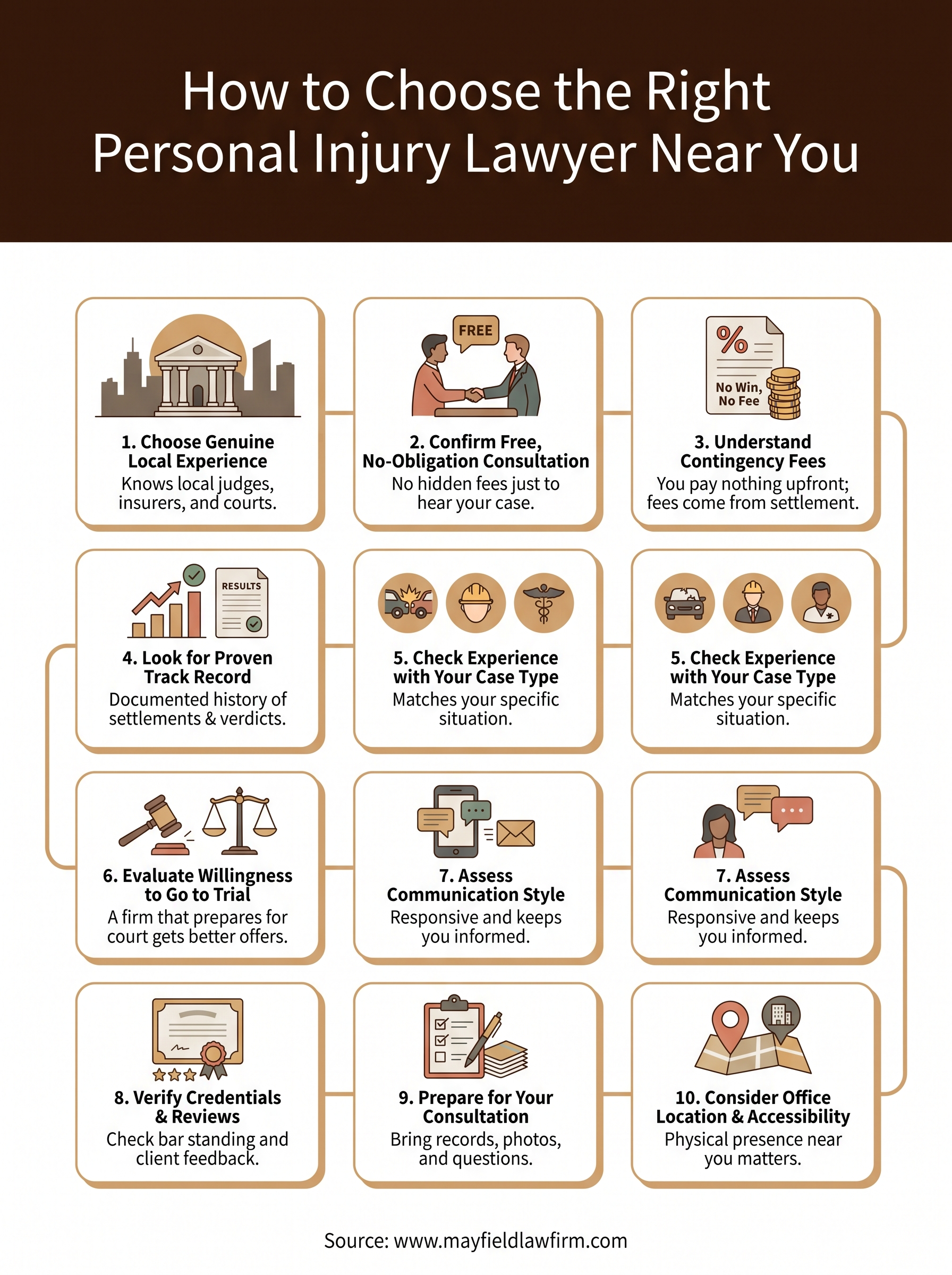
You don't need to interview a dozen firms to find the right one. Run through the ten checkpoints above with any personal injury attorney near me you're considering, and the gaps become obvious fast. Some firms dodge questions about trial history. Others rush you off the phone before you finish describing what happened. Those reactions tell you as much as anything on their website.
Trust the firm that answers plainly, shows real results, and treats your first call like it matters. That combination, local courtroom experience, clear fees, and a team that actually picks up the phone, is what separates a firm that fights for you from one that just files paperwork.
If you're ready to talk through what happened, book a free consultation at the Mayfield Law Firm office closest to your home and get a straight answer about your case today.